25% to 54% of Gen Z K-12 students are lacking engaging school experiences
Engagement is particularly low among non-college-bound students
Students are most excited to learn when teachers make it interesting
WASHINGTON, D.C. — As parents and children prepare for the start of a new school year, a survey from the Walton Family Foundation and Gallup finds that the experiences young people in the U.S. have in their middle and high school classrooms are closely tied to their confidence and optimism about their future — but many schools are struggling to engage their students.
The online survey was conducted April 26-May 9, 2024, with 4,157 12- to 27-year-old children and young adults, including 2,317 who are enrolled in a K-12 school, using the probability-based Gallup Panel. This is the latest in the Voices of Gen Z study, a multiyear research effort to understand the educational and life experiences of this generation.
Between 25% and 54% of students say they are not having eight engaging experiences in school, such as feeling that what they are learning is important or interesting. Less than half of students say their schoolwork positively challenges them (49%) or aligns with what they do best (46%).
One-third or less of students strongly agree they are having each of these engaging experiences, and nearly half (46%) do not strongly agree they are having any of them.
The extent to which Gen Z K-12 students feel engaged in the classroom is an important factor in their overall wellbeing and outlook for the future. The 25% of students who report the highest ratings on these engagement items are more than twice as likely as students who report the lowest 25% of ratings to be thriving in their lives (76% vs. 32%, respectively) and are more than four times as likely to strongly agree they have a great future ahead of them (61% vs. 15%).
Students who do not plan to pursue a degree after high school are also notably less likely than college-bound students to feel motivated by, interested in or excited about what they are learning in school. They are also significantly less likely to feel their schoolwork gives them the opportunity to do what they do best.
What would it take to get Gen Z more engaged in the classroom? According to the students themselves, the teacher plays a big role: Six in 10 say that when they are most excited about or interested in what they are learning, it is because their teacher made the material interesting and exciting for them. The same percentage mention that the subject matter was something they wanted to learn more about. Nearly half of Gen Z K-12 students (46%) also say opportunities to engage with the material in a hands-on way drive their interest, and about one in three (35%) most enjoy what they are learning when they can connect it to the real world.
Gen Z Feels Optimistic About the Future — but Not Prepared for It
One of the key findings from the first year of the Voices of Gen Z study was the contrast between the optimism young people had for the future and the relatively low levels of confidence they expressed about their readiness for it. One year later, the gap remains: While nearly eight in 10 Gen Zers (79%) agree they have a great future ahead of them, about half (51%) agree that they feel prepared for that future.
Optimism is largely consistent across age and gender. Black Gen Zers are more likely than their peers to feel they have a great future ahead of them; however, this group remains among the least likely segments of Gen Z to feel prepared for the future. Meanwhile, though not uniquely optimistic, 25- to 27-year-olds, Asian and White Gen Zers, and Gen Z men and boys are most likely to feel prepared for the future.
Gen Z students who do not plan to pursue a degree after high school are less likely than their college-bound peers to agree they feel optimistic about the future. About two-thirds of those who do not plan to attend college (68%) believe they have a great future ahead of them, compared with more than eight in 10 students planning to pursue an associate (81%) or bachelor’s degree (86%). These non-college-bound students are also less likely to agree they feel prepared for their future (40%) than those hoping to earn an associate degree (45%) or bachelor’s degree (54%).
Due to the relationship between school engagement and Gen Z’s future outlook, the dampened optimism non-college-bound students feel may be a reflection of the consistently lower levels of engagement they report at school, as well as a belief that what they are learning may not be relevant to their postgraduation lives.
Bottom Line
The extent to which Gen Z K-12 students feel hopeful about and prepared for their future is linked to how engaged they feel in the classroom. Unfortunately, fewer than two in 10 students strongly agree that what they are learning in class feels important, interesting, challenging or aligned with their natural talents. This disconnect is especially high among students who do not want to attend college, and previous Gallup research finds that engagement declines as students advance along their K-12 journeys.
Gen Z students suggest several strategies teachers and schools could use that might help increase their engagement: Learning from teachers who are themselves highly engaged with the material and finding opportunities to apply what they are learning in a hands-on, relevant way are two such strategies. Finding ways to implement these and other strategies for all students, including those who do not plan to pursue further education after high school, might not only increase student engagement in the present but also better prepare those students for success in adulthood.
Deputy Superintendent; Office of School Support and Well-being; Office of District Operations Social-Emotional and Mental Health Programming and Services for Students A. B. C.
PURPOSE To set forth a framework for a multitiered system of universal, targeted, and intensive student services that support the essential educational mission of Montgomery County Public Schools (MCPS): student learning and academic achievement, school attendance, and school completion To affirm the Board of Education’s commitment to student social-emotional well-being and mental health as essential to student academic success
ISSUE Student learning and academic achievement, school attendance, and school completion all have strong social-emotional and mental health components: cognitive demands for learning; social and emotional and mental health demands for behaving according to school rules, norms, and expectations; and physical demands to be active throughout the school day. School communities thrive when the student body is engaged in school life, healthy, and its members make positive decisions that promote their own well-being and the wellbeing of others.
POSITION 1. The Board affirms the importance of students and parents/guardians having access to reliable and caring sources of support in times of worry, concern, or crisis. In every MCPS school setting, students shall have access to social-emotional and mental health professionals and other trusted adults who interact with students regularly and can facilitate appropriate and timely connections with social emotional and mental health supports, programming, and services for students when needed.
MCPS will establish learning objectives and supporting resources for MCPS staff and, as appropriate, volunteers who regularly interact with students, so that they are knowledgeable about the functions of the Student Well-being Teams (SWBTs) and Educational Management Teams (EMTs)., to activate available resources, such as small-group skills training, short-term individual or group counseling, case management, home visits/interventions for absenteeism, behavior threat assessment, suicide assessment, crisis intervention, or referral to community partner agencies for individual or group therapy.
2. 3. 4. Consistent with Policy ABC, Family-School Partnerships, the Board promotes student and family access to social-emotional well-being and mental health supports, programming, and services, provided either directly by MCPS staff or through community partners.
a) b) Students will have regular opportunities to meet in person with school based MCPS social-emotional and mental health professionals, who will help them understand, as appropriate, the programming and services available to students, including each school’s SWBT.
MCPS will effectively communicate school-level information to families and students about the social-emotional well-being, mental health professionals, and programming and services at each school, either through direct provision by MCPS staff or through referrals to community partner agencies.
The Board seeks to support students’ academic success with a multitiered system of supports that – a) b) fosters positive, respectful, orderly, and safe learning environments necessary for effective learning, in alignment with Policy COA, Student Well-being and School Safety, and the Be Well 365 Initiative; and
responds to specific student needs by analyzing, organizing, and activating available resources and appropriate student services professionals, including school counselors, school psychologists, school social workers (SSWs), and direct outreach professionals such as pupil personnel workers (PPWs), emergent multilingual learner therapeutic counselors (ETCs), and parent community coordinators (PCC).
A multitiered system should include, but not be limited to, the following key components: a) b) Universal programming available to all students – grade-specific and age appropriate classroom instruction through the Maryland State Department of Education (MSDE) curricula for health education and mental health literacy;
research-informed schoolwide social-emotional learning programs; and drop-in support from school-based mental health professionals.
Targeted student supports – consultation among parents/guardians and grade-level or subject-area teams, as appropriate, to consider specific student needs and strengths and develop behavior support and interventions that address identified concerns.
c) 5. Intensive support – coordination through SWBTs and EMTs to activate available resources, such as small-group skills training, short-term individual or group counseling, case management, home visits/interventions for absenteeism, behavior threat assessment, suicide assessment, crisis intervention, or referral to community partner agencies for individual or group therapy.
MCPS shall provide parents/guardians with access to student educational records entitled to them under the Federal Educational Rights and Privacy Act (FERPA).
6. D. MCPS partnerships with with community partner agencies shall be established through memoranda of understanding that specify, as appropriate, partnership roles and responsibilities, referral processes, safety planning, decision-making rules, and confidentiality and data-sharing protocols in alignment with FERPA, which governs MCPS staff and programming, and the Health Information Portability and Accountability Act, which governs health providers.
DESIRED OUTCOMES 1. 2. 3. E.
All students will thrive and become healthy, resilient, self-confident, and successful young people, who are engaged in school life and make positive decisions that promote their own well-being and the well-being of others.
Students and families will access, when needed, the appropriate supports that students may need and understand the purposes of social-emotional and mental health programming.
The educational mission of MCPS will be supported by an effective and efficient system of universal, targeted, and intensive student services to foster positive, respectful, orderly, and safe learning environments necessary for effective learning.
IMPLEMENTATION STRATEGIES The superintendent of schools will –
1. 2. implement counseling, social-emotional learning, health education, and mental health literacy curricula to support student learning and academic achievement, school attendance, and school completion with social-emotional knowledge and skills appropriate for their level of development;
provide students and families with school-level and topic-specific information needed to effectively access each social-emotional and mental health program and practice area, provided through MCPS resources and community partners;
3 of 4 IJA 3. 4. F. collect regular feedback on stakeholder access to social-emotional and mental health programming and services; and establish regulations and/or other administrative procedures necessary for carrying out the commitments and priorities outlined in this policy, consistent with Maryland law and Board policy.
REVIEW AND REPORTING 1. 2. 3. The superintendent of schools shall recommend to the Board the funding necessary and available to implement the goals of this policy and strategically deploy student services professionals and their responsibilities effectively and equitably. As part of deliberations on the superintendent of schools’ recommended budget, the Board will review the capacity of social-emotional and mental health programming and student services for elementary, middle, and high schools and alternative programs, and determine the funding necessary and available to promote equitable and effective staffing, informed by national best practices.
This policy will be reviewed on an ongoing basis, in accordance with the Board of Education’s review process.
Related Sources: Policy History: MD Educ Code Ann § 7-1501 (2018); MD Courts and Judiciary Code Ann §5-609; Code of Maryland Regulations, sections 13a.07.11.03; 13a.05.05.02; 13a.12.03.02; 13a.12.03.07; 13a.12.03.11; 13a.12.03.08.08; 13a.12.04.08.08 Formerly Policy IJA, School Counseling (2004); amended by Resolution No. 200-24,
He wanted to focus on issues students cared about. Then the crises began.
Sami Saeed first got a glimpse last summerof how intense his term would beas the student representative of Maryland’s largest school district. Protesters were flooding Montgomery County’s school board meetings to call for the district to let families opt out of storybooks featuring LGBTQ characters.
“Is this normal?” he recalled asking others on the board. Long-serving memberssaid they could not recollect a protest of that magnitude.
Saeed, 18, said it was the start of a year that was marked by seismic crises. In addition to the calls for an opt-out policy, the school system also faced scrutiny for its handling of employees’ reports of misconduct after The Washington Post reported a middle school principal was promoted while he was under investigation for sexual harassment. Several administrators left, including former superintendent Monifa B. McKnight, which led to asearch for a new system leader.
It was a big shift from his original plans for the term. Coming in, Saeed thought he would focus on top issues for students like school lunches, mental health, safety and curriculum. But most of the year, he said, he was dealing with one administrative fallout after another — while still going to classes at Richard Montgomery High School in Rockville and listening to students.🌸
“I’ve done more crisis management than I have educational policy, which is something I never thought I would say by the end of this,” he said in a recent interview after his term ended July 1.S
Montgomery County has had a student representative since 1978, according to its website. Maryland allows student school board members voting rights, though that has been challenged in court. In Montgomery, student members can vote on most issues save for negative personnel actions, like a termination or other disciplinary measure. They can vote on personnel action involving the superintendent.
Saeed gaves peeches and participated in Q&A sessions with students while campaigning for the board seat. He was one of two finalists for the role, and then was elected by the school system’s middle- and high-schoolers in April 2023.
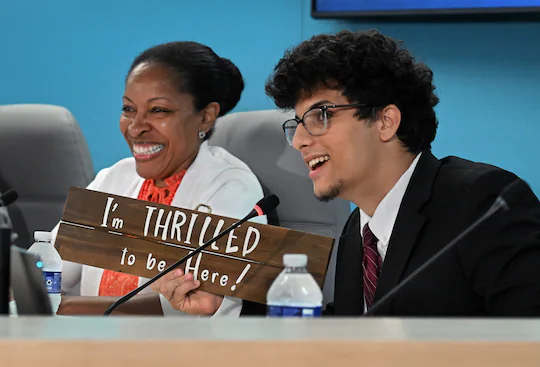
Lynne Harris, an at-large member on the school board, said Saeed came to each meeting as a “coequal member.” He showed up regularly well-informed and he was often one of the first people to speak.
“He was really fearless in being a full member, but he was always so incredibly excited and optimistic,” Harris said. “His year as [the student member] was the hardest year the board has had to deal with … but you would not know from seeing the way he served.
The debate over the opt-out policy early in his term was challenging, Saeed said.
Several Muslim and Christian families protested the school system’s decision to disallow opt-outs for books with LGBTQ characters, arguing it violated their religious rights under the First Amendment. Saeed recalled that he was going to a board meeting to speak about financial literacy. But after seeing the protests, he decided to instead speak in favor of the district’s decision. He spoke of how students had “overwhelming support for this measure” and argued that the books cannot be opted out of.
Right after, several protesters pulled him aside to persuade him of their viewpoint. Saeed said it caused a huge internal conflict. His dad is Muslim and his mom is an atheist, but he said they let him make his own decision about his religious identity. He is not Muslim, but he explained that many people assumed he was because he is Arab. When he disagreed publicly with the protests, he said he felt like he was betraying people in his own community.
“It was incredibly uncomfortable because I felt like, ‘Am I not being true to who I should be — to what my heritage is?’ But I need to stand with my principles,” he said. “But that was really a struggle, because I felt like I came into my role and I already let a whole group of people down before I even started.”
The district was in tumult again a few weeks later after The Post reported that a middle school principal, Joel Beidleman, was promoted last year despite being the subject of six teachers’ complaints. (Beidleman has denied many of the allegations.) He was warned in an email about a potential issue with a staff member, but learned the details from The Post’s reporting. Several investigations followed, and district and school board members also were admonished by the county council. The school system is now reworking its protocols and polices to address issues raised.
“It was so tough. Some of the things I was learning were so troubling,” Saeed said. “I had to go to a student meeting or something with a big smile on my face. The students would be talking about the same problems that they were talking about during my campaign, but my head is somewhere else.”
He said McKnight’s resignation in February was one of the most stressful periods of his term. Because it was a personnel issue, he said he can’t share what happened, and has never even talked to his parents or any of his friends about it. But at the time, he was panicking. He said the situation caused him sleepless nights and he worried about getting gray hairs.
Still, he tried to carve out time to focus onother issues, like school safety and security,something that touched him personally. Back in 2022, Saeed said he was targeted in a shooting threat that was posted online but that investigators later determined was not credible. His high school has had students come into the building with guns.
In October, Saeed successfully proposed a school safety resolution that would mandate the school system expand a student ID pilot program, implement a strategy to increase monitoring bathrooms and target substance use in schools. The measure called for the district to give an update in April. But when the time came, he learned little progress had been made on the request, he said.
“That was a huge, huge, huge let down,” he said. “I was shocked that the urgency was not there, because you’re dealing with kids’ lives.”
He said he met regularly with school officials on the issue. Now,six high schools have installed vape detectors this past school year, and the school system plans to use money from a legal settlement with JUUL to install them in all high schools.
And even amid all the upheaval this past school year, Saeed was able to accomplish one of his biggest goals: changing the district’s homework policy. The changes — including language that would encourage teachers to avoid assigning homework over the weekends when possible — were unanimously approved by the school board in June.
In his final meeting last month, Saeed voted to hire Thomas Taylor as superintendent. He said the hire was like “striking gold,” pointing to Taylor’s history as a graduate of Montgomery County schools. Taylor immediately stuck out to him during the interview process, and he is confident that Taylor cares about the students.
In his final speech, Saeed characterized becoming the student member of the board as one of the best decisions he’s made — along with deleting Twitter.
Worker burn out is common current experience. Teachers, nurses, doctors, people working in businesses and organizations feel burdened by stresses and pressures. A general malaise results. Many leave positions and the workforce. Others “work to rule” — doing the absolute minimum. Pandemic complicates the problem as more people become accustomed to working from home and resist regular office hours and restrictions. Such burnout often results more from lack of meaning and purpose than from overwork and external pressures.
Volunteer fatigue and burnout are less visible and rarely publicized. Nevertheless, volunteer fatigue is a significant social problem. Fewer people volunteer to assist our agencies and organization that provide the social capital to improve social health in our communities.
Our current ethos emphasizes individualism, anonymity and identity groups. The emphasis on individualism is commonly identified and described in the media. As everything moves faster, long-term commitments become rare. Many individuals and families distance themselves from worksites to nearby cities for many reasons, one of which is freedom from unappreciated intrusions in their personal affairs, which leads to greater social isolation — what Harvey Cox described as attractive in the ‘secular city.’ Identity groups support activities that benefit the ingroup and only incidentally benefit the entire community.
Economic changes and heightened expectations regarding finances and status result in smaller families with both parents working full time. Fifty years ago, one parent’s labor could provide a ‘living’, so that it was dire poverty that demanded both parents have jobs. Also, women faced difficulties finding professional positions. Extracurricular activities of children have increased dramatically creating burdens on ragged parents. No wonder less time exists for them to engage in volunteer activities.
Generational differences exist regarding volunteering and charitable contributions.
Data from the Lake Center on Philanthropy at Indiana University confirm that older people donate more and volunteer as long as they are able in larger numbers than younger and middle-aged adults. The elderly faithfully volunteered in the past, but fewer able-bodied peers support them even as needs increase. It is easier to burn out and give up. Thus, unless more younger people are inspired to contribute and volunteer, the future of many of our helping organizations is bleak as financial and social capital gradually fades away.
Unfortunately, individualism results in fewer people joining social organizations that sponsor needed social services in our community. Churches that in the past have inspired and organized people to volunteer local non-profit organizations are declining in membership, especially of younger generations. These organizations rely on volunteers to provide services directly to the members as well as to help others. We face a deficit of inspiration. The focus of some has changed from local challenges to national and global foci. Fortunately, many elderly are relatively secure financially and continue to fund local organizations they previously served as volunteers. Such financial support enables the organizations to hire paid staff to do work previously donated by volunteers. One hopes that economic downturns and decline of pension income will not reduce that to a trickle.
No easy solution exists for volunteer fatigue and the decline of charitable contributions and volunteer service. Two avenues to improve prospects for the future are: (1) Volunteer for some service to the community. Everyone, including recently retired persons, can find additional meaning, satisfaction, friendship and joy in helping others in the community. (2) Support those organizations that sponsor volunteer activities, and especially support those that provide inspiration for charitable contributions and volunteer service. Thereby, perhaps we can reduce the dangers of volunteer fatigue in Montgomery County.
Raymond B. Williams, Crawfordsville, LaFollette Distinguished Professor in the Humanities emeritus, contributed this guest column.
MCPS teacher resignations, retirements up 38% in past school year
More than 1,000 Montgomery County Public Schools teachers resigned or retired in the last year, a 38% increase from the year prior, according to district data.
Between Sept. 1, 2021, and July 7, 2022, 1,070 MCPS teachers resigned or retired, compared to 775 during the same time period the prior year.
With a teaching workforce of about 14,000, the number reported this school year equals about 7.6% of the total, over the course of the year. There was not a surge in resignations or retirements at the end of the year, MCPS data show, but rather slightly larger totals most months.
Jennifer Martin, president of the Montgomery County Education Association, the union that represents teachers, said there are “real problems on the horizon” for MCPS if the staffing problems are not addressed.
Martin cautioned about the expected increase in resignations and retirements in May, at the time saying about 800 teachers had said they intended to leave the district.
Concerns about teacher burnout increased as stressors caused or exacerbated by the COVID-19 pandemic escalated over the past year, such as addressing missed learning during online classes and also a rise in behavior and mental health problems among students, as well as losing planning time to cover classes for absent teachers.Advertisement
Teachers held a handful of protests and other events throughout the school year, urging the district to compensate them for extra work and do more to hire staff members to fill vacancies.
MCPS spokesman Chris Cram said there were 393 teacher vacancies in MCPS as of July 7. One-third of the openings were for special education teachers. At the end of June, a shortage of special education teachers forced about 175 students in a summer program to move to a virtual model at the last-minute.
It was difficult to convince many educators to take on summer courses because they need time to “recharge,” Tomas Rivera-Figueroa, MCPS supervisor in the Office of Recruitment, said in an interview last week.Advertisement
“We’re finding that to be a difficult task this year because teachers want to take the time, and they don’t want to be working, and they want to regenerate which will hopefully alleviate some of the tension and we’ll see them stay in the profession,” Rivera-Figueroa said.
There were an additional 422 open support staff positions, which include jobs such as bus drivers, food service workers and office staff. Some bus routes to summer school programs have not been able to run in the past week due to a shortage of drivers, according to notices posted on the MCPS website.
The pandemic has caused new recruitment challenges, Rivera-Figueroa said, but largely just “accelerated what was already an issue.”Advertisement
“We were already in crisis when it came to certificated teachers entering the profession — that was already a trend five or six years in the making of our schools of education becoming smaller and smaller,” Rivera-Figueroa said. “So there aren’t as many young people that are interested in becoming teachers as there once was and I think that the pandemic caused more of those young people to reevaluate their situation.”
MCPS has broadened its recruitment efforts in recent years beyond the immediate local area, realizing that the pool of qualified candidates across the country is shrinking, Rivera-Figueroa said.
Madeline Hanington — an MCPS recruitment specialist, former MCPS Teacher of the Year and Milken Educator Award winner — said the district recently created an “internal referral program” for employees to recommend people who are interested in working for MCPS.Advertisement
MCPS has invested in both in-person and virtual job fairs and events, and drill down into online analytics that show demographics about who’s visiting recruitment webpages.
Still, Rivera-Figueroa and Hanington said they can’t be certain all of the current vacancies will be filled when classes resume at the end of August.
“I wish I could tell you guaranteed we’re going to fill this all up and it’s going to be great,” Hanington said. “But we’re working hard and we’re going to do our best.”
MONTGOMERY COUNTY, Va. – This article is part of “Solutionaries,” our continuing commitment to solutions journalism, highlighting the creative people in communities working to make the world a better place, one solution at a time. Find out what you can do to help and subscribe to our Solutionaries channel on youtube.
Taking care of our mental health is just as important as our physical health and a letting students and staff take mental health days is paying off in one local school system.
“I think it’s always hard to be the first school division to do something, whether that’s across the country or in the state,” said Brenda Drake, director of communications for Montgomery County Public Schools.
Students and staff at Montgomery County Public Schools can take mental health days. It just counts as a sick day, which is an excused absence. The policy started in 2019 after students pushed for the change.
“There is no tracking or anything that they can just say they were out they were ill, and that is all that it takes to use a mental health day,” said Drake, who said these days can be used for a variety of things. “Stress, overwhelm, feeling like you just need a little bit of a break to really assess a situation, whether it’s school related or work-related or not. These mental health days allow for that break to happen so that we can all be at school or at work being our best selves.”
She says there’s no way to track how many mental health days are being used because of the way it’s reported, but it is helping connect families with resources.
“When a parent indicates that it was a mental health reason, whether a diagnosed condition or not, then the school is able to follow up with the family,” said Drake.
10 News checked in with several other local school districts and no one else we talked to has mental health days students can take.
“School for kids is their job and sometimes they need to take a step away from their work just like we need to take a step away from our work,” said Jamie Starkey, who works for Family Service of Roanoke Valley.
The organization provides mental health services, at a time when there’s a growing need and not enough providers.
“Mental health days are planned time away, to step away from your normal responsibilities, to intentionally reconnect and rejuvenate your mental health,” said Starkey. “I think a lot of times with kids, we sort of minimize the fact that they really know themselves best and allowing them to take a mental health day really is just us listening to them telling us what they need.”
She says no matter how young your child is, if they’re showing stress, they may need some time away.
“If a kindergartener seems extra tired or irritable, or doesn’t want to go to school one day and you think, ‘Are they just manipulating me?’ Maybe they just need the day,” said Starkey, who adds it doesn’t have to be an entire day.
It can be an afternoon or an hour.
“Maybe you let them go in late, maybe it’s a tardy, maybe it’s breakfast with mom before they go to school or, whatever the case may be that allows them that opportunity to just take a breath and reconnect,” said Starkey. “I think if we can reduce the stigma around mental health, and just look at mental health as health, then it helps kids to realize that everyone has these experiences and these struggles. It keeps kids from being other or disconnected from people because they feel like they’re doing something, or feeling a way that’s different from someone else.”
In Montgomery County, these mental health days are working.
“We’ve been able to connect some students who were flying, kind of right under that radar of things that we might normally look out for, and we were able to get them the help that they needed. That’s what this is about at the end of the day,” said Drake.
A school counselor checks in with the student when they get back to school to see how they’re doing and if there are resources they can provide.
There are some limitations. If a student is out for more than three days the school may require verification.
If a mental health day doesn’t feel like enough, Starkey says to talk to your doctor because you may need more help.
“If you’re sick, you go to the doctor. If you have a mental health challenge, then you seek someone to help you with that. Not addressing your mental health can be detrimental. It can result in physical stress, it can show signs of wear and tear on your body,” said Starkey.
You can see Jenna weekday mornings at the anchor desk on WSLS 10 Today from 5-7 a.m. She also leads our monthly Solutionaries Series, where we highlight the creative thinkers and doers working to make the world a better place.
Shannon Salter aimed to turn all the seniors in her high school civics class into voters. Her task has never been harder.
Story by Greg JaffePhotography by Michelle GustafsonJune 29, 2024 at 6:00 a.m.ShareCommentAdd to your saved storiesSaveHuman read|Listen30 min
ALLENTOWN, Pa. — Shannon Salter checked the results of an online poll that she gave each year to her high school civics students. One of the questions asked whether they would support lowering the voting age to 16.
“Everyone said no,” Salter told her students in late April. “That has never happened before. So, I am dying to dig into why.”
Salter, a 53-year-old White woman, stood at the front of the classroom. Her students, Black and Hispanic teenagers drawn from Allentown’s working-class neighborhoods, were arrayed around her. All were seniors. Most were weighing whether they will become first-time voters in the fall when the presidential election could come down to their state, Pennsylvania.Story continues below advertisement
One student complained that social media had polluted his peers’ minds with misinformation and fried their attention spans. “A 16-year-old nowadays — that’s not old enough,” he said. “There’s no maturity or knowledge there.”
Another, who had spent much of the coronavirus pandemic living with his mother in an abandoned building, talked about the social and emotional damage that the restrictions had inflicted. “As kids, we’ve become way more social distanced,” he said. Some of his classmates were so isolated that they barely spoke to anyone, he added. Surely, they weren’t qualified to choose the next president.
Like most civics teachers, Salter wanted her students to believe that their voices and opinions could shape the nation’s future — that their participation in politics was essential to improving their country, their neighborhoods and their lives. A big part of her job, as she saw it, was persuading her students to vote.
SHANNON SALTER, TEACHER
Salter, 53, chats daily with students, including J’livette Baez, 16, at Building 21. For some seniors, November’s election will be the first that they can vote in.
Whether young voters will turn out to vote in November is one of the essential unknownsof the upcoming presidential election. In 2020, nearly 50 percent of the population between the ages of 18 and 29 cast ballots, one of the highest levels since the voting age was lowered to 18 in 1971, according to the Center for Information & Research on Civic Learning and Engagement at Tufts University. Those young voters — particularly young voters of color — were critical to President Biden’s victory.
So far, polling suggests that young voter turnout in 2024 may not match 2020’s rate. In April, only 41 percent of Black people 18 to 39 told a Washington Post-Ipsos poll that they were certain to vote this year, down from 61 percent in June 2020.
The poll mirrored what Salter was seeing among her students, whose interest in voting had been hobbled by poverty, racism and two aging presidential candidatesseemingly far removed from the world of a struggling Allentown teen. “I’m pushing against more pessimism than I ever have before,” she said.
And so, on this morning, she decided to hit her students with a blast of idealism in the form of a clip from “The West Wing,” the television dramafrom the early 2000s that Salter called her “happy place.”
How we reported this story
Washington Postreporter Greg Jaffe made six trips to Allentown, Pa., starting in late April and attended 17 civics classes at Building 21 high school to document how young people think about politics and America’s democratic system.
Salter’s classroom filled with the sound of the show’s stately theme. On a screen at the front of the room a teenager in a suit was badgering the president’s communications director to rethink his position on teen suffrage. “I’m going to be drinking the water and breathing the air after you’re long gone, but I can’t vote to protect the environment,” the young man said.
Minutes later, the young advocate waschallenging the president at a packed White House news conference.
Salter hit the pause button and the students in her classroom picked up the debate, unmoved by the earnestness of their fictional counterpart. Their memories of politics began with the bitter 2016 presidential election between Donald Trump and Hillary Clinton and included the U.S. Capitol riot two months after the November 2020 election.
To these students, American politics was an ego-driven, aimless mess. Adding younger, less-mature voices to the toxic mix would only produce more chaos and disappointment, they said.
After class, a few of the students congregated around Salter’s desk, continuing the argument until Salter realized that they were running late for their third-period classes. She shooed them on. Salter hadn’t changed any minds, not yet.
But she still had more than a month to go before the end of the term to convince her students that their participation in American democracy was worth it. She had no idea how hard a sell that would turn out to be.Story continues below advertisement
Turning ideas into action
Salter teaches at a public high school called Building 21, housed in an old banking call center just beyond the edge of Allentown’s urban core.
The eastern Pennsylvania city, which once helped powerAmerica’s industrial revolution, had undergone a transformation in recent decades. Its factories had given way to sprawling e-commerce warehouses. Today, more than half of its 125,000 residents — many of whom came from New York City in search of cheaper housing — are Hispanic.
Salter arrived at the school in 2015, when it opened asan alternative to the city’s two big, underperforming high schools. Building 21 wasn’t much to look at. It didn’t have athletic fields or a gymnasium. On sunny days, gym class was a badminton net strung up in the school’s cracked asphalt parking lot. The classrooms were windowless.
To Salter, though, the school and her civics class sat squarely on the front line of a nationwide battle to save American democracy. Public school is one of the few American institutions where people from all sides of the country’s political, social and cultural divides still come together. In her view, it was the place where a new generation — the most diverse in the country’s history — could learn the skills needed to revive America’s creaking system of self-governance.
Salter played a role in shaping civics curriculums nationally through iCivics, an educational nonprofit organization founded by former Supreme Court justice Sandra Day O’Connor, and the Educating for American Democracy initiative, a coalition of 300 historians, political scientists and education leaders. Her Allentown classroom was the place where she sought to put those groups’ lofty ideas about voting and democracy into practice.
BUILDING 21
The school’s students live in Allentown’s less-wealthy voting districts. Clockwise from top left: Alexander Cardona, 18, helps J.J. Morales, 18, into the suit for Fuego, Building 21’s mascot; Brylee Gold, 15; and Doh Nay Kaw, 16, and Morales, now out of the mascot suit.
One of the students she thought she could win over was Bryan Sticatto, the senior who had spent much of the pandemic living in an abandoned building.
Bryan was one of the stars of the school’s Ethics Bowl team, in which he debated issues such as the morality of mining precious metals or the use of semiautonomous robots in war. “I’d be shocked if Bryan doesn’t end up becoming a voter,” Salter said in late April.
Shedidn’t see the other forces — outside of her classroom and the school — that had played an even greater role in shaping Bryan’s views of the country and his place in it. One of the biggest was his experience during the pandemic, when he and his mother lived in a house that lacked heat and water.
Deep Reads
There were other families living in the two-story building, Bryan said. So he and his mother fashioned privacy screens out of cardboard boxes. Today, when Bryan recalls that period of his life, he talks about the loud music that played late into the night, the drinking and the fights.
He remembers the bucket he used to take “bird baths,” the hours he spent alone watching YouTube videos on his phone and the two jobs his mother worked so that they could escape.
At the time, she was only earning $12 an hour, $3 less than he made last summer at a local amusement park. “You can’t even afford a good meal at McDonald’s at that wage,” Bryan said. The experience left him believing that he shouldn’t dream too big or expect too much.
It was a lesson his mother reinforced over pizza one evening this spring after school. She had just finished her shift caringfor people with intellectual and developmental disabilities.Her pay, thanks to a recent raise, was now $17 an hour, enough to afford a clean apartment in which Bryan has his own room. But the extra money still didn’t cover rent in a decent neighborhood, she said. A day earlier, the police had booted her car and she had borrowed $400 so that she could pay the parking fines she owed and make it to her job.
BRYAN STICATTO, 17
Bryan, a senior in Salter’s civics class, said his views have been strongly influenced by his difficult experience during the coronavirus pandemic.
“The system just doesn’t work,” Bryan’s mother said. “It’s literally meant to keep us down.”
Bryan’s mother had last voted in 2012, when she cast a ballot for Barack Obama, but she had no interest in voting this year.
“I have no hope,” she said.
In school, Bryan listened as his civics teacher talked about how hard some Americans, particularly Black people, had fought to earn the right to vote and how they had used their new power to improve their lives. In an early May class assignment, Bryan argued in favor of extending voting rights to felons in states where they were currently denied.
“How can you put someone back into society and then tell them that they are not allowed to vote to change it — that their voice doesn’t even count?” he asked.
But when Bryan considered whether he would vote in November,the first election he’ll be eligible, the loudest voice in his head belonged to his mother. Neither Biden nor Trump seemed like candidates who understood or cared about his life, he said. Neither was likely to make itmaterially better.
“I don’t think my rent is going to get any cheaper. I don’t think jobs are going to get any better,” he said. “So, honestly, I don’t really care.”Story continues below advertisement
A system worth saving?
Salter knew her experience of America and its democracy was starkly different from that of her students. She had spent her high school years in Singapore, a prosperous and clean city-state, where her father was an executive with a big, U.S.-based company. After college in the United States, she worked in marketing, married a computer programmer, and then returned to school to become a teacher, a job that would give her time at home with her two children.
Now, her children were grown. Her marriage had ended a decade earlier in divorce. Home was a townhouse in a newish suburb, carved from farmland,about an hour south of Allentown.
Most mornings, she passed time on the drive to work listening to left-leaning podcasts. The view through her windshield spoke to the anger and disillusionment in the country: An “Arrest Trump” flag was followed a few hundred yards later by a “Make America Great Again” banner. A “Taylor Swift 2024” flag stirred in the wind across the street from a yellow sign that warned: “Today’s Illegals Are Tomorrow’s Democrats.”
Salter said she tried to bring an “optimistic patriotism” to class. She had seen American democracy work for people with “privilege” like her, she said. She wanted to teach her students the rules that would give them access to that same system.
One of her most meaningful moments as a teacher came the day after Trump won the presidency in 2016. Salter arrived at Building 21 and found two dozen students lined up outside her classroom desperate to talk about what had just happened. Most were old enough to remember Obama’s groundbreaking victory in 2008, which seemed, in the moment, to symbolize America’s overcoming the stain of slavery and racism. They had been expecting to wake up to another historic moment — the country’s first female president.
Many students felt betrayed by their country and fellow citizens. Several were the children of immigrants — some of whom were undocumented. They worried that their parents were going to be deported by the incoming president’s administration.
Salter reassured them, saying that nothing would happen imminently and that there were laws and processes that would protect them and their families. The anger and shock they and millionsof other Americans felt fueled a surge in activism that dominated Trump’s term — the Women’s March, the March for Our Lives protests of gun violence, the Black Lives Matter protests.
In 2024, Salter’s students saw American democracy through a different prism. They were fifth-gradersin 2016 when Trump defeated Clinton, andfreshmen when rioters, inflamed by Trump’s disproved allegations of election fraud in his loss to Biden, stormed the U.S. Capitol on Jan. 6, 2021. Now, Trump and Biden were headed for a rematch, with both insisting that the foundations of the republic could be irreparably harmed should the other guy win.
Salter was determined to convince her students that as damaged as American democracy might be, it was still a system worth saving.
Two years earlier, she had persuaded the Lehigh County elections office to hire high school students as Election Day poll workers. The county had an urgent need for Spanish speakers that her students could help fill.
Building 21’s students could benefit, as well. Salter knew that many of their parents didn’t vote because they weren’t citizens or because they had lost faith in politics. She hoped that working the polls would make her students feel more invested in the country’selections. She also believed it would help them see through Trump’s repeatedly disproved allegations of voter fraud.
VANESSA-LUSIANNE BELONY, 17
Vanessa was a poll worker for Lehigh County during Pennsylvania’s April primary. For a class assignment, Vanessa created a proposal to increase voter turnout.
This year, one of Salter’s student poll workers was Vanessa-Lusianne Belony.
“How did yesterday go? What did you notice?” Salter asked her the day after Pennsylvania’s April 23 primary.
“There were a lot of White people,” Vanessa replied.
She told Salter that she could probably count the number of Black voters she saw “on both of her hands.” There were even fewer Hispanic and Asian voters, she said. Most of the 250 people who came through her polling place — located in an old banquet hall — were in their 50s or older.
Vanessa, 17, lived with her parents, grandparents and four siblings in a modest two-story house a short distance from downtown. Her mother and father — a nurse and long-haul truck driver — emigrated from Haiti more than two decades earlier and spoke often of moving back home.
Vanessa, who grew up speaking Creole and English, was born in the United States. But lately, she said she felt more Haitian than American, and she wasfilled with doubts about the country where she lived.Story continues below advertisement
One of her earliest childhood memories was of the police stopping her father as he was leaving a store in Allentown. “I remember being terrified. I was so confused,” she recalled. Vanessa said it seemed as if the police officer was using his power to intimidate her father “for no reason.”
The experience continued to resonate in the years that followed as she watched demonstrators flood Allentown — and dozens of other American cities — to protest the 2020 murder of George Floyd by a Minneapolis police officer.
Salter asked if she thought she could work to help fix the problem of American policing through voting or activism. “It’s been like this forever, like, since the country’s founding,” Vanessa replied. “If it hasn’t changed now, I doubt [it] … It feels like a systemic thing.”
The relatively small number of Black people who had turned out to vote in the primary had surprised and disappointed Vanessa. But it also didn’t fuel a determination to vote when she turns 18 or drive a desire for greater civic engagement. Instead, she said it left her feeling alienated.
“I don’t think I’ll ever feel that I belong in this country,” Vanessa told Salter before heading off to her next class.Story continues below advertisement
Empty desks, distracted students
The toughest students for Salter to reach were the ones who weren’t there because they rarely made it to her 9 a.m. class. She was supposed to have 12 students, but most days only six or seven showed up.
During the 2022-2023 school year only 54 percent of Building 21’s students were classified as “regular attendees,” down from about 80 percent before the coronavirus pandemic, said Jose Rosado Jr., the school’s principal. This year,the number rebounded, withabout 74 percent of the students attending regularly.
But students still struggled to make it to morning classes. Several of Salter’s students worked after-school jobs that kept them out until 10 p.m. or later. One student worked on the cleanup crew at the PPL Center, Allentown’s downtown arena, and didn’t get off some nights until 4 a.m. He told Salter that he had been working since he was 12 and landed a job washing dishes on the weekend at a cafeteria-stylerestaurantnear Allentown’s mall. “I lied about my age,” he said. “I don’t know why they believed me.”Story continues below advertisement
Other students had simply fallen out of the habit of making it to school on time. Instead of demanding they come to class, Salter worked with them during their free periods or after school. “I’ve only got one shot to convince a 17-year-old of the benefits of our democracy,” she said. “I’d rather they learn social studies than die on the hill of insisting that they show up in my room on time.”
In early May, Salter’s class studied the factors that tended to drive or suppress participation in presidential elections. The students discussed why turnout dropped precipitously in 1820, when James Monroe effectively ran unopposed for the White House, and why it spiked to about 80 percent in 1860, when Abraham Lincoln was elected amid rancorous division over the future of slavery in America.
Bryan oftenspent class reading Japanese manga novels on his phone or playing chess on his school-issued laptop. Some days he rested his head on his desk. Vanessa paid attention but rarely participated in class. The other students didn’t appear any more excited or engaged by the material.
Salterblamed some of the students’ apathy on this election’s uninspiring choices. Her students knew Biden from memes and short videos showing him slipping on the stairs of Air Force One or appearing to walk into a bush. They saw Trump as loud, profane and largely focused on helping the rich.
Salter envisioned her classes building to an exercise that she hoped would drive home the importance of voting no matter the candidates’ appeal. She had worked with a geospatial data analyst at Lehigh University to map 2016 voter turnout in more than 50 Allentown voting districts. The plan was to have students compare their district’s turnout with wealthier, Whiter and better-maintained parts of the city.
YEIMY LORENZO, 17, AND JINESSA GONZALEZ, 18
From left: Yeimy and Jinessa are seniors learning about the benefits of civic engagement; Jamalia Torres, 18, chats with Yeimy and Jinessa in Building 21.
In early May, Salter was helping a couple of seniors who rarely made it to school before 10 a.m. — Yeimy Lorenzo and Jinessa Gonzalez — catch up on their work. She decided to try the assignment out on them before she unveiled it to the full class. The two seniors noticed that voter turnout in Allentown’s wealthier west side, which has big green parks and wide, tree-lined streets, typically averaged nearly 80 percent.
Jinessa then zeroed in on her voting district, a couple of miles north of Building 21, where turnout in 2016 was less than 40 percent and the roads were full of potholes.
“This is why our shit is so shitty!” Jinessa exclaimed.
“Tell me more,” Salter replied.
“When you vote, that’s when [the politicians] look at you more and stuff,” Jinessa said. “And look at us. We aren’t voting.”
Salter was delighted that her students had made the connection. “I want you to bring all of these awesome ideas to class tomorrow,” she told them.
The next morning, a rainy Friday, only four students showed up for class; neither Yeimy nor Jinessa was among them. The students were restless and distracted. Salter directed their attention to the high voter-turnout rates in Allentown’s wealthier and Whiter western districts.Story continues below advertisement
“What do you know about the west side?” she asked, brightly.
“I didn’t even know there was a west side to Allentown,” one senior replied.
“I don’t go outside, man,” Bryan added, dully.
“It’s nicer,” Vanessa finally volunteered.
The class proceeded fitfully. “What’s going on?”she snapped at Bryan. “Why can’t you keep your head off your desk?”
Then class ended. There were two weeks until the end of the term. A frustrated Salter told the students that they would try to wrap up the lesson on Monday. The same exercisehad succeeded in previous years with other Building 21 students, she said. But, clearly, something had changed.
“What’s not working here?” she asked herself. “What’s messed with my students?”Story continues below advertisement
A new approach
The following Monday, after the students had settled into their desks, Salter asked them to put away their phones and laptops.
“Something happened in my life over the weekend, and it immediately made me think of you all,” she told them. She pulled up a picture from a few years earlier of her sitting in a restaurant in Washington with two white-haired men.
“The two older gentlemen I’m sitting with are my two high school social studies teachers,” Salter said. “In fact, I would describe them as the two voices that kind of sit on my shoulders, whisper in my ear and tell me, ‘Do better for your students.’”
She told them that Bob Dodge, who was seated to her right in the photo, had died of a brain tumor over the weekend.
“Whoa,” one of the students replied. For the first time all semester, everyone’s eyes were fixed on Salter.
Dodge had taught her that if she wanted her students to fall in love with history, then she needed to “be a storyteller,” she said.This was the mistake she had been making. “I realized that I hadn’t been doing enough storytelling with you,” she told her students.Story continues below advertisement
So, she began to tell them a story that she hoped might finally persuade them to become voters. It started with a 1963 photo of the Rev. Martin Luther King Jr. and President Lyndon B. Johnson sitting together in the White House. Johnson wanted to move forward with his War on Poverty, but King insisted that the push for voting rights in the South should take priority.
Salter then skipped to 1965 and photos of Alabama state troopers attacking civil rights marchers as they crossed the Edmund Pettus Bridge on their way from Selma to Montgomery — a day that became known as Bloody Sunday. “Look at the pictures carefully,” she said. “Are these protesters being treated humanely and decently by the police?”
“There’s Black people on the floor!” one student exclaimed.
Salter focused in on Amelia Boynton, a foot soldier in the civil rights movement, whom the troopers were beating unconscious. Just five months later, Congress passed the Voting Rights Act, which cleared away many of the barriers that blocked Black people from voting in the South. Salter knew that most of the students in her class were more worried about their economic well-being than voting. So she ended her story with a chartthat showed how the passage of the Voting Rights Act had helped open thousands of good-paying state and local government jobs to people of color.
JALIUS DEJESUS, 17
Jalius was moved when Salter taught his class about civil rights protesters beaten by law enforcement officers in the 1960s.
Jalius DeJesus, 17, sat cross-legged on top of his desk. He and Salter had grown close over the semester; sometimes, Jalius would drop by her office just to chat.
After graduation, hewas thinking of going to trade school to learn how to be a plumber or an electrician. As for voting, he wasn’t interested. Politicians, he said, seemed more focused on their personal well-being and their party than the good of the country.
Now Jalius, who had been moved by Boynton’s bravery and sacrifices at Selma, had a question for Salter. “What argument do you have if I feel guilty for voting for somebody who I thought was going to do good but didn’t?” he asked. “I’d rather just not vote.”
“Sometimes, you’re going to kick yourself,” Salter replied. But it was still worth trying. Jalius hadn’t committed to voting in November, but at least he seemed to be considering it. The students drifted off to their next classes. For weeks, they had seemed distracted and disengaged. Salter felt that she had finally found a way to grab their attention.Story continues below advertisement
Time for a choice
For their final assignment, Salter asked her students to presenta proposal to increase voter turnout and an answer to the most important question of all: Were they going to vote?
Bryan, soaking wet from a heavy storm that hit as he was walking to school, focused on the need for more voter education in middle and high school. Some students learned about politics and the importance of voting from their parents, he said. Bryansaid hedidn’t have that opportunity. He and his mother were too busy trying to survive.
The other students listened quietly or fretted over their presentations. Bryan began to walk back to his desk. “So, what are you going to do?” Salter asked. “What are the chances that you show up on Election Day?”
He was going to register but didn’t plan to vote, he said. He was waiting for a candidate who deserved his support.
BUILDING 21
The school is in a town that has been transformed — factories have given way to e-commerce warehouses. Clockwise from top left: Keane Carrington, 17, prepares to play flag football; Alisha Peña, 15, talks to Promyse Swift-Ford, 16, in between classes; and students play badminton.
Vanessa suggested that a better, more diverse set of candidates might boost turnout.When she thought about voting, her mind went to a bridge that she passed over on her way home from school. Beneath it was a stream, a grassy bank and a homeless encampment. “We need to fix homelessness. We need to fix poverty. Inflation is crazy. Gas prices are crazy,” she said. “I think that’s part of the reason why people don’t vote.”
She thought of Boynton and the marchers beaten at Selma. “We, as Black people, fought so hard for this chance to vote. … We came from such inspiring and amazing people, and it feels like we’re here stuck in the dirt, not able to find a way out of it,” she said. “How would voting even begin to change that?”
In the fall, Vanessa plans to attend Temple University’s campus in Tokyo. She isn’t going to be old enough to vote, but even if she were, she didn’t think she would participate. “I feel like it’d be a matter of which choice isn’t as bad as the other,” she told the class.
Jalius proposed getting rid of the two-party system, which he said fed politicians’ “egotistical tendencies” and inhibited cooperation. More humility and compromise, he argued, would lead to more progress and higher voter turnout.
But like Bryan and Vanessa, he didn’t plan to vote. “I don’t consider myself well-versed enough,” he said.
In all, nine of Salter’s 12 students completed their final presentations. Only four said they planned to vote in November’s election. None seemed particularly enthusiastic.
Salter was disappointed by the final tally. She had underestimated the damage the pandemic had wrought on her students’ learning and social development, she said. She hadn’t fully grasped the ways in which the last decade’s angry and divisive politics had filled them with a deep mistrust of government and the collective wisdom of their fellow citizens.
But she didn’t feel that she had failed. All of her students had described voting as important. They hadn’t entirely quit on the idea of democracy — even if many of them were choosing not to take part. Eventually, she told herself, some issue would energize them, or some politician would inspire them. They would find a reason to have their say.
Robert Balfanz Everyone Graduates Center, School of Education, Johns Hopkins University
This brief aims to provide a synthesis of what we know about the district and school challenges of post-pandemic chronic absenteeism, and what can be done to meet them. It further analyzes existing federal and state data on chronic absenteeism, shows variation across states on key metrics, and examines the evidence-base on what has proven effective in reducing it.
By now, most of us are aware that chronic absenteeism rates doubled post-pandemic. The multiplicity of personal, health, social, economic, and educational disruptions caused by the pandemic made it harder for millions of students to be in school every day, even as the direct health impact of Covid-19 receded.
But what does a doubling of the number of students who are missing a month or more of schooling in the school year mean? What do the numbers tell us about the challenges our schools and communities face, and what does the evidence base say about the types of solutions and responses that are needed to meet them?
It’s a big problem.
With close to 15 million students chronically absent in the 2021-22 school year, two-thirds of the K-12 students in the US were attending a school where at least twenty percent of the student body was chronically absent. This is problematic because research has shown that when a school’s chronic absenteeism rates are at these levels, the whole student body can be impacted. Not only are a fifth or more of students experiencing interrupted schooling, but the instructional pace of the whole school is interrupted when teachers constantly have a shifting set of students in their classrooms. If they slow down to catch up the students who were absent the prior day, they lose the attention of the students who were there. If they keep moving ahead, the students who were absent feel lost, and can demand additional attention. Given the unprecedented number of schools with chronic absenteeism rates of twenty percent or more in 2021-22, we need to understand that the pandemic has caused two plus years of interrupted learning in most locations.
High rates of chronic absenteeism spread to districts that had not experienced it before.
Prior to the pandemic, chronic absenteeism was a significant challenge, and its impact was heavily concentrated in schools serving students from high poverty neighborhoods. Like a tsunami wave, bringing waves of water to dry land, the impact of the pandemic spread chronic absenteeism far and wide across the country. As seen in this map, created by the Everyone Graduates Center at Johns Hopkins University, in nearly all states, the majority of school districts had chronic absenteeism rates of twenty percent or higher in 2021-22; many experienced rates of thirty percent or more. Rural areas were not immune from large increases. Looking at the five rural districts in each state, with the greatest number of chronically absent students, shows that 138 rural districts had between 1,000 and 9,000 chronically absent students. This means that large numbers of school districts were confronted with an issue with which they had little experience, accumulated know-how, or established response systems.
In districts where chronic absenteeism had been a challenge prior to the pandemic, post-pandemic levels exceeded the capacity of existing response systems.
Before the pandemic, a district with a high rate of chronic absenteeism typically had rates between twenty and thirty percent. Post-pandemic, many of these districts saw their chronic absenteeism rates soar to fifty percent or higher. In short, missing a month or more of schooling became the normal experience for the majority of students in the district. When this occurs for a district of any size, the sheer number of students who were chronically absent becomes daunting. A large district with 80,000 students could have 45,000 who were chronically absent. A smaller district of 10,000 could have 5,000 chronically absent students. The intensity of the challenge might be best seen at the school level. In 27 states in 2021-22, half of the chronically absent students in the state attended a school where there were 200 or more chronically absent students. Think for a moment of what a school faces in reaching out to and supporting over two hundred students who are facing assorted challenges to attending school on a regular basis. Very few school’s student support systems were built for this scale and intensity of need. In 35 states, there were between 100 and 950 schools where 200 or more students were chronically absent. In the four largest states plus Arizona, there were between 1,000 and 3,000 schools with 200 or more chronically absent students.
Half of the nation’s chronically absent students are concentrated in just six percent (1,000) of school districts, which are located in every state.
The significant increase in chronic absenteeism rates in the school districts that had the highest rates of chronic absenteeism before the pandemic resulted in half of all chronically absent students in the nation being concentrated in just 1,000 (6%) of the nation’s roughly 17,000 school districts. In 36 states half of chronically absent students are concentrated in twenty or fewer school districts in the state. Districts’ ability to establish comprehensive and effective responses aligned with the scale and intensity of their attendance challenge will have outsized impacts on state and national chronic absenteeism rates and related educational and well-being outcomes. The other half of the nation’s chronically absent students are found everywhere, spread across the remaining 94% (16,000) of school districts.
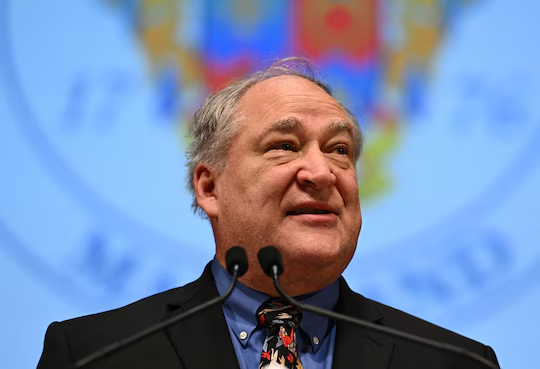
Montgomery County property tax rates would hold steady while the county puts more money into schools, affordable housing and other priorities under a spending plan unveiled by County Executive Marc Elrich (D) on Thursday.
Higher tax bills from rising property values are projected to help support the roughly $400 million in increased spending baked into Elrich’s plan for the budget year that begins July 1, a $7.1 billion framework that he said marked a return to normalcy after navigating the challenges presented by the coronavirus pandemic.
“We’ve been able to manage this without increasing the rates to get this extra money,” Elrich said Thursday during a budget briefing.
That marks a departure from last year, when the county executive’s initial pitch included a 10 percent property tax increase to help pay for schools; the county council, which ultimately approves the budget, favored a 4.7 percent tax hike.
Nearly half of the county’s budget is devoted to the public school system, Maryland’s largest with about 160,000 students and more than 200 schools. The schools budget under Elrich’s proposal would total $3.3 billion, an increase of about $128 million, or 4.0 percent over this fiscal year.
Elrich’s budget proposal comes as the state continues to roll out the Blueprint for Maryland’s Future, a landmark law that funnels billions of local and state money toward public schools. Some county executives have expressed concerns to state leadership about the law centered on costs, and they have gone to the General Assembly to request changes to their tax codes to foot the bill.
Added expenses during the pandemic years brought budget-wide challenges, followed by new problems when federal aid began running out.
About $33 million of the school budget would pay for positions previously covered by federal coronavirus relief funds, according to the school system’s budget request. Those federal funds will expire for school systems across the country in the upcoming fiscal year. Montgomery County Public Schools plans to use the requested $33 million to cover the costs of about 100 positions, which include social workers and psychologists.Share this articleNo subscription required to readShare
The next biggest chunk of the proposed county budget, $755 million, or nearly 11 percent of the total, goes to public safety expenditures that include police, fire and correctional services. That is an increase from this fiscal year’s $701 million approved public safety budget.
Elrich said his budget proposal also includes “an unprecedented $65-million increase in affordable housing” money, bringing the total to more than $169 million to help finance the preservation and production of affordable units.
The county was short 24,590 units for residents who made less than 100 percent of the area median income, according to a report last year from the Metropolitan Washington Council of Governments. It estimated that Montgomery’s existing stock of naturally occurring affordable housing could shrink by an additional 7,000 to 11,000 units before the close of the decade.
The county’s economic advisers are forecasting a possible slight recession later this calendar year, which could affect both this and next fiscal years’ budgets. “But everybody says it’s mild, it could be extremely mild,” Elrich said. “We hope it’s extremely mild.”
The county is expecting property valuations to increase 5.6 percent in the coming fiscal year.
Montgomery officials expect to end this fiscal year with $957 million in reserves, which represents 15 percent of adjusted governmental revenue, exceeding the county’s policy of holding at least 10 percent in reserve.
County Council President Andrew Friedson said the council appreciates Elrich’s work on the proposal.
“With unprecedented needs and finite resources, we must ensure every dollar is put to its best use to serve the greatest needs of Montgomery County residents,” Friedson (D-District 1) said in a statement. “We look forward to receiving the views of our community members during the budget process, so we can carefully balance the need for important County services with pressures on our taxpayers.”
The council is scheduled to hold public hearings on the budget before a June 1 deadline for final action.
Nine-year-old Leo Kennedy used tostruggle with writing.
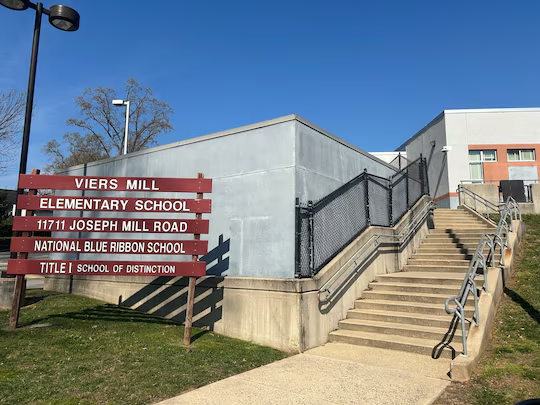
Then an enrichment teacher at Viers Mill Elementary School in Silver Spring, Md. — where Leo is a fourth-grader — started pushing him more, recounted his mom, Laurel Kennedy. After the teacher gave him C’s, itmotivated him to try harder. Leo started writing, and he loved it. Now, his dream is to become a reporter.F
But the program that helped Leo discover his love of writing is in jeopardy, now that Viers Millis losinga federal Title I grant that’s key in paying fortheenrichment teacherand other positions. Three other Montgomery County elementaryschools are in asimilar predicament.
The four campuses are among 58 Montgomery schools participating in the Community Eligibility Provision,another federal program that gives free breakfast and lunch to all studentsat certain schools withhigh need. Through it, Montgomery County Public Schoolssays it is feeding more children than ever at no cost.
But schools participating in the program are no longer collecting applications for free and reduced meals, a metric that the Montgomery schools district has traditionally relied on to measure poverty at schools and dole out Title I money.
Now, there are concerns that the school system’s new methodology doesn’t fully capture how much need ison a campus, and schools that need additional federal funding may notget it. It also comes as the Montgomery County Public Schools is seeing a drop in Title I money overall as its demographics change.
Last school year, about 75 percent of Viers Mill students received free or reduced-price lunch, Montgomery County Public Schools spokesman Chris Cram said. But under the district’s new metric, the poverty level fell to about 65 percent. Under the new estimate, Viers Mill Elementary will lose its Title I status in the fiscal year that starts July 1.
During an October 2022 report, the Maryland Department of Education warned of an “inevitable disparity” for schools participating in the Community Eligibility Provision: “These CEP schools will then intrinsically have a lower FARMs rate than other schools who are not participating in CEP, even if the student population is identical.”
The state’s Department of Education saidat the time that it would work on an “alternative income eligibility form” that could capture some of the students that are missing in the data. But while the agency initially promised to create that formby 2023, it isn’t expected to roll out until the 2025-2026 school year.
Poverty calculations are vital to establish which schools qualify for Title I status, a designation that enables campuses toreceive extra federal aid. In the Montgomery school system —which has 45Title I schools in the 2023-2024 school year— the funding has helped establish summer programs and recruit staff.
Census data on an area’s poverty levels is used to determine how much Title I money is distributed to school divisions like Montgomery. The district receives a preliminary allocation of money from the state Department of Education in the spring, Cram said.
Last year, Montgomery received about $52 million to split among schools, but it has not received an estimate for the upcoming fiscal year. However, the school system typically will make its own estimate of potential Title I funding by reviewing census data. This year, with census datafrom 2022 indicating there were fewer students in poverty in Montgomery, school officials project the division will receive less Title I fundingin the coming school year.
With some schools no longer collecting the free and reduced meal applications, the school system used a different method to decide how to distribute its Title I money.The new “direct certification” process uses data from public benefits like the Supplemental Nutrition Assistance Program and Temporary Assistance for Needy Families to estimate the poverty level of a school — a method that follows guidance from the federal government, according to a document issued in February 2022. The district then ranked schools by amount of need.
That method “changed the ranking of the schools quite drastically,” Peggy Pugh, theMontgomerydistrict’s chief academic officer, saidduring a February school board meeting. “Some of the schools slipped [in the ranking]. Some of them moved up much faster than we anticipated.”
In addition to the changes at Viers Mill,Brookhaven Elementary School in Rockville, Md., went from 72 percent to 66 percent. At Oak View Elementary School in Silver Spring, the number dropped from about 74 percent to 65 percent. But the largest decrease was at Strathmore Elementary School, which went from 73 percent to about 60 percent. Each school lost between about $360,000 to $520,000 to pay for staff and other programs.Share this articleNo subscription required to readShare
On the flip side, sixnewschools were identified as Title I. Through the method, the poverty level atEast Silver Spring Elementary Schoolrose fromabout 62 percent to about 80 percent. Other schools showing higher need under the new method wereS. Christa McAuliffe Elementary School and Waters Landing Elementary School in Germantown, Md.; Benjamin Banneker Middle School in Burtonsville, Md.; Meadow Hall Elementary School in Rockville; and Strawberry Knoll Elementary School in Gaithersburg, Md.
In February, principals at the four schools losing their Title I status started notifying their parent-teacher associations of the change. A letter from Brookhaven Elementary School Principal Xavier Kimber explained that the school would be losing several important learning interventions, including summer school and key staff members.
“This loss brings about several significant implications for our school, staff, and most importantly, our students,” Kimber wrote in his letter.
Parents were perplexed by the switch-up. One of the schools losing funding, Oak View, serves only students in grades three through five. But its feeder school, New Hampshire Estates Elementary — which serves children in between prekindergarten and second grade — kept their Title I status.
“Our numbers haven’t just changed overnight,” said Danielle Ring, a parent of a fifth-grader at Strathmore Elementary School. “They are pretty consistent over what they’ve been for the past few years.” She added that the method the school system uses appears to cut out families who are undocumented, since it relies on public benefits.
Donna Gunning, an assistant state superintendent, said state officials are working on a method that would help districts with schools in the Community Eligibility Provision identify more students who may be in need.
Meanwhile, Montgomery County Public Schools has sought grants to pay for resources provided at the four schools losing their Title I status. “It goes without saying that our focus on equity remains no matter the Title I status of any school,” Cram said.
Parents and students at the schools are wanting to bring more attention to the issue.
This month, third-, fourth- and fifth-graders at Viers Mill Elementarywho arepart of a local Girl Scouts troop organized a walkout during the school day. The elementary school students called on the school system to keep their teachers and programs.Advertisement
Leo, the 9-year-old who used to be hesitant to write, decided to cover the rally as his first reporting assignment. The change will probably affect the accelerated math and enhanced reading classes he takes.
“I feel a bit sad that I’m not going to be able to get an education that I’m on level for and stuff, and that some teachers are going to lose their jobs and stuff,” Leo said. “I feel mad because, seriously, MCPS? What did we do?”Share163Comments
By Nicole AsburyNicole Asbury is a local reporter for The Washington Post covering education and K-12 schools in Maryland. Twitter
 Posts by Paul Costello1