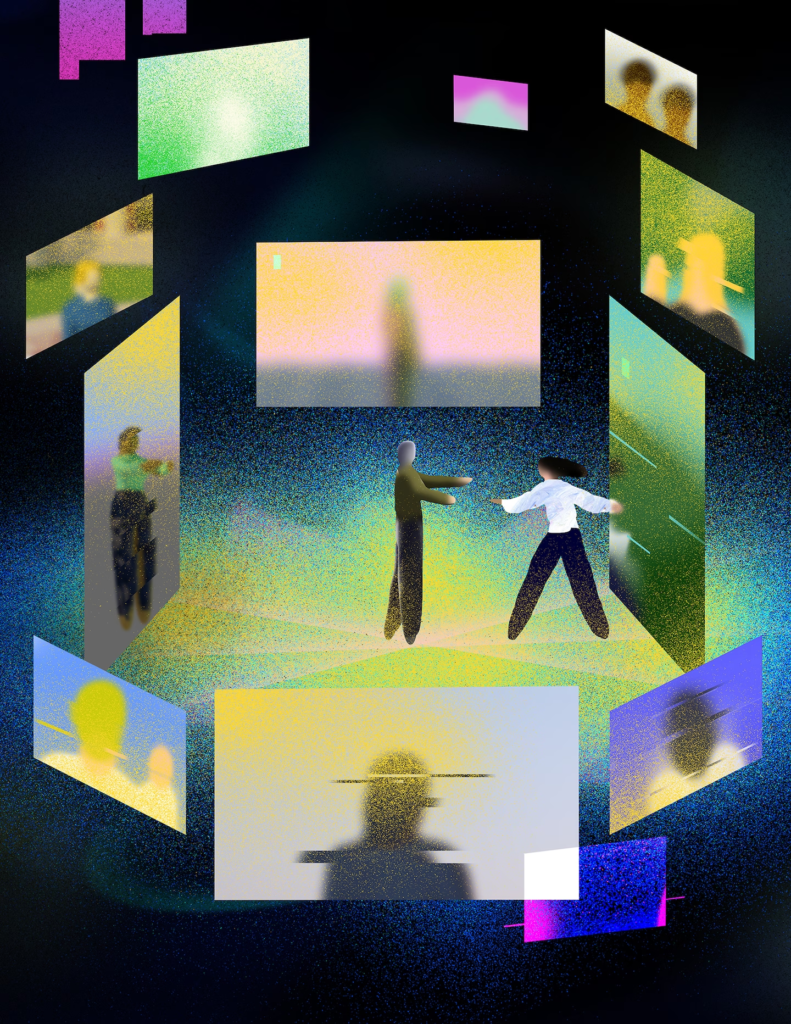
A queasy mix of awe and anxiety consumed me after I viewed “Oppenheimer,”director Christopher Nolan’s exceptional film chronicling physicist J. Robert Oppenheimer’s single-minded quest to build the world’s first atomic bomb. So urgent was the deadline to complete the task and win the war that it was only after Oppenheimer achieved his goal, and viewed photographs of the human devastation in Hiroshima and Nagasaki, that he could also see what he called the “blood on my hands.” Human catastrophe had been the other side of his scientific triumph, he realized, and no one would be spared its consequences.
Among the most lasting and visceral of those consequences has been the mushroom cloud of raw fear and apprehension that has hovered overhead ever since. It is against that murky fog that subsequent health crises, wars, climate change concerns and threats of international terror have cast their own shadowy imprints. “Oppenheimer”provides no answers to help us confront these dilemmas or manage our fretful disquiet. It is instead left to the eminent psychiatrist and author Robert Jay Lifton, who faces these questions in his latest book, “Surviving Our Catastrophes: Resilience and Renewal From Hiroshima to the Covid-19 Pandemic.”
Despite his occasional tendency to ramble and use cumbersome psychological lingo, Lifton’s conversational style is mostly accessible, detailing a vision of resilience that cuts through the existential fog to reveal something like hope.
Again and again, starting with his interviews with the hibakusha (the Japanese name for the atomic bombs’ surviving victims), Lifton found that “survivors of the most extreme catastrophe could take on collective efforts toward reestablishing the flow of life.” Most began that journey in a static state of victimhood, emotionally numbed and incapacitated by wounds psychic or physical or both.
Only gradually could they begin to take in and grapple with the magnitude of their loss and grief, and soon their mourning inevitably entailed a search for the “why” and “how” of what had happened. “We humans are meaning-hungry creatures, and survivors are particularly starved for meaning that can help them ‘explain’ their ordeal,” Lifton writes. “Only by finding such meaning can they tell their story and begin to cope with grief and loss.”
He found a similar dynamic at work among the survivors of other mass traumas. Sharing their stories with one another, he found, allowed them to build new bonds and rebuild old ones. They were thus able to form makeshift communities to work together and learn from one another. In doing so, they gradually shed the identity of passive victims and began to reconceive themselves as survivors whose discovery of purpose or meaning allowed, even propelled, them to re-engage with life. Countering the senselessness of tragedy with a sense of mission took many forms, he found, including aiding those who have similarly suffered; educating others to prevent similar catastrophes; and organizing campaigns for research funding and health care, whether for AIDS in years past or long covid today.
Throughout, Lifton emphasizes that “meaning depends upon memory,” and he reminds us of the grave risks we run by denying or erasing the past. A prime example, he writes, is “the failure to sustain active cultural memory of the 1918 flu pandemic, to hold its details in our collective imagination. … That failure to retain such crucial historical knowledge left us psychologically vulnerable to Covid-19, which we perceived as totally unpredicted and random, having no relationship to anything before it.”
That is just one reason, despite the pain and trauma that remembering may evoke, collective commemorations, public art memorials and other ceremonial occasions to honor the dead and the living are essential. Think of the incalculable healing impact of such projects as the AIDS Quilt, the annual reading aloud in many Jewish communities of the names of those killed in the Holocaust, the Vietnam Veterans Memorial in Washington, the 9/11 Memorial & Museum, the Pearl Harbor National Memorial, and the National Memorial for Peace and Justice, which commemorates the victims of racially motivated lynchings. Such legacies — and lessons — of witnessing live on even after first-generation survivors have died, through their memoirs, writings, oral and video histories, and other literary and artistic works, to help guide us through present-day threats.
Lifton is most deeply concerned today with the politicization of the pandemic and the split in the social core that has led to the spread of life-threatening misinformation. He sounds nothing less than prophetic in urging us to choose witnessing and survival over the destructive, deadly impact of denial. “A society must recognize the reality of a catastrophe in order to cope with it,” he writes. Lifton’s wisdom is worth reading — and heeding.Share this articleShare
Diane Cole is the author of the memoir “After Great Pain: A New Life Emerges.”
A few days ago, I attended my last back-to-school night at our local public middle school. That real-world experience offered a dramatic contrast to the perpetual online brawling today among irate parents, irate teachers and irate politicians over education.
For several years now, I’ve marveled about how our middle school manages to find teachers who are relatively young and energetic (at least for one night of meeting parents) and who seem absolutely thrilled to spend their days attempting to get teenagers grappling with the roller coaster of puberty to absorb some knowledge.
Elementary school kids are adorable, and high-schoolers are taking those exciting first steps into adulthood, but a lot of us would prefer to forget that awkward transition of the middle school years. Some of my son’s classmates don’t look all that different from when they left elementary school, while others have hit monstrous growth spurts and look more like college freshmen. And yet somehow, my child’s teachers seem to love teaching kids in this self-conscious, stumbling stage of life.
The school has its share of problems, of course — an ambitious reconstruction project that has dragged on and on, intermittent discipline issues, and the continuing effort to overcome setbacks from a year of subpar “distance learning” and a few more months of on-and-off in-person learning during the pandemic. Over at the nearby high school, it’s hard to tell whether rumors of commonplace drug use are factual or based on teenage exaggeration and insecure boasts of fearless rule-breaking.P
At the back-to-school meeting, I wondered to what degree Americans’ current heated debates about education are influenced by the actual experiences of students and teachers in classrooms, as opposed to being shaped by bomb-throwing contests elevated by algorithms on social media. You don’t have to look hard to find online examples of outrageous behavior (by students or teachers), or stories of strong ideological views being imposed by teachers or administrators, or titanic struggles over which books to include on a library shelf or in a classroom (often with both sides using wild misrepresentations).Share this articleNo subscription required to readShare
Sure, you can find teachers making disturbing boasts about proselytizing their personal views to children, as tracked by Libs of TikTok, but your child’s teacher is unlikely to be one of them. No, your child’s teacher is probably dealing with matters that are much more mundane but still thorny and persistent. These students aren’t just trying to make up for learning loss from the pandemic; they’re also trying to make up for one to two years’ worth of missing socialization and maturity.
A therapist who works with children told me that many she sees are about two years behind in social development — high school seniors acting like sophomores, younger high-schoolers acting like middle-schoolers, etc. Sometimes this manifests as just misbehaving in class, but sometimes it manifests as fistfights.
After the hard lessons of online learning during the pandemic, lots of schools are trying to figure out how to integrate technology without having students staring at their screens all day. Countless teachers and administrators across the country are also no doubt trying to preserve school safety with reasonable and effective discipline policies, while also trying to ensure that students are challenged to perform to the best of their abilities.
Little of that is likely to be the subject of exciting cable news segments or viral social media posts.
On balance, it is a good thing that, during and after the pandemic, many parents became much more attuned to what their schools were teaching and became much more engaged — even if that meant some shouting at previously staid school board meetings. Parents who show up to complain about the curriculum are parents who care a great deal about their children’s education — better that than apathetic or disengaged parents who just assume everything is going fine.
But as we have these arguments, let’s not let a media ecosystem that is designed to spotlight the atypical and strange create an impression that public education is being hijacked by lunatics and extremists. There are a whole lot of teachers out there who are too busy grading papers, revising lesson plans and, in many cases, buying some class materials with their own money. They don’t have the time or inclination to fight in the culture war.
Every school-day afternoon, my two sons — the older is entering sixth grade, the younger second grade — return home and gather snacks before beginning the day’s homework tussle. They are tired and ready to play video games or to watch incomprehensible YouTube videos about video games. I ignore all complaints, offer up my trademark cackle and direct them to the index cards on our fridge listing the day’s homework: reading, math, writing and even — when I am feeling particularly villainous — Hebrew reading.
For 30 to 60 minutes every weekday, I dash among rooms in our apartment, adjudicating disputes, answering questions, trying and failing to find creative ways to say the same thing (“Sound it out!” “Check your work!”) for the ten-thousandth time. I try to patiently listen to my younger son read, for the 50th time, the same book about a trickster dad and his gardening shenanigans. Then I scuttle off to talk my older son through the steps for a tricky math word problem about dividing up shipments of pencils or deliveries of doughnuts. It is, without question, the most hectic hour of my day. I am some combination of substitute teacher, coach, drill sergeant and motivational speaker, cajoling, pleading and bargaining to get through another round of homework. Some days, the process is utterly lacking in drama; other days, I emerge feeling exhausted, as if I’ve performed my life’s most demanding labor.
I am thankful to be granted the opportunity to walk alongside my kids as they commit to the work of learning.
Homework has fallen out of favor with a new generation of parents and teachers. It is drudgery, they say, rote work that unnecessarily burdens children. These are fair criticisms, and I suspect that my kids might agree with them all.
But here’s the thing: I love homework. It provides me with a means to discover just what my children are spending their days learning, how that learning is progressing and how I might help. Each Monday evening this past school year, my older son and I would drag out our battered Hebrew-English dictionary, look up words from his Hebrew-language book about the life of Charles Darwin and record definitions on a notepad (how do you say “fossil” in Hebrew?). The effort was often draining, but as the year progressed, it was easy to see how much more confident my older son — and I, for that matter — had become when facing a page of Hebrew.
Like bird-watching or gardening, overseeing homework is a specialized and abstruse hobby.
The kids are tasked with solving problems, and I am tasked with solving the problem of how they can best solve problems. I enjoy the daily array of tweaks that teachers suggest — whiteboards, not scrap paper; the dining-room table, not the living-room couch — that help build a successful homework routine. For my older son, typing out his writing assignments in the Notes app on our family iPad best allows the words to flow; for my younger, a sharpened pencil and a spiral notebook with thick lines for his oversize letters serve best. I must also determine the precise amount of intervention that will help my boys learn most effectively.
I don’t love being the bad guy my kids jeer when I remind them that it is homework time once again. But I am thankful to be granted the opportunity to walk alongside them as they commit to the work of learning. I enjoy seeing them overcome the initial impulse that if something doesn’t come easily, it isn’t worth doing. I love bearing witness to the steady accretion of skill, until I notice that my younger son is suddenly reading fluidly, no longer requiring my assistance. I even enjoy the process of tweaking my older son’s math routine, again and again, until all the pieces — whiteboard, marker, dining table, checking your work — cohere. Getting to these moments requires that I remember my place: When do I insert myself, and when do I stay quiet? I was instructed by my younger son’s teachers to let him sound words out as he reads, rather than leaping in with the answer, and I oblige. These are questions, I belatedly realize, that are about more than just homework, questions I will undoubtedly return to again and again as my kids mature and they are required to solve their own problems — academic, social, emotional and moral.
I am not a teacher, but the question of what we can impart to our children is a profound one for any parent — perhaps especially so for Jewish parents like me, the grandson of a refugee forced to flee his country. My grandfather Joseph Austerlitz — whose face I see reflected in my older son’s — left Vienna in 1936, not long before the Nazi Anschluss. He never returned. The only thing he could take with him was his education. If, as his example taught me, we are guaranteed to keep only the things we have learned, I want to ensure that my children hold on to all they can. I want them not only to learn but also to value learning as essential to the nurturing of our individual and collective humanity. I want them to think of knowledge as a partial shield against the indignities, large and small, that life may fling at them. I hope that, after I am no longer there to play the villain, they will cherish their curiosity, guarding it against anything or anyone who might dull it.
Saul Austerlitz is a writer whose latest book is “Kind of a Big Deal” (Dutton, 2023).
More than two decades after Sept. 11, 2001, educators who watched the terror attacks unfold live on TV see slow changes in how the tragic day is honored in classrooms.
Teachers are forced to walk a fine line, facing the emotions from a day that no one in their generation will forget while educating kids who see the deadliest foreign attack on U.S. soil as a distant historical event.
“It was actually my first year teaching, and we had only been in school a couple of weeks when it happened, so I was very brand new still,” said Shannon Seneczko, who was teaching fifth grade in a suburb of Chicago. “And so that kind of really hits me. That was one of my very first teaching experiences, dealing with my own emotions that day and then being there for the kids too.”
Seneczko recalled the nervousness of students who had parents in the city on the day of the attack, as no one knew where could be targeted next.
Some were even closer to the site of the terror strikes. John DeFazio, a teacher from a private Catholic school, was just 24 miles from where United Airlines Flight 93 crashed in Pennsylvania.
DeFazio remembers some parents coming to pick up their children, although he was not aware of how close Flight 93 crashed to their building until the school day was over. In the days following, he recalls it being “a little surprising” how things “went on as usual” in the region.
He says tributes in the following years became a kind of routine.
“There were probably some times in the next few years where they had the Flight 93 remembrance ceremonies — some of us would stop class and put it on the television. The students, actually, a few years later, could see the remembrance and the families that were gathered in Somerset County,” DeFazio said.
And just last week, the school bused students out to the official Flight 93 memorial in remembrance of that day.
However, further away from the crash sites, the emphasis on that day and the emotions associated with it may not be lingering as strong for students or teachers.
“For a while after 9/11, our school did a moment of silence at the beginning of the day during morning announcements. But you know, kind of like anything else over time … not going to say that the memories fade away, but that we are farther and farther away from them,” said Jamie VanDever, who taught sixth grade during the attack and is now an eighth grade teacher in Kansas. “And as we went on, kids understood less and less about what was going on.”
“I teach an English class, and for the first few years after 9/11, we would do some writing assignments and some reading assignments toward remembrance of 9/11. I think we’ve gotten far enough away from it now where those are becoming smaller and smaller,” she added, although it has not completely faded away yet.
For those far removed from the East Coast, VanDever says, there are fewer personal connections to the terrorist attacks.
“Being where we are out in the Midwest, it’s just very, very unlikely that any person here, at our school anyway, would have known or even known of someone who was directly affected by 9/11,” she said. “So we’re removed from that aspect of it and so, therefore, I feel like while those emotions exist for us older teachers who will remember it vividly, it doesn’t necessarily have that visceral, personal aspect of actually knowing someone who might have been lost on that day.”
While it can be increasingly difficult to get students to understand the pain of 9/11 at all, especially far away from New York and Washington, many teachers try to relay individual stories and their own experiences to let their students understand how sweeping and close the tragedy was.
“I bring in the idea of my own personal experience, and I think because I have the rapport with most of my students, and what I have in that relationship when I talk about it I think I get their full attention,” said Mark Scheurer, a U.S. history teacher in Michigan.
One story he always tells students is how he flew a few days after 9/11, and the way a person of Middle Eastern descent was treated on that flight, with passengers seeming uncomfortable with the person’s presence.
“I think I really get them then, and I tried to put it from a perspective where we’re so quick to judge people based on looks and that type of thing,” he said.
Scheurer said he is “not surprised” by the drift in attitude among students, comparing it to his own recollection of teachers discussing the John F. Kennedy assassination.
“Actually, I understand it probably more now,” he said.
By Paul Woodruff September 7, 2023 at 6:45 a.m. EDT
Paul Woodruff, a professor of philosophy emeritus at the University of Texas at Austin, is finishing a book called “Surviving Technology.”
My good friends know that my end is near. Several of them have flown from far away to see me in Texas. They come for an hour or two of conversation, and then they fly home. That’s an expensive visit, and time-consuming for them. Why aren’t they satisfied to see me over the internet? I offer them that way out, but they insist on the trip. Why?
My friends tell me the internet is not a healthy place to develop friendships. I agree.
In my latest meeting with one friend, I gained a growing understanding of him at this stage in his life, and he of me, from subtle clues in our posture, expressions and body language — clues we could not have captured on the web. We kept close eye contact most of the time — something we could not have done on the internet. In the end, I felt that soul had touched soul.
Another recent visitor and I both changed as we came to know each other better. He told me he had shelved a beloved project to devote time to his business. We had little need for words after he told me of his decision. By contrast, the web would have allowed us hardly anything but words to go on.
Yet another friend told me that he had come to value in-person meetings because the business he had started was entirely in virtual space, and he saw its shortcomings every day. During his business meetings, he tells me, he suspects that many of his workers are multitasking — head and shoulders pretending to be paying attention, hands below camera range busy on other projects. They would not get away with that in person, he says. Because worries like this bother him every day, he sets a higher value than ever on seeing friends face to face. In-person encounters have become more intense for him, more special than they were before. Today, he wastes no time on small talk when we meet. We are each focused on the other.P
I am not against the medium as such. I have taught on Zoom, and I know its strengths and weaknesses. I also understand that internet technology allows us to make and maintain connections that we would otherwise be denied. I know a stay-at-home parent with a large family who rejoices in her Zoom and Facebook connections. Without technology, she would be isolated, as parents were in the old days. Being physically together might be the gold standard for connecting, but we must not discount the value of other options. Whatever form of connection we are allowed is a gift.Share this articleNo subscription required to readShare
But web-based connections are simply not as good as in-person ones. Technology tempts us into being satisfied with pseudo-friendships, and these can be dangerous. You’d be a fool to marry or promise sex to someone you had never met off-screen. That’s because the internet can’t reliably protect us from falsehood. Now, artificial intelligence has become a champion at falsehood. It can create false images of people — even of my friends — and get me to believe they are real.
Friends should be able to trust each other with secrets. Trust is at the heart of friendship, and trust can’t get started without privacy. The most valuable things friends say with each other must be safe behind a wall of “Don’t tell anyone else.” My wife and I need to process a rift in a colleague’s marriage to be clear about our own, but we don’t want the colleague to know what we are thinking. My wife and I are best friends, so I can trust her to keep our conversation private. But nothing has ever been private on the web. If I dare not tell you the truth of my heart, you cannot be my friend. But I don’t dare tell the truth of my heart to anyone I know through the internet. It follows that I cannot have friends through the internet.
I am delighted that my friends are flying in to see me from far away. They warm my soul. And having such good friends keeps me honest with myself and others. We do not come together to say goodbye. We come together to know each other better, right now, as we are at this hour, today. Each visit brings a growth of understanding in real time. I am very lucky to have such friends.
They are right to come in person. In actual presence, they can hold my hand, stroke my brow. At the end of my life, if they were trying to see me through the internet, they would fail. That dying thing will not be me. I am who I am through my actions, and dying is not an action. It is a happening. At the end, I will have no comfort in being observed. At the end, I cannot be seen. I want to be touched.
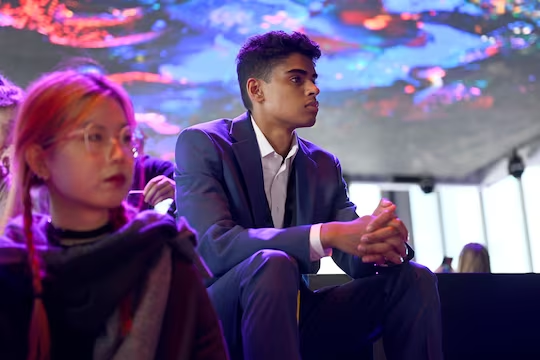
Qureshi’s longtime concerns were thrust into the national spotlight when Meta whistleblower Frances Haugen released documents linking Instagram to teen mental health problems. But as the revelations triggered a wave of bills to expand guardrails for children online, he grew frustrated at who appeared missing from the debate: young people, like himself, who’d experienced the technology from an early age.
“There was little to no conversation about young people and … what they thought should be done,” said Qureshi, 21, a rising senior at American University.
So last year, Qureshi and a coalition of students formed Design It For Us, an advocacy group intended to bring the perspectives of young people to the forefront of the debate about online safety.
They are part of a growing constellation of youth advocacy and activist organizations demanding a say as officials consider new rules to govern kids’ activity online.
The slew of federal and state proposals has served as a rallying cry to a cohort of activists looking to shape laws that may transform how their generation interacts with technology. As policymakers consider substantial shifts to the laws overseeing kids online, including measures at the federal and state level that ban children under 13 from accessing social media and require those younger than 18 to get parental consent to log on, the young advocates — some still in their teens — have been quick to engage.
Now, youth activists have become a formidable lobbying force in capitals across the nation. Youth groups are meeting with top decision-makers, garnering support from the White House and British royalty and affecting legislative proposals, including persuading federal lawmakers to scale back parental control measures in one major bill.
“The tides definitely are turning,” said Sneha Revanur, 18, another member of Design It For Us.
Yet this prominence doesn’t necessarily translate to influence. Many activists said their biggestchallenge is ensuring that policymakers take their input seriously.
“We want to be seen as meaningful collaborators, and not just a token seat at the table,” Qureshi said.
In Washington, D.C., Design It For Us has taken part in dozens of meetings with House and Senate leaders, White House officials and other advocates. In February, the group made its debut testifying before the Senate Judiciary Committee.
“We cannot wait another year, we cannot wait another month, another week or another day to begin to protect the next generation,” Emma Lembke, 20, who co-founded the organization with Qureshi, said in her testimony.
Sen. Richard J. Durbin (D-Ill.), who chairs the panel and met with the group again in July, said that Lembke “provided powerful testimony” and that their meetings were one of “many conversations that I’ve had with young folks demonstrating the next generation’s call for change.”
Revanur said policymakers often put too much stock in technical or political expertise and not enough in digital natives’ lifetime of experience and understanding of technology’s potential for harm.
“There’s so much emphasis on a specific set of credentials: having a PhD in computer science or having spent years working on the Hill,” said Revanur, a rising sophomore at Williams College. “It diminishes the importance of the credentials that youth have, which is the credential of lived experience.”
Revanur, who founded the youth-led group Encode Justice, which focuses on artificial intelligence, has met with officials at the White House’s Office of Science and Technology Policy (OSTP), urging them to factor in concerns about how AI could be used for school surveillance as they drafted a voluntary AI bill of rights.
The office’s former acting director, Alondra Nelson, who led the initiative, said Encode Justice brought policy issues “to life” by describing both real and imagined harms — from “facial recognition cameras in their school hallways [to] the very real anxiety that the prospect of persistent surveillance caused them.”
In July, Vice President Harris invited Revanur to speak at a roundtable on AI with civil rights and advocacy group leaders, a moment the youth activist called “a pretty significant turning point” in “increasing legitimization of youth voices in the space.”
An honor to join @VP (alongside @WHOSTP & @neeratanden) for an AI roundtable with civil society leaders. Never before has a young person had a voice in federal AI policy!
We discussed ChatGPT in the classroom, algorithms & youth mental health, risks from advanced AI, & more. pic.twitter.com/MI0KeONOHG— Sneha Revanur (@sneharevanur) July 18, 2023
There are already signs that those in power are heeding their calls.Share this articleShare
Sam Hiner, 20, started college during the covid-19 pandemic and said that social media hurt his productivity and ability to socialize on campus.
“It’s easier to scroll on your phone in your dorm than it is to go out because you get that guaranteed dopamine,” said Hiner, a student at the University of North Carolina at Chapel Hill.
Hiner, who in high school co-founded a youth-oriented policy group, worked with lawmakers and children’s safety groups to introduce state legislation prohibiting platforms from using minors’ data to algorithmically target them with content.
He said he held more than 100 meetings with state legislators, advocates and industry leaders as he pushed for a bill to tackle the issue. The state bill, the Social Media Algorithmic Control in Information Technology Act, now has more than 60 sponsors.
Last month, Prince Harry and Meghan, Duchess of Sussex, awarded Hiner’s group, Design It For Us and others grants ranging from $25,000 to $200,000 for their advocacy as part of the newly launched Responsible Technology Youth Power Fund. Hiner said he received a surprise call from the royals minutes after learning about the grant.
“As a young person who … has a bit of a chip on my shoulder from feeling excluded from the process traditionally, getting that … buy-in from some of the most influential people in the world was really cool,” he said.
Youth activists’ lobbying efforts are also bearing fruit in Washington.
This summer, Design It For Us led a week of action calling on senators to take up a bill to expand existing federal privacy protections for younger users, the Children and Teens’ Online Privacy Protection Act, and another measure to create a legal obligation for tech platforms to prevent harms to kids, the Kids Online Safety Act (KOSA).
Great to meet young activists with @DesignItForUs this afternoon.@JudiciaryDems are on a mission to protect kids online. These youth advocates have experienced the ills of social media firsthand.
A Senate Democratic aide, who spoke on the condition of anonymity to discuss the negotiations, said the advocates played a key role in persuading lawmakers to exclude teens from a provision in KOSA requiring parental consent to access digital platforms. It now only covers those 12 and younger.
Dozens of digital rights groups have expressed concern that the legislation would require tech companies to collect even more data from kids and give parents too much control over their children’s online activity, which could disproportionately harm young LGBT users.
“We were focused on making sure that KOSA did not turn into a parental surveillance bill,” said Qureshi.
Sen. Richard Blumenthal (D-Conn.), the lead sponsor of the bill, said their mobilization “significantly changed my perspective,” calling their advocacy a “linchpin” to building support for the legislation.
Qureshi and other youth advocates attended a White House event in July at which President Biden surprised spectators by endorsing KOSA and the children’s privacy bill, his most direct remarks on the efforts to date. Days later, the bills advanced with bipartisan support out of the Senate Commerce Committee.
Hiner and other youth advocates said they have worked closely with prominent children’s online safety groups, including Fairplay. Revanur said her group Encode Justice receives funding from the Omidyar Network, an organizationestablished by eBay founder Pierre Omidyar that is a major force in fueling Big Tech antagonists in Washington. Qureshi declined to disclose any funding sources for Design It For Us, beyond its recent grant from the Responsible Technology Youth Power Fund.
Some young activists argue against such tough protections for kids online. The digital activist group Fight for the Future said it has been working with hundreds of young grass-roots activists who are rallying support against the bills, arguing that they would expand surveillance and hurt marginalized groups.
Sarah Philips, 25, an organizer for Fight for the Future, said young people’s views on the topic shouldn’t be treated as a “monolith,” and that the group has heard from an “onslaught” of younger users concerned that policymakers’ proposed restrictions could have a chilling effect on speech online.
“The youth that I work with tend to be queer, a lot of them are trans and a lot of them are young people of color, and their experience in all aspects of the world, including online, is different,” she said.
Studies have documented that prolonged social media use can lead to increased anxiety and depression and that it can exacerbate body image and self-esteem issues among younger users. But the research on social media use is still evolving. Recent reports by the American Psychological Association and the U.S. Surgeon General painted a more complex picture of the dynamic and called for more research, finding that social media can also generate positive social experiences for young people.
“We don’t want to get rid of social media. That’s not a stance that most members of Gen Z, I think, would take,” said Qureshi. “We want to see reforms and policies in place that make our online world safer and allow us to foster those connections that have been positive.”
After a game between rivals Bethesda-Chevy Chase and Walter Johnson high schools, a large group of students gathered near the Bethesda Metro station, where fighting ensued, resulting in “some serious student injuries,” principals of both schools said in a joint statement Saturday. At least one student was taken to a hospital for treatment, a district spokesperson told The Washington Post.
The incident comes nearly a year after Montgomery County Public Schools announced new safety protocols for athletics events, following an on-field brawl that broke out between Northwest and Gaithersburg high schools at a 2022 football game. Under the new restrictions, the audience of Friday’s game at Bethesda-Chevy Chase was limited to students of both schools, with other school-aged children requiring chaperones. But the violence that followed the game points toward the safety challenges that emerge beyond school property.
In their joint statement, Shelton Mooney, principal of Bethesda-Chevy Chase, and Jennifer Baker, principal of Walter Johnson, described the incidents as “dangerous, illegal and completely inappropriate.”
“This is completely unacceptable and will not be tolerated,” the principals said.
Montgomery County police spokeswoman Shiera Goff said officers responded to “several calls” Friday after the game. Extra officers had been assigned to the area, she said in a statement, and they responded to reports of “thefts, robbery and assaults” in Bethesda’s central business district.
A Walter Johnson student filed a report with police Friday night, saying “he was assaulted and had his shoes stolen,” according to the statement. “There are more juveniles coming forward this weekend, reporting that they had also been assaulted,” Goff added.
As of late Sunday afternoon, no arrests had been made, Goff told The Post.
Bethesda students have been texting one another videos of the violent melees that occurred after the game, one student told The Post. Some of the videos are circulating on social media. The Post has not independently verified the authenticity of the videos, which appear to capture short snippets of sometimes-brutal altercations between students.
Chris Cram, a spokesman for Montgomery County Public Schools, said school officials would work with police and Metro security to identify perpetrators.
“The idea of course is to get to the bottom of this,” Cram said. “People were harmed. That can’t happen in the future. This behavior is not to be tolerated.”
Students can be disciplined for violations of the student code of conduct off school property, according to the policy.
Kate Stewart, a Montgomery County Council member, happened to be on a ride-along with police Friday night in Bethesda. She did not directly observe any violence, she said, and was impressed with what she saw of how officers handled the postgame crowd. But Stewart said the school system needs to consider new approaches, which might include a decision to “take a pause from these two schools playing each other.” (Walter Johnson is in District 4, which Stewart represents.)
“What I’m hearing is a lot of shock at the violence that we all witnessed,” Stewart said, “and an insistence that we need to do better next time.”Share this articleShare
‘Everybody is outraged’
Leading up to Friday’s game, students, parents and community members were already bracing for the possibility of violence, several people told The Post. Among them was Lyric Winik, immediate past president of the Bethesda-Chevy Chase High School Parent Teacher Student Association.
This problem has been going on for years, Winik said. Last year, as president of the PTSA, Winik posted a message on the association’s email group about “an epidemic of street fighting in downtown Bethesda” after the school’s football game with Walter Johnson. Winik wrote that she was “frustrated, as a parent, that there hasn’t been much more open discussion in our school community of post-game fighting.” On Sunday, in a message to The Post, Winik expressed frustration that Montgomery County Public Schools do not take more responsibility for off-campus violence after school events.
“For the sake of the students and local residents, I hope MCPS will finally enact a comprehensive game-day safety plan,” she wrote in an email, “extending beyond the technical school borders. If Montgomery County wants community support of its schools, our schools need to commit to being good neighbors in the community.”
Other parents, while similarly disturbed by the violence, credited school administrators with doing their best to improve safety. Rex Garcia-Hidalgo, president of the Bethesda-Chevy Chase Sports Boosters Foundation, said there was a “huge” police presence at the game Friday, which he attended. To reduce the risk of postgame conflicts, Garcia-Hidalgo said B-CC students were instructed to stay in the stadium for about 15 minutes as Walter Johnson fans exited the stadium. (The Walter Johnson Wildcats won the game 21-14.)
“We had a show, and we were giving away free merch, to keep our fans in the stadium,” he said.
Garcia-Hidalgo said he was among the last to leave the game, by which time the crowd appeared to have peacefully dispersed. Then, “these videos started rolling in,” he said.
“And all the kids are in these chat groups — andIsaw it and I was outraged,” he said. “This was really bad. In years past it’s two kids going at it, or groups of one-on-one fights. But this was like a beatdown by a mob on like two or three or four kids — and girls also.”
Hearing from other parents, Garcia-Hidalgo said, “everybody is outraged.” And yet, there is concern that steps that might be taken to mitigate the problem — whether it’s pushing games to earlier in the day or limiting the number of spectators — will punish everyone for the actions of a relative few.
“It’s a very complicated situation,” he said. “I really don’t have a solution.”
Mary Bittle Koenick,president of theWalter Johnson High School All-School Booster Club, has two boys who play football at Walter Johnson. She said that MCPS “has done a good job with the things that are in their control.” Yet, Koenick found the videos from Friday “shocking.” She said she was saddened to think about “what generates this type of action — this type of anger — among the students.”
“I think this goes beyond a school rivalry,” Koenick said.
Christo Doyle, whose daughter is a junior at Bethesda-Chevy Chase, said he has advised her to steer clear of areas where students congregate after games.
“I would like it not to be such a spectacle,” said Doyle, a 1990 graduate of the school, who captained the football team. “I would like the student body of both schools to realize they shouldn’t go and give this fuel.”
Doyle said he hopes the students involved in the violence are held legally accountable. “I think a couple of kids being made examples of,” he said, “is unfortunately necessary.”
A few years ago, Christopher Page Jr.’s Colorado high school was rocked by a spate of student deaths, including three by suicide. So the longtime principal was troubled when he couldn’t fill a school psychologist job for an entire year. Nobody had applied. This summer, he finally hired a budding social worker who was still finishing her last two classes.
He helped get her an emergency license, which was not hard, because there is an emergency.
In his area and elsewhere, the student mental health crisis is unfolding as the nation’s schools face a shortage of counselors, psychologists, social workers and therapists — each problem amplified by the other, and all of them worsening since the pandemic began. “There’s just such an influx of need,” Page said.
“Not only do we have shortages, but we have attrition from the mental health field,” said Sharon Hoover, a professor of child and adolescent psychiatry and co-director of the National Center for School Mental Health at the University of Maryland’s School of Medicine. “So as demand is going up, supply is going down.”
In a moment that seems to plead for creativity, educators are finding new ways to bring support into schools. Some universities are expanding counseling programs, hoping to produce more graduates. Schools are hiring interns and trainees. Some states, including California, are offering scholarships to lure students into mental health professions, while researchers are going back to the basics, rethinking what it means to be a mental-health-care provider.
But the need is immediate and widespread, and services often are not. It would take 77,000 more school counselors, 63,000 more school psychologists and probably tens of thousands of school social workers to reach levels recommended by professional groups before the pandemic hit, those organizations say. Typically, the jobs require a master’s degree, meaning six or seven years of higher education. The pipeline does not flow rapidly.
John R. Weisz, a professor at Harvard University who studies youth mental health, recalled visiting a school with 600 students at which the principal was the lone person working with pupils in distress. Weisz said he’s come across therapy waitlists of five to 10 months in community clinics in the Boston area and elsewhere; some queues were closed because waits exceeded a year.
Even so, the situation is uneven. “There are very rich school districts where there areno problems, and there are a lot of school districts where there’s not even one counselor in a school,” Weisz said.
New options are in the works. At the University of Oregon, a well-regarded psychologist is leading a bachelor’s degree program that creates a new profession — child behavioral health specialist. In California, the state’s plans include hiring wellness coaches and peer support specialists, as part of a multibillion-dollar initiative. In Chicago, the nation’s third-largest school district provided mental health training to 300 school nurses, adding to efforts that include school-based behavioral health teams.
The school mental health workforce needs to be built out, Hoover said. Instead of relying only on clinicians with advanced degrees, the system needs a more expansive approach that uses the skills and training of a wide range of people, she said. “There needs to be something in the middle.”
A 2018 research overview of that idea — often called “task-shifting” — points to challenges in implementation but is positive about the potential. It concludes that the great need and clinician shortage mean that using “nontraditional providers may be the only solution in both low- and high-resource settings, at least in the short term.”
Some question whether mental health issues are too sensitive to be handled by those with less expertise. They worry that those with bachelor’s degrees, or less, may not have adequate training and supervision, or that their well-meaning guidance could be off the mark. “With the crisis that our students are facing, I don’t know if bachelor’s-level individuals have adequate preparation to help students and their families navigate these situations,” said Blaire Cholewa, an associate professor in the counselor education program at the University of Virginia. Others also worry that over time, schools could prefer to hire lesser-trained employees because they do not have to be paid as much.
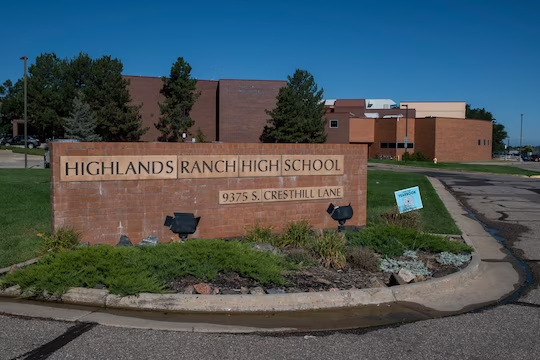
In Colorado, Page, the principal of Highlands Ranch High, was not left entirely in the lurch when he couldn’t fill the psychologist job: He had other clinicians. His school of 1,500 students already had two social workers, a psychologist and seven counselors.
Still, Page found an outside mental health provider who came one day a week — and was always booked. The school also relied on a national suicide prevention program, Sources of Strength. After the traumatic year of fall 2019 to fall 2020 — when, Page said, the school lost three students to suicide, one student to homicide, and three students to accidents or illnesses — its students began organizing a mental health week every spring.
“We’re definitely supporting more kids in more ways than maybe we could have or would have in the past,” said Page. “That’s always good. I’m glad. But is that enough? No. We always want to do more to be better by kids.”
‘A third of the workforce we need’
Surgeon General Vivek H. Murthy recently called the youth mental health crisis “the defining public health issue of our time,” saying that it threatens “the foundation for health and well-being for millions of our children.”
Seventy percent of schools have reported an uptick in students asking for mental health services since the pandemic started. Teenage girls reported record levels of sadness and hopelessness in the most recent surveys conducted by the Centers for Disease Control and Prevention. Nearly 1 in 3 girls reported in 2021 that they seriously considered suicide — up almost 60 percent from a decade ago. Boys are suffering too. Federal data shows a rising rate of suicide from 2020 to 2021 for males, highest among those ages 15 to 24.
But counselors and psychologists are in short supply in some schools. The recommended ratio of no more than 250 students per school counselor is often a distant goal, with the national average 1 for 408 students. Similarly, the standard of 500 students per school psychologist is frequently aspirational. The national average: 1 for 1,127.
With roughly 35,000 psychologists in schools across the nation, “we have about a third of the workforce that we need,” said Kelly Vaillancourt Strobach, director of policy and advocacy at the National Association of School Psychologists.
For child and adolescent psychiatrists, the numbers are worse still, with roughly 10,600 in practice across the country. More than 85 percent of counties in America do not have even one, according to the American Academy of Child and Adolescent Psychiatry.
“As a result of the workforce shortage, pediatricians have become the default mental health provider,” said Sandy Chung, president of the American Academy of Pediatrics. In Virginia, two-thirds of mental health claims in 2019 were made by primary-care clinicians, she said.
A bright spot on the landscape is the Bipartisan Safer Communities Act, which committed $500 million over five years to ramp up the pipeline for school psychologists, counselors and social workers. That money is coupled with a second $500 million for efforts to recruit, retain and train staff for those positions.
The same law steers another$1 billion for school districts to promote safe and healthy learning environments, prevent and respond to bullying, and combat violence and hate. More than 30 states have distributed their money to school districts.Share this articleShare
All told, it’s a historic investment in school mental health, and yet the pipeline moves slowly.
Many school districts steered some of their federal pandemic-relief money to mental health, and that money is drying up over the next year. A number of superintendents who were surveyed said they will need to reduce school specialist staff, which can include those involved in mental health, said Sasha Pudelski, advocacy director of the AASA, the School Superintendents Association.
“I’m really worried about what’s going to happen when government funding runs out after this year because that’s kind of the first thing that gets cut,” said Brett Zyromski, an associate professor and head of the school counselor education program at Ohio State University.
Others vow to keep it going.
The Desert Sands School District in California, for instance, used the money to hire 20 school-based mental health therapists — one for every middle and high school, and some at elementary schools. The district will keep the therapists on its payroll after federal funds are gone, said Laura Fisher, assistant superintendent of student support services.
Still, as school started, four of its 20 positions were open. Hiring remains competitive, Fisher said. “Everyone is looking for them, whether it’s private or public,” she said.
At the district’s Indio High School, Principal Derrick Lawson said group therapy has been critical, bringing together four to 10 teenagers at a time who need help getting through their grief, for instance, or pent-up anger. Last year, as many as 14 groups were going at various times. This year, he expects the same.
“The need is not diminishing,” he said.
Many districts pair up with community mental health providers, who often set up an office at school. Students can get help during the school day, sparing families from transportation glitches and schedule conflicts. Costs are mainly covered by private or government-funded insurance. In a similar way, more schools have also turned to mental health care by telehealth.
To boost the school pipeline, a $5.5 million federal-grant-funded program at the University of Maryland at Baltimore School of Social Work’s Center for Restorative Change will support the recruitment, training and development of 105 social workers a year, particularly those who are African American or Hispanic. Students of color have often lacked resources for higher education, and school social workers have been predominantly White. The program, which also involves Coppin State University and the University of Maryland Baltimore County, aims to produce social workers who will be hired in its partner schools.
Russell Sabella, a professor at Florida Gulf Coast University who heads the school counseling program, said he and others redesigned their master’s degree program. It’s now virtual, with synchronous instruction, an in-person internship and a two-year time frame, rather than three. This year’s class is 25 students, three times as many as last year. “We’ve got students coming in from all over the state, and even those who are local don’t have to worry about things like gas and trying to get off work early,” he said.
At Marquette University in Wisconsin, Alan Burkard’s program is expanding, thanks to a $2.8 million federal grant aimed at preparing students of color to become school counselors — a profession that is overwhelmingly White. Fifty-five students are slated to earn master’s degrees over five years, with the help of tuition assistance and while doing supervised work in Milwaukee-area schools.
Beyond the traditional programs, less-conventional approaches to the shortage are gaining traction.
One is the Oregon program, where Katie McLaughlin, until recently a psychology professor at Harvard, took the helm. The initiative is part of the Ballmer Institute for Children’s Behavioral Health, funded with a $425 million gift by Connie and Steve Ballmer. Steve Ballmer, now a philanthropist, is a former chief executive of Microsoft.
McLaughlin said a few dozen students are already enrolled — to become “child behavioral health specialists” — and will ultimately work under supervision in Portland public schools and other locations, accumulating more than 700 hours over the course of two years.
Ideally, she said, the new specialists will help identify students who struggle sooner and then intervene — reducing the number who require more intensive support later. If fewer children are in need, then existing mental health professionals — psychologists, psychiatrists, social workers — will be better able to meet the demand.
“Our hope is that this is a workforce solution to meet the enormous unmet need for mental health support among children and adolescents,” she said.
Ernesto Leyva, a rising sophomore, was interested fairly quickly, saying the pandemic deepened his interest in mental health. He started college as a psychology major and likes the idea of working in schools. “I wish I had somebody I could talk to when I was younger,” Leyva said.
“If thatprogram is replicated in other universities and becomes popular nationwide, that could create a real revolution in mental health,” Weisz said.
Other efforts could also change the landscape. In California, state officials are creating “wellness coaches” to support students in school and in the community, one part of a more than $4.4 billion effort to “transform” the system of care for children and youth. Wellness coaches will focus on education, individual check-ins, care coordination, crisis referrals and small group sessions.
California is also offering scholarships to students who agree to become school counselors, psychologists or social workers.
And Tony Thurmond, California’s state superintendent of public instruction, said in an interview that his department is assisting in a state effort to hire 10,000 mental health clinicians to support students. He said it was just beginning but has been funded. He did not specify a timeline.
“We’re in a kind of triage moment,” he said. “We know that the counselors aren’t there, but the need is there.”
Alex Briscoe, principal of the California Children’s Trust, said what is happening with children’s mental health care in his state is akin to what happened with physical medicine many years ago,when that workforce expanded to include roles such as nurse practitioner and physician’s assistant.
Mental health care for children and adolescents can take many forms and often is not suited to a standard 50-minute therapy session, Briscoe said. Instead, interventions might look different — for instance, shorter interventions about how to manage anger or frustration, or focusing on relationships or handling the stress of not understanding school work.
Looking at the shortage from another angle, a program from Harvard researchers would give digital mental health training to counselors and others who may not have trained for today’s level of mental-health-care needs, said Weisz, a co-principal investigator. The idea is to bolster resources inside school buildings. But the project — part of a broader program called Empower — won’t be done for another 18 months, he said, and will then require testing.
“The challenge is that the need is immediate, but the process of developing things that are well-tested and known to be effective takes longer than we’d like,” Weisz said.
If you or someone you know needs help, visit 988lifeline.org or call or text the Suicide & Crisis Lifeline at 988.
In the movie “Spider-Man: Into the Spider-Verse,” Miles Morales is 13 when he gets bitten by a radioactive spider. Overnight, his pants are too short, he sweats profusely when he talks to a girl at school, and he’s acutely aware that people are whispering about him in the hallway. As he tries to make sense of his disconcerting new reality, he concludes that “it must be puberty.”
Who could blame the kid for mistaking supernatural superpowers for puberty? In fact, superheroes and tweens have a lot in common. Both begin their journeys feeling like strangers to themselves, and both must learn – through trial and error – how to activate their superpowers.
Combine the turbulence of middle school with the turbulence in the outside world, and it’s no wonder that tweens need superhuman strength to navigate the tougher moments. Here are ways caregivers can help their kids acquire four superpowers that they need to embrace their transformation and recover from any setback.
Super Belonging: The power to find your place and make strong connections
When a well-liked seventh-grade girl told me that she felt too awkward to talk to anyone during recess, I wasn’t surprised. While it may be counterintuitive to kids, even the most popular middle-schooler experiences insecurity. To the girl’s relief, an extroverted classmate offered to act as her “wing girl” and find ways to pull her into conversations.
Research shows that friendships play a powerful role in decreasing middle-schoolers’ stress and improving their health, but connecting with peers is easier for some than for others. To help all kids feel more comfortable in social situations, arm them with concrete strategies.
“Some kids think joining a conversation is just being present, standing next to someone, rather than actually contributing to the conversation, even if it’s only three words,” said psychologist Mary Alvord, author of “The Action Mindset Workbook for Teens.” “Or they may not know what to say.”
Explain that if a peer is talking about sports, for instance, they can ask them about their favorite sport. Alvord teaches kids the “one-minute rule” to help them understand pacing. “You watch and listen to what someone is saying for a minute, then interject with a comment on the same topic,” she explained. Boost their sense of belonging by sharing other practical tips, too, such as making eye contact and listening without interrupting.
If your child tells you they’re lonely, try to determine the root cause. Do they have friends but feel like they’re on the edge of a group — the proverbial third wheel? Are they only lonely at travel baseball practices because they have little in common with teammates who attend a different school? Do they have no one to eat with at lunch? Once you pinpoint the problem, you can help them come up with potential solutions.
Super Security: The power to take pride in your identity
Developmentally, middle-schoolers are tasked with figuring out who they are and whether they’re good enough. That’s exponentially more difficult for today’s tweens, who not only are getting pummeled with unrealistic images and messages, but also growing up in a time of deep division when differences can be dangerous.
To increase the odds that your child will talk to you about their fears and insecurities, be clear that you don’t expect perfection and convey your openness to discussing sensitive topics. “If they don’t want to disappoint you, or they sense that you’re not comfortable having the conversation, they won’t bring it up and may make assumptions about your expectations,” said Erlanger Turner, associate professor of psychology at Pepperdine University in Los Angeles.
You might ask, “What are these expectations you have of yourself, or expectations others have that shape the way you feel about yourself?” Turner said, adding that he sometimes has kids write down the negative thoughts they’re having about themselves. “Then we can challenge them and ask questions like, ‘Has this happened before? What evidence supports these views you have of yourself?’”
Some middle-schoolers are more vulnerable than others, including those who are part of a marginalized group. Research shows that LGBTQ+ teens, for instance, are more than four times as likely as their peers to attempt suicide — not because of their sexual orientation or gender identity but because of how they’re treated and stigmatized in society.
Parents can be a protective buffer. According to the Trevor Project, kids who had “high social support” from their families reported attempting suicide at less than half the rate of those who felt low or moderate social support.
As Turner pointed out, “respecting the individuality of your child is always important for the development of their self-esteem, and acceptance is especially important for [LGBTQ+] teens because they may not be getting that from other places.”Share this articleShare
Super Bounce: The power to learn and recover from missteps
A small setback can stop even the most confident tween in their tracks. To help them work through self-doubt and persist toward a personal goal, teach them to speak to themselves in the second- or third-person, said Jason Moser, a professor of psychology and neuroscience at Michigan State University who studies how distance self-talk facilitates emotion regulation.
You also can help them gain psychological distance by seeking inspiration from a personal hero. Say, “Can you turn to another individual you look up to who acts in a way that’s brave and could make you feel like you can do something?” Moser said.
For instance, a child might ask themselves, “What would LeBron James do if he failed once and had a terrible game and was worried what other people think of him?” Moser said, adding that parents can show kids video clips of athletes talking about what they do when they get stuck in negativity. As he noted, “the athletes talk about banking the past; about putting that thing behind them and focusing on preparing for the next thing.”
Super Balance: The power to set a reasonable pace
In middle school, the pressure ratchets up. Some kids react by being hard on themselves and exhibiting perfectionist tendencies, while others feel weighed down by external expectations.
“Parents, teachers and schools can put pressure on kids to be as perfect as possible academically and athletically, and maybe act in ways that are counter to who they are,” said Robyn Silverman, a child and teen development specialist and author of “How to Talk to Kids About Anything.”
As a result, a middle-schooler might devote so much time to schoolwork and extracurricular activities that they sacrifice sleep. The American Academy of Pediatrics recommends that children ages 6 to 12 should sleep 9 to 12 hours a night, and children ages 13 to 18 should sleep 8 to 10 hours a night. Yet, in middle schools in every state, the majority of students reported getting less than the recommended amount of sleep.
Despite the fact that friendship is everything to kids in this age group, they also might sacrifice spending time with peers. In a 2018 Pew Research Center Survey of 13- to 17-year-olds, roughly 40 percent of teens cited “too many obligations” as a reason that they don’t spend time with friends.
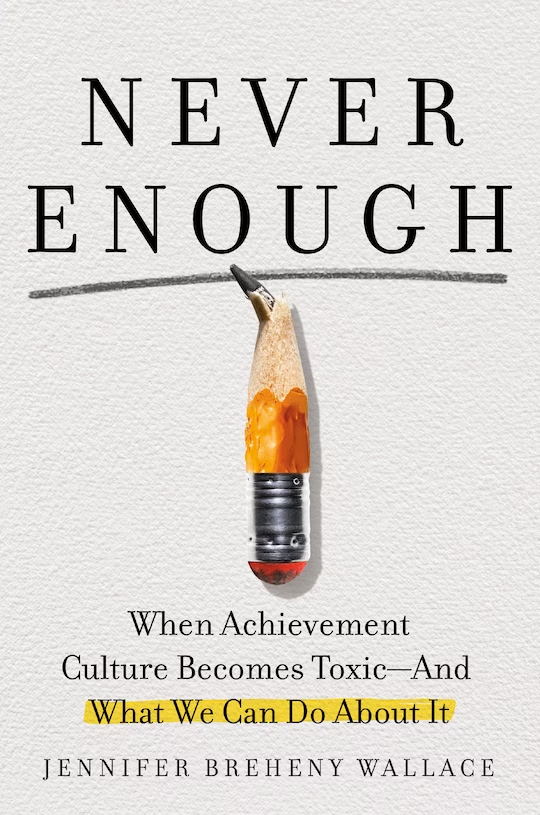
Parents can help create healthy boundaries, said Jennifer Breheny Wallace, author of the book “Never Enough: When Achievement Culture Becomes Toxic — and What We Can Do About It.” In her home, the internet goes off at 11 p.m. “If my kids are not done with the assignment, they know it goes back on at 6:30 a.m.,” she said, adding that she wants her kids to understand that “they’re human, they have limits, and they’re worthy of protection and rest.”
“We sometimes think our job as a parent is to support our kids’ ambition, to be there and drive them to all the places,” Wallace added, “but in a hypercompetitive culture sometimes our kids need the opposite — for us to limit them, even hold them back, to prevent them burning out.”
Every middle-schooler is going to struggle at times to find their place, cope with insecurity, bounce back from disappointment and maintain balance, but that’s what makes it the perfect time to help them hone their superpowers and learn to leverage any setback — from the personal to the global — into resilience.
Several years ago, Jennifer Breheny Wallace noticed research was emerging that showed children who attended “high-achieving schools” were experiencing higher rates of behavioral and mental health challenges. It was so stark that youths in these schools were added to a list of “at-risk” groups, right along with kids living in poverty and foster care, recent immigrants and those with incarcerated parents.
Wallace wrote about this for The Washington Post. But the findings continued to vex her and coincided with the “Varsity Blues” scandal. Parents, she realized, were putting an inordinate amount of pressure on their children to achieve, to take all the AP classes, join all the activities, essentially do whatever it took to get ahead. The results of this are devastating. “How did we get to the point where parents were going to jail?” she wondered, because they were so desperate to get their children into high-end colleges.
At the same time, Wallace’s oldest of three was about to go to high school. “I came to the realization that I had four more years with him at home,” she said. “I wanted to know what I could do … to buffer against it.”
The following answers have been lightly edited for length and clarity.
Q: Along with the research you were seeing, the scandal, and your own family, what did you do to determine this warranted delving deeper?
A: I wanted to make sure this wasn’t just an East Coast-West Coast problem. I worked with a researcher at the Harvard School of Education and developed a survey because I wanted to know if it was everywhere, and what was the hidden landscape parents were feeling, and I was certainly feeling it in my own home. Over 6,500 parents filled it out. I asked parents if they’d be willing to be interviewed, and hundreds reached out.
Q: So you were feeling the toxic achievement culture creeping into your own home?
A: Over the years, I had been noticing and so curious as to why my children’s childhood was so different than my own. Our lives felt so much busier. The weekends felt so much more fractured. Homework was much more intense. The pressure I felt for their success, it felt like it was my responsibility to help them be successful. While my parents encouraged my achievement, it wasn’t front and center in the house. So I interviewed historians, economists, sociologists. Parents are parenting today in a very different economic climate than I grew up in, being raised in the late ’70s and early ’80s. Life was generally more affordable then. Over the past decades, we have seen this ushering in of extreme inequality, a crush of the middle class. It’s been the job of the parent to help our kids thrive when we’re not around, and it’s so much more fraught now. Those pressures we’re feeling, we’re absorbing those fears.
We feel caught. We want to set our children up for success. But parents feel their communities are judging them. But they also just want to be parents and enjoy their kids and enjoy that connection. It’s hard.
Q: Is it impossible for parents to step back and step away from adding to the pressure?
A: Not at all. I wanted to find “healthy achievers,” and I wanted to know if they had anything in common. I found these healthy strivers had a lot in common: It all boils down to this idea psychologists call “mattering.” It’s a psychological construct that’s been around since the 1980s. Kids who felt a healthy level of self-esteem felt like they mattered to their parents, that they felt important and significant. Over the past few decades, researchers have found kids who felt valued for who they were at their core, by their family and friends and communities. These kids were relied on to add meaningful value back; those kids had a high level of mattering that acted like a protective shield. It worked like a buoy that lifted them up and helped them be resilient. Mattering has really changed my parenting and my life.Share this articleShare
Q: How?
A: I used to solve for happiness. I now solve for mattering. If one of my children is acting “off,” I wonder if they’re not feeling valued by me, by friends, by the school community. Or am I not relying or depending on them at home? My son, coming out of covid, wasn’t feeling as connected to his friends as before covid. He was just a little lonelier. Then a few of his friends asked him to join the baseball team. They were short one player, and if he didn’t play, they wouldn’t have a team. The cons were it’s two hours after school every day. He said it would take away from his schoolwork. But he said if he didn’t do it, his friends wouldn’t be able to play. So he did it. Before mattering, I would have maybe said school is the most important thing; baseball would interfere with grades. Instead, I realized we needed to bolster his mattering with friends. Not only did it make him feel valued by his friends, but it also started an upward spiral. He had a deep sense of belonging, and he really mattered.
Q: What other ways has the reporting on the book changed the way you parent?
A: His junior year — he’s now a senior — I made our home a haven from pressure. It was the place to recover. We made a pact that we’d only talk about college stuff once a week on the weekend at a time when he wanted to do it. We’d block out an hour, but we’d usually be done in 15 minutes. So I could just enjoy him in the last two years of him being home. I also prioritized affection. Our teenagers don’t necessarily want us hugging them all the time, but I’d find times when I’d massage his back or just pat his arm.
Q: How are parents doing today?
A: Parents are really anxious. Research tells you that a child’s resilience rests fundamentally in their caregiver’s resilience. That primary caregiver, well-being has to be intact. And adult well-being isn’t what’s being marketed to us. It won’t give us the resilience we need to be first responders to our children. What will is our relationships. The communities I visited, they didn’t have the time and bandwidth to develop friends to be true sources of support, people they could be vulnerable with. We’re told as parents to put our oxygen masks on first. Really what these relationships are is having someone in your life who sees you struggling for breath, and puts that mask on for you.
Q: What can we do?
A: Make home a mattering haven. Let our children know their worth is not contingent on performance. Be careful about criticism; be careful about praise. Get a PhD in your child: What is it uniquely that makes your child tick? Their humor? How collaborative they are? Make that be what you talk about at home.
Parents need to prioritize relationships outside of the home for the benefit of people inside the home. You only need an hour a week of intentional connection with a friend or two for you to get that resilience you need. You need people to see you and love you unconditionally, like you do with your own kids.
Q: What can communities do?
A: Communities can really try to focus on helping kids know they’re needed, that the community depends on them. Ask them to pitch in. Thank them. If you have a neighbor whose son is great with tech, ask them for help. Give kids in your community opportunities to be depended on and relied on.
Q: How can parents ratchet it down if they feel as if they are the only ones in their cohort not pushing for high achievement?
A: There is a silent majority; don’t feel like you’re the only one. Find one or two friends who share your values. That’s all you need. Then you can turn to them when you’re feeling the contagion of stress all around you. Parents see this isn’t working. They want solutions, and I found them in the families I visited around the country.
 Posts by Paul Costello1