Pandemic was bad, but last half century shows steady improvement, particularly in math
Pessimism about American public schools runs deep, particularly with the latest federal sampling tests showing a sharp drop in achievement among 9-year-olds because of the pandemic.
That does not mean, however, that readers are right when they tell me U.S. education has been getting worse for decades. Some people my age say that because we have warm, but only vague, memories of our days in school. The truth is that until covid-19 hit, our schools had been steadily improving for nearly a half century.
University of Buckingham professor M. Danish Shakeel and Harvard University professor Paul E. Peterson have just published their study of U.S. reading and math scores showing significant gains between 1971 and 2017. Math scores grew by nearly four years’ worth of learning and reading scores by nearly one year’s worth of learning during that period.
The two scholars, writing in the journal Education Next based on their recent 87-page article in Educational Psychology Review, also found Black, Hispanic and Asian students improved faster than their White classmates in elementary, middle and high school.
Some reports on American schools have left a different impression. Shakeel and Peterson cite books such as 1994’s “The Decline of Intelligence in America” by Seymour Itzkoff and 2008’s “The Dumbest Generation” by Mark Bauerlein. Those authors argued that American youth were failing to develop basic knowledge and skills because of electronic devices and other bad influences. Bauerlein told me the big problem is the lack of much improvement in high school, which cannot counteract the hours teens pile up on screens in leisure time.
Shakeel and Peterson suggest the rise of achievement during the half century they studied came from improved living standards as well as better schooling. While that was going on, research was revising our understanding of changes in how smart we are.
It was once thought, the two scholars said, that intelligence as measured by IQ tests was “a genetically determined constant that shifted only over the course of eons.” But in the mid-1980s, New Zealand political scientist James Flynn found IQ scores were increasing by three points per decade. Shakeel and Peterson said: “Though Flynn’s work was initially dismissed as an over-interpretation of limited information, his finding was replicated by many others.”
That growth in average intelligence was accompanied by a narrowing of achievement gaps between ethnic groups and income groups in the United States, they said. Over the half century studied, the gap between Black and White students in both reading and math was cut in half. The gains for Black children were largest in elementary school, persisted in middle school and occurred in diminished form through high school.
“It could be due to educationally beneficial changes in family income, parental education and family size within the Black community,” Shakeel and Peterson said. “Other factors may also be in play, such as school desegregation, civil rights laws, early interventions like Head Start and other preschool programs, and compensatory education for low-income students.”
The average performance differences between fourth- and eighth-grade students on the same test are roughly one standard deviation, a common term in statistical analysis. The scholars found elementary school reading scores for White students grew by 9 percent of a standard deviation each decade, compared with growth of 28 percent per decade for Asian students, 19 percent for Black students and 13 percent for Hispanic students.
The scholars said, “Students from low socioeconomic backgrounds also are progressing more quickly than their more advantaged peers in elementary and middle school.”
They said, “Our data consist of more than 7 million student test scores on 160 intertemporally linked math and reading tests administered to nationally representative samples of U.S. student cohorts born between 1954 and 2007.”
The term “intertemporally linked” means the tests were designed to be comparable over time by repeating some of the same questions in different decades, and other techniques. The tests included the U.S. government’s long-term check on school achievement, the National Assessment of Educational Progress (NAEP), and other exams that compare educational results in different countries.
The scholars suggested that math scores improved more than reading during the half century they studied because of different rates of change in different kinds of intelligence. An analysis of 271 studies of IQ published by Austrian researchers Jakob Pietschnig and Martin Voracek in 2015 found that during the previous century, fluid reasoning, which involves math, grew more than crystallized knowledge, which involves reading. Better nutrition and less exposure to contagious diseases among mothers and babies the last 100 years may have given fluid reasoning a boost.
There are other possible connections between the condition of our planet and how we did in fourth grade. The learning loss during the pandemic, for instance, may be linked to factors that caused a world slowdown in intellectual growth during World War II, Shakeel and Peterson said. That huge conflict, they said, brought “both school closures and worldwide disruptions of economic and social progress.”
Overall, the last half century has been mostly good for schools, even if we’re not sure why. Shakeel, Peterson and the many other researchers on whom we depend must wait now to see how quickly we recover from the educational ravages of the coronavirus.
Say hello to your inner critic, the silent voice constantly judging your thoughts and behaviors. Harshly.
In my practice, I hear about its abusive attacks from my patients every day. Sometimes it calls them by name, but it generally prefers the pronoun “you.”
My patients are not a unique group. I’ve never met a person who doesn’t have an inner critic. It “is not volitional, it is already in your nervous system,” says Steven C. Hayes, foundation professor of psychology at the University of Nevada at Reno, and co-developer of acceptance and commitment therapy (ACT). “It’s not going away.”
Its methods may seem harsh, but its intentions are noble. The inner critic is hypervigilant, anxiously scanning the environment for threats. “The inner critic is activated when we’re trying to survive, because it’s trying to keep us alive,” says Kathy Steele, a psychotherapist in Atlanta. “Only, it sees everything as a threat at some point, especially other people.”
Social rejection is a real threat to our survival, and the inner critic tries to protect us by shaming us before someone else might. It attacks to push us to develop characteristics that society rewards, such as competence. It calls us stupid [or fill in the blank] to motivate us to do better.
Are the alarms occasionally justified? Perhaps. “Sometimes it’s emotional wisdom,” Hayes points out.
‘Whose voice is this?’
The inner critic “is built upon and through our experiences over time,” Steele says. The inner critics of many of my patients use the same phrases as a parent would when they were young. When asked “Whose voice is this?” or “Who said this to you?” it can be a lightbulb moment.
Its harshness also can be contextual and dependent on a person’s sensitivity toward being shamed, their mood and the situation. For example, I have patients whose inner critic regularly berates them about their appearance but remains quiet about other issues until a significant stressor appears.
One such stressor was the pandemic. In my practice, I noticed a significant increase in my patients anxiously comparing themselves to friends, colleagues and even strangers about their ability to cope with the demands of family and work. Online, it looked as if everyone else was thriving — learning a language, baking bread, reinventing themselves.
The inner critic uses social comparisons to determine if you need to do more to be socially accepted. Trapped in isolated bubbles without everyday social cues, many an inner critic had people feeling as if they were falling woefully short of elusive goal posts. There were times when nearly every session involved a patient convinced that they were inherently deficient.
The inner critic rarely speaks on matters of life or death, so suppressing or ignoring it can be tempting. That can provide merciful, albeit brief, relief.
Exerting mental and emotional control to suppress a thought, however, takes energy and can result in psychological depletion. Running out of psychological resources not only affects our mood, but can also make us more passive and less persistent, and cause us to struggle with problem solving. Now we’ve given our inner critic even more ammunition to use against us.
How to befriend your inner critic
Rather than trying to suppress negative thoughts,learning to live with the inner critic is an essential skill that we can learn. Here are some strategies that can help.
Name your critic: Many of my patients name their inner critic and create a fictional backstory for it. The inner critic may be a disgruntled relative or a scared child. “What are the benefits of it? Figure out if it’s tapping into parts of your history,” Hayes says.
This strategy involves changing your perspective about the inner critic. The subtle shift of “third personing” the inner critic can be liberating. “Make friends with it. Dialogue with it. Be curious,” Steele suggests.
Offer counterevidence: Cognitive Behavioral Therapy teaches us how to counter negative self-talk. This empirically validated approach capitalizes on holes in the inner critic’s logic. For instance, if your inner voice says, “You’re such a failure,” you should cite examples of success. “I know I’m not a failure. I’m good at my job.”
Be open to painful thoughts and emotions: A recent study by Hayes and others found that being open to painful thoughts and emotions is an important therapeutic tool that accounts for significant change among patients in therapy. “What if you could take a magic pill and erase all of your pain? But you also had to remove the wisdom and values you learned from it?” Hayes asks. “I’ve never had a client who wants to make that bargain.”
Stay mindful: Mindfulness is another powerful distancing technique. “When we hear the inner critic being harsh, we could notice it, recognize it, thank it for trying to help, remind ourselves that we would never say things like that to someone we care about and see if we can be a little more kind to ourselves,” writes Ruth Baer, an emeritus professor of psychology at the University of Kentucky who specializes in mindfulness.
“Practicing mindfulness is like mental exercise,” says Baer, who compares it to physical exercise. “It’s not always fun or comfortable and just doing it a few times won’t have much impact.” But with regular practice, you can reap the benefits. “We learn to respond more skillfully to difficult experiences, and that can lead to a greater sense of peace and calm,” Baer says.
I have recommended apps such as Headspace to my patients as a starting point, and Baer agrees. She also recommends exploring mindfulness-based stress reduction (MBSR) or mindfulness-based cognitive therapy (MBCT) courses. Many centers offer evidence-based courses and free resources online, such as the Center for Mindfulness and Compassion and the Mindfulness and Health Institute.
Use the inner critic for growth: Once understood, the inner critic can be useful. It can, for instance, help us lead a values-driven life. Chronically late people, for example, often experience a harsh inner critic who scolds them for looking bad in front of others and being immature. But if the patient values reliability, they can thank the inner critic for reminding them of this value and start applying time-management skills. In this and other cases, the inner critic brings something important to our attention, and we can use the experience to align our actions with our values.
Are you a mental health professional who would like to contribute to this column? Email OnYourMind@washpost.com
Montgomery County students met the school system’s performance target in reading but fell short of goals in math for the last school year, according to academic data shared with the school board Thursday.
Overall, 71.7 percent of students met academic standards in literacy. That was 5.8 percentage points higher than the goal for the 2021-2022 school year, which was originally set for 65.9 percent.
Math scores were lower, with 61.2 percent of students meetingexpectations; lower than the 64.1 percent target.
The data follows trends seen nationally of students who are continuing to catch up after two years of disrupted learningduring the pandemic, with the district’s economically disadvantaged students and students of colordisproportionately lagging behind.
The academic data presented to the board focused on students in second, fifth, eighth and 11th grades. It was further categorized by race and economic status.The results are a mix of students’ report card grades, district tests and other outside exams — such as state-level exams, AP tests and the SAT. Scores were presented for each of the tests.
Student scores on report cards were higher than those on district tests and outside assessments, the data showed. In math, for example, fifth- and eighth-graders’ report card scores were twice that of the district’s test scores.
During a discussion on math scores, Kisha Logan, director of pre-K through 12th grade curriculum, said district assessments depict a student’s understanding of a topic during a specific moment in time. But report card grades generally reflect a longer period of time, after a teacher has the time to help a student better understand a topic.
Board member Lynne Harris (At Large) saidshe’d heard from teachers that because of the amount of re-teaching that has had to be done, the district’s assessments have tested students on topics they hadn’t yet gotten to in the classroom.
“This is a very common discrepancy that you see in districts,” said board member Scott Joftus (District 3), who is also a consultant for superintendents and school districts across the country. “One thing that I think we need to be careful about is that there’s not a misunderstanding among our educators about what the level of expectation is.”
Joftus added that normally, when data collected directly from the classroom — like the report card data — shows twice the amount of students being successful compared with district assessments, “it means that our expectations are somewhat out of alignment.”
Officials from the school district’s curriculum office said they plan to focus on professional development initiatives for teachers, which would include training on different data tools to monitor student progress. They also use the data to better help students who have a significant need, which could include targeted tutoring before or after school.
An interesting book of research on AmeriCorps that challenges us deeply to think about the mission and the structures that we operate in that often are intended to make us ineffective.
Sara Carpenter Thesis Abstract Over the last twenty years, the academic work on citizenship education and democracy promotion has grown exponentially. This research investigates the United States federal government‘s cultivation of a politics of citizenship‘ through the Corporation for National and Community Service and the AmeriCorps program. Drawing on Marxist-feminist theory and institutional ethnography, this research examines the ways in which democratic learning is organized within the AmeriCorps program through the category of civic engagement‘ and under the auspices of federal regulations that coordinate the practice of AmeriCorps programs translocally.
The findings from this research demonstrate that the federal regulations of the AmeriCorps program mandate a practice and create an environment in which politics,‘ understood broadly as having both partisan and non-partisan dimensions, are actively avoided in formalized learning activities within the program. The effect of these regulations is to create an ideological environment in which learning is separated from experience and social problems are disconnected from the political and material relations in which they are constituted.
Further, the AmeriCorps program cultivates an institutional discourse in which good citizenship is equated with participation at the local scale, which pivots on a notion of community service that is actively disengaged from the State. Through its reliance on these forms of democratic consciousness, the AmeriCorps program engages in reproductive praxis, ultimately reproducing already existing inequalities within U.S. society.
The primary elements of this reproductive praxis have been identified as a local fetish‘ and the democratic management of inequality.‘
The local fetish refers to the solidification of the local as the preferential terrain of democratic engagement and is characterized by an emphasis on face-to-face moral relationships, local community building, and small-scale politics.
The democratic management of inequality refers to the development of discursive practices and the organization of volunteer labor in the service of poverty amelioration, which is in turn labeled good citizenship.‘ This research directs our attention to a more complicated notion of praxis and its relationship to the reproduction of social relations. Also, this research brings into focus the problem of the conceptualization of civil society and its relationship to democracy and capitalism
Final Comments from the Dissertation As I brainstormed elements to include in the conclusion to this thesis, a friend asked me what I hoped my research participants would get from reading this text. In that moment, I had to confront the reality that I have not necessarily written this thesis for them. I have written for myself and for those like me who are struggling with their own understanding of themselves in relation to questions of social justice and transformation; for those who have similarly grown tired of the limits of the progressive imagination and the lack of curiosity they confront in social activism.
That may sound deeply cynical and dismissive, but it was precisely how I felt when I left the United States to pursue this doctoral degree. I felt as though everyone around me was utterly satisfied with the uncomplicated understandings of social life that circulated through leftist‘ politics and that they genuinely wanted a little bit of social change to be enough social change. If being unsatisfied with these limitations is being cynical, then that is fine with me. I hope that students who are interested in political consciousness will take from this work that solutions might also be problems and that doing good‘ is harder than it seems. Also, I hope my readers glean not just the importance of critique, but the importance of critical reflection understood as a dialectical relation between going forward and looking back. Perhaps I will concede that Dewey might have been right on that point.
Because of this, I hope that my research participants will think critically about the many paradoxical elements I have attempted to hold together in this research. Perhaps some will feel that I have not accurately represented their experience because my window into this world was partially obscured by my own position. I suspect others will feel I have said things that needed to be said.
If these research participants go on to do what Obama, Bush, and Clinton have envisioned that they might, that is lead long lives of public service, I hope they will understand that the conditions of their work are not natural or neutral, but political constructions. That everything around them is a contestation of power. That they, who so earnestly hope to do good, are engaged in class struggle, whether they like it or not. I hope that they understand that their year of service was not pointless or worthless; important learning can come from the experience of volunteerism. I am evidence of that fact and I saw many of my research participants grow and deepen in their intellectual and emotional engagement over the course of the six months I spent with them.
I hope that they remember that their discomfort and unease about their own work and their own place in the world is an important thing to hold on to. I remember that one day, in one group, we discussed that if you hurt yourself you feel pain; your body is telling you something is wrong. If you go to serve at the homeless shelter and you feel guilty, your body is telling you that something is wrong. I hope they will take seriously what Lillian Smith (1946), another of my heroes, said about society‘s struggle to transform itself
: “Always the conscience hurt; always 298 there were doubts and scruples; always hate was tempered with a little love, and always folks were inconsistent…ideals seemed to be dead, but at least their ghosts haunted men‟s [sic] souls” (P. 68)
Dr. Carr is an assistant professor at the Institute for Society and Genetics at U.C.L.A. Sept. 20, 2022 New York Times Sep 20th 2022
What if the cure for our current mental health crisis is not more mental health care?
The mental health toll of the Covid-19 pandemic has been the subject of extensive commentary in the United States, much of it focused on the sharp increase in demand for mental health services now swamping the nation’s health care capacities. The resulting difficulty in accessing care has been invoked widely as justification for a variety of proposed solutions, such as the profit-driven growth of digital health and teletherapy start-ups and a new mental health plan that the Biden administration unveiled earlier this year.
But are we really in a mental health crisis? A crisis that affects mental health is not the same thing as a crisis of mental health. To be sure, symptoms of crisis abound. But in order to come up with effective solutions, we first have to ask: a crisis of what?
Some social scientists have a term — “reification” — for the process by which the effects of a political arrangement of power and resources start to seem like objective, inevitable facts about the world. Reification swaps out a political problem for a scientific or technical one; it’s how, for example, the effects of unregulated tech oligopolies become “social media addiction,” how climate catastrophe caused by corporate greed becomes a “heat wave” — and, by the way, how the effect of struggles between labor and corporations combines with high energy prices to become “inflation.” Examples are not scarce.
For people in power, the reification sleight of hand is very useful because it conveniently abracadabras questions like “Who caused this thing?” and “Who benefits?” out of sight. Instead, these symptoms of political struggle and social crisis begin to seem like problems with clear, objective technical solutions — problems best solved by trained experts. In medicine, examples of reification are so abundant that sociologists have a special term for it: “medicalization,” or the process by which something gets framed as primarily a medical problem. Medicalization shifts the terms in which we try to figure out what caused a problem, and what can be done to fix it. Often, it puts the focus on the individual as a biological body, at the expense of factoring in systemic and infrastructural conditions.
Once we begin to ask questions about medicalization, the entire framing of the mental health toll of the Covid crisis — an “epidemic” of mental illness, as various publications have called it, rather than a political crisis with medical effects — begins to seem inadequate.
Of course, nobody can deny that there has been an increase in mental and emotional distress. To take two of the most common diagnoses, a study published in 2021 in The Lancet estimated that the pandemic had caused an additional 53.2 million cases of major depressive disorder and 76.2 million cases of anxiety disorder globally.
Let’s think about this. The fact that incidences of psychological distress have increased in the face of objectively distressing circumstances is hardly surprising. As a coalition of 18 prominent mental health scholars wrote in a 2020 paper in The Lancet: “Predictions of a ‘tsunami’ of mental health problems as a consequence of [Covid] and the lockdown are overstated; feelings of anxiety and sadness are entirely normal reactions to difficult circumstances, not symptoms of poor mental health.”
Things get even less surprising when you look more closely at the data: If you bracket the (entirely predictable) spike in psychological distress among health care workers (a fact that itself only reinforces the idea that the major causal vectors in play here are structural), the most relevant predictors of mental health are indexes of economic security. Of course, it’s not simply a question of the numbers on your bank statement — although that is a major predictor of outcomes — but of whether you live in a society where the social fabric has been destroyed.
Before we go further, let me be clear about what I am not arguing. I am not arguing that mental illnesses are fake, or somehow nonbiological. Pointing out the medicalization of social and political problems does not mean denying that such problems produce real biological conditions; it means asking serious questions about what is causing those conditions. If someone is driving through a crowd, running people over, the smart move is not to declare an epidemic of people suffering from Got Run Over by a Car Syndrome and go searching for the underlying biological mechanism that must be causing it. You have to treat the very real suffering that is happening in the bodies of the people affected, obviously, but the key point is this: You’re going to have to stop the guy running over people with the car.
This principle is what some health researchers mean by the idea that there are social determinants of health — that effective long-term solutions for many medicalized problems require nonmedical — this is to say, political — means. We all readily acknowledge that for diseases like diabetes and hypertension — diseases with a very clear biological basis — an individual’s body is only part of the causal reality of the disease. Treating the root cause of the “epidemic” of diabetes effectively, for example, would happen at the level of serious infrastructural changes to the available diet and activity levels of a population, not by slinging medications or pouring funding into clinics that help people make better choices in supermarkets filled with unregulated, unhealthy food. You’ve got to stop the guy running over people with the car.
But if the public health consensus around diabetes has shifted somewhat in response to what we know, it’s been remarkably hard to achieve the same when it comes to mental health.
Psychiatric sciences have long acknowledged the fact that stress is causally implicated in an enormous range of mental disorders, referring to the “stress-diathesis model” of mental illness. That model incorporates the well-documented fact that chronic stressors (like poverty, political violence and discrimination) intensify the chance that an individual will develop a given diagnosis, from depression to schizophrenia.
The causal relationship may be even more direct. Remarkably, all throughout decades of research on mood disorders, scientists doing animal studies had to create animal models of anxiety and depression — that is, animals who showed behaviors that looked like human anxiety and depression — by subjecting them to weeks or months of chronic stress. Zap animals with unpredictable and painful shocks they can’t escape, force them to survive barely survivable conditions for long enough, put them in social situations where they are chronically brutalized by those higher up in the social hierarchy — and just like that, the animals will consistently start behaving in a way that looks like human psychopathology.PART I
This doesn’t mean that all psychiatric symptoms are caused by stress, but it does mean that a whole lot of them almost certainly are. There is increasingly strong evidence for the idea that chronic elevation of stress hormones has downstream effects on the neural architecture of the brain’s cognitive and emotional circuits. The exact relationship between different types of stress and any given cluster of psychiatric symptoms remains unclear — why do some people react to stress by becoming depressed, while others become impulsive or enraged? — indicating that whatever causal mechanism exists is mediated by a variety of genetic and social conditions. But the implications of the research are very clear: When it comes to mental health, the best treatment for the biological conditions underlying many symptoms might be ensuring that more people can live less stressful lives.
And here is the core of the problem: Medicalizing mental health doesn’t work very well if your goal is to address the underlying cause of population-level increases in mental and emotional distress. It does, however, work really well if you’re trying to come up with a solution that everybody in power can agree on, so that the people in power can show they’re doing something about the problem. Unfortunately, the solution that everyone can agree on is not going to work.
Everyone agrees, for instance, that it would be good to reduce the high rate of diabetes plaguing the United States. But once we begin to de-medicalize it, diabetes starts to look like a biological problem arising from a vast swathe of political problems: transportation infrastructure that keeps people sedentary in cars, food insecurity that keeps a racialized underclass dependent on cheap and empty calories, the power of corporate lobbies to defang regulations, and so on. These are problems that people do not agree on how to solve, in part because some are materially benefiting from this state of affairs. This is to say, these are political problems, and solving them will mean taking on the groups of people who benefit from the status quo.
That the status quo is once again benefiting the usual suspects is all too obvious in the booming market of V.C.-backed mental health tech start-ups, which promise to solve the crisis through a gig economy model for psychiatric care that has been criticized for selling psychiatric medication irresponsibly, with little accountability.
But even publicly funded solutions risk falling into the trap of medicalizing a problem and failing to address the deeper structural causes of the crisis. President Biden’s plan for mental health, for instance, makes many genuflections to the language of “community” and “behavioral health.” A section outlining a plan for “creating healthy environments” makes a great show of saying the right things, including: “We cannot transform mental health solely through the health care system. We must also address the determinants of behavioral health, invest in community services and foster a culture and environment that broadly promotes mental wellness and recovery.”
But then the plan goes on to focus on several proposals aimed at regulating social media platforms — a strange target that seems relevant only in a downstream way from major infrastructural determinants of health, like wealth inequality and public services — until you remember that it’s one of the few policy goals that both Democrats and Republicans share.
Sure, parts of the proposal do seem to offer genuinely needed care. For instance, a proposal to establish scores of behavioral health clinics that can offer subsidized substance use treatment like methadone tapering is an exigently needed — if depressingly belated — response to the phenomenon of mass opiate addiction pushed by corporations like Purdue Pharma and Walgreens.
But despite the fact that much of the proposal seems to have been drafted with the opiate addiction crisis in mind, the billboard-size implications of the so-called opioid epidemic seem to have failed to register. It is hard to imagine a clearer demonstration of political conditions undergoing the reification switch into a medicalized epidemic than what everyone now knows happened: The despair of the post-industrial underclass was methodically and intentionally milked by pharmaceutical companies for all it was worth. It was so obvious that at last even a political establishment that remains largely indifferent to the poor eventually had to get around to sort of doing something.
And yet when the plan addresses suicide, it focuses on crisis intervention — as if suicide were a kind of unfortunate natural occurrence, like lightning strikes, rather than an expression of the fact that growing numbers of people are becoming convinced that the current state of affairs gives them no reason to hope for a life they’d want to live.
The proposal’s main plan to address the so-called epidemic of suicide has been the rebranding of a national suicide hotline — which will encourage callers on the brink of killing themselves to refrain from doing so, and may or may not connect them to resources like three cognitive behavioral therapy sessions (most likely conducted through teletherapy) that insurance companies will be required to cover for their customers — depending on what the state the caller is in has decided about funding. (Like all of Biden’s proposal, the plan is yet to be passed into law.) It’s not so much that the hotline is a bad idea; it’s that the sheer scale of failure to comprehend the political reality that it displays, the utter inability to register how profoundly the “suicide epidemic” indicts the status quo, is ultimately more terrifying than outright indifference. It’s worth recalling that in the 2016 presidential election, even though Hillary Clinton touted a “suicide prevention” campaign plank, communities most affected by so-called deaths of despair voted overwhelmingly for Donald Trump, who addressed, however disingenuously, their economic situation and promised to bring back jobs.
Solving the mental health crisis, then, will require fighting for people to have secure access to infrastructure that buffers them from chronic stress: housing, food security, education, child care, job security, the right to organize for more humane workplaces and substantive action on the imminent climate apocalypse.
A fight for mental health waged only on the terms of access to psychiatric care does not only risk bolstering justifications for profiteering invoked by start-ups eager to capitalize on the widespread effects of grief, anxiety and despair. It also risks pathologizing the very emotions we are going to need to harness for their political power if we are going to win solutions.
Danielle Carr is an assistant professor at the Institute for Society and Genetics at U.C.L.A. She is working on a book about the history of neuroscience.
But many Americans didn’t actually see it — apart from, for some, the effects on their own families. We didn’t see moments like these:
A 7-year old Black boy in St. Louis, unable to access a working computer at home, starts skipping remote school in May 2020. Instead, he dons his red school uniform polo and heads to a Family Dollar store, where he pretends to be an employee, holding doors and carrying bags. He uses his tips to pay for meals.
PublicAffairs
In New Jersey, a kindergartner is missing his school friends so much by the end of the 2019-2020 school year that he stops eating. His parents tell him he cannot leave the table until he finishes his food, and things seem to improve — but then his mother, suspicious of the boy’s ever-thinner cheeks, goes through the trash and discovers he has been secretly spitting his small bites of waffles, sandwiches and broccoli into napkins.
“He was, like, just lying in his bed,” the boy’s mother recounted later. “My baby. Saying he would just rather die, over and over and over again.”
As kids head back to school in this third year of the pandemic, Kamenetz has given us an essential read for anyone who wants to understand how American schools and schoolchildren fared in the early days.The book also investigates the historical factors, blatant inattention, and racist and sexist world that had shaped America’s public school and child-care systems into what they were by the time the virus began closing schools across the country in March 2020. Kamenetz documents how America has long failed to invest in its schools, leaving some lacking basics such as soap, paper towels and running water when the virus arrived; how the nation’s refusal to invest in child care or offer paid family leave created a teetering, unequal system that crashed, flattening many mothers, when schools shuttered; and how the structure of special education, designed to pit parents against school systems, forged an even more bitter relationship between families and districts at the height of the pandemic, when mutual support and understanding were needed most.
“It is entirely possible that when all is said and done, districts and states end up spending more money fighting families in court over COVID-related denial of services, and on paying families’ legal fees when they lose, than they spend on the services themselves,” Kamenetz writes. “Meanwhile, months become years and children grow up.”
She analyzes how America performed compared with peer nations, noting that we kept schools closed longer than many parts of the Asia Pacific did and that, unlike Europe, Britain and Israel, we prioritized reopening other institutions — bars, restaurants, businesses — ahead of the places where the next generation is supposed to go to learn.
She also offers thought-provoking, clear-eyed insights into the way systems and people functioned, and did not function, during the pandemic. For example, she asks us to think of the virus’s effects on children “as being like the climate crisis. More heat stress, more energy going into the atmosphere raises the likelihood and the intensity of individual disasters like wildfires and floods. … In the same way, [the pandemic] raised the background conditions that made ACEs [adverse childhood experiences] more numerous and more severe, especially for children who are already vulnerable.”
She breaks the fourth wall to make another salient point: “More than nine out of ten of the researchers, advocates and other experts I talked to for this book were women. Because that’s who tends to study children. And a great number of those women were raising children themselves. At the time when the country needed voices like [theirs] the most, their capacity was limited by the same catastrophe that was affecting everyone else.”
To her credit, Kamenetz has no desire to play the blame game. Rather than deploy a favorite argument of the right — that left-leaning parents, school officials and teachers’ unions were responsible for school closures — or entertain progressives’ assertions that virus-denying, Trump-supporting proponents of school reopening did not care much whether teachers lived or died, Kamenetz takes a more balanced view.
“These decisions shouldn’t have been left up to districts in the first place,” she writes. “They were mired in political battles. They had little relevant expertise to judge incomplete and emerging evidence.”
Still, the book is at times confusing, leaping backward and forward in time despite its ostensible division into sections labeled “Spring 2020,” “Summer 2020” and so on. The plethora of expert, parent and student voices from across the country can be overwhelming — and sometimes I wished for more direct quotes and thoughts from the children she interviewed, rather than summaries of their parents’ perspectives.
There is a slight overemphasis on history for a book that Kamenetz promises, in the introduction, will tell “the story of 2020 and 2021 in the words of children and teenagers from around the country.” Occasionally, the book also suffers from clumsy writing — for example, a triply mixed metaphor in which Kamenetz declares that the “politics of childcare” is a “field … crisscrossed with bright lines and third rails, like one of those laser mazes in a heist movie.” Elsewhere, she jarringly interjects, in mockery of a senator’s statement, “Hahahaha that’s a sweet thought, guy.”
The book is at its best when Kamenetz’s human reporting is allowed to dominate the page. These moments will stick with me most:
The teacher in Brooklyn who realized the school system wasn’t fulfilling its promise of deep cleaning when she drew in pencil on a desktop, then arrived the next morning to discover it hadn’t been wiped away overnight.
The 11-year-old autistic, dyslexic boy in San Francisco who, frustrated by his inability to learn on Zoom, begged of his parents: “I want to die. I wish I could kill myself. I want you to kill me!”
The teenager on an Oklahoma reservation who lost his scholarship when his grades slipped during online learning — rendering him unable to accept the offered spot at his dream school, Oklahoma State. When the teen’s mother and Kamenetz showed up at the Sonic restaurant where he worked, he refused to acknowledge them.
“May I please take your order?” was all he would say. He didn’t want to talk about it.
Hannah Natanson is a Washington Post education reporter.
It was a cold day in January 2019, and Heidi, who was 6 years old, was ready for her first day of school in the United States. Her father, Jorge, woke up early to help her with her hair and pack her lunch. Jorge and Heidi had migrated from Guatemala to the United States in 2018. (I am using their first names only because of their vulnerable and changing immigration status.) Upon arrival at the Mexico-U.S. border, they were separated. For more than two months Jorge was in Texas while his daughter was 1,700 miles away in New York City.
Like many immigrant parents, Jorge’s greatest goal is to provide a better life for Heidi. And like many immigrant parents, he believes that American schools promise Heidi the opportunity for that better life. For Jorge, after the hardship of the journey north and the trauma of family separation, school offers hope.
Before Heidi headed to school that morning, Jorge took pictures of her in her dress, tights and puffy silver coat. They waited at the bus stop, looking nervous but feeling excited. Heidi spoke mostly Spanish and a little English. She was headed to a bilingual program where one of her teachers spoke Spanish. Jorge was hopeful. Heidi was hopeful.
Over 18 million children in the United States — one in four children — were born in another country or have at least one parent who was. For the last 12 years I have focused on understanding the trajectories of Latin American immigrant families in the United States. Immigrant parents describe education and schooling as among the most important benefits of migrating to the United States. Leaving home and risking the treacherous, expensive journey north is often partly motivated by the promise that U.S. schools hold for children. To migrate is to care.
The promise of education, however, became precarious in March 2020, when school closures and remote learning measures were implemented to curtail the spread of the coronavirus. These measures disadvantaged immigrant children. Their parents were unfamiliar with the school system and often faced language barriers — which posed challenges to navigating distance learning.
In addition, the pandemic compromised many in-person school support structures that immigrant students depend on, such as English-language instruction, speech therapies, reading support, social work check-ins and other forms of counseling. Between 2020 and 2021, many immigrant parents struggled to navigate their vulnerable immigration statuses and a health crisis while continuing to work outside their homes in essential services.
With school buildings open again, educators now must focus on welcoming immigrant students and families to their classrooms, providing in-person language support and, most important, learning from these families’ experiences.
When an immigrant child arrives in an English-speaking classroom without many English-language skills, research shows that the most important factors are the teacher’s mind-set, access to adults who speak the child’s language and the overall environment of the school. Some educators perceive immigrant families negatively because of cultural and language differences: They focus on what immigrant children don’t know and don’t have, as opposed to what they do know and what they bring to the classroom. A deficit-oriented view can lower educators’ expectations of immigrant children, which in turn can make it harder for those children to succeed academically. Classrooms where teachers celebrate immigrant students’ languages and cultures in meaningful ways provide a safe space for children to grow.
Language connects school and home. Any communication materials — letters sent home, emails from teachers, phone calls from nurses, signage on school walls — in languages other than English allow immigrant families to get closer to schools and educators. Bilingual or multilingual programs, teachers trained in language learning, counselors, nurses and school psychologists who speak languages that the children speak all increase trust between families and schools.
But perhaps the most effective way to provide an environment that allows for children to flourish, learn and develop is to understand the specific vulnerabilities of immigrant families in the United States. In other words, to care. Teachers in many schools have done just that. From creating WhatsApp group chats with families to engaging in parent-teacher conferences over FaceTime, teachers are meeting parents and children where they are. Some immigrant parents work in low-paying, unstable jobs, leaving them with little time to physically go to schools. There is also a general hesitance to trust the bureaucratic structure of schools because of immigrant families’ vulnerable immigration statuses. There is fear that sharing their stories, physically being in school buildings and signing school forms could hurt their asylum cases or compromise their undocumented status.
Educators in schools with high rates of immigrant student enrollment are learning about immigration laws and how those laws affect the families their districts serve. This knowledge makes authentic relationships possible.
Our society benefits as a whole when educators support immigrant students. When implemented with care, multicultural and multilingual curriculums engage students in constructive dialogue, prioritizing the human experience and genuine learning. Schools aren’t only about the hopes of individuals but also the larger hope that we can create an inclusive and just society where people of all sorts of backgrounds can thrive.
Heidi had a great first day of school that January in 2019. She mentioned the colorful classroom, the teacher speaking to her in Spanish, and her excitement about having books to bring home. It took Jorge a couple of months to trust Heidi’s teacher enough to tell her the story of their migration. Heidi had already written some stories and made drawings about Guatemala, the border and living in the United States at school.
When the pandemic hit a year later, Jorge’s hopes for school as a place of opportunity shattered. Like many children, Heidi had a hard time engaging in remote schooling. The Wi-Fi connection was unstable at home, she missed the social aspect of learning among peers and Jorge contracted the coronavirus, resulting in a three-week stay at a hospital.
Eight months later, when Heidi was able to go back to school in person, she and Jorge felt the nervousness of that January day again. But Heidi came home from her first day back and told her father that there were other students in her class who also were from Guatemala. Heidi was excited she got to use Spanish and English with her friends. She was enthusiastic about helping them find the library and gave them tips about when and how to use the bathroom at school. Heidi was hopeful.
Gabrielle Oliveira is an associate professor of education and Brazil studies at the Harvard Graduate School of Education. Her work focuses on family migration, care structures and the educational trajectories of immigrant children in the United States. She is the author of “Motherhood Across Borders: Immigrants and Their Children in Mexico and in New York City.”
Kimberly Wilson’s TikTok videos often begin with the back of a little girl’s head. The child’s hair is matted, and Wilson, who works at Butcher-Greene Elementary in Grandview, Mo., begins to gently comb out the snarls. By the end of the videos, which tend to be just a minute or two long, the girl’s hair has been transformed into a beautiful braided style, often with colorful bows adorning it.
Wilson, who posts under the handle @ms.honey.vibes, is careful to obscure the children’s identities and never shares specific details of their struggles. Butcher-Greene is a Title I school, which means that it receives federal assistance because a high number of its students come from low-income families. Over 80 percent of its nearly 300 students qualify for free or reduced-price lunches.
Wilson told me that some of her students are dealing with unstable and even violent home lives, and they see things outside of school a child should never have to see. She started making videos of the children before she even had a TikTok account, because she wanted to show them how to do their own hair at home if the adults in their lives weren’t capable of helping them care for it.
Hair care isn’t part of Wilson’s job description. As a behavior intervention specialist, she provides support to teachers when students are struggling. She gives children breaks from the classroom when they act out, and helps them work on their emotional regulation. “We’ll either remove the student to work on skills or remove the students to have a sensory break,” she explained. Wilson has mats and beanbag chairs in her room, where children can rest when they are exhausted or overwhelmed.
She does hair in any spare moments she can grab. Since her TikToks started going viral, other educators have reached out to her to say they do similar care work for their students. Wilson highlighted a fourth-grade teacher in Alabama named Carey Arensberg who has a “care closet” filled with toothbrushes, deodorant, hair ties and food for kids in need. Wilson has been able to install a washer and dryer in her school building, thanks to donations from her TikTok followers, so that children without clean clothes can do laundry.
This kind of crucial support for children is something that happens every day in schools. When the pandemic began in 2020 and schools shut down, children did not just miss out on academics. They missed out on essential care from trusted adults outside their homes. I’m not just talking about child care for working parents, though of course schools do provide that, to an extent (still, the American school day doesn’t mirror typical parents’ working hours). I’m talking about a full spectrum of physical and emotional support, what Lauren Bauer, a fellow in economic studies at the Brookings Institution and the associate director of the Hamilton Project, who researches education and safety net policies, described as “stability and relationships.”
Dig deeper into the moment.
“Schools served a vital function in protecting our most vulnerable kids,” said Bauer. This function may have been obscure to many people who don’t frequently interact with the public education system. But when schools closed for months, “we no longer had that window into children’s lives. The screening — not just for glasses but for trouble at home; the observation that a child is falling asleep at their desk, or seems hungry or lacks an appetite,” she said.
Before the pandemic, more than 29 million children received food from the National School Lunch Program and around 15 million received food from the School Breakfast Program on a typical day, according to the U.S. Department of Agriculture. And according to Census Bureau data for 2020, the most recent year for which information is available, the median estimated poverty rate for school-age children was around 13 percent.
This lapse in care for many children happened before the pandemic, in a smaller way, every summer break: As the nonprofit campaign No Kid Hungry noted in 2016, “Research shows that family grocery costs rise more than $300 a month when school is out and school meals disappear, putting a strain on already tight budgets.”
But once the coronavirus quarantines hit, it was a true disaster. “Between March and May of 2020, the rate of food insecurity tripled in the United States; by May, one-fifth of mothers were struggling to feed their children — the highest rate since such data became available in 2001,” according to Karina Piser in The Nation.
What seems missing from a lot of the culture war wrangling over the implementation of “social-emotional learning,” or SEL — a curriculum meant to help bolster students’ emotional regulation and relationship skills — is the acknowledgment that emotional stability and academic achievement are inextricably linked. And that link is not new. Wendy A. Paterson, the dean of the School of Education at Buffalo State College, who has been an educator for 40 years and now trains educators, said that it has always been her experience that the whole child matters. “If you were a really well-prepared teacher, you were also sensitive to the fact that these are human beings in progress, and that schools have such a great influence,” Paterson said.
For example, it is much more difficult to learn if you’re crushed from grieving a parent or caregiver who died from Covid, a fate suffered by roughly one in 450 American children by the end of 2021. As the report “Hidden Pain: Children Who Lost a Parent or Caregiver to Covid-19 and What the Nation Can Do to Help Them,” from a group of health, economic and education experts, points out, “The traumatic loss of a caregiver has been associated with depression, addiction, lower academic achievement and higher dropout rates.” Nonwhite children lost caregivers at “up to nearly four times the rate of their white peers,” the report notes — a “grim reality.”
While “kids are incredibly resilient,” Paterson said, after being out of school for a prolonged period of time, “we were getting kids coming back who were just unable to work with other kids, to integrate with other kids and speak with them appropriately.”
What’s the most important thing school offered you? How did it influence your life, either in the long term or the short term?Continue »
When The Times polled over 300 school counselors in May, 88 percent of them said that students were having more trouble regulating their emotions than they did before the pandemic. This is a stark reminder for everyone that “we have got to go back to the notion that the classroom is a place for the development of people, and not just for the dissemination of curriculum,” as Paterson said. Ideally, we would live in a country where kids had their basic needs met by their parents or their close communities, and schools did not have to play such a vital and expansive role in children’s emotional lives. But we don’t live in an ideal world, and the more places children can learn to be empathetic humans, the better.
As Kimberly Wilson told me, what she’s doing for these children “goes so much further than just hair.” All the children in her school know that she only does hair for the kids who really need it, so they have started looking out for one another. They will bring her the children who need help. When the children walk in the room with their new hairstyles, their classmates shower them with compliments. “It’s starting to come full circle with our babies,” Wilson said. The children are seeing their teachers act with care and compassion, and they are giving it back to one another. If that’s not an essential schoolroom lesson, I don’t know what is.
In one word, how does it feel to be a teacher right now?
These 12 Teachers Don’t See Themselves as Superheroes
Give this article
Across the United States, education has become one of the hottest and most keenly felt political issues. Ever since the Covid pandemic began, governors, mayors, union officials, legislators and school board members have been arguing — often quite fiercely — about fundamental questions: When should schools reopen? What should be taught there? What is the purpose of public education? Who should decide these questions?
Once pretty much everyone was back in school — an uneven process that took place at different rates in different areas and in different types of schools — another set of questions emerged: How far behind had students fallen academically? How could they catch up? What about their social and emotional development, which also seemed to be lagging?
Nearly everyone had an opinion, but it sometimes seemed that one of the most important constituencies in this discussion was left out: teachers. As part of Opinion’s “What Is School For?” package, we asked a dozen public school teachers from elementary, middle and high schools to talk with us about teaching during a pandemic, trying to meet students’ academic and social needs and being caught between parents and politicians.
Like a lot of people in America, they were worried. “I find we don’t even have the art of conversation anymore,” one of the teachers said. “My students can’t talk to each other.” Teacher after teacher talked about how much harder the job has gotten over the past few years. “I just feel like I have an endless to-do list,” one said. “I understand that everyone should have a say,” another pointed out. “But oftentimes, there’s a lot of collision there.”
The teachers we gathered spent an hour and a half talking through these collisions with one another — which policymakers and parents would benefit from digging into — but they also took the time to talk about what inspired them to become teachers in the first place and what, despite all the difficulties, is keeping them in the classroom.
“Our school district has seniors write a letter to a teacher that’s impacted them, an elementary or a middle school teacher that’s impacted them,” one teacher told us. “And when you get a letter from a student saying, ‘I hated going to the library at the beginning of the year, but after taking your reading class and reading better, I love to go to the library, and I might write a book myself one day.’ I mean, that’s why I do it.”Aaron Retica and Adrian J. RiveraMr. Retica is an editor in Opinion. Mr. Rivera is an editorial assistant in Opinion.PARTICIPANTS
Stacey55, Democrat, Black, special area teacher
Brandie38, independent, Black, elementary school teacher
Jill35, Democrat, white, elementary school teacher
Carlotta35, Democrat, Latino, elementary school teacher
Bobbie48, Democrat, Asian, special education teacher
Dan55, independent, white, high school teacher
Shannon54, Democrat, white, middle school teacher
Laura49, Republican, white, high school teacher
Mary37, Democrat, white, elementary school teacher
Jessie37, Democrat, white, high school teacher
Tyler35, Republican, white, middle school teacher
David55, independent, white, high school teacherTRANSCRIPTModerator, Margie Omero
If you had to describe your biggest concern about the United States in a single word, what would it be?
Jill, 35, Democrat, white, elementary school teacher
Inequitable.
Jessie , 37, Democrat, white, high school teacher
Extremists.
Dan, 55, independent, white, high school teacher
Polarized.
Shannon, 54, Democrat, white, middle school teacher
Divided.
Brandie, 38, independent, Black, elementary school teacher
Unbalanced.
Tyler, 35, Republican, white, middle school teacher
Corruption.
Carlotta, 35, Democrat, Latino, elementary school teacher
Lacking.
Stacey, 55, Democrat, Black, special area teacher
Turmoil.
Mary, 37, Democrat, white, elementary school teacher
Hate.
David, 55, independent, white, high school teacher
Polarized.
Bobbie, 48, Democrat, Asian, special education teacher
My word would be “disregard.”
Laura, 49, Republican, white, high school teacher
Mine was one that was already used — “division.”Moderator, Margie Omero
Why did people pick so many words around “division”?
Stacey, 55, Democrat, Black, special area teacher
I feel like we’re going backwards in terms of equity. Whenever I look at the news, it’s always the left, the right, Republicans, Democrat. And in my head, I’m thinking, “Why can’t we all just be one?”
David, 55, independent, white, high school teacher
With polarization, it has to be “either/or,” instead of “both,” instead of “and.” We’ve lost empathy. And with that, we lose forgiveness.
Bobbie, 48, Democrat, Asian, special education teacher
I teach high school. I teach young adults. I used to teach in college. But even just within my limited experience, I’ve seen a lot of shift in attitude. I’ve seen a lot of shift in effort.Moderator, Margie Omero
A shift in a good way or a shift in a bad way?
Bobbie, 48, Democrat, Asian, special education teacher
A bad way. I find we don’t even have the art of conversation anymore. My students can’t talk to each other. They can’t talk to adults. And I feel that that doesn’t bode well because, again, I look at these young people, and I want to have hope for them, but then I try to teach them, and I just don’t feel hopeful.
Mary, 37, Democrat, white, elementary school teacher
I kind of have the opposite experience. I did intervention this past school year, and before that, only elementary education for eight years. I feel like the kids now are so much more respectful and appreciative of each other, especially in the district I came from before Kansas City. It was Title I, low income. But they realized how hard it is to work for something and how appreciative they were when they got something. And I don’t think kids now, like older kids maybe, high school kids — I think they’re spoiled rotten, whereas the younger kids have — they’re just so much more respectful and appreciative. It was mostly second, third grade where, yeah, they’re little and not corrupt yet, I guess.
Jessie , 37, Democrat, white, high school teacher
I definitely can empathize with Bobbie in terms of feeling hopeless. I’ve been an educator for 13 years, and my toughest year was this past year. But I have hope that we’re going to swing away from this extremely difficult time.Moderator, Aaron Retica
This is another pick-a-word exercise, a single word to describe how it feels to be a teacher right now.
Dan, 55, independent, white, high school teacher
Challenging.
Bobbie, 48, Democrat, Asian, special education teacher
Tough.
Laura, 49, Republican, white, high school teacher
Exhausting.
Mary, 37, Democrat, white, elementary school teacher
Pressure.
Tyler, 35, Republican, white, middle school teacher
I’m trying to think of a word that’s like “pulled in different directions.” “Overwhelmed,” maybe.
Jessie , 37, Democrat, white, high school teacher
Also “exhausting.”
Brandie, 38, independent, Black, elementary school teacher
Chaotic.
Shannon, 54, Democrat, white, middle school teacher
Frustrating.
Carlotta, 35, Democrat, Latino, elementary school teacher
Exciting.
Jill, 35, Democrat, white, elementary school teacher
Exhausting.
Stacey, 55, Democrat, Black, special area teacher
Unappreciated.
David, 55, independent, white, high school teacher
Needed.Moderator, Aaron Retica
There were three people who said “exhausting.” Why “exhausting”?
Jill, 35, Democrat, white, elementary school teacher
I am in a school district where we’re facing the possibility of going on strike. It’s exhausting to me to come in already starting the school year where our board of education is not respecting us. And after last year and the year and a half we’ve had with teaching, it’s just — it’s so exhausting to be pulled all these different ways.
Laura, 49, Republican, white, high school teacher
I just feel like I have an endless to-do list that’s what I have to do to prepare for my classroom, what admin wants me to do to prepare for my classroom, what the law says I have to do.Moderator, Aaron Retica
Carlotta, you said “exciting.”
Carlotta, 35, Democrat, Latino, elementary school teacher
I agreed with the other words that everybody else said, too, but I was trying to think of something a little bit different. And I’m into technology, and so that’s why I think it’s exciting with all of the new technology that is coming into the classrooms for students to use.Moderator, Aaron Retica
Tyler, you were trying to describe a sort of multifaceted feeling?
Tyler, 35, Republican, white, middle school teacher
Kind of piggybacking off of what Laura just described: You’re answerable not only to administration and also parents but also to the different levels of bureaucracy that are sometimes telling you things that don’t coincide with one another on a district level and on the state level and the federal level. And then there are just a lot of voices because education is essential. I understand that everyone should have a say. But oftentimes, there’s a lot of collision there. And then we’re kind of caught in between with what exactly the expectations are for us. And then things kind of get piled on with state testing and then other mandates. It’s a lot to kind of manage all of that, while also managing behaviors day to day in the classroom.
Dan, 55, independent, white, high school teacher
Teaching’s always been challenging. I’m going into my 30th year, and it’s still a challenge. When I first started, it was a challenge to get stuff ready for my classroom. And I didn’t think I was doing a very good job. And I still don’t know if I’m doing a good job, but it’s less challenging for the classroom management part. But the other challenges come up. There are new initiatives. It’s always something new.Moderator, Aaron Retica
Dan, several teachers here have mentioned that this last year was particularly challenging, and you said that all the years are challenging. Do you feel that the postpandemic period has been especially difficult for teachers overall?
Dan, 55, independent, white, high school teacher
Absolutely. Last year, we finally got back to being in a classroom. The kids who really hadn’t been in a classroom for two years — I kind of think they forgot how to be in a classroom and forgot how to act in a classroom. It was a challenge to get them to focus. This isn’t your house. Get off the furniture. You can’t do that kind of stuff. You’re back in school. And we have certain things we have to do in class.Moderator, Margie Omero
If we had done this group three years ago before the pandemic, would you have picked the same word to describe teaching? How many people say, “I would have picked the same word if we did this three years ago, before the pandemic”?If we had done this group before the pandemic, would you have picked the same word to describe teaching?9 people raised their hands.
Stacey, 55, Democrat, Black, special area teacher
Brandie, 38, independent, Black, elementary school teacher
Jill, 35, Democrat, white, elementary school teacher
Carlotta, 35, Democrat, Latino, elementary school teacher
Bobbie, 48, Democrat, Asian, special education teacher
Dan, 55, independent, white, high school teacher
Shannon, 54, Democrat, white, middle school teacher
Laura, 49, Republican, white, high school teacher
Mary, 37, Democrat, white, elementary school teacher
Jessie , 37, Democrat, white, high school teacher
Tyler, 35, Republican, white, middle school teacher
David, 55, independent, white, high school teacher
Jessie , 37, Democrat, white, high school teacher
I said “exhausting,” and I’ve always felt that teaching is exhausting, which doesn’t, at this point in my career, stop me from doing it.
Brandie, 38, independent, Black, elementary school teacher
Yeah, I picked “chaotic,” and I would just say I’ve been a teacher for 16 years. It’s always been a certain level of chaos and unpredictability. But I would say, postpandemic, it’s just intensified things that teachers have been saying for years about workload, about support with managing challenging student behaviors, about unrealistic testing and curriculum expectations.
Stacey, 55, Democrat, Black, special area teacher
I feel the same way. For the most part, I feel like being a teacher is a thankless profession. And it’s something that you definitely have to want to do. Otherwise, you won’t be doing it for long. I come from a district that’s a parent-pleasing district —Moderator, Margie Omero
What does that mean, “a parent-pleasing district”?
Stacey, 55, Democrat, Black, special area teacher
Students aren’t held accountable, parents aren’t held accountable. For example, at one point, they wanted to implement a uniform policy. Parents raised a stink. OK, they scrapped that. A teacher gives a kid a grade — or a kid earns a grade on a certain thing, and they don’t pass the assignment or the class. And the district is breathing down the teacher’s neck: “You need to pass this child.” Well, the child didn’t do what he or she was supposed to do. At times, there’s pressure on you to change it because the parent is over here, barking at the district level. And then the district is barking at the administration. And the administration is barking at us.Moderator, Margie Omero
Shannon, you said you would have picked a different word if we had done this a couple of years ago. What’s changed?
Shannon, 54, Democrat, white, middle school teacher
When I started teaching, it was more fun, and students were held accountable. Now my middle school students come with some kind of sense of entitlement. And I don’t know where that comes from. And many of their parents are younger, and they just want to be their friend. When I was a kid, you were afraid of your parents. If you got in trouble at school, there was a consequence at home. Now a lot of these kids, they get suspended, they come back with new fancy shoes and tattoos and rewards for being rude and disrespectful.Who here has thought of leaving the profession because of challenges during the pandemic?5 people raised their hands.
Stacey, 55, Democrat, Black, special area teacher
Brandie, 38, independent, Black, elementary school teacher
Jill, 35, Democrat, white, elementary school teacher
Carlotta, 35, Democrat, Latino, elementary school teacher
Bobbie, 48, Democrat, Asian, special education teacher
Dan, 55, independent, white, high school teacher
Shannon, 54, Democrat, white, middle school teacher
Laura, 49, Republican, white, high school teacher
Mary, 37, Democrat, white, elementary school teacher
Jessie , 37, Democrat, white, high school teacher
Tyler, 35, Republican, white, middle school teacher
David, 55, independent, white, high school teacher
Stacey, 55, Democrat, Black, special area teacher
For me, it was a fleeting thought because at the beginning of the pandemic, my district’s theme was compassion over compliance. Well, that quickly went out the window. Almost a year into the pandemic, we finished out the first year virtual, and the following year was almost completely virtual. And in the middle of our district’s Covid numbers escalating, they ordered all teachers back in the building, with no students. Well, some of us, like me, have children who are also in the district. You want me back in the building, but I can’t bring my child. And my child is a minor, and she can’t stay home by herself. If I wasn’t so close to the end of the rainbow, I would have said, “You know what? Forget this.” I just felt like I wasn’t appreciated.
Tyler, 35, Republican, white, middle school teacher
I had an exit plan this summer and was looking to shift careers. This past year, the group of sixth graders that I had was by far the best I’ve had in my six years of teaching. That wasn’t pushing me out. I still love the curriculum and love interacting with them. But it was the other stuff that I wasn’t sure was going to end. Everything that we have to do on top of teaching was kind of driving me out. But I do have hope for this next year.Moderator, Aaron Retica
What are some of the other jobs that you’re performing when you’re a teacher?
Carlotta, 35, Democrat, Latino, elementary school teacher
A counselor, a parent, a nurse.
Brandie, 38, independent, Black, elementary school teacher
Technician, curriculum development. Mediator, social-emotional therapist, to some degree. Secretary, data analyst.
Jill, 35, Democrat, white, elementary school teacher
I’d say all the above, as well as, sometimes I’m — I don’t feel like a police officer, but I’m breaking up fights, even at the elementary level.
Mary, 37, Democrat, white, elementary school teacher
A safe space, the only safe space for some, and a confidante, an advocate.Moderator, Aaron Retica
A lot of people suggest that teachers don’t have enough say in decisions about education.Do you have enough control over what you’re doing? Who says no?8 people raised their hands.
Stacey, 55, Democrat, Black, special area teacher
Brandie, 38, independent, Black, elementary school teacher
Jill, 35, Democrat, white, elementary school teacher
Carlotta, 35, Democrat, Latino, elementary school teacher
Bobbie, 48, Democrat, Asian, special education teacher
Dan, 55, independent, white, high school teacher
Shannon, 54, Democrat, white, middle school teacher
Laura, 49, Republican, white, high school teacher
Mary, 37, Democrat, white, elementary school teacher
Jessie , 37, Democrat, white, high school teacher
Tyler, 35, Republican, white, middle school teacher
David, 55, independent, white, high school teacherModerator, Aaron Retica
If teachers had more of a voice, how would things be different?
Shannon, 54, Democrat, white, middle school teacher
Teaching is a second career for me. And I’ve never had a job where so many people think they could do your job better than you without any training. People think they can just come in and be a teacher. Everybody says, “Oh, teachers are so valuable.” But in most states — and I’m sure many of you would agree — they’re not treated that way. In other countries, teachers are paid very well and given all these other things and revered. And here they’re not. We do need to be about the students. At the same time, with the pandemic, people are like, “Well, if you don’t like teaching, just quit.” Well, who’s going to teach the kids if we all quit?Moderator, Aaron Retica
Laura, you were talking before about being pulled a million different ways. If teachers like you had a bigger voice, how could it be better?
Laura, 49, Republican, white, high school teacher
Well, I think the biggest thing is to let teachers be the drivers of policies that are created, instead of them being created at a political level or even an admin level. And when I say admin, I’m not talking about the admin within my school but the district itself. Really listening to the educators and just letting them drive the policy decisions, not letting people who have never been in a classroom — politicians and things like that — drive those policy decisions. Because we know what happens in our classroom on a day-to-day basis, and others don’t.Moderator, Aaron Retica
Could a couple of you give me examples of what you would be doing in class that you’re not getting to do because of the jumble of other things?
Jill, 35, Democrat, white, elementary school teacher
Yeah, I would say focusing more on the social-emotional side of teaching, because my kids, they come in, and they’ve been home for a year and a half, almost two years. And they’ve forgotten how to play with each other or how not to argue — just the basics. I felt like because I teach first grade, they haven’t ever been in school, some of my kids. So I really wish we could spend more time building the background that they need, even just saying “thank you” after you get something. Some of them don’t get that at home. I just wish we could focus more on that instead of so much on the rigor of what we have to teach, because if they aren’t met emotionally, they’re not going to retain anything.
Stacey, 55, Democrat, Black, special area teacher
As far as nonteachers making policy decisions: In my state, any Joe Blow can be on the board of education. Most professions, you have to be in that profession to be on the board that governs that profession. And that’s not the case for education. Nonteachers making policy changes and decisions that affect us — it’s ridiculous.Moderator, Margie Omero
We talked about some of the challenges of teaching. But what made you decide to go into teaching? What inspired you?
Brandie, 38, independent, Black, elementary school teacher
I wanted to be a teacher because of the children. That was my big drive when I started. And that’s what I continually think about on the bad days, is, “These kids depend on me,” especially kids that look like me. They need to see other teachers that look like them in the classroom. And I’ve always taught primary children, so third and second and first. And they’re just funny at that age. Just remembering something silly that the kids did or something they said or something they said to each other just makes me smile and gets me through the day.
Laura, 49, Republican, white, high school teacher
I love what I teach: government and history. I love the age group that takes those classes in my state, juniors and seniors in high school. I love talking with that group of kids. They have a lot to talk about and to learn about history, and we have a lot of great conversations.
Dan, 55, independent, white, high school teacher
I tell everybody I have the greatest job because I get to come to school and I get to play every day in physics. And I like teaching high school because the kids have a sense of humor. They start to laugh and get sarcasm. And we have a good time. I also coach and advise classes and see kids outside of the class as well. It’s just — it’s a great experience.
Carlotta, 35, Democrat, Latino, elementary school teacher
I had some teachers who were a great help to me in middle school. That’s why I wanted to go teach.
David, 55, independent, white, high school teacher
I didn’t want to be a teacher. I hated kids. I graduated from U. of A., was working for the city of Tucson. It was boring, and the people I worked with were boring. When my college career ended, my roommate kind of forced me to go help out at the local high school. I had fun with coaching. You can have some positive effect on kids. You see and you kind of become everything that everybody else is saying — a parent. You see their successes. You have the joy with them. But you have the accountability. And so I went back and changed my career and went back to U. of A. and got a teacher certification. And now I’ve taught 11 different subjects across 32 years.
Jessie , 37, Democrat, white, high school teacher
Similar to David, I didn’t think I wanted to teach. I studied writing in college. And they say when you’re an English major, you can do anything. And I just said, tell me one thing because I don’t know what I want to do. And I loved books. And I thought — I had a friend who became a teacher, and I was like, “Oh, maybe I can just talk about books all day and have super-high-level conversations about literature. That sounds like a good thing.” And I learned quickly into student teaching that that is not what education was all about. So I went into education for books, but I stayed for the students. I don’t always get to have those high-level conversations. But once in a while, they do. The kids absolutely have kept me in it. And I don’t think I ever would have thought that. Seeing kids first in their family not only to graduate high school but to be in high school or to see them get those acceptance letters from college — I mean, there’s nothing like it in terms of being there when that happens.Moderator, Aaron Retica
Sometimes people talk about how teachers are kind of superhuman. What do you think people mean when they say that?
Brandie, 38, independent, Black, elementary school teacher
As I’ve chugged along in my career, I’ve liked that phrase less and less. It adds an unrealistic pressure. And in some ways, it takes the humanity out of us. It’s like we can’t have bad days. We can’t be off. We can’t be unhappy. We have to be always on. The culture’s infatuated with superheroes. Superman can’t have a bad day. He’s Superman. He has to save everybody constantly. But who’s saving Superman when he has a bad day? Or he’s sick or he’s hurt?
Mary, 37, Democrat, white, elementary school teacher
The idea that teachers are superheroes — do people say that because there’s so much stuff we go through and have to deal with that normal civilian people are like, “There’s no way I could do it”? Well, half the time, we can’t do it, either. But also, when a student comes back to you or when you have a struggling student and they finally get it, that is the biggest emotion in the world, is when you have that kid, that kid who overcomes a behavioral issue or finally masters the standard or hits proficient on something. Those are the superhero moments, for sure.
Shannon, 54, Democrat, white, middle school teacher
Sometimes people say “superhero,” and my thing is, I’m just doing my job. I mean, everybody does their job. Sometimes I think that people expect teachers to fix everything. As much as we love the kids, you can’t fix everything in their life with school. But our school district has seniors write a letter to a teacher that’s impacted them, an elementary or a middle school teacher that’s impacted them — and when you get a letter from a student saying, “I hated going to the library at the beginning of the year, but after taking your reading class and reading better, I love to go to the library, and I might write a book myself one day.” I mean, that’s why I do it.Moderator, Margie Omero
Let’s switch gears here a bit. What is the purpose of education? What is school for?
Bobbie, 48, Democrat, Asian, special education teacher
School is to help students realize their potential. They get exposed to different kinds of people and different backgrounds and different topics. And it’s for them to absorb as much as they want to and to do that exploration on their own. So my job, as a homeroom teacher or as a science teacher, is just to give them more options beyond maybe what they’re seeing online or in their home, to see that there’s other stuff out there and just to get out and figure it out for yourself. It’s really about encouraging them to find confidence and move on and just be awesome.Moderator, Margie Omero
Carlotta, in your view, what is school for?
Carlotta, 35, Democrat, Latino, elementary school teacher
Teaching kids the basics of life: reading, writing, math, budgeting.Moderator, Margie Omero
Tyler, how about you?
Tyler, 35, Republican, white, middle school teacher
To provide the next generation with the skills to help them succeed and to be responsible citizens with good values, to give students the foundation of what our democratic system is. This is how we participate in it. And this is why it’s important, along with compassion, strong families, kindness.
David, 55, independent, white, high school teacher
I think education is just formalized curiosity. Our skill set is to get a bunch of kids and individual kids who don’t want to be there — and don’t want to do what you do — to do it and do it willingly and happily. As teachers, we’re just the directors to help them get the skill set, the civic responsibility, as a person.Moderator, Margie Omero
What do you mean by “civic responsibility”?
David, 55, independent, white, high school teacher
To understand that they’re not entitled to anything, that they have to give back and it’s a community. And you have to be respectful and listen. That’s civic responsibility, as well as, “You can have a chance. There’s still hope for social mobility.”Moderator, Margie Omero
You think that’s an important part of your job as a teacher, is helping kids with social mobility?
David, 55, independent, white, high school teacher
Absolutely, to teach them there is hope. You can still, in this nation, be whatever and whomever you want to be.
Jessie , 37, Democrat, white, high school teacher
I think part of it is helping students really figure out who they are. And I can say this, especially for high school, what they’re good at and how to foster that, what they’re not good at and how to either get better at it or kind of work around it and then prepare them to sort of take that and show them what possibilities there are for them in all that.Moderator, Margie Omero
OK, Stacey, what do you think? What is school for?
Stacey, 55, Democrat, Black, special area teacher
Guiding the students in how to navigate this world that we live in. It’s changed. It’s not like it was when we were growing up. I was just telling my daughter this morning, she and her peers have the world at their fingertips. And there is nothing that they can’t find out by going online. And so at this point — I don’t see schools going away, but I see fewer and fewer brick and mortar buildings because, again, the pandemic has taught us that for older kids anyway, a certain level of things can be done online.
Mary, 37, Democrat, white, elementary school teacher
I want my kids to have a passion and to take ownership of their learning. And whatever they are thrilled about, diving deeper into — amazing. We’re all forced to teach to the standards and whatever, yada, yada, yada. That is not the entire thing of school. School is learning how to be social with people. School is building character. It’s so much more than reading, writing, arithmetic.Moderator, Aaron Retica
Here’s the last thing I want to ask about: How much do you think it would matter if teachers had higher social status and were simply paid more? Would that revolutionize education?
David, 55, independent, white, high school teacher
Thomas Jefferson always said that you needed the best and the brightest to be able to educate the next generation. And if that’s true, you need to treat them with respect. That means monetary compensation. Then others will hold you in that same regard. If not, then anybody, like the guy next to me, says, “I’ll just go teach as a hobby.” They don’t have any idea of the skill set that we possess.
Bobbie, 48, Democrat, Asian, special education teacher
This is actually my second career. I am a doctor, a medical doctor. And due to circumstances, I went from being in the hospital to being in the classroom. And I’ve actually had a strange reluctance to let people know about my education or my professional background because they’re like, “Why are you a teacher?” And I always tell people, “I can teach the material. I know my stuff. But not everyone can relay it and get it through to the kids.” So for me, I actually have both sides of it. I do believe that we need a little bit more respect and prestige for teachers because, again, as we said earlier, a lot of what we do does go unappreciated, just because of ignorance. They just don’t know what we do, how we get there, how hard it is every single day. It’s not just at graduation or the first day of school. It’s that second Tuesday in the middle of November when nobody wants to be there. And you’ve got to somehow muster up the strength to get everybody to open up that book and try to learn something today.
Shannon, 54, Democrat, white, middle school teacher
America in Focus seeks to hear and understand the views of cross-sections of Americans whose voices are often not heard in opinion journalism.
This discussion was moderated by a focus group veteran, Margie Omero, and Aaron Retica, an editor in Opinion. Ms. Omero does similar work for political candidates, parties and special interest groups. She chose the participants. (Times Opinion paid her for the work.) This transcript has been edited for length and clarity; an audio recording of the session is also included. Participants provided their biographical details. As is customary in focus groups, our role as moderators was not to argue with or fact-check the speakers, and some participants expressed opinions not rooted in facts.
Illustrations by Lucinda Rogers.
Give this article
American students’ test scores plunge to levels unseen for decades
Test scores in elementary school math and reading plummeted to levels unseen for decades, according to the first nationally representative report comparing student achievement from just before the pandemic to performance two years later.
Math scores dropped seven points during that period, marking a first-ever decline, while reading scores slipped five points, producing the largest dip in 30 years on the National Assessment of Educational Progress, or NAEP, often called “the nation’s report card.” The students who took the tests — given from January to March in 2020 and in 2022 — were 9 years old and mostly in fourth grade.
“These results are sobering,” said Peggy G. Carr, commissioner of the National Center for Education Statistics, which administers the tests. “It’s clear that covid-19 shocked American education and stunted the academic growth of this age group.”
The falloff — which she called “historic” — left little doubt about the pandemic’s toll. The average math score of 234 this year was comparable to the average score recorded in 1999, and the reading score of 215 was similar to the 2004 score. How long it might take to catch up is unclear and not likely to be understood until further test results are analyzed.
Carr said the academic losses are part of a complex picture of pandemic schooling. Other studies have shown a rise in classroom disruption, school violence, absenteeism, cyberbullying, and teacher and staff vacancies, and schools also say more students are seeking mental health services. “There are a lot of factors that contextualize these data that we’re looking at,” she said.
Schools began to struggle in spring 2020, as school buildings were shuttered nationally and learning faltered during the last few months of the school year. Then, for at least part of the next school year, millions of students learned remotely or under hybrid schedules that blended virtual and in-person classes. Last year, schools opened for in-person classes, but many scrambled repeatedly to manage covid surges, quarantines, mask mandates and staffing shortages. A number of educators called it the toughest time of their careers.
The stark results are likely to stir more debate about the wisdom of virtual learning and the speed at which schools reopened. There is wide agreement among educators that most students do better when they are in a classroom with a teacher.
The new data show that many of the most vulnerable students fared the worst. Children who performed at the lowest level lost the most in reading and math this year — with scores that plunged 10 to 12 points. By comparison, students who performed at the highest level fell an average of two to three points.
“While we see declines at all performance levels, the growing gap between students at the top and those at the bottom is an important but overlooked trend,” said Martin West, a member of the governing board that sets policy for NAEP and academic dean at Harvard Graduate School of Education, in a statement. “These results show that this gap widened further during the pandemic.”
“Supporting the academic recovery of lower-performing students should be a top priority for educators and policymakers nationwide,” West said.
Math scores for Black students tumbled 13 points, compared with eight points for Hispanic students and five points for White students. In reading, all three groups fell by six points. No statistically significant change in scores was reported for Asian, Native American or multiracial students.
Similarly, math scores sank seven to eight points for students who are economically disadvantaged, students with disabilities and English language learners. Reading scores dipped too, except for English language learners.
Geography made a difference, with math performance falling eight points in the Northeast, nine points in the Midwest, seven points in the South and five points in the West. Suburban schools fared worse than schools located in urban or rural areas.
Amid all of the declines, flat scores drew attention: No measurable declinein reading was found in the West, in cities or in rural areas. “The fact that reading achievement from students in cities held steady — when you consider the extreme crises cities are dealing with during the pandemic — is especially significant,” Carr said
Seventy percent of the 9-year-olds tested this year recalled learning remotely at some point during the pandemic. More than 80 percent of higher-performing students reported always having access to a laptop, a desktop computer or a tablet. Among lower-performing students, about 60 percent had constant access.
NAEP testing is done at public and private schools across the country that are randomly sampled, according to NCES. The test for 9-year-olds included three 15-minute blocks of questions, most of which were multiple choice, with more time allotted for answering a questionnaire. Test takers are randomly sampled, too — 14,800 students in all, from 410 schools. More than 90 percent of schools were sampled in both 2020 and 2022.
Education Secretary Miguel Cardona said in a statement that the NAEP results cast the experiences of the last two years in “a stark light” but should remind people to press ahead with efforts to accelerate student learning, support student mental health needs and invest in educators. States should steer federal relief funds “even more effectively and expeditiously” to proven strategies including “high-dosage” tutoring and after-school and summer programs, Cardona said.
Federal officials said the results are part of a special collection of long-term trend data. A more comprehensive look at student achievement is expected later this year. It will include national and state data, along with selected school district data for students in fourth and eighth grades in math and reading.
NAEP tests are a congressionally authorized project, sponsored by the Department of Education and administered through its statistical arm, the NCES.
 Posts by Paul Costello1
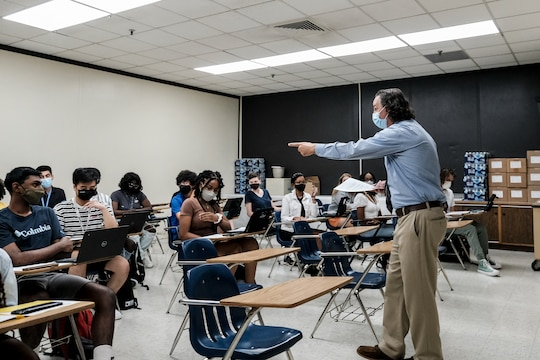
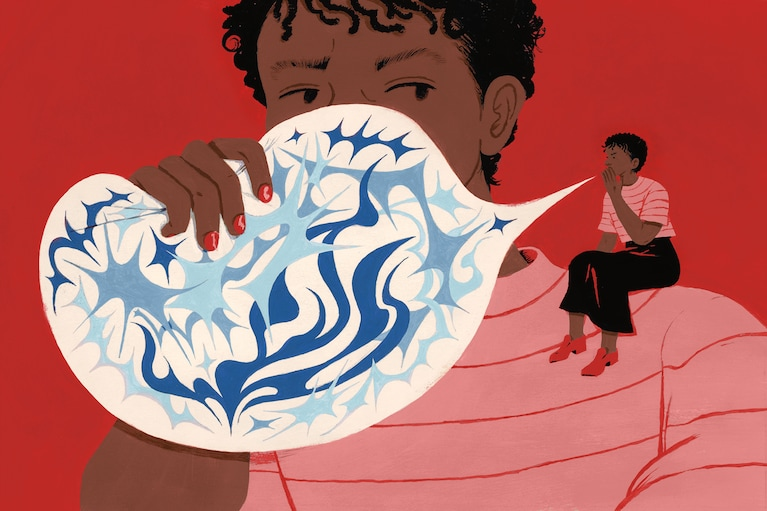
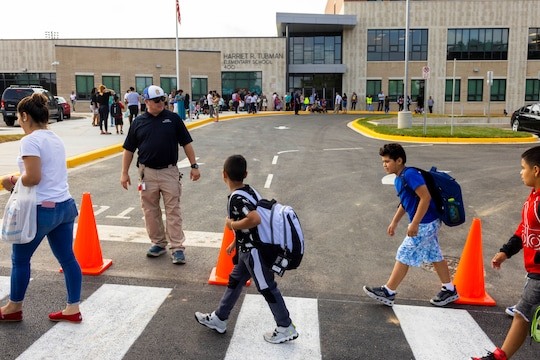
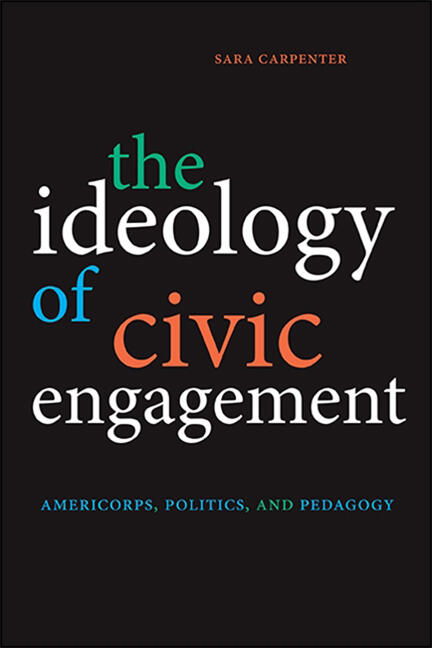
/voters-voting-in-polling-place-138711480-87a09f220a71438dbdff698a643c8cf1.jpg)