
"locals serving locals for over 25 years."
 Posts by Paul Costello1
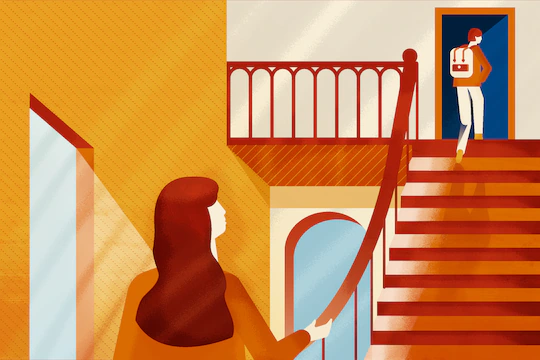
By Katherine Reynolds Lewis August 16, 2022 at 8:00 a.m. EDT Washington Post
The coronavirus pandemic has affected the mental health of children and teens, and therapists are tapped out and booked up. But that doesn’t mean care is impossible. In fact, caregivers can learn therapeutic strategies to support, reinforce and teach our children healthy coping skills.
Experts point to five key skills you can develop that will support your child during a crisis, supplement therapy once it’s underway and continue to improve your family’s mental health for years to come.Press Enter to skip to end of carousel
“Our job is being a proactive parent and taking initiative,” said Mary Alvord, a Rockville, Md.-based psychologist and co-author of “Conquer Negative Thinking.” “Even with suicidal kids, a little bit of intervention can go a long way. Avoidance and ignoring is not going to get you anywhere.”
Alvord and others suggested learning these mainstays of therapeutic practice.
In our busy lives, it’s easy to listen absently to our children or to bark orders. Attuning helps us notice when children need a deeper level of attention. It strengthens our relationship with our kids and helps them better understand themselves and their feelings.
Paying attention. When children’s routines shift or they come into the room in a huff, that’s a signal for you to dig deeper. Describe what you see, and invite them to share. You might say: “I noticed you’re spending more time in your room. I’m wondering if you’re upset about something.” Offering a guess can help them get started, both in processing their emotions and in sharing them, said Meag-gan O’Reilly, a psychologist and lecturer at Stanford University.
Reflective listening. One of the most powerful tools, reflective listening, can also be the most challenging to deploy. It involves three steps: listening closely, paraphrasing what you hear and inviting your child to correct your understanding. It’s important to be sincere, use eye contact, get at their level and put away distractions. Don’t offer opinions or advice; just seek to understand. Phrases such as, “I’m hearing you say,” and, “Let me see if I have this right,” can help. For example, when a child is upset over bad grades, parents can listen reflectively instead of telling the child to study more. That leaves space for children to process their emotions, consider how their choices led to the outcome and decide how to move forward.
Validation. Know that you may hear answers that alarm or upset you. This is when it’s crucial to validate your child’s perspective. If you dismiss their feelings or try to talk them out of it, they’ll shut down or argue. “Parents are driven to fix things and give kids the answer,” Alvord said. “That’s not how we learn.”
That doesn’t mean you need to agree. Maybe your daughter says she looks ugly in her yearbook photo, said Pat Harvey, an author and clinical social worker based in Rockville. If you insist that she looks beautiful, she may feel invalidated. Instead, you could say: “I get that you’re disappointed in how your pictures look. I happen to like them; I can understand that you don’t.”
“You have to touch your kid’s pain and disappointment, and none of us want to do that,” Harvey said. When you acknowledge your child’s pain, it actually lessens their struggle and opens a path to behavior change. “We only listen when we feel heard,” she noted.
When parents build emotional literacy, they help their children understand their own feelings. Part of that is connecting body sensations with emotions, Alvord said. Your fourth-grader’s stomach ache could be related to swimming tryouts. Teens’ headaches might be from holding school stress on their shoulders. “We know the mind and body are connected,” Alvord said, explaining that cognitive behavioral therapy connects feelings, physiology and thoughts to change behavior.
Know that all emotions are okay, even the unpleasant ones. Naming the emotion helps tame it, a strategy coined by authors Daniel J. Siegel and Tina Payne Bryson. As children tune in to their emotions, they get better at managing them — and at predicting how they will feel.
One study by the Yale Center for Emotional Intelligence involved high-schoolers tracking their emotions and behavior, with a surprising result about posting Photoshopped pictures to social media. “The anticipation was, ‘I’m going to feel more beautiful and more attractive,’ but in the end, they actually felt worse,” said Marc Brackett, author of “Permission to Feel” and director of the center, which helped create a free emotion-tracking app called How We Feel. “We all have to become emotion scientists, and that includes being self-aware and giving ourselves the permission to feel all emotions.”
One of the hardest parenting skills to develop is self-regulation, especially in the face of your child being angry or upset. A key is to breathe intentionally. “Take a deep breath and hold your breath for the count of 10,” Alvord said. “It’s amazing how effective that can be.”
Harvey encourages her parent clients to text her when they feel overwhelmed with emotions in a difficult moment with their children. Sometimes she coaches them by text about what to say, but even when she’s not available, pausing to text helps them respond more skillfully. “In texting me, they’ve taken themselves out of the emotionality,” she said. “They’ve thought about it differently.”
You should model self-regulation to your children. Maybe you had a difficult day and head out for a walk. Explain what you’re doing, O’Reilly said. “They’ll hear walking is a way we can attend to stress,” she said. “Telegraphing your internal process externally really gives them cues.”
Self-compassion involves more than just cutting yourself a break. There are three defined steps: Acknowledge that you are experiencing pain and be kind to yourself; recognize that you’re not alone; and put your experiences in perspective to moderate your own negative reactivity.
Studies have shown that self-compassion increases well-being, lowers anxiety and depression, and can buffer against many health issues, including substance abuse, eating disorders and suicidal ideation.
Self-compassion “is like portable therapy. Any moment that’s a moment of difficulty can be transformed,” said Kristin Neff, author of “Fierce Self-Compassion” and a researcher at the University of Texas at Austin. “It’s a way of being with negative emotions or negative experiences. Are we with it with mindfulness, connectedness, kindness, warmth and support? Or are we just blaming ourselves, blaming others or railing against reality?”
Emotions are contagious. People are such social creatures that if someone’s vibrating with anxiety, we’ll probably feel on edge. Parents and children pick up on each other’s emotions — and spread them — more easily because of our close relationships.
That’s why self-compassion can be so powerful. Parents can deploy self-compassion at any high-intensity moment with children. Model self-compassion by speaking out loud, or use it silently to calm yourself. Either way, your child benefits.
If children are being hard on themselves, telling them to lighten up will probably spark resistance. Instead, talk them through the steps of self-compassion.
“It’s not just being soft, complacent or indulgent,” Neff said. “Sometimes it’s getting your stuff together and saying: ‘What I need to care for myself is something uncomfortable that’s going to be good for me in the long run.’ ”
When you’re frustrated, it’s easy to start labeling your child, even silently. Therapists recommend reframing to open yourself to other ways of viewing the situation, which in turn helps you see positive paths forward. Avoid assumptions or judgments, and instead observe and become open to possibilities.
For example, if your child abruptly gets up to leave the table, you may interpret that as rude. Instead, consider whether your child needs quiet time, Harvey said. “We can do a lot about behaviors. We can’t do anything when we put labels on,” she said. “When you make assumptions, we act as if those assumptions are true, so we do all kinds of contracts and negotiations around what we think is the problem.”
Similarly, you can help children reframe by questioning assumptions. If they worry about you getting into an accident and dying, talk them through more realistic possibilities, Alvord said. Help them find their way to optimistic thinking, which sees bad things as temporary and specific. When you’re depressed, you tend to generalize and see bad situations as unchangeable.
Ask questions such as: “What’s the worst thing that could happen? Is it always? Is it everybody? Is it going to go on forever, or is this temporary?” Alvord suggested.
Practicing these five skills will build your child’s resilience. “As parents learn the skills of more effective parenting and really listening to their children, they can nurture their children emotionally, so they can be happy, motivated, empowered teens,” Alvord said.
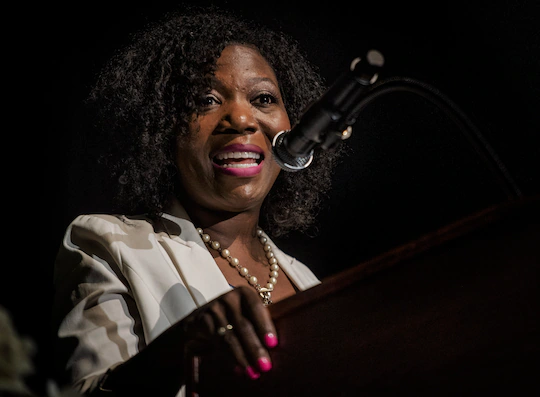
By Nicole Asbury Washington Post August 8th 2022
Three weeks before school begins, Montgomery County Public Schools is facing roughly 500 teacher and support staff vacancies, mirroring a national shortage of educators that has left school systems scrambling to fill positions.
The school system — Maryland’s largest with roughly 160,000 students — is trying to recruit and hire teachers in a more competitive environment than in previous years, Schools Superintendent Monifa B. McKnight said Monday during a media briefing on the system’s staffing. The school district’s biggest hiring needs are for special education instructors, elementary school teachers and school psychologists.
School districts across the country — including in Montgomery County — are facing significant staffing shortages as a result of the pandemic that led many teachers to leave the profession. Complaints of burnout, low pay and lack of respect from students, parents and lawmakers have also impacted the number of available teachers and support staff.
Despite the openings, the school system is 98 percent staffed and there has been progress in reducing the vacancies, McKnight said. On July 20, there were 396 teaching positions open, compared to the 157 open as of Monday morning. The superintendent attributed the improvement to the school system’s multiple recruitment efforts, including several in-person job fairs and partnerships with community organizations.
The school system is also seeking to hire 367 support staff — including paraprofessional educators and front office employees — and 16 bus drivers.
D.C.-area schools see spike in teacher resignations
“As we are continuing to set up, even until the first day of school, the process will continue,” McKnight said. “The numbers are going to change.” She said the system will continue to fill vacancies with substitute teachers, including several retirees, until the positions are filled permanently.
While the school system works on hiring,McKnight said it plans to maintain its current class sizes in the upcoming school year, which starts Aug. 29. Maximum class sizes vary by grade-level and program. Secondary schools, for example, usually have a maximum class size of 32 students.
The number of teachers who resigned at the end of the most recent school year, 576, was actually less than the previous year when 610 left, according to data provided by the school system in June. The number of teachers who left their jobs in the most recent year is equivalent to about 4 percent of the workforce.
Retirements, however, were up in Montgomery County this year, which has caused more staffing shortages, said Jennifer Martin, president of the Montgomery County Education Association, a union that represents over 14,000 teachers. Martin regularly spoke at county school board meetings during the last school year, warning of increasesin teacher and support staff retirements and resignations.
Montgomery teachers union concerned with timing of teacher transfers
Martin was invited to the news conference Monday, but did not attend. Two leaders of unions representingadministrators and support staff were present.
Martin said it felt inappropriate to attend, since many of the union’s pleas for workload relief and initiatives to address staff burnout have been unheard, she said in an interview Monday. The union put out its own statement after the news conference, writing that staff members continue to experience “ongoing disrespect” that affects teacher retention. The union criticized a move made by the system in July to involuntarily transfer a handful of teachers to different schools about a month before the start of the school year.
“I completely agree with my sister presidents and the unions who were there today, and with Dr. McKnight, who want to ensure that MCPS is a wonderful place to work,” Martin said in an interview. “But right now, we’re in disagreement with MCPS as to what teachers need for that to be the case.”
By Jessica Grose Opinion Writer New York Times August 14th 2022 p. 10

At the beginning of the year, I started hearing from readers across the country that there were long waiting lists for child and adolescent mental health providers. Many of their kids were really struggling, often with anxiety and depression. When these parents tried to find help, they found there was, in some cases, up to a six-month wait to even get in the door at a therapist’s office for an assessment.
This shortage is not just anecdotal, and in some places it existed before the pandemic produced so much suffering that the American Academy of Pediatrics declared child and adolescent mental health a “national emergency” back in October. Part of the reason for the shortage is that the need for services has increased consistently over time, and the number of child and teen providers has not kept pace.
According to a recent paper published in JAMA Pediatrics, “Between 2016 and 2020, there were significant increases in children’s diagnosed anxiety and depression.” In 2019, Pew Research found that “the total number of teenagers who recently experienced depression increased 59 percent between 2007 and 2017.” Then the pandemic came along. According to a meta-analysis across 29 samples including over 80,000 youths across the globe published in JAMA Pediatrics last summer, “youth mental health difficulties” during the pandemic have “likely doubled.”
In April 2020, David Axelson, the chief of the department of psychiatry and behavioral health at Nationwide Children’s Hospital in Columbus, Ohio, described the severity of the shortage of mental health providers in his hospital’s publication, Pediatrics Nationwide: “Less than half of the 7.7 million children in the United States with an identifiable mental health condition are receiving services from any mental health provider, much less a psychiatrist.”
Earlier this year, the American Psychological Association described a similar shortage of providers: “Only 4,000 out of more than 100,000 U.S. clinical psychologists are child and adolescent clinicians,” Ashley Abramson wrote as part of the A.P.A.’s 2022 Trends Report. School psychologists are also in “short supply,” she notes.
If you’re looking for a provider with a more specific background or cultural competency, resources can be similarly scarce. For example, according to the magazine Insight Into Diversity, data from the American Academy of Pediatrics “shows that only 2 percent of the estimated 41,000 psychiatrists in the U.S. are Black and just 4 percent of psychologists are Black.” “There are no providers in my area that cover both L.G.B.T.Q. issues and issues for the rest of my mental health,” one young person told The Trevor Project, an organization that serves L.G.B.T.Q. youth. And none of this addresses the cost of coverage, a barrier for many families.
Muniya Khanna, the director of the Philadelphia-area Children’s and Adult Center for O.C.D. and Anxiety, told me that the need for therapists has been steadily increasing over the past 20 years, but has exploded over the past two years. “We’re a general population clinic, and we used to get two to three new calls a week,” Khanna said. “Now we’re getting two to three calls per day.” She did note that the increase in need is not all bad — part of it is that there is less stigma about getting help for mental health issues, and there’s more awareness.
Still, the shortage remains, and you can’t just conjure a reserve force of mental health professionals out of thin air. Good mental health training takes years. I wanted to know: What can parents do in the absence of promptly available care? (To be clear: If your child, or anyone, is experiencing a mental health emergency, such as suicidal ideation, that calls for immediate assistance. The new suicide and crisis lifeline number to dial is 988, though, as The Times reported in July, there are some concerns that it, too, may not have adequate staffing everywhere in the country.)
While it may be difficult to get a depressed teenager out of bed, good habits matter more than you might think for your child’s mental health, said the psychologist Lisa Damour, the author of “Under Pressure: Confronting the Epidemic of Stress and Anxiety in Girls.”
“Though it is not the same as good psychotherapy, don’t underestimate the power of the basics,” she told me. “Making sure your young person is getting enough sleep, they’re getting enough physical activity, they’re eating a balanced diet. If possible, keep them busy with purposeful activities. These things go further than we sometimes expect.”
There are resources you can use at home, books and online programs, that can help your family. The online resources that come most recommended are often rooted in Cognitive Behavioral Therapy (C.B.T.), which “usually involves efforts to change thinking patterns,” according to the A.P.A. Patricia Frazier, a distinguished professor of psychology at the University of Minnesota, has, along with colleagues, studied the effects of internet-delivered C.B.T. programs (I.C.B.T.) on university students and found that they were “feasible, acceptable and effective.”
These I.C.B.T. programs tend to be a combination of text, videos and exercises that help explain the roots of anxiety, then encourage users to identify what may be triggering overwhelming feelings, and then offer exercises to help address these feelings. For example, the free app MindShift C.B.T., from the nonprofit Anxiety Canada, allows you to log your daily feelings and then write a short journal entry about the reason behind the feeling. You can also list symptoms you may experience, like racing thoughts, chest tightness or nausea. It gives you a series of tools to use, like guided audio for calm breathing or test anxiety, or “coping cards” that provide affirmations like “Learning to sit with some uncertainty will help me worry less.”
Frazier told me the body of research on the effectiveness of I.C.B.T. programs is “incredibly strong.” She pointed me to this 2019 review in the Canadian Journal of Psychiatry, which found that “I.C.B.T. works and can be as effective as face-to-face therapy.” But it’s worth noting that these studies were done on adults, not on children or teenagers, and that many of them had a trained professional helping to run the I.C.B.T. programs.
Patrick McGrath, an emeritus professor of psychiatry at Dalhousie University in Nova Scotia who has studied the effectiveness of I.C.B.T. in adolescents, told me that parents looking for reputable resources should start with the websites of children’s hospitals and professional organizations. He recommended Magination Press Children’s Books from the American Psychological Association, as well as the “C.B.T. Toolbox” series of books. As for online resources, he said that he refers people to MAP, or My Anxiety Plan, also from Anxiety Canada, which has a multipart online course for teenagers.
McGrath mentioned CopingCat, which includes an online resource called Camp Cope-A-Lot. It’s an animated program that helps teach parents and kids ages 7-13 C.B.T. skills and that was developed by Khanna and Philip Kendall, a professor of psychology at Temple University. She told me that she sees the program as a learning resource, not necessarily as a therapeutic one. The C.B.T. skills she teaches in talk therapy, like identifying triggers of anxiety and using tools like journaling and breathing, “are learnable concepts, and therapists are just better and more trained to teach the concepts,” she said.
If your kids aren’t interested in books or online resources, Khanna said, there is value in learning as much as you can about what they’re going through, so you can be prepared if they do come around. “I know there’s going to be a lot of kids who won’t sit down and go through a program because their mom and dad recommended it,” she said. But that doesn’t mean you can’t buy them a book and leave it around or suggest to school counselors that they might run a group that can teach some C.B.T. concepts.
Ultimately there will still be many kids who can benefit from in-person therapy. Khanna suggested that if you’re told there’s a monthslong waiting list, keep calling back periodically. While she notes this is an unfair burden on parents, unfortunately there is no solution in the near term. But as you’re waiting for the lists to move, it’s good to know that there are quality resources that can potentially help fill the void.
Parenting can be a grind. Let’s celebrate the tiny victories.
When my 5-year-old daughter lost her first teeth, I asked what she hoped the tooth fairy would bring. “A rock,” she said. I pushed back — not money or a lollipop? “A gray rock,” she said. And that’s why the tooth fairy leaves rocks at our house.
— Amanda Keim-Morrison, Saint Paul, Minn.
What has this to do with AmeriCorps? As much as AmeriCorps has to do with AmeriSports. We could not resist the amazing writing and about an amazing character. One did not have to follow baseball to feel moved.
And if there is a lesson here, it might be that sometimes words get in the way of the listening. Just shut up and let the moment speak for itself.
By Rick Reilly Contributing columnist Washington Post August 4, 2022 at 12:03 p.m. EDT

Schools sometimes ask me to come talk about sports writing. When I do, I always get up, put some text on a big screen and say, “See if you can guess who wrote it. It’s about Sandy Koufax’s epic perfect game in 1965.” On the screen, it says
You can almost taste the pressure now … Koufax lifted his cap, ran his fingers through his black hair, then pulled the cap back down, fussing at the bill … There’s 29,000 people in the ballpark and a million butterflies … I would think that the mound at Dodger Stadium right now is the loneliest place in the world.
Red Smith? Mike Lupica? Jim Murray?
Nope. Trick question. It wasn’t written at all. It was spoken, live, as it happened, by Dodgers broadcaster Vin Scully.
That’s how wonderful Scully was at calling a baseball game. Words he ad-libbed could keep an engraver busy for decades.
Scully, who died Tuesday at age 94, was such a joy to listen to that even fans who were at the game brought radios. Sure, my eyes saw it, but it’s not real until Vin describes it.
And not just fans. One time in the 1970s, Dodgers pitcher Jerry Reuss was on the mound at Dodger Stadium, and he could hear on all the radios that Vinny was in the middle of a story. “I can hear by his cadence, his inflection,” Reuss said. So he stepped off the rubber and fussed with the rosin bag. “He got his point out,” Reuss recalled a few years ago, “people laughed, and without missing a beat, he said, ‘Now Reuss is ready to deliver.’ ” Nobody delivered like Scully.
That’s the most remarkable part of Scully’s greatness. He did 95 percent of it without a partner, by design. Why did he need a partner when he had you? “I want it to feel like I’m talking to you,” he used to say. “That’s why you’ll hear me use a lot of, ‘Did you know that?’ or ‘You’re probably wondering why.’ I don’t really do play-by-play. I do conversation.”
My God, could he converse. Scully was so entertaining he could make you look forward to a Los Angeles traffic jam. Living in L.A., I see someone sitting at the wheel of their car in the driveway, engine running, staring at the dashboard, and I know what’s going on: Scully is in mid-story and they just can’t bear going into the house before it’s over.
He was like that in person, too. We were having lunch once when I asked him about a hole-in-one he’d just made.
“Well, it’s funnnnnny,” he said in that voice you’d never forget. “I was playing with a guy who’d make a cup of cohhhhhfee nervous and I wasn’t exactly having a ticker-tape day. Well, it sooooounded like I hit it with the Sunday paper. But as it happens, I’d chosen the wrooooong club, and — looooo and behoooold — the ball rolls straight up into the cup! Thus, disproving the oooooold adage: Two wrongs sometimes do make a right.”
Scully was born to do this. When he was a boy in the Bronx, his family had a big radio that perched on top of four legs. He’d take a pillow, a glass of milk and some crackers, lie under it, and listen to football games. His favorite part was in a big moment when the announcer would stop talking and he could hear the roar of the crowd. “That, to me, was thrilling,” he said.
Scully’s dulcet voice — and his dulcet silences — are woven through the history of American sports. He called Hank Aaron’s 715th home run (“A Black man is getting a standing ovation in the Deep South,” he said), San Francisco 49ers wide receiver Dwight Clark’s fingertip catch against the Cowboys in the 1981 NFC championship game (“It’s a maaaaaadhouse in Candlestick!”), Kirk Gibson’s shocking pinch-hit World Series homer (“And, look who’s coming up!”).
What a life he lived. It wasn’t perfect, of course. Nobody’s is. His first wife died at age 35 in 1972, from an accidental prescription drug overdose. A son died in a helicopter crash in 1994. His beloved Sandra, his second wife, of 47 years, suffered from Lou Gehrig’s disease (ALS) and died last year. He’d been fading ever since.
The last out comes for everybody. Scully understood that. Once in the 1990s, in listing that night’s injury report, he said, “Andre Dawson has a bruised knee and is listed as day-to-day” — pregnant pause — “aren’t we all?”
Vin Scully was loved in L.A. like nobody who came before him. The Los Angeles Times once did a Final Four-style tournament bracket called “The Biggest L.A. Sports Icon.” The final came down to Vin Scully vs. Magic Johnson. Vin won in a landslide.
It hurts knowing I’ll never get to hear the greatest announcer who ever lived tell another story or turn a drowsy 6-1 game into pure theater. So I’ll do now what Vin taught me to do: Be quiet and let the crowd roar.
https://www.washingtonpost.com/opinions/2022/08/04/vin-scully-baseball-radio-appreciation/
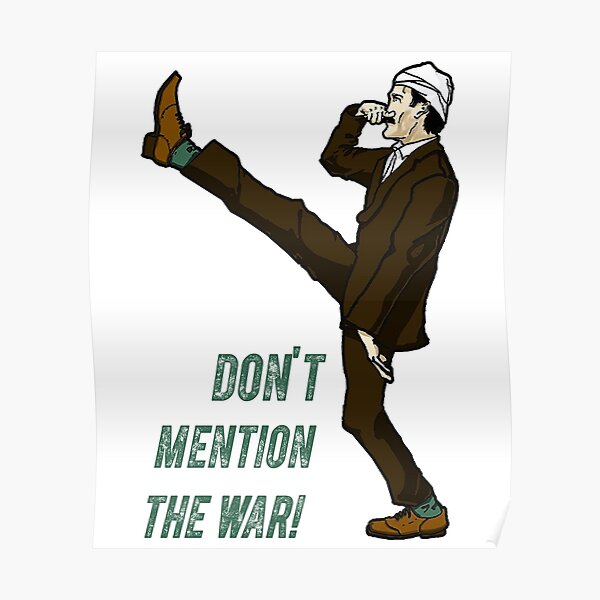
One of the nation’s largest therapy conferences happens annually in Washington DC. This year, the first in person for two years, the theme was “Meeting the Moment.” At first sight, I thought, “Yes” that is a great theme. How are we meeting this moment recovering from the pandemic and racial strife and four years of dysfunctional leadership on so many levels?
When I viewed the four day program, I was stunned to discover only one session focused on the pandemic. It was called “Rethinking Anxiety in Light of the Pandemic” and that was it. Of course, there were sessions on Trauma and so perhaps the pandemic was folded into that, but ‘Meeting the Moment’ without even naming the Moment seemed odd. Is there a different moment we are meeting? These are therapists. Have they been on holidays these last two years?
Fast forward two months and we are attending the ASC East Coast training conference for AmeriCorps, one of three repeated across the year. It’s title was “Shaping the Future.” Again, an apt theme given that every AmeriCorps program has had to maintain service when the world shut down. How do we build a future out of that experience?

Once again, there were great seminars on climate change and sustainability but only 2-3 that mentioned Covid explicitly. I went to all of them and discovered that they were not addressing the impact in any direct or personal way. There was one exception and that was the seminar Project CHANGE ran based on our new book “Our Stories Rise Up”
When I proposed that AmeriCorps before the pandemic and AmeriCorps after the pandemic were two different beasts, the attendees embraced the chance to pour forth their struggles and grief, and allow their peers to validate their commitment against the odds. It felt like such a cathartic moment.
The world feels different. We have lived through a national catastrophe that has affected everyone. Even the leaders of AmeriCorps have advocated for increased resources to help with the recovery. But there was no room on the conference agenda to speak about it. Busyness is one way to bury the pain, I guess.
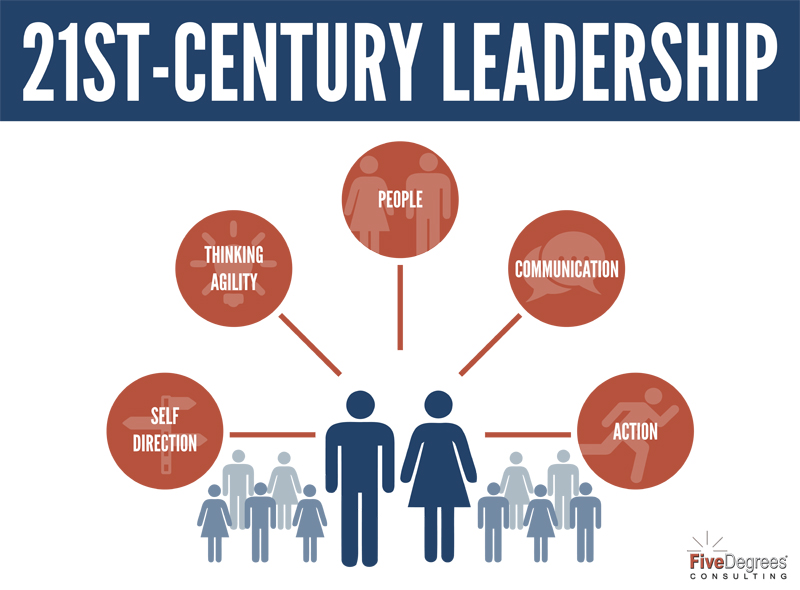
Fast forward to this month and another conference, this time on leadership education, by a prestigious research body. The four days were packed, interactive, fast paced, more an intensive training than a conference with 9 amazing facilitators. And amongst all the theories and approaches, not a word, not a session, not a formal invitation to share what the pandemic has done to leadership and leadership education. And these are leaders and those who teach future leaders.
I was reminded of the old British style “Carry On” comedies. This was “Carry On Leading,” as AmeriCorps was “Carry on Serving,” as the Washington DC Conference was “Carry on Therapizing.”

The more I think about it, the more alarming it is to me that we are not allowing ourselves to address the post pandemic world. We are not even willing to name it. These conferences were probably planned in 2020 and delayed two years, and so, they just rolled out what they had already prepared. But what a lost opportunity. Are they symptoms of our clinging to an illusion? Or is the fact that we are not hosting sessions on the trauma of the pandemic because we are still in the trauma of the pandemic? Denial is a classic delaying or diversion strategy.
The book “Our Stories Rise Up- Remembering as Resilience” is a simple and practical guide for people who want to talk about the elephant in the room without being overwhelmed. Every educator and parent, every leader and therapist should have a copy.
In our work serving students in our local county, we see every day the continuing impact of the pandemic. Kids are coming back to school to be with their friends. They are not coming back to learn. 70% of our sample tell us that they are NOT excited about learning, in the least. The ones that thrived during the shutdown have learned to teach themselves and so the classroom style feels restrictive. If I can ace algebra in my pyjamas, why do I have to go back to this daily torture of 8 hours, 8 classes, 25 to a room, with exhausted and angry teachers?
The school system has made the same assumption that the conferences made, determined to “Carry On and Catch up.” Let’s act as if nothing has happened and then deal with the behavior that is driving teachers in droves to other careers. Something has happened and we can see it all around. Something has happened to us. To pretend the opposite is a classic case of denial. It is only going to make it worse.
And it hurts us. It either shows a lack of self-respect for our own pain, or a lack of any empathy for those who are still bearing the brunt, who are mostly the poor and forgotten. What gives us the right to even presume they can get back to our normal when it was never normal for them in the first place?
Perhaps we therapists, non-profit directors and leadership experts rode the pandemic wave with our middle class surf board and did not drown. But the people we serve are still trying to dig themselves out.
Within 10 miles of the White House, one of our members serves food to over 900 local families every Thursday. Food insecurity has become a crisis like never before here in the Capitol area. Who knew, and who cares? The rise in abuse and domestic violence are things we are only starting to see. Some call it the tip of the iceberg. In 2020 and 2021, the country bought more guns than ever before. Think about what 40 million more guns mean for a minute, and think in how many states, any 18 year old can buy one! Experts who say we are in the middle of a mental health crisis are fast being treated like the boy who cried wolf. We shrug. We are fine. No need to worry. Until the next kid with one of those 40 million guns goes to school to make the world pay for our neglect. We will blame guns, or we will blame mental health, so long as we do not blame ourselves.
It is time to convene a critical conversation about these last two years. Let’s assess the losses and the wounds and identify who most needs healing, who cannot possibly carry on as before. We know in our school system, there were thousands of students falling behind before the pandemic. Asking them to catch up when they feel they are not even in the race anymore is nothing but cruel and inhuman punishment. Even our Constitution that the Judges say allows a kid to buy a gun, is against that.
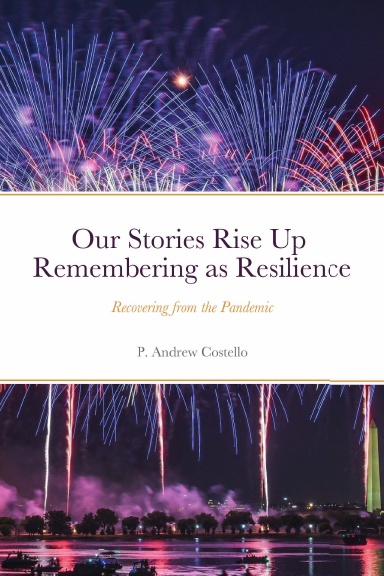
Our Stories Rise Up– it is time to tell the stories of our pain and our hope. There cannot be any way forward without that.
We offer tutorials, materials, meetings, trainings, and customized zoom sessions that are based on the book. If you would like to buy the book for your class or your group, bulk discounts can be arranged.
For more information, please purchase the book and reach out to us at info@projectchangemaryland.org

By Rachel Louise Snyder New York Times June 12th 2022
Ms. Snyder is the author of “No Visible Bruises,” a book on domestic violence.
What might have stopped the gunman from killing 21 people in Uvalde, Texas? In the aftermath of the shootings, familiar details emerged. We know he fought with his mother. We know he has been accused of posting footage of himself seriously abusing one or more cats online. We know he shot his grandmother, who worked at Robb Elementary. We know he harassed girls on social media and when one of those girls reported him to a social media app, nothing was done. And most critically, we know he bought a weapon of war around his 18th birthday from a company that offered buy-now-pay-later-style financing. The process for buying the gun was little more onerous than that for purchasing Sudafed.
These facts and allegations just as easily might speak to many mass shooters of our age. Racism, misogyny, violence, isolation, gun access, social media screeds. In some form or other, the patterns are known. But why is it that when we identify them, we can’t then prevent the carnage that follows? Or why won’t we?
There are many places in the world that share America’s social characteristics. Switzerland has a culture of gun ownership, too. Japan has young, isolated people so common, they have a name: hikikomori. Mental health in Germany and New Zealand is more understaffed than in the United States. And domestic violence is in every country, every community, every village and neighborhood. And yet — you know the end of this sentence — only the United States sees mass shootings so frequent that at least 38 more have occurred since the Uvalde shooting, according to the Gun Violence Archive.
Many believe they know the source of this national tragedy. Liberals say it’s guns. Conservatives cite mental health issues. I’ve heard we need fewer doors and more fathers, less poverty and stronger friendships. When I looked at the faces of those 19 children killed in Uvalde, I had to wonder if our polarized politics, mine included, cloud our ability to see our failing social infrastructure, the complex intersectionality of the immense issues we face. Put simply: We have broken our society. So to what lengths are we willing to go to rebuild it?
Many years ago, on my first day as a graduate student, my professor asked us to write him a letter about ourselves. My first line was this: “I feel like I know what it’s like to want to kill someone.” My family life was fueled by rage. I was expelled from Naperville North High School in Illinois. At 16, I was kicked out of my house. I lived in my car and stayed on the couches of co-workers and friends and sometimes in the parking lot of Fox Valley Mall. I did not want to live, but I had neither the means nor imagination to die.
I despised my stepmother so much, I might have envisioned killing her. We fought with our words and occasionally our fists, and yet somehow, years later and reconciled, I sobbed at her bedside as she lost her fight with cancer. Even though I am beyond those years, I can call up the memory of that rage. I can understand feeling that the world has nothing to offer you. That your life is so devoid of meaning, you could take the lives of those who mean the most to someone else. And probably you wouldn’t care how much you’re hated, because no one could hate you more than you already hate yourself.
So how did the 18-year-old hopeless me give way to who I am now? I’ve asked myself this for most of my life. I am a professor, a writer, a mother, surrounded by the love of an intentional family. How did I survive?
For teenagers to survive what are for some of us the worst years of our lives, they need hope. I don’t mean sentimental jargon from a greeting card. I mean hope from the vision of a possible future. Hope does not arrive, feathered, at one’s doorstep. Hope requires action, movement.
Because the opposite of hope is despair. Had I gotten hold of a gun in my teenage years, I believe I would have used one on myself. I know this because of who I was and how I felt, but I also know this because the research backs it. In a study of 172 mass shooters in the United States from 1966 to 2020, only four were women (two of whom acted in partnership with men). Some research suggests that responses to trauma can manifest differently in men and women, though these differences are not universal. Studies have shown a link between past violent or traumatic experiences and externalized aggression among men to varying degrees. Women, meanwhile, engage in deliberate, nonsuicidal self-harming behaviors 50 percent more frequently than men do, according to a 2008 study, which can be a trauma response in some cases. Numerous studies have also shown a link between domestic violence and heightened suicide rates, which are particularly acute among men.
Perhaps we have more tools at our disposal than we know. A full 86 percent of mass shooters under age 20 give warnings, according to Jillian Peterson and James Densley in their book “The Violence Project.” (Note: I provided a blurb for this book.) Dr. Peterson calls these warnings “a cry for help.” The problem comes from how these warnings are interpreted and what people do or can do with the information received.
The threateners — almost always young men — reach out to classmates and to people on social media, and sometimes they are reported to authorities, as in Buffalo; Parkland, Fla.; Sutherland Springs, Texas; and Uvalde. And occasionally these authorities might step in, as they did with the Buffalo shooter, but then they could not hold him for more than a day and a half in a hospital for a mental-health evaluation. In the United States, only a third of primary care physicians’ offices have mental health practitioners, compared with over 90 percent in the Netherlands and Sweden.
Mental health is a convenient lens through which to view mass shootings, but it provides an incomplete picture. The overwhelming majority of those who have mental illness are victims of crimes, not perpetrators. Often more germane to the question of stopping these crimes is domestic violence, which intersects with not only mass shootings but also many of the vast social issues that we face — and their consequences.
Domestic violence is a leading cause of homelessness in this country, especially for women. It speaks to gender inequality and teen dating violence and stalking. When you align it with guns, it becomes not merely another in a cascade of issues but the issue to address, because guns increase the lethality of essentially all domestic-violence-related situations.
Rates of domestic violence homicide increase fivefold with the presence of a gun. The easier a gun is to reach, the easier it becomes to succumb to a moment of desperation; a recent shooting in Tulsa, Okla., for example, happened less than three hours after the gunman legally purchased his weapon. And more than half of mass shootings aredomestic violence: Sandy Hook began with the gunman killing his mother, Uvalde with the gunman shooting his grandmother.
But even those that do not begin with shootings of close family members — like the ones at the Pulse nightclub in Orlando, Fla., and at the Route 91 Harvest Festival in Las Vegas — have domestic violence in the background of the shooter’s life. It’s not always in the public data, but Dr. Peterson told me familial violence is present. “In every case, literally, whether it’s parental, violence against Mom or physical abuse with a kid,” she said, perpetrators’ personal histories directly influence their shootings. “The worse the crime, the worse the story.”
When Gov. Greg Abbott of Texas attributed the Uvalde shooting to a lack of mental health treatment — even after slashing funding for the state’s department that oversees mental health by more than $200 million — he was not wrong. But his answer was incomplete.
The United States is suffering from a full-blown mental health crisis. In a 2020 report of 11 industrialized countries, the United States had the highest suicide rate and among the highest rates of anxiety and depression, coupled with the fourth-fewest mental health practitioners per capita among the countries in the study. Canada, Switzerland and Australia have roughly twice the number of mental health professionals that the United States has per 100,000 inhabitants.
And it’s not merely lack of options; it’s lack of resources. Health care is the No. 1 cause of bankruptcy in America. Children in Norway do not have to pay for mental health services. In France, those ages 3 to 17 can receive 10 free sessions with a psychologist. In their book, Dr. Peterson and Dr. Densley point out that for the United States to reach the recommended ratio of one psychologist per 500 students, 50,000 more psychologists would need to be hired across the country. The current national average is an abysmal one for every 1,500 students.
But mental health explains only so much. In the manifestoes that many of these young men leave behind, the language is eerily similar. The shooters in Buffalo; Charleston, S.C.; Santa Barbara, Calif.; and others wrote racist or misogynistic diatribes. Such screeds point to the need for much more education and socialization.
How do many young people navigate this? They go to the web, of course, and too many young men wind up in the darkest, most hateful corners. Covid — which pushed most students online — gave children the time and capacity to reach those corners more readily while the world sequestered us all, a recipe for disaster. It seems no coincidence that gun violence and gun purchasing records were set in 2020, with 2021 continuing the violence trend and barely slowing purchases.
To suggest the solution does not start with guns — raising the minimum age for purchase; lowering the number of guns allowed per household; keeping guns from convicted abusers; instituting mandatory training, licensing and waiting periods; barring the ownership of assault rifles; enacting safe storage laws; eradicating immunity for manufacturers — is to willfully disregard the life and future of every person in this country. When Second Amendment freedoms mean imprisoning someone else (in a classroom, in a hospital, in a home), then freedom is nothing more than a bully with a pulpit.
Maybe we cannot build a life for every disenfranchised young person out there, but we can certainly do better. We need to have not merely one answer but many. We need to do it all, everything, all at once. And we can. We have the knowledge, the talent, the resources.
We need to address domestic and teen dating violence. We need to address mental illness. We need to address toxic masculinity and allow for open, inclusive conversations about gender identity. We need to regulate social media. We need to heed the warnings from girls online. We need to create crisis intervention teams, say Dr. Peterson and Dr. Densley, and suicide prevention and crisis response coalitions. They also say we need to make sure that all students in this country have at least one person, just one adult, they can talk with.
For me, that person was a social worker named Bob Martin. He had a mustache that curled up at the ends and soft lighting in his office, and when he saw me in his doorway, he dropped whatever he was doing and listened.
So more Bob Martins and fewer guns. More hope and less despair. And then everything all at once, which really comes down to a single priority: a country where all people can see the possibility of their own future. Because the fact is, broken things need not stay broken. They can also be opportunities to rebuild.
https://www.nytimes.com/2022/06/09/opinion/shootings-domestic-violence.html
Social Emotional Learning aka (SEL) is more than a fad. It comes from the awareness that what students learn about themselves is just as important as what they learn about any other subject. Why is it that schools rarely have time to teach students how to better know themselves?
COVID has left the curriculum in tatters. Tests show students are behind. Most schools are teaching to “Catch Up.” Teachers have no time to ask students how they are feeling. What if they are overwhelmed? What if they are depressed? What if learning is the last thing on their minds?
Yet, ask any struggling teacher. They will know what students are saying, in the only way kids can speak- through bad behavior. “We are not ready to learn”-they are saying- “until you are ready to learn from us and where we are, and what we have been through.” One million plus dead, school suspended for over a year, Internet Interrupt Zoom School, and you presume we are ready to learn? That all is back to normal for us? Why won’t you listen? Don’t we have any say?

SERVING WITH AMERICORPS
AmeriCorps Project CHANGE is recruiting a ‘Champions of Student Success’ team of inspired members who sign on for a year to change all this. Through the innovative yet simple SEL instrument MyScore that Project CHANGE has developed, AmeriCorps is striving to bring the students back into the conversation about their lives. That, after all, is the one area in which they are the unrivalled experts.
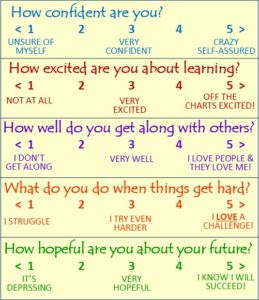
Standardized tests want to know if you can write and read, (That is TheirScore) but we are interested in ‘How Confident, How Curious, How Collaborative, How Courageous, How Career and Future- focused you are- (That is MyScore.) These 5C’s are just as predictive of becoming a successful Life Learner as any test result.
We know which students are struggling, because they tell us. We can support them to persevere and grow. We know which class is stuck because most students are telling us they are bored or struggling, or feel alone. We know which students are thriving and who to makes into allies to build a positive climate of inquiry in the classroom. They can assist their teacher with those classmates who might be behind. MyScore allows us to build an environment for learning and growing. It lifts up every voice.
This seems so obvious-to ask the kids- but it represents a radically different approach to student welfare. Their voice is given a priority. Project CHANGE wants to democratize education and, using SEL, re-center the curriculum on life, and on the self. These are life lessons worth learning. After the pandemic, it is time to reclaim the student voice as worthy of shaping the dialog of what schools might become. Parents and teachers or experts alone can’t be allowed to drown out the voice of the constituency we are there to serve.
WHO IS PROJECT CHANGE?
Project CHANGE is the original AmeriCorps program that for 21 years, has been serving Montgomery County students. Every year, in partnership with MCPS, we look at emerging student needs and search for ‘Champions of Student Success’ who have a servant’s heart and are ready and able to respond.
Project CHANGE’s unique Social Emotional Learning Approach is based on a narrative theory of change. Focusing on the story that a student is telling themselves about their value, their talents, their chances for success and their future, MyScore gets students to focus on growing in the 5Cs of confidence, curiosity, collaboration, courage and career-future focus. Members are trained to use this tool and shape interventions around the student’s emerging sense of self.
Imagine being the difference between a student passing or failing? Imagine being the difference between a student believing in herself and a student acting out their despair? Imagine helping a teacher or after-school program leader create the safety and the trust where children can thrive and feel the thrill of being alive.
_______________________________________________________________________________________________________________________________________________
DO YOU QUALIFY?
Requirements for AmeriCorps members in Project Change:
1. 18 years of age
2. High School Diploma
3. Drivers license/access to a vehicle
4. Able to work in the USA
5. Able to devote 35 hours a week
6. Some experience working with children/youth
7. Willing to have a criminal background check
8. Show Proof of full vaccination status for COVID19
9 Able to serve for a full 12 months Late August 2022 – Mid August 2023
BENEFITS
In return, AmeriCorps members receive:
Professional Development weekly training on Fridays ( 150 hours)
$21,500 living stipend with possible bonus
Student Loan forgiveness for the year served
Child Care allowance for members who are parents
$6,450 educational scholarship upon completion
Health Insurance including vision and dental
Professional mentoring
Peer support network and connection to AmeriCorps alumni
Preference in hiring for many organizations
The positions offer an overall life-changing experience. Most positions are full-time (1700 hours during a 12-month term) beginning end of August 2022- August 2023 and some positions are half-time (900 hours during a 12-month term).
______________________
BACKGROUND
Montgomery County Public Schools (MCPS) with 160,000 Students closed schools from March 2020- September 2021, leaving kids cut off from their peers, depriving them of normal healthy social outlets. School is back but how do we make up for their losses in Social/Emotional learning, the very skills students need most to succeed in life.
This is where YOU come in. Your role in the school will be as a mentor and coach to your peers, and to model for them ways to
-Actively engage and problem-solve physical, psychological, social and disciplinary issues that affect themselves and the community.
-Take responsibility for their actions.
-Set themselves up for success
If you are interested or need more information, please email
americorpsmontgomery@gmail.com
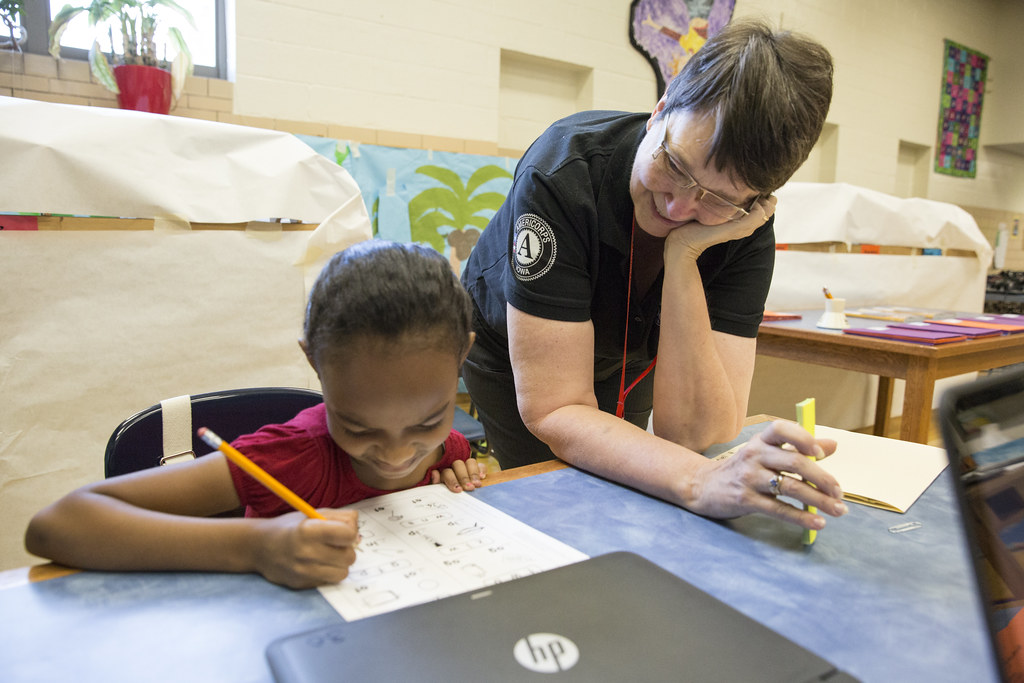
I will get things done for America – to make our people safer, smarter, and healthier.
I will bring Americans together to strengthen our communities.
Faced with apathy, I will take action.
Faced with conflict, I will seek common ground.
Faced with adversity, I will persevere.
I will carry this commitment with me this year and beyond.
I am an AmeriCorps member, and I will get things done.
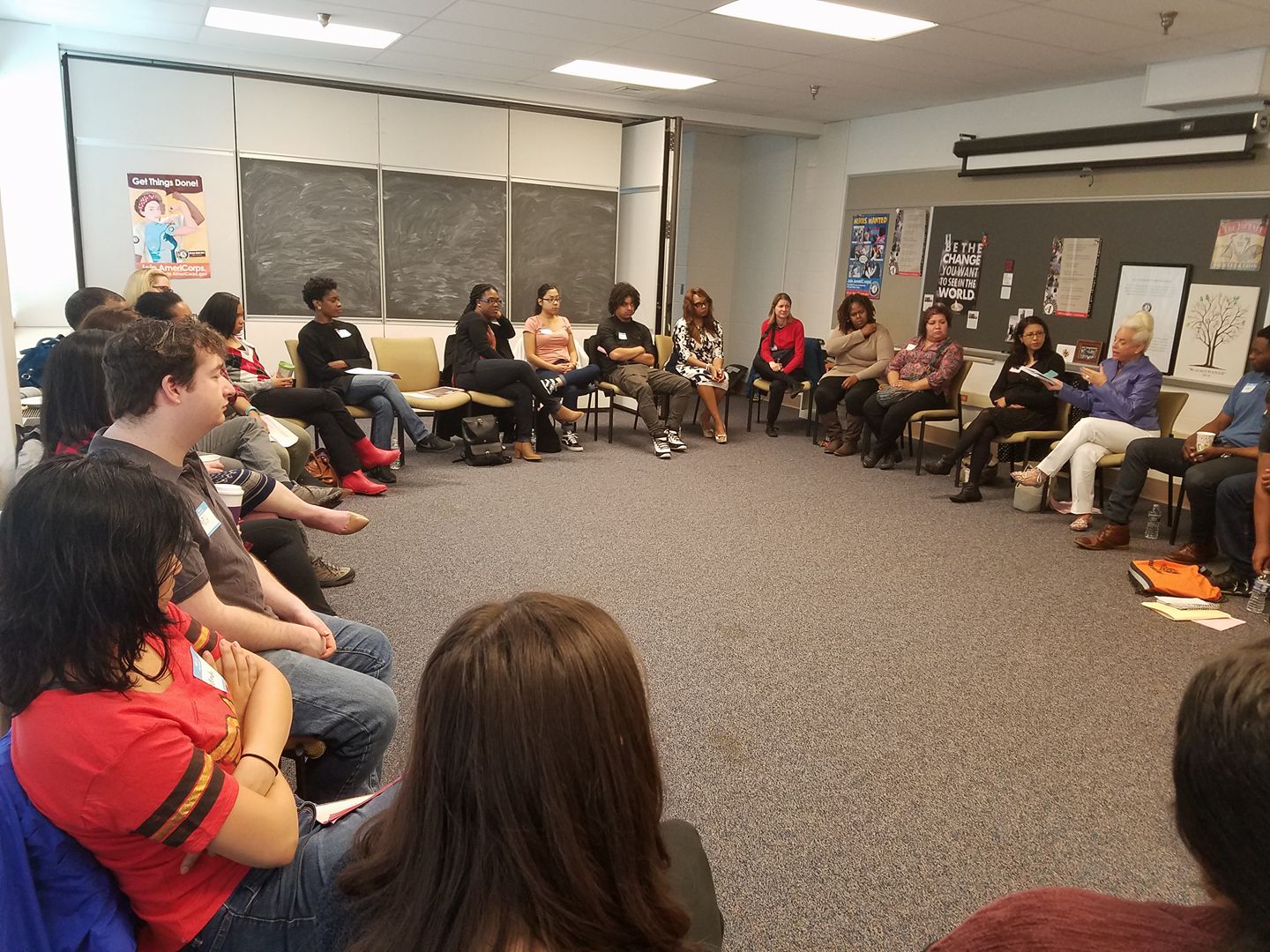
Being there for the community when they need it is the quintessential act of the citizen leader. He or she does not wait to be appointed, trained, called or ordained. The only qualifications are your need and my time and generosity, not because I want to make you feel needy but because this is the glue of our nation, that we meet each others humans needs in the most human way possible. I serve you knowing that one day, you will probably repay the favor. This is not just what we do, but who we are.