
Listen for alums tell the story of their AmeriCorps Project CHANGE experience.
"locals serving locals for over 25 years."
 Posts by Paul Costello1
Listen for alums tell the story of their AmeriCorps Project CHANGE experience.

Watch some of the highlights from Members of Project CHANGE as they sum up their service year. This is the class of 2014.
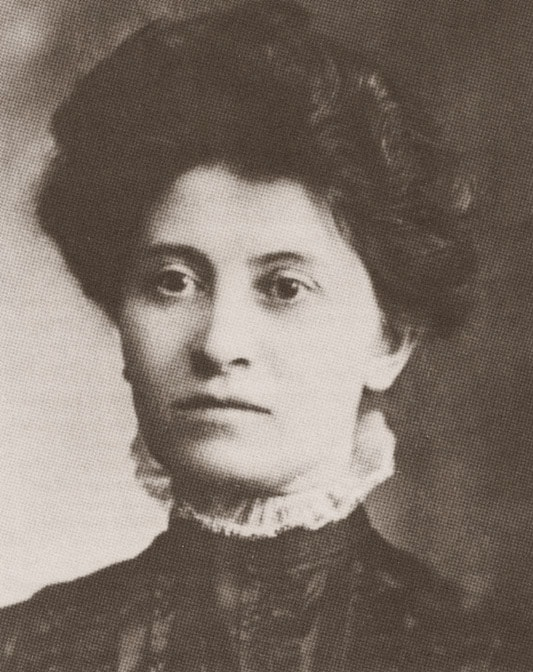
International Women’s Day is here again, and with it the opportunity to highlight women’s contributions to history, society and politics — and, of course, to sell stuff.
But how did the day get started? Some point to Russian communist roots; others claim an American origin story. The truth is that it’s neither and both. International Women’s Day began with a Russian-born Jewish woman in New York City, before traveling to the Soviet Union and back again.
For International Women’s Day, here are 7 of history’s greatest women-led protests
Theresa Serber Malkiel was born in 1874 in the Russian Empire, in an area now in western Ukraine. She came from a middle-class family and received a good education, but her Jewish family was increasingly persecuted and emigrated to the United States in 1891, when she was 17.
In New York City, her education mattered little, according to historian Sally M. Miller. Malkiel found herself in the same desperate position as so many other immigrant women, taking a job in a garment factory. Conditions were brutal: Shifts could last 18 hours, injuries were common and women earned half of what men did, barely enough to pay rent in crowded tenements and boardinghouses. So, like many Jewish and Italian immigrant women at the time, Malkiel soon joined the labor movement and then started a union for female cloak-makers.
Malkiel also became a socialist and, at 26, married fellow socialist and attorney Leon Malkiel. Her husband’s income allowed her to leave the sweatshop, but after moving to the suburb of Yonkers and having a child, Malkiel continued her activism, Miller wrote, providing aid to immigrant women, taking leadership positions in the Socialist Party of America and, with her husband, co-founding a socialist newspaper, the New York Call. (Side note: Their daughter, Henrietta, later co-founded another publication, Congressional Quarterly, with her husband, Nelson Poynter.)
Malkiel was a vocal proponent of women’s equality and the right to vote, though she was wary of the upper-class, nonimmigrant women who tended to lead women’s suffrage groups. In her pamphlets, columns and speeches, she argued that true equality — for women, African Americans, immigrants and child laborers — would only come through socialism.
It was in this context that she proposed the first National Woman’s Day in 1909. According to Rutgers University historian Temma Kaplan, events were held across New York, where thousands gathered to hear speeches and poems, sing socialist anthems and push for the right to vote.
Some websites claim that International Women’s Day marks the first known women-led labor strike on March 8, 1857, or that Malkiel sought to commemorate this strike, but there is no evidence such a strike ever happened. Newspapers from the time don’t mention it, though there was ample coverage of women-led labor strikes decades earlier in Pawtucket, R.I., and Dover, N.H. Additionally, Malkiel’s 1909 National Woman’s Day was held Feb. 23, not March 8.
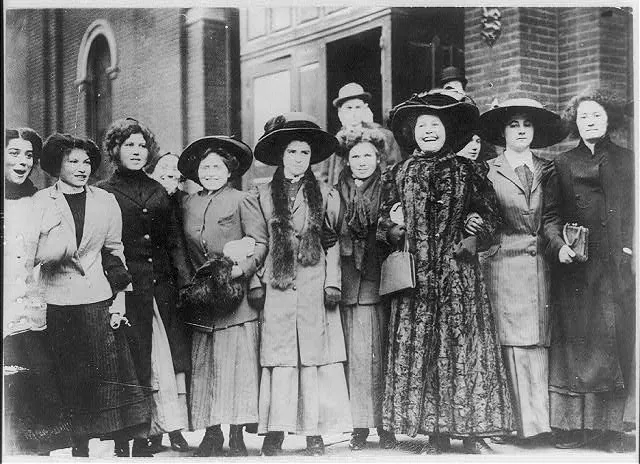
The first National Woman’s Day kicked off a busy couple of years for Malkiel. Later in 1909 and into 1910, she supported a huge strike of shirtwaist workers, dubbed the “Uprising of the 20,000,” with financial aid, speeches and columns. After enduring a winter on the picket line, the strikers were largely successful, winning better pay and shorter working hours, though factory owners refused to budge on safety concerns.
The strike ended about the same time as the second National Woman’s Day on Feb. 27, 1910. This time, there were events all over the country, and the New York Times covered a large gathering at Carnegie Hall, where speakers were “all women except one, and he denounces Man.” By 1911, it had spread to socialist women in Europe, with events in Vienna, though these were held March 18 in honor of the Paris Commune, according to Miller.
Malkiel soon published a book called “The Diary of a Shirtwaist Striker,” a fictionalized account of the uprising in which an American-born young woman joins with her immigrant co-workers to demand better working conditions.
But a year after the strikers’ seeming victory, their precarity was laid bare. The Triangle Shirtwaist Factory, whose workers had been part of the Uprising of the 20,000, caught fire, killing 146 people — 123 of them women and girls, who had been locked in by the factory’s owners. These days, more people remember the fire than the uprising that preceded it; even a 1949 Times article incorrectly claimed Malkiel’s book came after the fire.
Over the years, Malkiel turned away from the Socialist Party, where she and other women were constantly frustrated by the sexism of its leadership, despite the party’s public calls for equal rights, and focused on adult education for immigrant women. When she died in 1949 at age 76, a Times obituary didn’t mention her contribution to International Women’s Day, which by then used the plural “women’s” and was a big deal, if you lived in a communist country.
The event had continued to grow among leftist women in Europe, though the exact date moved around each year. Then, in 1917, International Women’s Day events in Russia snowballed into a general strike that ended with Czar Nicholas II’s abdication. Since then, it has been commemorated on the day the strike began, March 8 (or Feb. 23 on czarist Russia’s Julian calendar).It was a national holiday in the Soviet Union and in East Germany. In China, women are still given a half-day off work.
By the 1960s, feminists in Western Europe and the United States picked it up again, and the United Nations adopted it in 1975 as a day to celebrate the achievements of women. Kaplan, the Rutgers historian, traced the false origin story of the 1857 strike to 1950s France, where more mainstream feminists were probably trying to tamp down the Soviet vibes.
In the 21st century, social media has brought International Women’s Day to new generations — and new marketing opportunities, of which Malkiel and the millions of socialist women who created it probably wouldn’t have approved.41 CommentsGift ArticleMORE ON WOMEN’S HISTORYHAND CURATED

By Gillian BrockellGillian Brockell is a staff writer for The Washington Post’s history blog, Retropolis. She has been at The Post since 2013 and previously worked as a video editor. Twitter
washingtonpost.com © 1996-2022 The Washington Post
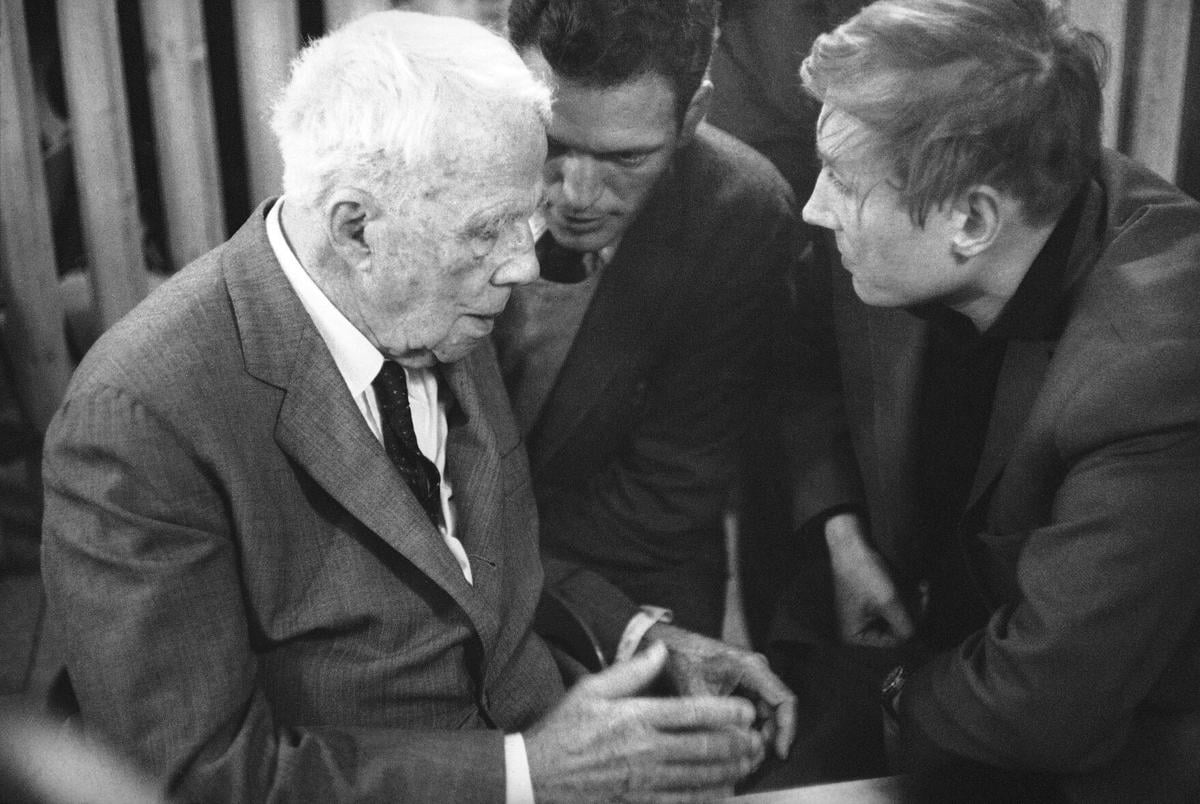
Weeks before the 1962 Cuban crisis, an elderly Robert Frost met Nikita Khrushchev in Russia and Khrushchev asked Frost to deliver a message of good will to JFK.
At the very same time, Khrushchev had personally ordered missiles to Cuba, after the failed USA attempt for regime change in Cuba and the Bay of Pigs fiasco. Russia was going to begin deStalinization at home and abroad.
On the very day of the Cuban Crisis breaking in the news, the famous Russian poet Yevtushenko released this poem about the fear of Stalin rising again from his Mausoleum.
Mute was the marble. Mutely glimmered the glass.
Mute stood the sentries, bronzed by the breeze.
Thin wisps of smoke curled over the coffin.
And breath seeped through the chinks
as they bore him out the mausoleum doors.
Slowly the coffin floated, grazing the fized bayonets.
He also was mute- his embalmed fists,
just pretending to be dead, he watched from inside.
He wished to fix each pallbearer in his memory:
young recruits from Ryazan and Kursk,
so that later he might collect enough strength for a sortie,
rise from the grave, and reach these unreflecting youths.
He was scheming. Had merely dozed off.
And I, appealing to our government, petition them
to double, and treble, the sentries guarding this slab,
and stop Stalin from ever rising again
and, with Stalin, the past.
I refer not to the past, so holy and glorious,
of Turksib, and Magnitka, and the flag raised over Berlin.
By the past, in this case, I mean the neglect
of the people’s good, false charges, the jailing of innocent men.
We sowed our crops honestly.
Honestly we smelted metal,
and honestly we marched, joining the ranks.
But he feared us. Believing in the great goal,
he judged all means justified to that great end.
He was far-sighted. Adept in the art of political warfare,
he left many heirs behind on this globe.
I fancy there’s a telephone in that coffin:
Stalin instructs Enver Hoxha.
From that coffin where else does the cable go!
No, Stalin has not given up. He thinks he can cheat death.
We carried him from the mausoleum.
But how remove Stalin’s heirs from Stalin!
Some of his heirs tend roses in retirement,
thinking in secret their enforced leisure will not last.
Others, from platforms, even heap abuse on Stalin
but, at night, yearn for the good old days.
No wonder Stalin’s heirs seem to suffer
these days from heart trouble. They, the former henchmen,
hate this era of emptied prison camps
and auditoriums full of people listening to poets.
The Party discourages me from being smug.
‘Why care? ‘ some say, but I can’t remain inactive.
While Stalin’s heirs walk this earth,
Stalin, I fancy, still lurks in the mausoleum.
Translated by George Reavey Yevgeny Yevtushenko

International Women’s Day 2022 is on Tuesday 8 March. It is an opportunity to act, improve opportunities and rebuild post-pandemic workplaces without bias for the benefit of everyone.
Ruth Holmes FEBRUARY 2022 from Relocate Global
According to Lean In – an international community dedicated to helping women realise their ambitions and offering its support to International Women’s Day with resources – around three-quarters of women around the world experience bias at work. Yet as author and consultant at Included Stephen Frost wrote in an article for Think Global People, the trouble with bias is that you often aren’t aware of your own unconscious bias. Lean In found that less than a third of employees are able to recognise bias when they see it. This makes it harder for women to be hired and promoted, and more difficult for companies to level the playing field.With women – especially women from minority Black or Asian backgrounds – hardest hit by the pandemic, this year’s International Women’s Day has never been more important to ensuring more equal boardroom representation, gender balance in public decision-making bodies and improved life chances for all women.
As well as being the right thing to do, acknowledging and addressing bias, conscious or otherwise, has a critical role in furthering the diversity, equity and inclusion agenda so vital to building more sustainable, responsible and successful businesses.Research into 1,000 companies in 12 countries by management consultants McKinsey & Company found gender-diverse companies outperform their national industry averages on profitability. Another study by Catalyst, a non-profit community working globally to help build workplaces that work for women, found that firms with more women in management positions enjoy 35 per cent more return on equity (ROE) than firms that lack gender diversity. To make this happen in more companies, bias means taking action to learn what we don’t know. This requires effort, engagement and buy-in to do something about the findings.
Speaking at the CIPD’s annual conference and exhibition in November, Steven Atkins, Global Analytics Enablement Director at splashHR, a people analytics platform, said the driver for addressing discrimination, diversity gaps and changing hearts and minds “has to be ‘show me what I don’t know, even though I think I know about it’.“Then when I see that information, to embrace it and adapt to it. Without information backing up all the wonderful things everyone is talking about, we are not going to make that mandate for change. This is where D&I discussions can help foster positive change.”For fellow CIPD panellist Katherine Gansallo, Diversity and Inclusion Director at the London Stock Exchange Group (LSE), this has been the case around adopting, for example, more flexible working patterns in the international organisation, which employees around 25,000 people in 17 countries.“We are really trying to look at systemic change when it comes to our D&I objectives and really looking at making sure data is key in driving some of the initiatives we are working on. “We are focused on gathering as much of that as possible to really inform the decisions that we make, and make sure we are not only focusing purely on different underrepresented groups, but also making sure that where we have bias in the system, we are mitigating it and pulling it out and making some real change.”
“For us, the pandemic is an interesting time because thinking just about the LSE [which acquired and merged with financial market information provider, Refinitiv, in 2021], it’s quite old in its way of thinking,” explained Katherine Gansallo, hihglighting how individuals and teams can challenge, spearhead change and drive the inclusion agenda at work for mutual benefit. Prior to the pandemic, research showed that flexible working carried with it a stigma, especially for women. A 2019 survey of 1,600 civil servants by the Global Institute for Women’s Leadership at King’s College London found a quarter felt their line manager viewed their flexible working as a negative. Over a third also said they felt they needed to put in extra hours to show their commitment.“There were some managers who were very keen to say there is no way we could do remote working without being present in the office,” continued Katherine Gansallo. “The reality of that is that this pandemic has been a great opportunity to really shake things up and showed us that we absolutely can. “It has allowed us to really challenge people around ‘why did we say we couldn’t work that way’? It’s a great opportunity to encourage people who need different modes of support.”
International Women’s Day is therefore a chance to amplify and reinforce the work that is already happening in purpose-driven organisations to identify and respond to workplace bias. The global movement has published a range of resources and guides so employers of all sizes from around the world can get involved and raise awareness in support of gender equity. You can also access Relocate Global’s wealth of information from our impactful International Women’s Day events over the years – the largest and highest profile celebrations in our sector.Find out how to join us as we celebrate diversity and inclusion in our leading annual Relocate and Think Global People Awards and Think Global People: Future of Work Festival in June, as well as year-round through our multimedia platform. Inspired and keen to get involved and tell us about your work to #BreaktheBias? We’d love to hear from you!

Celebrating 2022 International Women’s Day
The Buena Semilla Project in Guatemala, a 2021 grantee of the MBI, has produced the below video to celebrate International Women’s Day 2022. Please take a few minutes to appreciate some of what the Martín-Baró Initiative for Wellbeing and Human Rights at Grassroots International is helping to make possible.
______________________________________________________________________________________________________________________________________
WATCH THIS AMAZING VIDEO
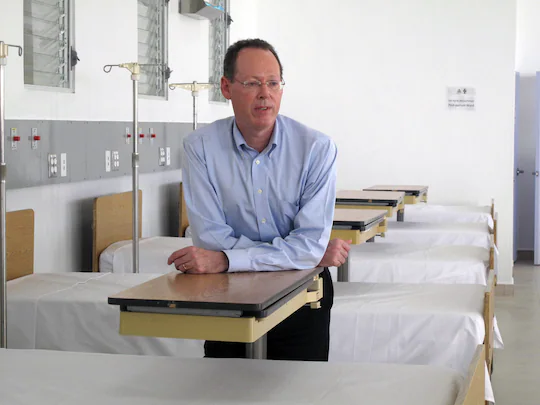
To the long list of Vladimir Putin’s offenses, add this footnote: His unprovoked and lawless invasion of Ukraine riveted the world’s attention when it might have been given to the magnificent life and untimely death of a saint, scourge and beacon, Paul Farmer.Opinions to start the day, in your inbox. Sign up.
Uncounted thousands of human beings are dead because of Putin, in graves from Chechnya to Syria to Kyiv. Uncounted millions are alive thanks to Farmer, in homes from Haiti to Liberia to the American Southwest — even to Russia.
Farmer was a beacon in the sense that he pointed the way — but from a distance, up ahead. He was brighter than most of us. Raised by an eccentric father who housed his family, at various times, in a converted school bus and on a boat anchored in a bayou, he earned a full scholarship to Duke University. He became a University Professor at Harvard, the highest honor given to faculty members there, and received honorary degrees from many of the most venerable universities of North America.
What is more important is the use to which Farmer put his gift of intelligence. Moved by the experience ofbefriending andworking alongside Haitian migrants during his unconventional youthand his undergraduate years, Farmer trained as a doctor and opened a clinic on Haiti’s central plateau. With colleagues, he founded Partners in Health (PIH), a transformational organization that puts the humanity of the poor at the center of its work.
Pause a moment over that, please. One way humans cope with suffering is to put psychic space between ourselves and the afflicted. We might say people are poor because they are deficient in some way, lacking initiative, or creativity, or good parents — or they are just short on luck. We might say people are sick because they lack discipline or hygiene — or, again, they lack luck.
John Green: How Paul Farmer helped save the lives of millions of people
Farmer and PIH insist that those who suffer are not different. Societies are structured in ways that thwart them, and if the structure is changed, they will flourish. To treat physical diseases without attempting to restructure society in liberating ways is insufficient, even inhumane.
A Catholic, Farmer was deeply influenced by Peruvian priest Gustavo Gutiérrez, a leading proponent of “liberation theology,” a movement introduced in the 1960s. By the time Farmer encountered the movement, in the 1980s, conservatives in government and the church largely scorned it. But liberation theology spoke to the way Farmer practiced medicine.
In this view of God’s creation, the poor are not an afterthought. They come first. To borrow the language of the movement, there is “a preferential option for the poor.” Liberating those who suffer from structural oppression is God’s first — preferred — choice: “The last shall be first,” as Jesus explains in the Gospel of Matthew.
A preference for the poor meant, in practical terms, that Farmer did more for his patients than he might have done were he treating the students and faculty at Harvard, say. In poor communities, it is not enough to open a clinic and wait for patients to come through the door. Medical providers must break down the structures that prevent impoverished people from accessing care.
As PIH explains itself: “A mother cannot undergo cancer care and lose work without receiving economic support. A tuberculosis patient cannot endure strong medications on an empty stomach. And a patient showing symptoms of covid-19 cannot take public transportation to her local testing site.” A patient might need food, money, child care and a car ride before medicine or surgery can be of any value.
Obituary: Paul Farmer, a giant of public health, dies at 62
Farmer’s work produced tangible results that he documented in scores of peer-reviewed articles in leading medical journals. Partners in Health grew rapidly, adapting its programs to the specific needs of communities. For example, in the Navajo Nation, which covers parts of New Mexico, Utah and Arizona, PIH identified poor diet as a major health problem. The economic structure of the region needed to be changed to create access to more nutritious foods.
The solution: Clinics in the Navajo Nation now write “prescriptions” for fresh fruits and vegetables. When grocery stores and trading posts “fill” the prescriptions, they are reimbursed by Partners in Health — just as pharmacies are reimbursed for pills. Community health workers offer the same recipes and encouragement that wealthy families receive from their neighborhood juice bars, personal trainers and subscriptions to cooking magazines.
A principle of liberation theology is that the shepherd lives among the flock. So it was that Paul Farmer was not in Cambridge, Mass., but at a district hospitalin Rwanda when his vast and demanding heart gave out on Feb. 21. He was just 62 years old but far ahead of the pack. There he remains, up ahead, beckoning the world to follow.121 CommentsGift Article

Opinion by David Von Drehle David writes a twice-weekly column for The Post. He was previously an editor-at-large for Time Magazine, and is the author of four books, including “Rise to Greatness: Abraham Lincoln and America’s Most Perilous Year” and “Triangle: The Fire That Changed America.” Twitter
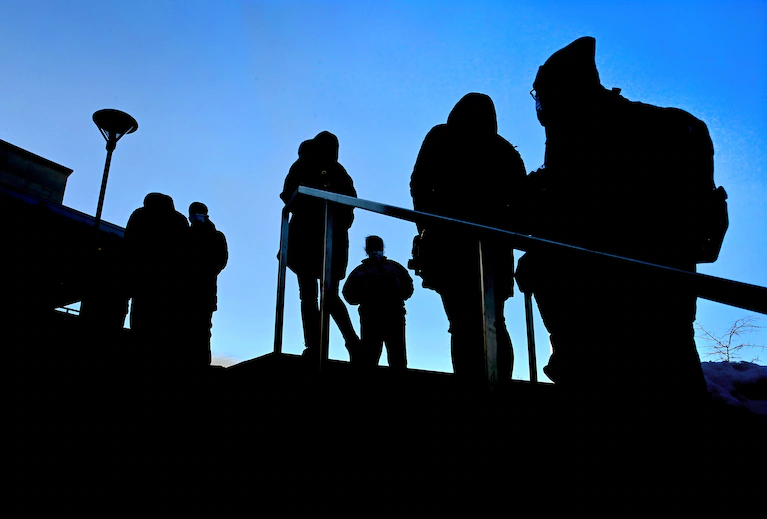
The condition known as long covid continues to frustrate its sufferers, baffle scientists and alarm people who are concerned about being infected by the coronavirus. The term, a widely used catchall phrase for persistent symptoms that can range from mild to debilitating and last for weeks, months or longer, is technically known as Post-Acute Sequelae of SARS-CoV-2 infection, or PASC. But scientists say much remains unknown about long covid, which is also referred to colloquially as “long-haul covid,” “long-term covid,” “post-covid conditions” and “post-covid syndrome,” among other names.
“This is a condition that we don’t even have an agreed-upon name for yet, and we don’t have any understanding really of what’s going on down at a chemical level,” said Greg Vanichkachorn, medical director of Mayo Clinic’s COVID-19 Activity Rehabilitation Program. “So, until we have that kind of understanding, it’s really important that we not make quick decisions about what long covid can or can’t be.”
The National Institutes of Health has launched a research initiative to study the potential consequences of being infected with the coronavirus, including long covid, with the goal of identifying causes as well as means of prevention and treatment. It is building a nationwide study population to conduct that research.
In the meantime, experts said, long covid shouldn’t be dismissed or taken lightly. “This is real, definable, and causes significant patient suffering,” said Bruce Levy, chief of the division of pulmonary and critical care medicine at Brigham and Women’s Hospital in Boston. “The majority of people who got acutely infected felt totally normal before they had their infection, and now they don’t feel normal. That’s jarring.”
Long covid is destroying careers, leaving economic distress in its wake
The Washington Post spoke with experts who are researching and treatinglong covid, and compiled answers to some of the most commonly asked questions about the condition. Please keep in mind that, because covid and its potential long-term effects are continuing to be studied and understood, many of these answers are not definitive, and information will probably change.
“It kind of depends on who you ask right now,” Vanichkachorn said, “and that’s a reflection of how much, or how little, we know about this condition.”
Generally, he said, long covid is “a state where a person experiences symptoms greater than what we would normally expect for the normal recovery from covid.”
But some experts consider symptoms that linger for four weeks or longer to be long covid, while others say symptoms should persist for at least 12 weeks before a patient is diagnosed with the condition.
Even prominent public health agencies have somewhat different definitions. For example, one definition from the World Health Organization states:“Post COVID-19 condition occurs individuals with a history of probable or confirmed SARS CoV-2 infection, usually 3 months from the onset of COVID-19 with symptoms and that last for at least 2 months and cannot be explained by an alternative diagnosis.”
Meanwhile, the Centers for Disease Control and Prevention defines the condition as:Post-COVID conditions are a wide range of new, returning, or ongoing health problems people can experience four or more weeks after first being infected with the virus that causes COVID-19. Even people who did not have COVID-19 symptoms in the days or weeks after they were infected can have post-COVID conditions. These conditions can present as different types and combinations of health problems for different lengths of time.
The CDC lists more than a dozen symptoms potentially associated with long covid, noting that they can be new or ongoing, and can occur in anyone who was infected with the coronavirus, regardless of severity. The WHO notes that symptoms typically have an effect on everyday functioning and they may fluctuate or relapse over time.
“The most hallmark feature is profound fatigue,” Vanichkachorn said. Patients have reported feeling exhausted for hours or days after doing simple tasks, such as taking a dog for a walk around the block.
Other common symptoms include “brain fog,” or difficulties with cognition and memory, pulmonary issues such as shortness of breath or lingering cough, heart-related problems and gastrointestinal complaints.
In other words, long covid can affect “almost every single body system,” said Daniel Karel, a primary care provider and clinical instructor in medicine in the general internal medicine division at George Washington University.
Long covid’s severity can also vary widely, experts said. Some people can function day-to-day, despite “not feeling themselves,” Levy said. But on the other end of the spectrum, “you can have just a completely debilitating picture that has just a horrendous impact on the patient’s life,” Karel said.
Five months post-covid, Nicole Murphy’s heart rate is still doing strange things
“Long covid” is a clinical diagnosis, Karel said, “meaning there is no test, there is no lab, there is no imaging to diagnose it.” Instead, he said, “we put the whole picture together.”
First, doctors determine whether someone was infected with the coronavirus. Ideally, there is a positive coronavirus test or other evidence of an infection, such as the presence of antibodies in the blood of someone who wasn’t vaccinated or a near-certain exposure (i.e., everyone in your household tested positive, and you also developed symptoms during that time).
A cluster of telltale symptoms that can’t be explained by other causes also help to support a diagnosis, experts said.0:00 / 6:34SettingsFor these three long haulers, debilitating symptoms and fatigue has kept them from returning to work — and in return, struggling to navigate their new normal. (Drea Cornejo, Joy Yi, Colin Archdeacon/The Washington Post)
It’s been difficult to pin down what percentage of people who contract the coronavirus go on to develop long-term symptoms of covid-19, experts said, partly because the condition is still fairly new. Existing research figures and estimates from experts range from single-digit percentages to upward of 30, 40 or 50 percent.
But with tens of millions of people in the United States alone who have been infected, even a small percentage is significant, Levy said.
“In the U.S., there’s been basically about 80 million people that have been infected,” he said. “If there’s even 1 percent, just 1 percent of that, you’ve got 800,000 people that are at risk of being affected, and that’s probably an underestimate, frankly.”
“The most important takeaway that we can definitely say is that it’s not rare,” Vanichkachorn said. Heath-care providers “are seeing this in general primary care clinics, in hospitals, internal medicine; it’s something that we all just need to be prepared for.”
Surviving a more serious acute covid-19 infection, having certain comorbidities and being older have been associated with potentially developing long covid and experiencing severe symptomsfrom it. But experts said that doesn’t mean other people aren’t at risk, too.
“Plenty of young people with no other medical problems can come down with very, very serious and life-altering symptoms,” Karel said. “You don’t have to be sick. You could be young, you could be healthy and unfortunately really suffer.”
A peer-reviewed paper published in January identified four potential risk factors: having Type 2 diabetes; how much viral RNA was produced by the initial coronavirus infection; the presence of Epstein-Barr virus (one of the most common human viruses in the world and the cause of the disease mononucleosis) in the blood; and having specific autoantibodies, antibodies that mistakenly attack tissues or organs in the body as they often do in people with autoimmune conditions.
Additionally, some evidence suggests that women may be more predisposed to long covid than men, Vanichkachorn said. This also tends to be true for autoimmune conditions as well as other chronic disorders such as myalgic encephalomyelitis/chronic fatigue syndrome (ME/CFS), “which seem to be very similar conditions,” he said.
Could long covid unlock clues to chronic fatigue and other poorly understood conditions?
Research is being conducted on whether vaccination status potentially plays a role, with some data suggesting that being vaccinated could help lower the riskof developing long covid. But although those findings are “intriguing,” Levy said, more studies need to be done.
Although it’s less common, children and adolescents can develop long covid, said Alexandra Yonts, director of the Pediatric Post-COVID Program at Children’s National, adding that she has seen long covid symptoms “completely sideline” young people.
Long covid in children is also generally defined as persistent symptoms lasting at least four weeks after the initial infection, but Yonts said the definition may change. “The population we really are concerned about may be those that have symptoms like 12 weeks or more after their initial infection,” she said.
As with adults, fatigue “is the number one presenting symptom” of long covid in children and adolescents, along with brain fog, Yonts said. However, headaches and abdominal complaints are more common, and young people may also be less likely than adults to have post-covid lung damage, despite reporting shortness of breath, she said.
At this point, experts are not aware of “any clear risk factors,” including preexisting conditions or the severity of the initial infection, Yonts said. “Kids with mild illness or no illness are the ones that can develop this as well, which makes it even scarier.”
Post-covid recovery programs and clinics have popped up nationwide during the pandemic, many of which are taking a multidisciplinary approach and providing patients with individualized care. But at this time, Karel said, “there’s no magic pill. There’s no magic cure.”
In addition to treating specific symptoms and conditions when possible, experts said rehabilitation through low-paced gradual increases in activity is key to recovery. Yonts said the typical therapy for children or adolescents suffering from fatigue and brain fog is “very much in line with what is done after concussions.”
It’s critical, experts said, to remember that recovery will probably take time and involve setbacks. “With covid, one of the hallmarks of the fatigue symptom is what we call post-exertional malaise, meaning that, if you exert yourself too much, you can feel like garbage,” Karel said. “You can feel very sick for the next day or two, sometimes longer.”
First, if you contract the coronavirus and develop covid-19 symptoms, avoid pushing through the illness, said Susan Cheng, director of the Institute for Research on Healthy Aging at Cedars-Sinai, who is studying long covid.
“Please rest and let your immune system recover as effectively and efficiently as it can,” Cheng said. “I am hoping that by taking that approach, individuals are less likely to develop the aftereffects.”
But if you do suspect you have long covid, don’t delay seeking help. Vanichkachorn said it may be beneficial to talk with a primary care provider if you notice lingering symptoms as early as three weeks after the initial infection. “The earlier that you can get care, the better it most likely will be for you.”
“One of the things that many patients try to do because they’re so eager to get back to life after covid is just try to grit their teeth to get right back to it,” he added. “It’s not something that you can grit your teeth and get through.”

1-Never underestimate the transformative power of individual relationships. (1999 Cathy Hurst Belfast quoting the USA Ambassador to UK)
2-You are either part of the problem or part of the solution- You cannot be neutral and every excuse is a choice. (2000-07 Belfast Orientation Weekend)
3-The listening contract means People will listen to you to the extent that they feel you have listened to them.( Presidential Plot 2008)
4. Don’t act into the story your opponent is acting out of. (The secret of Non Violence- Presidential Plot)
5. We need to find the story that changes the story.
6. Don’t come critical, come curious.
if you can’t come curious, be curious about why so critical.
If you can’t be curious about being critical,
be critical about why you are so critical.
If you can’t be critical about why you are so critical,
best not come at all- stay home. ( inspired by Peter Maurin-Easy Essays) For nsl teams
7. Stories turn walls into windows
(Wall of Stories)
8. If you come with expectations, best be disappointed early so you can replace it with anticipation (work placements) Stories work best when they are full of surprises. ( Team nsl 2010)
9. It’s not what you say that matters, it’s what gets heard
10 Our job is to listen in such a way that we can invite people to tell us the stories that they most need to tell. And to tell our stories in ways that invite the most engaged listeners.
11.Our job is to tell the stories that compel our listeners to get beyond their defenses and be open to change. Real stories of witness do not provoke argument but engagement.
12 Calm your biology, claim your biography, commit your soul (Mary Fowler)
13 The distance between a reaction and a response is about 10 seconds in real time- but in history, it can take up to 100 years. ( inspired by Victor Frankl)
14 A reaction to a reaction makes for a reactionary world-
A response to a response makes for a responsible world.
15 What we give meaning to, we give power to.
16 Things will be OK in the end- if they are not OK now, it’s because it is not the end. (John Lennon possibly?)
17 The story of power boils down to the power of a story
18 Don’t talk about us without us (NSL mantra)
19 NARRATIVE ETHICS
Everyone has a story
Everyone has a right to tell it, in their own time and in their own way.
Everyone has that right over anyone else’s right to tell it for them.
We have got to stop stealing other people’s stories.
20 Be a voice not an echo- Tell the story that only you can tell, before you repeat the scripts others have written for you

21 Transforming Conflicts requires we turn a generation obsessed with “If Only” to becoming a generation ready to relentlessly ask “What if?”
22 Leadership needs to shift from looking back in fear crying “Never Again” to looking forward in hope to dream about “Never Before.”
23 The start of any revolution is when people decide to grab back their own story (Barbara Meyerhof-Michael White definitional ceremony)
24 Meaning shifts through time, so do not ask Why or What or Who, ask “Where,” where have we shifted- we need a new geography of meaning (practice of narrative maps)
25 THE ANALYSIS- Those who want change don’t have power and those who have power don’t want change
26 Old story leaders see the present as the past just repeating itself over and over. New story leaders see the present as the future rehearsing, getting ready for a maiden performance
27 Let your attention always serve your intention. Beware that stories have the power to hijack your attention to betray your intentions.
28 It is easier to act into a new way of thinking than it is to think into a new way of acting (praxis, habit)
29 It is not the stories we tell that matter in the end- but the stories we create that others will tell
30 You have a right to speak but you do not have a right to be heard- you have to earn that.
31 A story with inspiration but no invitation is like hearing about the amazing party and not being invited. (JFK Ask not”)
32 You can either understand or you can judge but you can’t do both. If you judge, then you will struggle to see beyond your own “righteousness.” If you strive to understand, you will find that there was nothing to judge in the first place.

33 Certainty comes easiest to those who understand everything or those who understand nothing (the Knowledge illusion)
34 Stories take us there. They can travel such that no wall can shut them out and no checkpoint can lock them in. Stories don’t need a passport or a visa.
35 You will hear bold assertions “The facts of the matter,” the reality is,” “it is obvious that…” but refuse to allow another’s opinion to define your reality. Every utterance is situated in its time and place. We must challenge the false certainty that feeds the egos of war.
36 Appreciation is the soul force of peace – those who take and take and take soon bankrupt the economy of grace
37 “You are all terrorists” he screamed- Was it a threat, an insult, or the cry of pain of someone who realizes that the world he has been defending is falling apart and that his story no longer adds up. Rage is is not a tactic-but the last attempt to salvage a fallen world. (about NSL memeber)
38 The act of war begins in the imagination. So too the acts of peace (James Hillman)
39 “The greatest weapon of the oppressor is the mind of the oppressed.” (Steve Biko)
40 “There is nothing we can do” is exactly what the powerful want the oppressed to believe. “We can’t do everything but we can do something” is where all revolutions begin and where the powerful know their days are numbered. (Projects for Change)
41 In the end, it is not the results but the memories- did this experience help fund the well of meaning from which you create and give enduring value to your life. In the endless flow of time, will you tell it as “Once upon a time?”

42 Under stress, remember the three S’s are Soft, Slow, and Simple- conflict feeds on hard, fast, and complicated. (Ron Redmond)
43 Energy is a condition of position- and position shapes the horizon of possibility.
Beginnings We Create,
Middles are complicated so we correct, clarify and recommit,
Endings we Complete
44 Post It Diplomacy- write a note that Recognizes to Appreciate to Invite and to Apologize – a different kind of RAP sheet.
45 Stories are never innocent and the most dangerous are those that pretend they are.
46 The four Windows of Change-
Change challenges the old story of the old story,
to offer a new story of the old story,
to become the new story of the new story,
that even if it is made at the end to sound like the same old story,
no matter- change has changed things such that we no longer notice the change- that is the most profound kind of change
47 Stories run on the engine of human desire and are fueled by memory and dream.
48 We refuse to accept that the conflict has to be the defining story of our young people’s identity project.
49 The three shifts, from problem to possibility, from victim to agent, from excuses to responsibility.
50 We refuse to live inside a problem saturated story ( Michael White)
51. What matters is not the story you listen to, but the story you listen through.
52. We must turn our anger into rage and then, connecting our anger to our core, turn our rage into courage. (Cou-rage)
53. The world is always in flux such that either you are doing change, or change is doing you.
54. God hears all the stories and that is why the great religions all define God as a God of mercy above anything else. To judge simply means you don’t have all the stories.
55.Tell a story once, you are telling it
Tell a story twice, the story is telling you
Tell a story thrice, the story is you.
Tell it twice more, the story is us.
56. If you want to be serious about change- you have to be serious about power.
If you want to be serious about power, you have to get serious about organizing. ( Alinsky) CPO
57. Those who have power don’t want change.
Those who want change don’t have power.
58. If there is a future worth living into, there is a present worth learning in, and a past worth learning from.
59. The story that captures your keenest interest might not be a story that is acting in your best interests.
60 I refuse your invitation to be complicit in your acts of self-diminishment
61. A story without an audience is a bird without wings and a fish without water. You are the audience so realize your power to feed or starve a story.
62. I want to evolve the audience, oops, I mean involve the audience. Actually, no, I want to evolve them too(Kit Turen)
63. Despair means that we have reached those furtherest limits of life where our knowledge and our experience no longer feed our hope. That does not mean the end, but rather the start of a quest to build our hope not based on what we know or feel but on what lies beyond, in what we have yet to know. ( meeting with Seth and Kelly)
64. A normal reaction to a normal situation is normal as is an abnormal reaction to an abnormal situation is normal, but a normal reaction to an abnormal situation is not normal, and an abnormal rection to a normal situation is also abnormal.
65. “We must connect our rage to our heart, to the core of our conscience to so we access more than just our fury, that we see what it is lighting it up, and what in our heart of hearts we know is wrong, what needs to stop, what is intolerable, and when we have done that, connect rage to heart, to what in French we call “Cors” we create Cor and Rage, or COURAGE.” paul costello 2018
66. “The Future can only happen when the present lets go of its past. The Past can only be itself when the present lets go of its future. The Present can only appear when the future beats back the past and its claim to colonize the space of possibility.” P Andrew Costello with F Scott Fitzgerald
67- If you want to talk about change, you have to talk about power and if you want to talk about power, you have to talk about organizing, and if you want to talk about organizing, you have to eventually stop talking about it and doing it. Praxis, says Marx.
68. You can only act into the future, but people keep trying to act into the past and confuse the domains of change. Agency is about space to act into, and the only space wide enough is tomorrow. Keep ever widening tomorrow.
69. Start with Where because who you are is where you are. Don’t start with Why, and even if you do, you are at the start which is where. It is the where of the why that makes the why matter. A why 30 years ago might not matter much now, but there is a why pressing in on you now, where you are showing up.
70. Act and the world has to react. Without action, the world can stay the same as it ever was and doesn’t much care ( inspired by Tommy Shortall omi)
71. “It’s all a matter of growth” ( T.Shortall omi at SMS)
72.”The past was once the future that has come and gone.
The present is the future that came and is going.
The future is the future that still lies ahead and is as yet, still to come. No matter how you look at it, they are all futures.
There is no ghost in the machine.
Or if there is, it’s the ghost of tomorrow wanting a say in today,
Feeling so aggrieved that it wasn’t heard enough in yesterday.”
” P- Costello from the future
73. The Middle is going to be Complicated- expect that. Don’t complicate it more than you have to, but it’s meant to be complicated to keep it interesting.
But don’t complicate the beginning, when you are supposed to create,
And don’t complicate the ending, when you are supposed to complete.
Complicate means you have to clarify before you recommit. It’s all good. But don’t stay there. It’s meant to be on the way, not get in the way.
74. I can understand what past you are acting out of, but what matters more is What future are you acting into?
75. The question to ask is not “What are the facts?” but “What is the future?”
76. Memory seems to be about the past, but no, it is how we give the past a future. And how we give the future a past.
77. They tell us we need to live for Now, but Now last a second, and it cannot sustain itself. What we need to be building in the present is a history of the future that we most want to live into. That is the kind of Now worth paying attention to.
What story?” You ask.
The story that says, “You are wasting your time trying to change anything.”
The story that says,” Who are you to presume you can do anything that makes a difference to anyone? Lose that messiah complex.”
The story that says” We tried it all before, and it didn’t work then and so obviously it won’t work now.”
The story that says “Why bother? Just live your own life and make the best of it. No one else gives a dam, so, why should you?”
The story that says, “We have always had this story of how we do things, and to mess with that is to insult those who came before you.”
The story that says, “Try it but if you fail, you risk being labeled a loser. Don’t take crazy risks. Be prudent.”
The story that says ” You have to wait till you are ready, and you are not ready.”
The story that says, “You have to wait till you have enough funds, and you have no funds: you are broke!
The story that says “You have to wait till you get the right people, and so far, all you have are amateurs.”
The story that says, “You need to get your Harvard degree in change management and your Oxford MBA. Till then, leave it to the experts.”
The story that says” The best minds, Presidents, Prime Ministers, Generals, Popes, Diplomats, Rabbis, Mullahs, and Senators have all tried to bring peace to Israel and Palestine, and you think your little program can possibly do what this pantheon of potentates have failed to do?” …. If you want to change the world, you have to change the story…We know because it’s been done before:
Selma,
Seneca Falls,
Stonewall,
Gandhi,
MLK and JFK and LBJ
Jesus,
Moses,
Abraham,
The Prophet
Buddha
Steve Jobs,
FDR
the Beatles,
Obama,
You (write your name here) ……….
Come join the Project CHANGE Team because we need more New Story people.
What they told us 7 years ago “It can’t be done!”
is the very thing 7 years from now, they will be accusing us,
“Why didn’t you do it sooner.”
(Paul Costello)