Mr. Brooks ascribes hopelessness in the U.S. to the loss of traditional values and community. He has written many very insightful articles, but this piece is really off the mark. How can he say that America has been thriving economically and that “income inequality has gone down” in the last decade or so?
The level of inequality in America has reached epic proportions not seen in a century. A few hundred plutocrats hold more wealth than at least 200 million ordinary Americans. Donald Trump was elected because millions of Americans can’t afford health care, housing or a quality education and cannot get a decent-paying job.
The loss of community is directly related to our hypersteroidal capitalist economy in which good jobs have disappeared from whole sections of the country because the financial markets demand short-term profits at the expense of workers and their communities. And the Democrats have not done nearly enough to address these problems.
Furthermore, the deliberately addictive social media platforms — one of our “great” corporate inventions — rob people of genuine connections and damage teenage minds.
Mr. Brooks, the spiritual crisis and hopelessness are real, but this has occurred because of the unleashing of extreme greed and the complete corruption of our politics by Big Money going back to at least the 1980s.
Seth Mausner San Francisco
To the Editor:
David Brooks attributes “very liberal” American students’ high levels of depression to their embrace of “autonomy and social freedom,” their hyper individualism, their “greed” and their worship of individual choice at the expense of “core commitments that precede choice — our love for family, neighborhood, nation and the truth.”
He does not mention factors like economic anxiety, climate change, environmental devastation, digital devices, social media, suppression of free speech or political despair in the face of nascent dictatorship.
I am a relatively happy 78-year-old very liberal man, but if I were a college student I’d be depressed, too.
Mr. Brooks’s analysis is disappointingly reductive in its omission of so many discouraging realities of current American life.
Stephen Kessler Santa Cruz, Calif. The writer is a columnist for The Santa Cruz Sentinel.
To the Editor:
David Brooks is right: People flourish where there’s not only prosperity but also “dense networks of relationships” and shared purpose. He’s also right that America and other industrialized societies have largely let material success crowd out the social and moral conditions that sustain a good life.
And while I agree with Mr. Brooks that culture is at the heart of the problem, I’m convinced that there’s still plenty that we can do to address these challenges through sound public policies.
Start by scaling “social prescribing” in primary care so clinicians connect lonely patients to community groups, arts, nature and volunteering. Launch a national service year to bring people together to solve problems. Reinvest in “third places” — libraries as one-stop hubs for learning, counseling, job help and civic life; parks, community kitchens and maker spaces that invite people to unite without having to spend money.
As the adage goes, politics is downstream from culture. Yet smart public policies can reshape culture by making connection the default of modern life. Both left and right care about the disconnection that Mr. Brooks describes. Let’s build the political will to start fixing it.
Kim Samuel Toronto
To the Editor:
David Brooks focuses on the rise in hopefulness among poorer, more religious countries and the decline in richer, more secular countries like the United States and Western Europe. His reasoning is that “since the 1960s we have adopted values that are more secular, more individualistic and more oriented around self-expression.”
I agree with his analysis. However, he fails to point out the upside of the adoption of such values.
As a result of the trend “to emancipate the individual from the group,” previously repressed groups are freed from conformity to the norm. L.G.B.T.Q.+ individuals are certainly better off than they were in the 1960s. Religious minorities are freer to practice their religion as they choose. Indeed, “cat ladies” whose career goals are nontraditional are undoubtedly happier.
The real challenge is not to recreate the 1960s conformity but to create a society in which religious and cultural institutions provide a sense of community for all of us in all of our diversity.
David Silverstone West Hartford, Conn.
To the Editor:
David Brooks encourages a focus on abstract notions of shared community that ignores the real economic and political conditions.
The United States has one of the highest levels of wealth inequality among developed nations. Globalization and deindustrialization have hollowed out previously cohesive communities. Economic mobility has stalled as one’s future success is highly correlated to what ZIP code one was born into. Meanwhile tech companies engineer our realities and are set to radically change our work lives with A.I. No amount of church attendance will fix these worries.
And why are young liberals more depressed than conservatives? Maybe they are aware enough to worry about their own and their children’s future in a world where government has failed to successfully address these problems. Perhaps young conservatives aren’t noticing those trends.
And besides, what kind of yardstick is “happiness”? In Aldous Huxley’s novel “Brave New World,” the populace was given Soma so that they could feel “happy” while not noticing their oppression.
Mr. Brooks’s prescriptions for values and connection are hollow when disconnected from the societal context in which we live.
Diane Finn Candler, N.C. The writer is a semiretired social worker/psychotherapist.
I hope you don’t mind if I pierce the general gloom with a piece of wonderful news. More people around the world report that they are living better lives than before. Plus they are becoming more hopeful about the future. In a new survey, the Gallup organization interviewed people across 142 countries and asked them a series of questions to determine whether they felt they were thriving in their lives or struggling or, worst of all, suffering.
The number of people who say they are thriving has been rising steadily for a decade. The number of people who say they are suffering is down to 7 percent globally, tying with the lowest level since 2007. This trend is truly worldwide, with strong gains in well-being in countries as far-flung as Kosovo, Vietnam, Kazakhstan and Paraguay.
Unfortunately, there is a little bad news. Some people reported sharp declines in well-being. That would be us. The share of the population that is thriving is falling in America, Canada, Western Europe, Australia and New Zealand. In 2007, 67 percent of Americans and Canadians said they were thriving. Now it’s down to 49 percent.
To put it another way, the nations with some of the highest standards of living are seeing the greatest declines in well-being. We still enjoy higher absolute levels of well-being than nations in the developing world do, but the trend lines are terrible.
This should not be a surprise. I would say the most important social trend over the past decade has been the disconnect between our nation’s economic health and its social health. Over these years the American G.D.P. has surged, wages have risen, unemployment has been low, income inequality has gone down. At the same time, the suicide rate has surged, social isolation has surged, social trust is near rock bottom. According to a Gallup survey from January, the share of Americans who say they are “very satisfied” with their lives has hit a new low. According to the 2025 Edelman Trust Barometer report, only 30 percent of Americans feel optimistic for the next generation.S
What’s going on here?
People thrive when they live in societies with rising standards of living and dense networks of relationships, and where they feel their lives have a clear sense of purpose and meaning. That holy trinity undergirds any healthy society. It’s economic, social and spiritual.
I spoke with Dan Witters of Gallup, who broke down some of the contributors to social and spiritual health. People who are thriving are more likely to feel a strong attachment to their community. They feel proud of where they live. People are more likely to experience greater well-being when they join congregations and regularly attend religious services. Feeling your life has purpose and meaning, he adds, is a strong driver of where you think you are going to be five years from now.
The most comprehensive study of well-being is probably the Global Flourishing Study, led by Tyler J. VanderWeele of Harvard and Byron Johnson of Baylor. Their group has interviewed 200,000 people across 22 countries beginning in 2022. They found that a few countries do well across material, social and spiritual measures, notably Israel and Poland. A lot of countries score well materially, but the people who live in them are less likely to have a sense of clear purpose and meaning, like Japan and the Scandinavian nations. Other countries don’t do as well economically, but do very well socially and spiritually, like Indonesia, Mexico and the Philippines.
I’d say that the nations that are doing well in that Gallup thriving survey are those that are experiencing rising living standards while preserving their traditional social arrangements and value systems. The nations like America that are seeing declining well-being are fine economically, but their social and spiritual environments are deteriorating.
Why have rich nations lagged behind in this way? VanderWeele theorizes that maybe it’s a question of priorities. “I tend to think you end up getting what you value most,” he told me. “When a society is oriented toward economic gain, you will be moderately successful, but not if it’s done at the expense of meaning and community.”
I’d add that we in the West have aggressively embraced values that when taken to excess are poisonous to our well-being. Over the past several decades, according to the World Values Survey, North America, Western Europe and the English-speaking nations have split off culturally from the rest of the world. Since the 1960s we have adopted values that are more secular, more individualistic and more oriented around self-expression than the values that prevail in the Eastern Orthodox European countries such as Serbia, the Confucian countries like South Korea and the mostly Catholic Latin countries like Mexico.
The countries that made this values shift are seeing their well-being decline, according to that Gallup thriving survey. The countries that resisted this shift are seeing their well-being improve. The master trend in recent Western culture has been to emancipate the individual from the group, and now we are paying the social and spiritual price.
Two groups are particularly hard hit. First, young people. Those of us who are older can at least remember the pre-Bowling Alone era. But young people now have to grow up in a more distrustful and atomized world. It used to be that people’s happiness levels followed a U-shaped curve. People felt happier when young, then it dipped in middle age (it’s called having teenage children), and then happiness levels rose again around retirement. Now the curve looks more like a slope. People are more miserable when young, doing OK in middle age and happiest in their senior years. Young Americans are the worst off among all age groups in that Global Flourishing Study, as are young people in Australia, Brazil, Germany, Sweden, Britain and other Western countries.
Progressives, and especially young progressives, are the other group that is suffering. Since researchers started measuring these things in 1972, conservatives have almost always been happier than progressives because conservatives are more likely to do the things that correlate with happiness, like get married, go to church, give to charity, feel patriotic, have more sex and feel their life has meaning.
But around 2011 something changed. Lower happiness levels transmogrified into higher levels of depression and mental illness, a related but different thing. That year, young progressives began reporting a significant rise in depression rates. A few years later, conservatives began reporting a similar rise, but not to the same degree. A 2024 survey by the Foundation for Individual Rights and Expression found that 35 percent of “very conservative” college students said they suffer from poor mental health at least half the time, which is terrible, but 57 percent of “very liberal” students did, which is horrendous.
There’s a lot going on to explain these depression rates, but one of them has got to be that progressives are more likely to embrace the autonomy and social freedom ethos described in that World Values Survey, and this hyperindividualistic ethos is not good for your social and spiritual health.
Let’s be clear about what’s happened here: greed. Americans have become so obsessed with economic success that we’ve neglected the social and moral conditions that undergird human flourishing. Schools spend more time teaching professional knowledge than they do social and spiritual knowledge. The prevailing values worship individual choice and undermine the core commitments that precede choice — our love for family, neighborhood, nation and the truth. There’s a lot of cultural work to do.
David Brooks
Opinion Columnist
In this piece I offer a cultural explanation for why more people in poorer countries feel like they are thriving while fewer people in rich countries feel like they are – that we care less about and are less versed in social and spiritual knowledge. Of course there are many alternative explanations. One is about momentum: Many poorer countries feel like they are moving up, while richer ones feel like they are stagnating.
Another, coming from Brink Lindsey, whose book “The Permanent Problem” will be coming out soon, is that affluence changes expectations: Affluent people want government and society to provide basic physical security as well as meaning and purpose and friendship. When they can’t deliver, people get angry and disillusioned.
Do these alternate explanations seem plausible? Are there others? Thanks for reading the piece!
My students resisted reading books. I found an unexpected solution.
Guest column by Seth Biderman Washington Post August 24th 2025
A few months into my first year of teaching middle-school English in Santa Fe, I realized that a handful of my students were not reading books. I had carefully structured the class time so there would be 20 minutes for silent, light-dimmed independent reading. Most of the students tucked into a novel at their desks or on the floor — an angsty adolescent novel or a dog-eared Harry Potter. But six or seven kids in my class of 20 would just sit at their desks and stare out the window. Or doodle on the back of their hand. Or unfold a paper clip and use it to make intricate carvings into an eraser. (Smartphones, the ultimate distractors, were not yet a thing.)
I would come up to these kids, and in a very gentle voice, remind them that they were supposed to be reading. Any book they wanted — it was their choice. But they did have to read.
The kids would sigh, lift themselves from their desks and shuffle over to the bookshelf. This I had stocked with all sorts of paperbacks from the thrift store and my own collection. The kids would look at the titles for a few seconds, grab one with a thin spine, shuffle back to their desks, open it up and wait for me to leave. Forty-five seconds later, they’d be once again window-staring or doodling or eraser-carving, the book lying sad and forgotten before them.
Like every English teacher who has ever walked this planet, I interpreted their resistance to reading not only as a pedagogical challenge but also as a personal affront. More: It was further evidence that civilization was in decline. What better way to learn about honesty and humility than to read “Charlie and the Chocolate Factory”? What better way to understand compassion and tolerance than to read “The House on Mango Street”? What is life without “The Catcher in the Rye”?
There was also the lesser issue of the New Mexico state standards for English language arts, which I was legally obliged to insert into these half-formed human beings. These standards were full of proclamations like, “By eighth grade, students should be able to identify how an author employs metaphors to express key themes in a work of fiction.” Which those nonreader students would never learn by carving into their erasers.
I tried sticks and I tried carrots. I assigned mini book reports and punished the nonreaders with bad grades when they failed to produce. I created whole-class reading challenges, promising pizza parties if as a group we read so many books in a month. Following the advice of more experienced colleagues, I offered graphic novels and magazines to the nonreaders, just to get them started.
None of this worked. If anything, my efforts only made the nonreaders resent reading — and me — even more.
This problem kept me up at nights. I was 26 years old and fresh off a two-year stint at creative writing school. My secret ambition was admittedly naive: to become John Keating in “Dead Poets Society,” belting Walt Whitman from the desktops. Every minute a child did not read eroded my dream, left me defeated and gray.
Then I remembered my beloved 11th grade English teacher, Ms. Germanas. In her class, we had all read a book because she had made us do it. Each afternoon, we pulled our desks into a circle and read aloud “The Scarlet Letter.” No one had found much pleasure in “The Scarlet Letter,” but we had read every word of that book. All of us.
This approach flew in the face of my desire to create independent-minded students, motivated to read by their own love of literature and longing for human connection. But something had to give. I pulled the plug on independent reading and said that we were going to read a book, all of us together.
It was an unpopular edict, met with groans. The readers liked reading their own books, and the nonreaders liked carving their erasers. I held my ground, and that Friday afternoon the students came in to find the desks in a circle, and on each a copy of “Of Mice and Men.”
Yes, a book about two farmhands on a ranch in the 1930s, written by a White man now long dead.
“Here’s what’s going to happen,” I told them. “We’re going to read this out loud, page by page.”
One boy raised his hand and asked if he could read first.
“No,” I said. “I’m reading it to you.”
We opened the book, and I began.
It worked. Little by little, Friday by Friday, the nonreaders stopped window-staring and doodling. They wouldn’t always turn the pages, but they would listen.Advertisement
After a few Fridays, I noticed that one of the most inveterate nonreaders was not only listening, but also looking at his book, even mouthing along. On a hunch, I pulled him after class, showed him how quotation marks worked, and asked him to read Lennie’s lines the following week. He turned out to be a natural, with a slow, plodding delivery. Steinbeck would’ve been pleased.
As we proceeded, some of the reading kids asked if they could take the book home and finish it. I told them they could not. And if I caught them reading ahead in class, I would stop and make them come back to the page we were on.
With that one student reading Lennie and me reading the descriptions at a leisurely clip, it took us a few months of Fridays to move through that slim novel.
I taught English for another decade after that class. Each year, I was asked to spend less time on literature, more time training students to hunt down main ideas in snippets of informational text. Each year, I failed to comply, and kept reading novels out loud.
I don’t know what the next generation of English teachers has done. I don’t know if middle and high school students still circle up and listen to literature anymore.
What I do know is that I will never forget how the classroom was dark and still and quiet as we came to those final tragic pages of that Steinbeck classic. There seemed to be very little happening in the world outside the windows. “Le’s do it now. Le’s get that place now,” our Lennie read, slowly. Carefully. And I read on from there, and the classroom grew even quieter, the circle seeming to shrink, the distance between us dissipating, falling away. And then the final words, and we closed our books and sat there, 20 human beings in a circle, the unbearable weight of humanity draped over us like an enormous wool blanket, into which it was all woven in, rage and injustice, compassion and love.
Seth Biderman is a writer who lives in Washington, D.C. This is adapted and edited from an essay in his Substack, Unprincipalled, which draws from his former life as a teacher and principal.
Chronic absenteeism in the 2024–2025 school year remained above prepandemic levels.
In roughly half of urban school districts, more than 30 percent of students were chronically absent—a far higher share of students than in rural or suburban school districts.
One-quarter of youths in K–12 districts do not think being chronically absent from school is a problem.
Youths’ most commonly reported reason for missing school was sickness.
District leaders report using a combination of strategies, including family messaging and partnering with community organizations, to combat absenteeism.
Persistent high levels of absenteeism are slowing students’ academic recovery after the disruptions to schooling brought on by the coronavirus disease 2019 (COVID-19) pandemic (Dewey et al., 2025). Even several years after the end of the COVID-19 pandemic, heightened levels of chronic absenteeism continue to be one of district leaders’ top concerns. Four in ten districts identified reducing chronic absenteeism in their schools among their top three most pressing challenges for their schools during the 2024–2025 school year, including 8 percent who ranked this issue as their top challenge. Districts’ concern about chronic absenteeism is on par with their concern about raising math and reading achievement.[1]
Beyond being a persistent challenge, chronic absenteeism levels also continue to be a puzzle. Heightened absenteeism was perhaps not surprising during and immediately after the COVID-19 pandemic, which drastically upended normal schooling conditions. However, it remains unclear why increased absenteeism is still such a large problem for school districts years after the pandemic has ended and schooling routines have returned to prepandemic conditions.
There are many competing and complementary explanations for why absenteeism has remained above prepandemic levels (Mervosh and Paris, 2024). One hypothesis is that families and students became accustomed to districts’ relaxed expectations and revised instructional practices that were implemented during the pandemic; for example, schools might still be providing more-generous makeup windows or allowing students to make up more missed schoolwork online, relative to their prepandemic practices. Specifically, the availability of online materials to replace in-person instruction may have shifted at least some parents’ perceptions about the importance of their children being physically present in school (Diliberti et al., 2024; Saavedra, Polikoff, and Silver, 2024). A second is that many youths are struggling with mental health challenges after the pandemic, and increased anxiety or depression may be the reasons that students are missing more school (Stanford, 2023). Third, parents may be taking illnesses more seriously after the pandemic and keeping their children home for minor issues instead of sending them to school (Diliberti et al., 2024; Vázquez Toness, 2024). Finally, teacher absenteeism has also increased (Hansen, Aggarwal, and Wagner, 2025), which some suspect might make in-person attendance less compelling for students, although recent data have cast doubt on this theory (Jacobson, 2025).
Chronic absenteeism is defined as a student missing at least 10 percent of school days (i.e., 18 days in a typical 180-day school year or roughly three-and-a-half weeks of school) for any reason, whether excused or unexcused (U.S. Department of Education, undated).
In this report, we investigate the state of chronic absenteeism across the nation as of the 2024–2025 school year. We provide chronic absenteeism levels for the most recent school year using recollections from district leaders, updating our prior work on this topic from the 2023–2024 school year (Diliberti et al., 2024). We also investigate youths’ reasons for being absent from school and consider what strategies districts are using to get students back in school.
To address these questions, we primarily use survey and interview data collected through the American School District Panel (ASDP). The ASDP is a research partnership between RAND and the Center on Reinventing Public Education. The panel also collaborates with several other education organizations, including the Council of the Great City Schools and MGT. In particular, we use data from an ASDP survey administered to 245 K–12 public school districts between March and May 2025.
We weighted these districts’ responses to our survey to make them representative of K–12 public school districts across the country. We caution readers that this is a very small share of the roughly 13,000 school districts located across the United States. Furthermore, although we weighted our small sample of districts to make it representative of school districts across the country at least on such observable characteristics as enrollment size, region, locale, and district poverty level, even our weighted survey sample might not be entirely representative of districts nationally. It is likely that the public school districts that enroll in the ASDP and take our surveys differ from those who do not in meaningful ways that are impossible to measure. We complement these survey data with interviews of 14 leaders of these districts between March and May 2025. Although we interviewed only those who agreed to participate, these data help us better understand and extend our survey results. We also rely on results from an American Youth Panel survey of 1,551 youths, ages 12 to 21, conducted in January and February 2025, which we also weighted to be representative of youths across the nation. More details about our methods are included at the end of this report.
The full set of ASDP survey results can be viewed and user-friendly charts can be created in Bento, a free data visualization tool. To learn more about Bento, go to www.getbento.info/about or email bento@mgt.us.
In spring 2024 and spring 2025, we asked nationally representative samples of K–12 public school districts to estimate what percentage of their students had missed 10 percent or more of school days (i.e., had been chronically absent) during the school year. We used districts’ responses to this survey item to construct a national estimate of the chronic absenteeism rate in the 2023–2024 and 2024–2025 school years, as shown in Figure 1.[2]
As reported in Diliberti et al. (2014), we estimate that roughly 19 percent of K–12 students nationally (or about 9.4 million students) were chronically absent in the 2023–2024 school year. Our updated estimate for the 2024–2025 school year is roughly 22 percent (10.8 million students). Because these estimates are derived from district leaders’ best recollections of their student absenteeism rates, they are subject to some degree of uncertainty, as represented by the confidence intervals in Figure 1.[3]
In Figure 1, we present these survey-based national estimates alongside annual chronic absenteeism rates for the school years 2016–2017 through 2023–2024 that we obtained from Malkus (2025).[4] Although the Malkus estimates were constructed using a different methodology than our estimates, we include them to provide the best available context to interpret our 2024–2025 estimate. Nevertheless, readers should use caution when interpreting the trendline because our estimate is both derived through a different method and imprecise because of our data limitations.[5]
With these caveats in mind, our 2024–2025 estimate is lower than the estimated 28 percent of students who were chronically absent in the 2021–2022 school year but notably is still above the prepandemic rate of about 15 percent.
Figure 1. Chronic Absenteeism Rates by School Year
A line chart showing chronic absenteeism rates by school year from 2016 through 2025. The data from 2016–2023 is obtained from Malkus and the chart also shows estimates from RAND surveys for 2023–2025.Data from Malkus (2025)Estimate from RAND surveys2016-172017-182018-192019-202020-212021-222022-232023-242024-25051015202530%School closures due to COVID-19 pandemic. Interpret with caution due to data collection interruptions.
This line chart displays chronic absenteeism rates by school year from 2016–17 through 2024–25.
Data from 2016–17 to 2022–23 is from Malkus (2025) and is represented by a solid blue line.
Estimates for 2023–24 and 2024–25 are from RAND surveys and shown as a dashed purple line.
Key data points:
2016–17: 13.4%
2017–18: 15.2%
2018–19: 15.1%
2019–20: 13.3%
2020–21: 18.9%
2021–22: 28.5%
2022–23: 25.4%
2023–24 (RAND survey estimate): 19.1%
2024–25 (RAND survey estimate): 21.8%
A shaded region highlights the 2019–20 and 2020–21 school years, with a note indicating school closures due to the COVID-19 pandemic and a caution to interpret data from this period carefully due to data collection interruptions.
NOTE: Data for school years 2016–2017 through 2023–2024 were obtained from Malkus (2025). Data from 2023–2024 and 2024–2025 were obtained from our nationally representative surveys of districts. The y-axis shows percentage of students who were absent, and the x-axis shows the school year.
Data collection was particularly unreliable during the 2019–2020 and 2020–2021 school years because of the transition to remote instruction that occurred during the height of the COVID-19 pandemic. Some districts stopped reporting attendance data and those that did report such data likely used differing definitions of attendance (Schwartz et al., 2021).
When we interviewed district leaders, their comments mirrored these findings. Even as their districts’ attendance rates improved, 11 of the 14 leaders reported that their districts’ chronic absenteeism rates are still “too high” or “disappointing.” As one leader from a district with more than 20 percent of students chronically absent said, “That number has actually dropped each year since we came back from COVID full-time . . . even though it still feels very high.” All of the district leaders with whom we spoke said that they are “continuing to work on” reducing absenteeism.
Extreme Chronic Absenteeism Is Highly Concentrated in Urban Districts
We categorized the severity of districts’ chronic absenteeism levels using definitions from Attendance Works (2024): low (0 to 5 percent of students chronically absent), modest (5 percent to 10 percent of students chronically absent), significant (10 percent to 20 percent of students chronically absent), high (20 to 30 percent of students chronically absent), and extreme (30 percent or more of students chronically absent). Figure 2 shows the distribution of our surveyed districts across these severity levels in the 2024–2025 school year. As shown in purple, about one in ten of our surveyed districts reported extreme chronic absenteeism levels in 2024–2025. Meanwhile, fewer than one in ten districts had low absenteeism levels, as shown in yellow. Most districts fell in the middle of the spectrum. That is, about two or three districts in ten had modest, significant, and high rates of absenteeism in the 2024–2025 school year.
Figure 2. Percentage Distribution of Districts by Severity of Chronic Absenteeism Levels, by District Subgroup
However, the severity of chronic absenteeism levels varied significantly across different types of districts as shown in Figure 2. Most concerningly, nearly half of urban districts reported extreme levels of chronic absenteeism, meaning that 30 percent or more of students in urban districts were chronically absent. Urban districts were roughly five to six times more likely to report extreme chronic absenteeism levels than their rural and suburban peers did (see the purple box in Figure 2). This finding suggests that dangerously high levels of chronic absenteeism is a problem that is largely concentrated in urban districts.[6] Of course, high levels of chronic absenteeism is not an entirely new problem for urban districts; even before the COVID-19 pandemic began, urban districts had higher absenteeism rates than their suburban and rural peers (Malkus, 2025).
We talked to two leaders in urban districts with extreme chronic absenteeism levels about why they thought their rates remained elevated. Their responses generally matched those of the district leaders in suburban and rural areas. They cited an increase in student and family disengagement, student illnesses and mental health challenges, and transportation issues, but they emphasized that the challenges they face in urban districts “are just that much more acute and concentrated.”
One-Quarter of Youths Think Being Chronically Absent Is Not a Problem
We asked about 1,300 youths, ages 12 to 21, who are enrolled in K–12 schools and are part of the RAND American Youth Panel, created in 2024, whether they thought it was a problem when children miss three or more weeks of school in a single school year. Most of the students (74 percent) said that missing three weeks of school is mostly a problem and that it is hard to catch up from that much missed school. However, one-quarter of youths (26 percent) said that missing three weeks of school is “mostly OK” and that students can make up what they missed online or in person (see Figure 3).
Youths’ perceptions about whether being chronically absent is a problem did not depend on gender, race/ethnicity, or age group. However, we did find one factor associated with youths’ beliefs about whether being absent is problematic: their parents’ highest education level. More specifically, youths whose parents’ highest education levels were high school completion (or less) were more likely than youths whose parents had higher education levels to say that they believe missing three weeks of school is mostly OK (see Figure 3). A full one-third of students whose parents did not complete further education after high school said that they felt missing three weeks of school is mostly OK.
Figure 3. Percentage of Youths Who Said They Felt It Is “Mostly OK” to Miss Three Weeks of School, by Parents’ Highest Education Level
Bar chart comparing the percentage of youth who felt it was “mostly ok” to miss three weeks of school by their parents’ highest education level: high school or less, some college or associate’s degree, or bachelor’s degree or higherAll youth26%Parents’ highest education levelHigh school or less (ref. group)33%Some college or associate’s degree*24%Bachelor’s degree or higher*23%
Group
Percentage
All youth
26%
Parents’ highest education: High school or less (reference group)
33%
Parents’ highest education: Some college or associate’s degree*
24%
Parents’ highest education: Bachelor’s degree or higher*
23%
NOTE: This figure depicts response data from the following survey question administered to a nationally representative sample of youths ages 12 to 21: “Is it OK or is it a problem when kids miss three or more weeks of school in a school year?” (n = 1,337). Youths were asked to choose between two response options: (1) “It’s mostly OK. Kids can make up what they missed online or in person” or (2) “It’s mostly a problem. It’s hard to catch up from that much missed school.” Only youths who were enrolled in K–12 schools at the time of survey administration received this question. The y-axis shows the percentage of youths. An asterisk (*) indicates that the subgroup percentage of youths reporting that it is “mostly OK” to miss three weeks of school is statistically significantly different (p < 0.05) from the percentage of youths with a parent whose highest level of education was high school (or less) and who said the same.
By Far, Youths’ Top Reason for Missing School Was Sickness
All told, 82 percent of youths reported that they had missed at least some school in 2024–2025. Perhaps related to their beliefs about whether missing school is problematic, children of parents whose highest education level was high school completion (or less) were slightly more likely than youths whose parents completed higher levels of education to say that they had missed at least some school this year.
We asked youths to identify all the reasons why they had missed school in the 2024–2025 school year. By far, the most common reason that youths identified was sickness: 67 percent of them said that they had missed because of sickness (see Figure 4). Other reasons that youths identified for missing school were not nearly as prevalent: 10 percent said that they missed school because they felt down or anxious, 9 percent said that they missed school because they overslept, and 7 percent said that they missed school because they were uninterested. Though still not very prevalent, older youths (those 15 to 17 years old) were more likely than younger youths (those 12 to 14 years old) to identify these three things (anxiety, oversleeping, and disinterest) as reasons for having missed school. Meanwhile, less than 5 percent of youths selected the other reasons noted, including needing to care for a family member (4 percent), lack of transportation to school (3 percent), being too far behind on schoolwork (3 percent), and work conflicts (1 percent).
Figure 4. Percentage of Youths Who Selected Various Reasons for Missing School This Year
Bar chart comparing percentage of youths who selected various reasons for missing school this year.Sickness67%Felt down or anxious10%Oversleeping9%Uninterested in school7%Needed to care for a family member4%Lack of transportation to school3%Too behind on schoolwork to go3%Work hours conflict with school hours1%
Reason for missing school
Percentage of youths
Sickness
67%
Felt down or anxious
10%
Oversleeping
9%
Uninterested in school
7%
Needed to care for a family member
4%
Lack of transportation to school
3%
Too behind on schoolwork to go
3%
Work hours conflict with school hours
1%
NOTE: This figure depicts response data from the following survey question administered to a nationally representative sample of youths ages 12 to 21: “What are all the reasons you have missed school this year?” (n = 1,342). Only youths who were enrolled in K–12 schools at the time of survey administration received this question. Respondents were instructed to select all that apply. Eighteen percent of youths selected, “I haven’t missed any school this year.”
Taken altogether, these findings support the hypothesis that one reason absenteeism has remained above prepandemic levels is simply because youths and their families are taking sicknesses more seriously after the pandemic. What we heard from district leaders further supports this hypothesis. In interviews, some district leaders said that they believed schools and families had overcorrected when it came to dealing with children’s sicknesses by encouraging children to stay home for even mild symptoms. As one leader from a rural district expressed, “I think we had trained them during COVID.”
However, it may also be the case that youths report sickness as their reason for missing school because this reason might be more socially acceptable than others. Youths also might interpret sickness as encompassing other health and wellness reasons for missing school (e.g., “taking a mental health day”); therefore, youths’ responses may overrepresent sickness as the primary reason for school absences.
Column by Marina Lopes WASHINGTON POST August 14th 2025
My friend Melissa has the voice of a principal you don’t want to cross: calm, steady and, sometimes, dripping with disapproval.
One Wednesday night, I watched her use it on my son.
“Ollie. Down.” He was scaling her mid-century modern table mid-game of tag, seconds from toppling a plant onto her Persian rug. In our house, that behavior might have earned a warning or maybe a plea to take the game to his room. But at Melissa’s, it crossed a line, and he knew it.
Ollie inched his body down, each limb surrendering individually. Head hung, he braced for his scolding.
“The table is not for climbing,” she said firmly. “If you do it again, I’ll send you home.”
Melissa and I parent differently. At her house, there are no gentle reminders. Rules are clear. Expectations are high. Compliments are rare. She’s more likely to say “Do better” than “Great job.” At karaoke, she has no problem telling her 7-year-old son he’s off pitch and should try harder or sit down. I’ve even seen her return his drawings when she thinks he didn’t put in his best effort. Her style would raise eyebrows among many parents. Still, several times a week, I send my children over to eat, to play and, occasionally, to get yelled at.🌎
After years abroad, my husband and I were wary of raising our kids in the isolated bubble of an American nuclear family. In many of the countries where I worked as a foreign correspondent, there was always an auntie, a grandma or a neighbor hugging, guiding and yelling at kids who stepped out of line. In Singapore, grandparents are the primary caregivers for half of children by the time they’re 18 months old. In contrast, just 4 percent of children in the United States are primarily cared for by their grandparents. In Mozambique, child care is often collective, with one adult watching over a street full of kids while others work. But back in the States, my husband and I, like 82 percent of Americans, lived alone, far from family, surrounded by neighbors we barely knew beyond a polite hallway nod.
Inspired by the collective care I saw overseas, we decided to build a village of our own. So we moved in next door to our best friends: Melissa, Jeremy and their son, Jay. We shared school drop-offs, meals and playdates, but not parenting philosophies. At first, the differences jarred me. I would rush to comfort them after a scolding, or cut a playdate early and take them home. But to my surprise, my kids quickly learned to adapt. They learned that different adults have different expectations, and we learned to trust other grown-ups to show up for our kids, even when they didn’t follow our script.
Parents say they want a village, but too often, we only want villagers who parent exactly like we do. When caregivers don’t align with our philosophies, we sometimes opt out, at a cost.
Maternal anxiety and parental loneliness have surged to record highs. A survey by Ohio State University’s Wexner Medical Center found that 66 percent of parents feel isolated and 62 percent experience burnout.
I’ve lived the alternative. When I was writing my book, “Please Yell at My Kids,” I spent years studying how families around the world raise children in community. In places including Brazil, Singapore and Mozambique, I saw how neighbors, aunties and grandparents routinely love, care for and, yes, scold kids. In these cultures, the village is alive — not because everyone agrees on every parenting decision but because they trust each other to show up, even imperfectly.
That trust is eroding in the U.S., where parenting can feel like a tightrope walk.
Modern caregivers are swimming in expert-fed, algorithm-driven advice: gentle parenting, conscious parenting, positive parenting, attachment parenting — each with their own jargon and ever-expanding list of rules.
Many of the principles, like naming emotions, praising effort over outcome and modeling regulation instead of punishing, stem from solid developmental research. But as the guidelines become more rigid and complex, the unintended consequence is often less help for parents who desperately need it.
“There are impossible rules,” said Kimberly Bepler, a “grandmother doula” in Oregon who trains grandparents to support new parents. “You can’t yell. You can’t say no. You can’t discipline harshly.”
Bepler says today’s parents are deeply committed to getting it “right.” But many don’t realize how many other adults it takes to raise a child without burning out. Increasingly, grandparents, teachers, even coaches are stepping back, not out of apathy but fear of saying the wrong thing, crossing a line or being shamed for parenting “incorrectly.”
Sandy Wolfe got a crash course in millennial parenting at a playground when she warned her granddaughter to “be careful.” Her daughter quickly corrected her: “We don’t say that anymore. We ask, ‘What’s your plan here?’”
In a video that’s now been viewed more than 11 million times, Wolfe’s daughter walked her through the new parenting lexicon. “Good job” is now “good choice.” “Stop hitting your sister” is replaced with “gentle hands.” Even “I’m so proud of you” is now “You should be so proud of yourself.”
The internet had opinions. Some applauded the gentle parenting framework. Others rolled their eyes and sided with the bewildered grandmother. But beneath the laughs is a deeper tension: What happens to the village when the parenting rule book gets too thick to follow?
Rebecca Parlakian, senior director of programs at the early childhood development organization Zero to Three, says the goal isn’t to be perfect; it’s to offer kids safe, loving, responsive care. “They can adapt to different caregiving styles, as long as those three things are there,” she said.
There’s no question that today’s parenting ideals reflect progress, including more emotional attunement, greater mental health awareness and a commitment to kinder discipline. But if we want the village back, we have to loosen our grip. That may mean more screen time, sugar or a different kind of discipline than our kids are used to at home.
But the beauty of a village isn’t sameness. It’s the wild, messy, deeply varied ways we show up for each other again and again.
Parenting doesn’t need more rules. It just needs more hands.
Deportations are ramping up as benefits get slashed for mixed status families
The parents of the 10-year-old didn’t understand why there were cuts on their child’s arms.
It wasn’t until a routine physical that the child’s doctor, Sarah Polk, figured out the child had been self-harming out of fear their parents could get deported.
“[They] hadn’t wanted to upset anybody, hadn’t wanted to increase anybody’s stress, so hadn’t confided this fear in anybody else,” Polk said. “Cutting yourself is really a very profound sign of mental distress.”
The parents were able to talk to a professional about how to manage their child’s anxiety. But Polk, who works primarily with Latino children and immigrant families, worries that others aren’t getting the same mental and physical help. She has noticed more patients skipping doctors’ appointments as immigration enforcement picks up near their health center. Scared families are keeping low profiles at home, away from the eye of law enforcement.
Life for kids in immigrant families has changed under President Donald Trump’s second term. In ways that aren’t always visible to parents, they are dealing with increasing uncertainty and isolation as deportations ramp up.Polk said she also worries about the anti-immigrant rhetoric kids could be internalizing as they form their identities.
Since Trump reentered office, deportations have more than doubled in Maryland while increasingly targeting immigrants without criminalcharges or convictions. At the same time, the federal government is trying to curtail access to programs like free early childhood centers, the child tax credit and extra instruction for students learning English — all of which impact the quality of life for kids in immigrant families.
Dr. Sarah Polk works primarily with Latino and immigrant families, and has seen families pull back from services with the recent threat of deportation. (Kaitlin Newman/The Baltimore Banner)
Some of those kids could also soon lose access to Head Start, which provides free early childhood education for low-income families. The U.S. Department of Health and Human Services recently reclassified certain social services as “federal public benefits” to lock undocumented immigrants out, reversing decades of precedent. That includes Head Start.
The Trump administration has paused implementing the ban until Sept. 4 in 20 states that have sued over the policy change, including Maryland.
Some who work with Head Start said parents may pull their kids from classrooms even if their child is technically eligible but lives in a mixed-immigration status household. Head Start has never required a check on children’s immigration statuses, and some families, like those experiencing homelessness, may not have documentation. The ban could alter relationships between Head Start programs and already frightened communities.
Tommy Sheridan, the deputy director at the National Head Start Association, said investing in the program leads to more parents working, more children hitting their development milestones and fewer families relying on public assistance.
“Our priority is on the well-being, the safety for young children and their families,” Sheridan said. “And we’re concerned and, frankly, alarmed that this could threaten that.”
The head of the Maryland Family Network, the largest grantee of Early Head Start dollars in the state, said the change punishes children “who have no role in coming here or where they were born or what their parents did before they existed.”
“Turning away any child — and we’re talking about babies, toddlers, preschoolers here — from their opportunity to have a strong start in life and a prosperous future and a resilient family, is antithetical to what the supposed American dream is,” Laura Weeldreyer said.
Maryland Family Network oversees 16 Early Head Start centers for infants and toddlers, mostly in places where there’s already a shortage of child care options, Weeldreyer said. In Baltimore, regulated child care is only available to 20% of infants.
Weeldreyer fears that families will turn to unregulated care if they even suspect Head Start will turn away their child or that ICE, which can now make arrests at schools and day cares, might show up. Parents cobbling together care across family and neighbors, changing who their children are with each day, can be “stressful for babies,” she said.
Child care operators could lose revenue and staff when fear keeps immigrants home. In Maryland, 29% of early educators were born outside the U.S. Day care and preschool closures can drive up prices for all families, as they did after the pandemic.
As the federal government tries to curtail access to programs some immigrants benefited from, one major loss could be the Head Start program. (Florence Shen/The Baltimore Banner)
Cuts could keep coming for kids beyond their earliest years. Federal funds dedicated to teaching English to students who speak other languages were part of the billions withheld from school systems that had already budgeted the cash.
Though the U.S. Department of Education has promised to restore this year’s congressionally appropriated funds, those earmarked for English learners are not in Trump’s budget for next fiscal year said Lina Lenis, a policy analyst for K-12 education for UnidosUS.
Lenis said the money helps those students get to a place where they no longer need the extra help. In Maryland, 11.2% of public school students are English learners, Lenis said.
“They start to fall behind in math and science because they can’t access their education meaningfully,” she said.
School resources could also be stretched by a “much greater number of children experiencing some degree of mental distress” said Polk, a co-director at Johns Hopkins’ Centro SOL for Latino families. While children are resilient, struggles with depression or anxiety could hurt kids’ performance in school or how they make friends. There’s a “small but real” risk of self-harm and suicide.
Polk said she worries about people “suffering in silence together,” with kids trying to put their parents first, like the 10-year-old worried about deportation.
“It’s really a tremendous act of generosity to remain silent, but it doesn’t help anybody,” Polk said. “Because the parents know that their child isn’t OK.”
About the Education Hub
This reporting is part of The Banner’s Education Hub, community-funded journalism that provides parents with resources they need to make decisions about how their children learn. Read more.
Marc Fisher Associate editor and columnist focusing on Washington and its suburbs Washington Post July 30th 2025
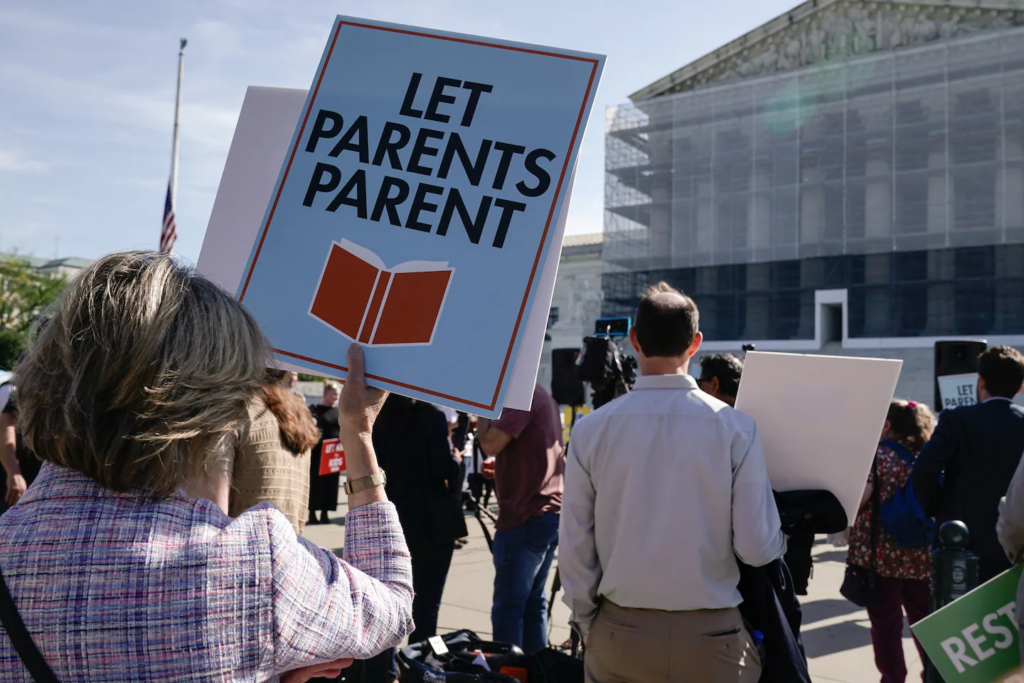
Chris and Melissa Persak chose to live in Montgomery County, Maryland, the most religiously heterogeneous county in the nation, expressly because, Chris says, “we want to enjoy the diversity of our community.”M
The Persaks are Catholics who had two daughters in Montgomery County’s public schools a couple of years ago when their older child, then 9, came home with a book she’d taken out of her elementary school’s library. It was called “My Maddy,” and she had chosen it because Maddy is her sister’s name. The book turned out to be a story about a parent who is neither a Mommy nor a Daddy, but a combination of the two — a “Maddy.”
The Persaks, who believe that “a person’s biological sex is a gift bestowed by God that is both unchanging and integral to that person’s being,” as their lawyer later put it, did not like this book’s message.
As Supreme Court Justice Samuel A. Alito Jr. wrote in June in the case the Persaks had been pursuing for three years, the school board in their affluent D.C. suburb had introduced “LGBTQ+-inclusive” storybooks into the lower grades’ curriculum to “disrupt” children’s thinking about sexuality and gender.
The Persaks quickly learned that books similar to “My Maddy” were being assigned in their children’s classrooms to teach about human sexuality. They found out that Maryland law had long allowed parents to opt their kids out of sexuality lessons — except those on menstruation — that parents felt violated their religious beliefs. But when the Persaks asked about opting their daughter out, they were told that the rules had changed: Montgomery County Public Schools had moved instruction about “LGBTQ+ inclusion” out of the family life curriculum and into the English curriculum, allowing the school system to get around the state’s opt-out law.
The Persaks, and parents who agreed with them, could not opt out, nor could they get advance notice of when such books were to be used.
To zip ahead in this years-long story, the Supreme Court ruled last month in a 6-3 decision that the county must let parents opt their kids out of what Alito called “instruction that poses ‘a very real threat of undermining’ the religious beliefs and practices that the parents wish to instill.”
When school starts next month, the Persaks and other parents in their case expect to be informed about what books are being used and to get a chance to pull their kids out of lessons they believe conflict with their beliefs about “the biblical way to properly express romantic and sexual desires,” as their lawyer, Eric S. Baxter, wrote in his brief.
I speak with a forked tongue about this issue. The whole notion that parents have the right to determine what and how their children are taught in school strikes me as just one more reflexive rejection of expertise in a society increasingly enraptured with the notion that anyone is qualified to do anything. (“Hand me that scalpel, Dr. Surgeon — lemme show you how we do that back home!”)
Yet when the opportunity arose years ago, my wife and I joined other parents at our kids’ school in pushing to opt our children out of a grossly inappropriate lesson on the Holocaust that included showing the annoying, simplistic and wildly ahistorical 1997 film “Life Is Beautiful.”
How appallingly hypocritical of me. Or maybe not. This issue turns out to be one more example of how some of the best American institutions are designed to encourage compromise: Schools are generally built to protect the experts’ ability to deliver as their professions think best. Educators should decide what curriculum and what books best teach the next generation, just as judges get to interpret the law and doctors ought to lead patients toward the most efficacious treatments.
But each of those systems was also built to safeguard the public’s ability to weigh in:Just as jurors and voters serve as checks on judges and prosecutors, parents can use their votes to pick school board members and state legislators, who in turn can curb the excesses of educators.
Which takes us back to Montgomery County.
I asked to speak with the MCPS officials deciding how schools will comply with the court’s ruling this fall. That request was denied. The school system’s spokeswoman, Liliana Lopez, offered this statement: “We are working to determine next steps in order to meet the expectations of the Court’s ruling and remain true to our shared values of learning, relationships, respect, excellence and equity.” She said MCPS will update families and staffers before school starts.
Persak hasn’t heard from his daughters’ school. He expects MCPS to, as his lawyer put it, “rebuild trust with parents whom they slandered.” (At least one Montgomery County elected official said pro-opt-out parents were on the same side as “white supremacists and outright bigots.”)Advertisement
I hope the school system reaches out to parents who want to opt their kids out of lessons on sexuality. And I hope the county stands firm against those who would expand parents’ roles in choosing books and lessons. The last thing the county needs is the kind of cleansing of bookshelves now happening in nearby Virginia, where school boards have removed 223 books from libraries in the past five years.
Educators deserve to decide how best to achieve society’s goals in the classroom. And parents get to push back with their votes and, ultimately, by asserting their authority to raise their children as they see fit. All of this is inherently contradictory — and that’s exactly as it should be. The beauty of the system lies in the tension between opposing ideas.
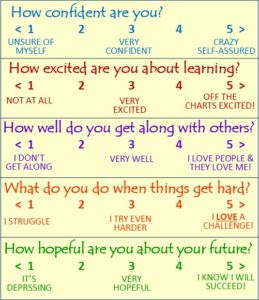
MyScore is an innovative Social-Emotional Learning (SEL) tool and framework primarily used in educational settings, particularly in programs like <<Link: AmeriCorps Project CHANGE https://www.projectchangemaryland.org/theroy-of-change-myscore/}>.
It is not a new tool, it was developed in 2016. Here’s a breakdown of what MyScore is and how it functions as an SEL tool:1. Focus on the “5 C’s”
MyScore is built around helping students develop five key elements believed to be crucial for learning success: Confidence, Curiosity (excitement about learning), Collaboration (working with others), Courage (resilience in adversity), and Career-Future focus (optimism).
It specifically targets students who may have developed negative self-narratives, emphasizing self-belief and positive self-talk as essential for overcoming academic and personal challenges.
2. Narrative-based approach
MyScore employs a narrative approach, acknowledging that students’ “stories about themselves” deeply impact their learning experiences.
It aims to help students identify and challenge negative self-perceptions, and in collaboration with mentors, to build a “new story of possibility”.
3. Tool and methodology
MyScore utilizes a set of colorful cards with questions related to the 5 C’s, designed for self-reflection and assessment.
It is administered at various points (Pre, Middle, and Post) to track student progress and growth in the identified SEL areas.
Trained AmeriCorps members act as mentors, guiding students through the MyScore process and supporting them in developing their SEL skills.
4. Addressing inequities and promoting well-being
MyScore is particularly focused on supporting students in high-need populations who may be experiencing poverty, racism, trauma, or language barriers.
The approach recognizes that addressing students’ social-emotional needs is fundamental for achieving educational equity and promoting overall well-being.
5. Potential benefits
Research and experience with MyScore suggest that it can lead to improvements in areas like self-awareness, self-management, social awareness, and responsible decision-making.
Studies have shown that students engaged in SEL programs can demonstrate improved academic achievement, better pro-social behavior, and fewer emotional and classroom management problems.
In essence, MyScore serves as an SEL tool to empower students, particularly those facing adversity, to develop essential social and emotional skills that can foster a greater sense of self-belief, engagement with learning, and ultimately, success in school and life.
Research reveals techniques that families can deploy to emotionally prepare children for the upcoming school year
Washington, D.C., July 30, 2024 – Gallup and the Walton Family Foundation today announced a new research series with Dr. Lisa Damour, best-selling author and clinical psychologist, to advance their ongoing work on the experiences of Gen Z.
Along with Dr. Damour, they will explore the relationships that 10- to- 18-year-old Gen Z children have with their parents, the support systems that children and parents rely on, and how both groups navigate the preteen and teenage years.
“Parents want to understand their kids’ emotional lives and to know how to offer support,” said Dr. Damour. “My partnership with Gallup and the Walton Family Foundation illuminates key points: along with their uncomfortable emotions, young people feel a great deal of happiness; they have effective strategies for helping themselves feel better when they’re upset; and they want to feel heard and be taken seriously by adults.”Media ContactDonielle LeeSenior Communications Officerdlee@wffmail.com
To mark thelaunch of the research series, and ahead of the start of the new school year, Gallup, Dr. Damour and the foundation released a new survey of 1,675 10- to 18-year-old children and their parents or guardians.
The data shows young people are using a range of healthy coping mechanisms. These can be leveraged by families to help children overcome uncomfortable emotions and prepare them for the stress of a new school year. Gen Z youth are most likely to manage challenging feelings by listening to music (58%), playing video games (45%), connecting with friends (45%) and talking about their feelings (39%). Only 20% reported turning to social media when upset.
“These new findings suggest that the negative emotions many Gen Zers feel are closely related to the pressure they feel to be perfect,” said Stephanie Marken, Gallup senior partner. “Prior Gallup research has found that children who frequently experience negative emotions are more likely to say that they also struggle in school, so helping Gen Z to cope with these emotions – as well as their underlying causes – is critically important to their academic and future success.”
The new survey also demonstrates that the emotional lives of preteens and teenagers are marked by more ups than downs. Nearly all children (94%) say that they felt happiness a lot of the prior day, but 45% also felt stressed, 38% felt anxious and 23% felt sad.
Parents also have a role to play in helping their children manage their emotions. According to the young Gen Z respondents, 62% say they want their parents to listen to them when they are upset, yet only 28% want their parents to give advice. Younger Gen Z children are more likely to want reassurance and physical comfort from their parents, while teenagers are 20 percentage points more likely than 10- to 12-year-olds to say they want their parents to give them space when they are upset. While 35% of parents say their child has very intense emotions, more than eight in 10 parents feel confident in their ability to comfort and communicate with their child when they are struggling with their emotions.
Overall, one-third of Gen Z children say they feel pressure to be perfect. That sentiment is higher among 13- to 15-year-olds (38%) and is especially high among girls (40%). Whether Gen Z children report feeling negative emotions is closely related to their propensity to feel the need to be perfect. Those who say they need to be perfect are 23 to 30 percentage points more likely than those who do not feel that pressure to say they felt anxious, sad and stressed a lot of the prior day.
Throughout the summer and fall, Dr. Damour, Gallup and the foundation will release further research and analysis about the relationship between Gen Z children and their parents.
Methodology
Results are based on a Gallup Panel web survey conducted Mar. 13-20, 2024, with 1,675 parents aged 18 and older, and their 10- to 18-year-old children. The Gallup Panel is a probability-based panel of U.S. adults, living in all 50 U.S. states and the District of Columbia, who are randomly selected using address-based sampling methodology. Gallup also recruits using random-digit-dial phone interviews that cover landline and cellphones.
Parents were eligible to complete the survey if they indicated they had at least one child living in their household between the ages of 10 and 18. If there were multiple children between the ages of 10 and 18 in the household, parents were asked to answer questions about the child who would have the next birthday. After completing their section of the survey, parents were asked to pass the survey to that child, who then completed their section of the survey.
For results based on the total sample of adult parents, the margin of sampling error is +/-3.3 percentage points at the 95% confidence level. For results based on the total sample of 10- to 18-year-old children, the margin of sampling error is +/-3.3 percentage points at the 95% confidence level.
All reported margins of sampling error include computed design effects for weighting. In addition to sampling error, question wording and practical difficulties in conducting surveys can introduce error or bias into the findings of public opinion polls.
About the Walton Family Foundation
The Walton Family Foundation is, at its core, a family-led foundation. Three generations of the descendants of our founders, Sam and Helen Walton, and their spouses work together to lead the foundation and create access to opportunity for people and communities. We work in three areas: improving education, protecting rivers and oceans and the communities they support, and investing in our home region of Northwest Arkansas and the Arkansas-Mississippi Delta. To learn more, visit waltonfamilyfoundation.org and follow us on Facebook, Twitter and Instagram.
About Gallup
Gallup delivers analytics and advice to help leaders and organizations solve their most pressing problems. Combining more than 80 years of experience with its global reach, Gallup knows more about the attitudes and behaviors of employees, customers, students and citizens than any other organization in the world.
For many pre-teens and teens, a new school year brings big changes: new routines, different classes and changing friendships (both in real life and online).
Parents can help kids navigate these transitions by understanding their feelings and finding ways to better support them. A survey published in July 2024 provides fresh insight into the emotional landscape of today’s Gen Z youth.
Conducted by the Walton Family Foundation (a funder of NPR) and Gallup, in partnership with teen psychologist Lisa Damour, the group surveyed 1,675 children ages 10 to 18 and one of their guardians. It found that Gen Z kids felt pressure to be perfect and increased negative emotions like anxiety, especially among girls and teens.Sponsor Message
Being a pre-teen and teen has always been hard, says Damour. But this generation of children faces unique challenges. “We’re asking a lot of them academically. They are trying to navigate a social media environment that can be very taxing for them.”
“And young people worry about big things, like their future,” she adds. About two-thirds of Gen Z youth worry about what the world will be like when they are adults, according to the survey.
Damour, author of Untangled, Under Pressure and The Emotional Lives of Teenagers, talks to NPR about what parents can learn from the findings from the Gallup study.
😇 Remind your teen they don’t have to be perfect
About one in three Gen Zers struggle with perfectionism, according to the survey — especially girls, teens and oldest children.
That can affect a child’s self esteem, says Damour. The study found that those who say they need to be perfect were “more likely than those who do not feel that pressure to say they felt anxious, sad and stressed a lot the prior day.”
So help your teen get comfortable with making mistakes, she says. “Let them recognize the mistake while still having a general sense of positive self-regard.
Tell them that “while we are working on our shortcomings, we still can feel we are good, worthy and decent,” she says.
And make sure they hear from you that they don’t need to be perfect — it may help reduce negative emotions that come with striving for perfection, according to the report.
🗣️ Talk to your teen. They want to hear from you
About one in six parents struggle to comfort their child or communicate with them when they are upset, found the survey. They assume that their teens don’t want to talk to them, or may not be receptive to a conversation.
“But what we heard from teenagers is how helpful these conversations are and how much they care about what adults have to say,” says Damour. “So my advice to anyone caring for a teenager is to go ahead and have a conversation about whatever it is you’re worried about.”
If you’re not sure what to do, just listen, she says. That was the No. 1 response when Damour asked the teens: What can adults do to be helpful when you’re upset? “Second to that: ‘Take our feelings seriously.’ Very low down the list was ‘offer advice.’ “
Look for natural openings in everyday conversation to bring up your concerns, she says. “Once your kid is talking about it, that is a great time to say, ‘it sounds like your friend’s having a hard time at school. How are things feeling for you at school?’ “
🎢 Be OK with your kid’s roller coaster of emotions
The emotional lives of preteens and teenagers are complex, according to the findings. Nearly all the children surveyed said they “felt happiness a lot of the prior day,” but 45% also felt stressed, 38% anxious and 23% sad.
“The takeaway here is that kids have lots of moods, good and bad,” says Damour.
In general, teens have more intense emotions, says Damour. “But it’s not a sign that anything is wrong. It’s actually a sign of forward development.”
Parents can better navigate big mood swings by “thinking about it the way psychologists think about it: having feelings that fit what’s happening — and managing those feelings,” she says.
“If your kid isn’t invited to a party that all their friends seem to be going to, they will be sad. That is the expected emotion. It would be strange if they didn’t feel it,” says Damour.
Kids already have great coping skills that they turn to comfort themselves, according to the report. “Maybe they have a good cry, cuddle their dog, go for a run,” says Damour. Parents should only worry “if they’re using coping strategies that are harmful.”
In other words, it is OK to have negative emotions. It’s what we do with them that counts, she says.
The digital story was written by Malaka Gharib and edited by Andee Tagle and Meghan Keane. The visual editor is Beck Harlan.
We’d love to hear from you. email us at LifeKit@npr.org. Listen to Life Kit on Apple Podcasts and Spotify, or sign up for our newsletter.
 Posts by Paul Costello1
:max_bytes(150000):strip_icc()/9-things-to-do-when-you-feel-hopeless-5081877-noicons-9c0d5df035bd4e0f9b61a5c5dbc25336.png)