By Michael Gerson Washington Post Columnist December 23, 2021 at 4:23 p.m. EST
Many in our country have lost the simple confidence that better days are ahead, for a variety of understandable reasons. There are the coronavirus’s false dawns, followed by new fears. There are rising prices and empty store shelves, as if in Soviet Romania. There is Afghanistan, descending into man-made catastrophe. There are increases in urban violence. And deeply embedded racial injustice. And an environment buckling under terrible strains. Everything seems crying out in chaotic chorus: Things are not getting better.
That spirit possesses our politics. The right sees a country in cultural decline, stripped of its identify and values. The left fears we are moving toward a new American authoritarianism. Both are ideologies of prophesied loss. In a society, such resentments easily become septic. So many otherwise irenic people seem captured by the politics of the clenched fist. A portion seem to genuinely wish some of their neighbors humiliation and harm.
Under such circumstances, it can feel impossible to sustain hope. Yet from a young age, if we are lucky, we are taught that hope itself sustains. It is one of the most foundational assurances of childhood for a parent to bend down and tell a crying child: It is okay. It will be all better. We have an early, instinctual desire to know that trials are temporary, that wounds will heal and all will be well in the end. When a child abuser violates such a promise, it is the cruelest possible betrayal. When young people and adults lose confidence in the possibility of a better day, it can result in the diseases and ravages of despair: drug addiction leading to overdose, alcoholism leading to liver failure, depression leading to suicide.
A columnist living through an appropriate column illustration should probably disclose it. I have been dealing with cancer for a long time. For most of that period, the cancer was trying to kill me without my feeling it. It was internal and theoretical. Now I have reached a different and unpleasant phase, in which the cancer is trying to kill me and making me feel it — the phase when life plans become unknitted and the people you love watch you be weak.
I am not near death and don’t plan to be soon. But there is a time in the progress of a disease such as mine when you believe that you will recover, that you will get better. And I have passed the point when that hope is credible. Now, God or fate has spoken. And the words clank down like iron gates: No, it will not be okay. You will not be getting better.
Such reflections flow naturally when you are writing from the antiseptic wonderland of the holiday hospital ward. But nearly every life eventually involves such tests of hope. Some questions, even when not urgent, are universal: How can we make sense of blind and stupid suffering? How do we live with purpose amid events that scream of unfair randomness? What sustains hope when there is scant reason for it?
The context of the Nativity story is misunderstood hope. The prophets and Jewish people waited for centuries in defiant expectation forthe Messiah to deliver Israel from exile and enemies. This was essentially the embodied belief that something different and better was possible — that some momentous divine intervention could change everything.
But the long-expected event arrived in an entirely unexpected form. Not as the triumph of politics and power, but in shocking humility and vulnerability. The world’s desire in a puking infant. Angelic choirs performing for people of no social account. A glimpse of glory along with the smell of animal dung. Clearly, we are being invited by this holy plot twist to suspend our disbelief for a moment and consider some revolutionary revision of spiritual truth.
Or at least this is what the story says, which we try to interpret beneath limited, even conflicting texts. No matter how we react to the historicity of each element, however, the Nativity presents the inner reality of God’s arrival.
He is a God who goes to ridiculous lengths to seek us.
He is a God who chose the low way: power in humility; strength perfected in weakness; the last shall be first; blessed are the least of these.
He is a God who was cloaked in blood and bone and destined for human suffering — which he does not try to explain to us, but rather just shares. It is perhaps the hardest to fathom: the astounding vulnerability of God.
And he is a God of hope, who offers a different kind of security than the fulfillment of our deepest wishes. He promises a transformation of the heart in which we release the burden of our desires, and live in expectation of God’s unfolding purposes, until all his mercies stand revealed.
There is an almost infinite number of ways other than angelic choirs that God announces his arrival. I have friends who have experienced a lightning strike of undeniable mission, or who see God in the deep beauty of nature, or know Jesus in serving the dispossessed.
For me, such assurances do not come easy or often. Mine are less grand vista than brief glimpse behind a curtain. In Sylvia Plath’s poem “Black Rook in Rainy Weather,” she wrote of an “incandescent” light that can possess “the most obtuse objects” and “grant / A brief respite from fear.” Plath concluded: “Miracles occur, / If you care to call those spasmodic / Tricks of radiance miracles. The wait’s begun again, / The long wait for the angel. / For that rare, random descent.”
Christmas hope may well fall in the psychological category of wish fulfillment. But that does not disprove the possibility of actually fulfilled wishes. On Christmas, we consider the disorienting, vivid evidence that hope wins. If true, it is a story that can reorient every human story. It means that God is with us, even in suffering. It is the assurance, as from a parent, as from an angel, as from a savior: It is okay. And even at the extreme of death (quoting Julian of Norwich): “All shall be well, and all manner of thing shall be well.”
By Doris Iarovici December 18, 2021 at 9:00 a.m. EST
The first-year student in my office was terrified. Here he was, finally living on the campus of the college he had dreamed of attending, and instead of joy, he experienced an unsettling sense of unreality.FAQ: What to know about the omicron variant of the coronavirus
The world around him felt off; strange. Worse: He felt off, detached from himself. Too aware of everything he said and did, and at the same time, removed, not relating. The numbness and inability to connect had persisted over a couple of days, triggering panic.
How would he navigate the transition from high school to college if he could not connect? Was he losing his mind?
Derealization and depersonalization — the subjective experiences of unreality of either the outside world or of the self — are fairly common, usually transient phenomena. I am used to hearing about them from the young adults I treat as a college psychiatrist, although these complaints usually come up as side-notes rather than the presenting concern.
But the first week back in my campus office in Cambridge, Mass., this fall, after 18 months of virtual practice because of the pandemic, several students came to see me in crisis specifically because of these symptoms. I began to wonder if the return to school has upended our understanding of reality in new or particular ways.
Many of us have experienced brief moments where we feel as if we’re in a dream or in a fog or numb. We might feel disconnected from, or floating beside or above, our own body: too keenly aware of actions that normally happen without our consciousness. Usually this happens when we’re very tired or significantly stressed. It’s a frequent response to trauma. Alcohol, cannabis and other drugs can also be triggers.
But my patient was experiencing these feelings sober, just as he finally got to do something he’d wanted to do for a long time. I might have attributed his symptoms to the stress of starting college and leaving home for the first time, had I not also seen upper-class students with similar difficulties. One student who had navigated travel abroad during the pandemic — a particularly challenging task — felt especially disconnected upon return to the familiarity of campus.
Of course, campus is and is not familiar this year. As I walked across the main quad that first week back, the word “surreal” bubbled up in conversation after conversation among the undergraduates not sitting in my office. An editorial in the student newspaper described how watching the campus come alive again felt “like a dream.”
In an informal survey of my colleagues who work in college counseling centers nationwide, other clinicians agreed they had seen an increase in student complaints of depersonalization or derealization. Some had noticed this over the course of the pandemic, not just when most campuses reopened a few months ago. One psychiatrist commented that even pre-pandemic, she encountered these symptoms more frequently among college students than among adults in other settings where she had worked, such as in a clinic for people with chronic mental illness.
Although depersonalization and derealization can occur in a variety of psychiatric disorders, from the early stages of psychoses to depression, post-traumatic stress disorder and panic disorder, they’re quite common in the general population. Incidence decreases with age, and young people seem more susceptible. Although exact rates in college students are not known, surveys of students not in treatment for psychiatric conditions reported depersonalization or derealization experiences in 8 to 46 percent of respondents, depending on the method used.
In one pre-covid-19 study of over a thousand adults in rural North Carolina in 2001, nearly 1 in 4 reported depersonalization or derealization over the past year. The detachment from self more commonly occurred when people felt nervous or depressed, or after a severe stress. Derealization seemed more frequent when people felt they had experienced something dangerous.
During the pandemic, we’ve all felt a sustained sense of danger. Most of the students now on campus have endured more than a year and a half in isolation, a particular challenge for adolescents and young adults. The normal fears about making friends and keeping up academically are accentuated. And uncertainty persists.Advertisement
Limited socializing is allowed now among vaccinated students, but there are so many rules and restrictions. People continue to get sick. New variants appear, triggering fears of endless cycles of isolation. Some students have lost family members or friends to the coronavirus, or have been sick themselves. Against this backdrop, it is unsurprising that more students might experience more intense dissociative symptoms.
And reality has been significantly altered for us all.
We’ve become accustomed to interacting online more than in person. For me, a sense of unreality was most acute when we went into lockdown last March: the experience of being cut off from everything usual in my life was disorienting. But my return to work on campus felt reassuringly normal, even with the strangeness of continued mask-wearing and other new protocols. In-person activities make up the bulk of my lived experience.Advertisement
For young adults, who were already spending more time online than we nondigital natives did, 18 months constitutes a bigger proportion of their lives. Perhaps this more firmly entrenches in their brain that virtual life is the norm. For some, then, live interactions become more jarring. And with the rise of extremely divisive discourse online, and disagreements over basic scientific truths, we are all bombarded with challenges to our shared understanding of reality.
Most people who experience depersonalization and derealization find that it improves within a few weeks, without professional intervention. The understanding that these are normal responses to significant stress, fatigue or some substances often helps symptoms fade.
One study showed improvement in patients instructed to direct their attention to the bodily sensation of breathing. In general, mindfulness meditation techniques help ground people experiencing dissociation.Advertisement
Distraction is also helpful, especially when it involves talking to or being around other people, instead of isolating. Labeling the feeling, and redirecting the attention to another activity, such as listening to music or exercising, can help.
My students improved rapidly with treatment, which included a combination of talk therapy and medicine. They told me they valued the opportunity to examine their strange experiences without fear that they would be labeled crazy. Should the symptoms continue, worsen or recur, other treatments can help.
In a time of unprecedented disruptions, the surreal has become commonplace.
Doris Iarovici is a psychiatrist at Harvard University and the author of “Mental Health Issues and the University Student.”
From reframing our notion of “good” schools to mining the magic of expert teachers, here’s a curated list of must-read research from 2021.By Youki Terada, Stephen Merrill, Sarah GonserDecember 9, 2021 Edutopia
It was a year of unprecedented hardship for teachers and school leaders. We pored through dozens of studies to see if we could follow the trail of exactly what happened: The research revealed a complex portrait of a grueling year during which persistent issues of burnout and mental and physical health impacted millions of educators. Meanwhile, many of the old debates continued: Does paper beat digital? Is project-based learning as effective as direct instruction? How do you define what a “good” school is?
Other studies grabbed our attention, and in a few cases, made headlines. Researchers from the University of Chicago and Columbia University turned artificial intelligence loose on some 1,130 award-winning children’s books in search of invisible patterns of bias. (Spoiler alert: They found some.) Another study revealed why many parents are reluctant to support social and emotional learning in schools—and provided hints about how educators can flip the script.
1. WHAT PARENTS FEAR ABOUT SEL (AND HOW TO CHANGE THEIR MINDS)
When researchers at the Fordham Institute asked parents to rank phrases associated with social and emotional learning, nothing seemed to add up. The term “social-emotional learning” was very unpopular; parents wanted to steer their kids clear of it. But when the researchers added a simple clause, forming a new phrase—”social-emotional & academic learning”—the program shot all the way up to No. 2 in the rankings.
What gives?
Parents were picking up subtle cues in the list of SEL-related terms that irked or worried them, the researchers suggest. Phrases like “soft skills” and “growth mindset” felt “nebulous” and devoid of academic content. For some, the language felt suspiciously like “code for liberal indoctrination.”
But the study suggests that parents might need the simplest of reassurances to break through the political noise. Removing the jargon, focusing on productive phrases like “life skills,” and relentlessly connecting SEL to academic progress puts parents at ease—and seems to save social and emotional learning in the process.
2. THE SECRET MANAGEMENT TECHNIQUES OF EXPERT TEACHERS
In the hands of experienced teachers, classroom management can seem almost invisible: Subtle techniques are quietly at work behind the scenes, with students falling into orderly routines and engaging in rigorous academic tasks almost as if by magic.
That’s no accident, according to new research. While outbursts are inevitable in school settings, expert teachers seed their classrooms with proactive, relationship-building strategies that often prevent misbehavior before it erupts. They also approach discipline more holistically than their less-experienced counterparts, consistently reframing misbehavior in the broader context of how lessons can be more engaging, or how clearly they communicate expectations.
Focusing on the underlying dynamics of classroom behavior—and not on surface-level disruptions—means that expert teachers often look the other way at all the right times, too. Rather than rise to the bait of a minor breach in etiquette, a common mistake of new teachers, they tend to play the long game, asking questions about the origins of misbehavior, deftly navigating the terrain between discipline and student autonomy, and opting to confront misconduct privately when possible.
3. THE SURPRISING POWER OF PRETESTING
Asking students to take a practice test before they’ve even encountered the material may seem like a waste of time—after all, they’d just be guessing.
But new research concludes that the approach, called pretesting, is actually more effective than other typical study strategies. Surprisingly, pretesting even beat out taking practice tests after learning the material, a proven strategy endorsed by cognitive scientists and educators alike. In the study, students who took a practice test before learning the material outperformed their peers who studied more traditionally by 49 percent on a follow-up test, while outperforming students who took practice tests after studying the material by 27 percent.
The researchers hypothesize that the “generation of errors” was a key to the strategy’s success, spurring student curiosity and priming them to “search for the correct answers” when they finally explored the new material—and adding grist to a 2018 study that found that making educated guesses helped students connect background knowledge to new material.
Learning is more durable when students do the hard work of correcting misconceptions, the research suggests, reminding us yet again that being wrong is an important milestone on the road to being right.
4. CONFRONTING AN OLD MYTH ABOUT IMMIGRANT STUDENTS
Immigrant students are sometimes portrayed as a costly expense to the education system, but new research is systematically dismantling that myth.
In a 2021 study, researchers analyzed over 1.3 million academic and birth records for students in Florida communities, and concluded that the presence of immigrant students actually has “a positive effect on the academic achievement of U.S.-born students,” raising test scores as the size of the immigrant school population increases. The benefits were especially powerful for low-income students.
While immigrants initially “face challenges in assimilation that may require additional school resources,” the researchers concluded, hard work and resilience may allow them to excel and thus “positively affect exposed U.S.-born students’ attitudes and behavior.” But according to teacher Larry Ferlazzo, the improvements might stem from the fact that having English language learners in classes improves pedagogy, pushing teachers to consider “issues like prior knowledge, scaffolding, and maximizing accessibility.”
5. A FULLER PICTURE OF WHAT A ‘GOOD’ SCHOOL IS
It’s time to rethink our definition of what a “good school” is, researchers assert in a study published in late 2020. That’s because typical measures of school quality like test scores often provide an incomplete and misleading picture, the researchers found.
The study looked at over 150,000 ninth-grade students who attended Chicago public schools and concluded that emphasizing the social and emotional dimensions of learning—relationship-building, a sense of belonging, and resilience, for example—improves high school graduation and college matriculation rates for both high- and low-income students, beating out schools that focus primarily on improving test scores.
“Schools that promote socio-emotional development actually have a really big positive impact on kids,” said lead researcher C. Kirabo Jackson in an interview with Edutopia. “And these impacts are particularly large for vulnerable student populations who don’t tend to do very well in the education system.”
The findings reinforce the importance of a holistic approach to measuring student progress, and are a reminder that schools—and teachers—can influence students in ways that are difficult to measure, and may only materialize well into the future.
6. TEACHING IS LEARNING
One of the best ways to learn a concept is to teach it to someone else. But do you actually have to step into the shoes of a teacher, or does the mere expectation of teaching do the trick?
In a 2021 study, researchers split students into two groups and gave them each a science passage about the Doppler effect—a phenomenon associated with sound and light waves that explains the gradual change in tone and pitch as a car races off into the distance, for example. One group studied the text as preparation for a test; the other was told that they’d be teaching the material to another student.
The researchers never carried out the second half of the activity—students read the passages but never taught the lesson. All of the participants were then tested on their factual recall of the Doppler effect, and their ability to draw deeper conclusions from the reading.
The upshot? Students who prepared to teach outperformed their counterparts in both duration and depth of learning, scoring 9 percent higher on factual recall a week after the lessons concluded, and 24 percent higher on their ability to make inferences. The research suggests that asking students to prepare to teach something—or encouraging them to think “could I teach this to someone else?”—can significantly alter their learning trajectories.
7. A DISTURBING STRAIN OF BIAS IN KIDS’ BOOKS
Some of the most popular and well-regarded children’s books—Caldecott and Newbery honorees among them—persistently depict Black, Asian, and Hispanic characters with lighter skin, according to new research.
Using artificial intelligence, researchers combed through 1,130 children’s books written in the last century, comparing two sets of diverse children’s books—one a collection of popular books that garnered major literary awards, the other favored by identity-based awards. The software analyzed data on skin tone, race, age, and gender.
Among the findings: While more characters with darker skin color begin to appear over time, the most popular books—those most frequently checked out of libraries and lining classroom bookshelves—continue to depict people of color in lighter skin tones. More insidiously, when adult characters are “moral or upstanding,” their skin color tends to appear lighter, the study’s lead author, Anjali Aduki, told The 74, with some books converting “Martin Luther King Jr.’s chocolate complexion to a light brown or beige.” Female characters, meanwhile, are often seen but not heard.
Cultural representations are a reflection of our values, the researchers conclude: “Inequality in representation, therefore, constitutes an explicit statement of inequality of value.”
8. THE NEVER-ENDING ‘PAPER VERSUS DIGITAL’ WAR
The argument goes like this: Digital screens turn reading into a cold and impersonal task; they’re good for information foraging, and not much more. “Real” books, meanwhile, have a heft and “tactility” that make them intimate, enchanting—and irreplaceable.
But researchers have often found weak or equivocal evidence for the superiority of reading on paper. While a recent study concluded that paper books yielded better comprehension than e-books when many of the digital tools had been removed, the effect sizes were small. A 2021 meta-analysis further muddies the water: When digital and paper books are “mostly similar,” kids comprehend the print version more readily—but when enhancements like motion and sound “target the story content,” e-books generally have the edge.
Nostalgia is a force that every new technology must eventually confront. There’s plenty of evidence that writing with pen and paper encodes learning more deeply than typing. But new digital book formats come preloaded with powerful tools that allow readers to annotate, look up words, answer embedded questions, and share their thinking with other readers.
We may not be ready to admit it, but these are precisely the kinds of activities that drive deeper engagement, enhance comprehension, and leave us with a lasting memory of what we’ve read. The future of e-reading, despite the naysayers, remains promising.
9. NEW RESEARCH MAKES A POWERFUL CASE FOR PBL
Many classrooms today still look like they did 100 years ago, when students were preparing for factory jobs. But the world’s moved on: Modern careers demand a more sophisticated set of skills—collaboration, advanced problem-solving, and creativity, for example—and those can be difficult to teach in classrooms that rarely give students the time and space to develop those competencies.
Project-based learning (PBL) would seem like an ideal solution. But critics say PBL places too much responsibility on novice learners, ignoring the evidence about the effectiveness of direct instruction and ultimately undermining subject fluency. Advocates counter that student-centered learning and direct instruction can and should coexist in classrooms.
Now two new large-scale studies—encompassing over 6,000 students in 114 diverse schools across the nation—provide evidence that a well-structured, project-based approach boosts learning for a wide range of students.
In the studies, which were funded by Lucas Education Research, a sister division of Edutopia, elementary and high school students engaged in challenging projects that had them designing water systems for local farms, or creating toys using simple household objects to learn about gravity, friction, and force. Subsequent testing revealed notable learning gains—well above those experienced by students in traditional classrooms—and those gains seemed to raise all boats, persisting across socioeconomic class, race, and reading levels.
10. TRACKING A TUMULTUOUS YEAR FOR TEACHERS
The Covid-19 pandemic cast a long shadow over the lives of educators in 2021, according to a year’s worth of research.
The average teacher’s workload suddenly “spiked last spring,” wrote the Center for Reinventing Public Education in its January 2021 report, and then—in defiance of the laws of motion—simply never let up. By the fall, a RAND study recorded an astonishing shift in work habits: 24 percent of teachers reported that they were working 56 hours or more per week, compared to 5 percent pre-pandemic.
The vaccine was the promised land, but when it arrived nothing seemed to change. In an April 2021 survey conducted four months after the first vaccine was administered in New York City, 92 percent of teachers said their jobs were more stressful than prior to the pandemic, up from 81 percent in an earlier survey.
It wasn’t just the length of the work days; a close look at the research reveals that the school system’s failure to adjust expectations was ruinous. It seemed to start with the obligations of hybrid teaching, which surfaced in Edutopia’s coverage of overseas school reopenings. In June 2020, well before many U.S. schools reopened, we reported that hybrid teaching was an emerging problem overseas, and warned that if the “model is to work well for any period of time,” schools must “recognize and seek to reduce the workload for teachers.” Almost eight months later, a 2021 RAND study identified hybrid teaching as a primary source of teacher stress in the U.S., easily outpacing factors like the health of a high-risk loved one.
New and ever-increasing demands for tech solutions put teachers on a knife’s edge. In several important 2021 studies, researchers concluded that teachers were being pushed to adopt new technology without the “resources and equipment necessary for its correct didactic use.” Consequently, they were spending more than 20 hours a week adapting lessons for online use, and experiencing an unprecedented erosion of the boundaries between their work and home lives, leading to an unsustainable “always on” mentality. When it seemed like nothing more could be piled on—when all of the lights were blinking red—the federal government restarted standardized testing.
Change will be hard; many of the pathologies that exist in the system now predate the pandemic. But creating strict school policies that separate work from rest, eliminating the adoption of new tech tools without proper supports, distributing surveys regularly to gauge teacher well-being, and above all listening to educators to identify and confront emerging problems might be a good place to start, if the research can be believed.
To Unite a Divided America, Make People Work for It
Dr. Holloway is the president of Rutgers University, a historian and the author, most recently, of “The Cause of Freedom: A Concise History of African Americans.” July 2, 2021
This essay is part of a series exploring bold ideas to revitalize and renew the American experiment. Read more about this project in a note from Ezekiel Kweku, Opinion’s politics editor.
If we Americans listened to one another, perhaps we would recognize how absurd our discourse has become. It is our own fault that political discussions today are hotheaded arguments over whether the hooligans storming the halls of the Capitol were taking a tour or fomenting an insurrection; if we broadened our audiences, perhaps we would see the fallacy of claims that all Republicans are committed to voter suppression and that all Democrats are committed to voter fraud.
It seems like an easy challenge to address, but we lack the incentives to change our behavior. We are all, regardless of where we sit on the political spectrum, caught in a vortex of intoxication. We have fooled ourselves into thinking that our followers on social media are our friends. They aren’t. They are our mirrors, recordings of our own thoughts and images played back to us, by us and for us. We feel good about ourselves, sure, but do we feel good as citizens? Do we feel good as Americans? Are we better off? Is America?
There are many problems in America, but fundamental to so many of them is our unwillingness to learn from one another, to see and respect one another, to become familiar with people from different racial and ethnic backgrounds and who hold different political views. It will take work to repair this problem, but building blocks exist. A good foundation would be a one-year mandatory national service program.
Nearly 90 years ago, in response to the Great Depression, President Franklin Roosevelt created the Civilian Conservation Corps, what was then America’s largest organized nationwide civilian service program. About 30 years later, President Lyndon Johnson brought to fruition President John Kennedy’s “domestic Peace Corps” initiative, the Volunteers in Service to America program, known as VISTA. Today, domestic civilian service is dominated by AmeriCorps and nongovernmental programs like Teach for America.
Taken together, these programs have been enormously successful at putting people to work, broadening the reach of basic social services related to education, health and welfare. Most important, they have helped citizens see the crucial role that they can play in strengthening our democracy. Given that we know service programs can be so effective in shoring up the nation in moments of crisis, the time has come for a broader initiative, with higher aspirations and goals. The time has come for compulsory national service for all young people — with no exceptions.
Universal national service would include one year of civilian service or military service for all adults to be completed before they reach the age of 25, with responsibilities met domestically or around the world. It would channel the conscience of the Civilian Conservation Corps and put young people in the wilderness repairing the ravages of environmental destruction. It would draw on the lessons of the Peace Corps and dispatch young Americans to distant lands where they would understand the challenges of poor countries and of people for whom basic health and nutrition are aspirational goals. It would draw on the success of our military programs that in the past created pathways toward financial stability and educational progress for those with limited resources while serving as great unifiers among America’s races, religions and social classes.Share this article.
These are but three examples. A one-year universal national service program could take many other forms, but it is easy to imagine that it could be a vehicle to provide necessary support to underserved urban and rural communities, help eliminate food deserts, contribute to rebuilding the nation’s infrastructure, enrich our arts and culture, and bolster our community health clinics, classrooms and preschools.
Furthermore, because service would be mandatory, it would force all of our young people to better know one another, creating the opportunities to learn about and appreciate our differences. Speaking as an educator, I know that we get better answers to complex problems when we assemble teams from a wide range of backgrounds. Once these teams realize that they have a common purpose, their collective differences and diversity in race, gender, expertise, faith, sexual orientation and political orientation start to emerge as a strength. If you look at the state of our civic culture, it is clear that we have a long way to go before we can claim that we are doing the best that we can. The kind of experiential education I am advocating could change a life, could open a mind and could save a democracy.
A sensible system of compulsory national service would build bridges between people and turn them into citizens. It would shore up our fragile communities and strengthen us as individuals and as a nation. Compulsory national service would make us more self-reliant and at the same time more interdependent. It would help us to realize our remarkable individual strengths and would reveal the enormous collective possibilities when we pull together instead of rip apart.
At its core, we need to heed the call for citizenship. We need to take the natural inclination to help out our friends and families and turn it into a willingness to support strangers. We need to inspire people to answer the call to serve because in so doing, they will discover ways to have their voices heard and their communities seen and respected.
This is neither a new nor a partisan idea. This call to serve and inspire is written into the preamble of the United States Constitution. When the founders sought to “form a more perfect union, establish justice, ensure domestic tranquility, provide for the common defense, promote the general welfare, and secure the blessings of liberty,” they were talking about establishing an ethos of citizenship and participation.
Compulsory national service is not a panacea, but neither is it a mere placebo. It could be a very real solution to a very real problem that already has wrought havoc on our democracy and that threatens our future as a nation, our viability as a culture and our very worth as human beings. This nation and its democratic principles need our help. We can and must do better.
Jonathan Holloway is the president of Rutgers University, a historian and the author, most recently, of “The Cause of Freedom: A Concise History of African Americans.”
The Times is committed to publishing a diversity of letters to the editor. We’d like to hear what you think about this or any of our articles. Here are some tips. And here’s our email: letters@nytimes.com.
Bob Dole, who died on Sunday, represented Kansas in the U.S. Senate from 1969 to 1996, including as Senate majority leader, and was the 1996 Republican nominee for president. This column was drafted early in 2021 to be published around the time of his death.
Shortly after I was elected Senate majority leader in November 1984, a friend stopped by the Capitol to offer his congratulations. We toured my office, reviewing pictures of past majority leaders and admiring two portraits of personal heroes: Abraham Lincoln and Dwight D. Eisenhower.
Something about the place, steeped in such distinguished history, touched a common nerve in us. We fell silent for a time, when a smile crossed my friend’s face. With wonder, he said, “Imagine a kid from Russell, Kansas, having an office like this.”
My home at birth was a three-room house. I grew up during the Dust Bowl, when so many of us helplessly watched our livelihoods blow away with the wind. I have always felt humbled to live in a nation that would allow my unlikely story to unfold.
Many nights during my time as majority leader, I would step out on my office balcony overlooking the National Mall and be reminded of what made my journey possible. Facing me were monuments to our nation’s first commander in chief, the author of our Declaration of Independence, and the president who held our union together. In the distance were the countless graves of those who gave their lives so that we could live free.
That inspiring view came back to me as I watched the Jan. 6 riots at the Capitol. I imagined the view of those monuments and headstones obscured by clouds of tear gas. I thought about the symbol of our democracy consumed by anger, hatred and violence.
There has been a lot of talk about what it will take to heal our country. We have heard many of our leaders profess “bipartisanship.” But we must remember that bipartisanship is the minimum we should expect from ourselves.
America has never achieved greatness when Republicans and Democrats simply manage to work together or tolerate each other. We have overcome our biggest challenges only when we focused on our shared values and experiences. These common ties form much stronger bonds than political parties.
I cannot pretend that I have not been a loyal champion for my party, but I always served my country best when I did so first and foremost as an American. I fought for veterans benefits not as a Republican but as someone who witnessed the heroism of our service members firsthand. I advocated for those with disabilities not as a member of the GOP but as someone who personally understood the limitations of a world without basic accommodations. I stood up for those going hungry not as a leader in my party but as someone who had seen too many folks sweat through a hard day’s work without being able to put dinner on the table.
When we prioritize principles over party and humanity over personal legacy, we accomplish far more as a nation. By leading with a shared faith in each other, we become America at its best: a beacon of hope, a source of comfort in crisis, a shield against those who threaten freedom.
Our nation’s recent political challenges remind us that our standing as the leader of the free world is not simply destiny. It is a deliberate choice that every generation must make and work toward. We cannot do it divided.
I do have hope that our country will rediscover its greatness. Perhaps it is the optimism that comes from spending 98 years as a proud American. I grew up in what others have called the Greatest Generation. Together, we put an end to Nazi tyranny. Our nation confronted Jim Crow, split the atom, eliminated the anguish of polio, planted our flag on the moon and tore down the Berlin Wall. Rising above partisanship, we made historic gains in feeding the hungry and housing the homeless. To make a more perfect union, we swung open the doors of economic opportunity for women who were ready to rise to their fullest potential and leave shattered glass ceilings behind them.
Our nation has certainly faced periods of division. But at the end of the day, we have always found ways to come together.Advertisement
We can find that unity again.
In 1951, when I was newly elected to the Kansas House of Representatives, a reporter asked me what I had on my agenda. I said, “Well, I’m going to sit back and watch for a few days, and then I’ll stand up for what I think is right.” In 1996, when I left public office for the final time, I announced the same plans, to sit back for a few days, then start standing up for what I thought was right.
After sharing these thoughts, I plan to once again return to my seat to sit back and watch. Though this time, I will count on tomorrow’s leaders to stand up for what is right for America. With full optimism and faith in our nation’s humanity, I know they will.
Awe might be our most undervalued emotion. Here’s how to help children find it.
By Deborah Farmer Kris November 30, 2021 Washington Post
When my dad shook me awake at 2 a.m., I grumbled my way out to the backyard and onto the quilt he had spread out for me and my four siblings. Moments later, a streak of light sliced the sky. And then another. For hours, until the sun lit the horizon, we watched the cosmic dance of the Perseid meteor shower.
My 9-year-old self would have described the night as “awesome.” That’s a good word choice, because awesome has a powerful emotional correlate: awe.
Awe is what we feel when we encounter something vast, wondrous or beyond our ordinary frame of reference. It evokes a sense of mystery and wonder. And, given its documented benefits, awe might be our most overlooked, undervalued emotion.
Psychologist Dacher Keltner, the founding director of the Greater Good Science Center at the University of California at Berkeley, has spent years studying the beneficial effects of awe on our physical, mental and emotional well-being. “It makes us curious rather than judgmental. It makes us collaborative. It makes us humble, sharing and altruistic. It quiets the ego so that you’re not thinking about yourself as much.” It also calms the brain’s default mode network and has been shown to reduce inflammation. In other words, he says, don’t underestimate the power of goose bumps.
With pediatric health experts raising the alarm about children’s mental health, helping kids experience a little more awe, as my father did on that chilly morning, could become part of our collective response. Here’s how experts say we can infuse more of this emotion into our everyday lives.
Slowing down childhood
According to research out of Stanford University’s Challenge Success, children and adolescents need regular PDF — playtime, downtime and family time — for healthy development. This prescription dovetails with Keltner’s findings.
“How do you find awe? You allow unstructured time. How do you find awe? You wander. You drift through. You take a walk with no aim,” Keltner says. “How do you find awe? You slow things down. You allow for mystery and open questions rather than test-driven answers. You allow people to engage in the humanities of dance and visual art and music.”
Unfortunately, today’s highly structured, competition-oriented child-rearing culture is largely a “failure in awe,” Keltner says. If every hour is filled with activities, pressures and obligations, then children will have less time to wonder, wander or tune in to their emotions and surroundings.
As a bonus, feeling awe might even support academic performance. “One of my favorite findings suggests that awe might help spur curiosity about the world,” says psychologist Craig Anderson. In one study of more than 400 high school adolescents, “the more awe that they felt, the more curiosity they expressed and the better they performed in school.”
How do we experience more awe?
You don’t have to take your kids to the Grand Canyon or stand in the Sistine Chapel to experience awe, Keltner says. People commonly feel awe when they spend time in nature, listen to or make music, view or create art, contemplate big ideas, engage in meaningful rituals or enjoy community experiences that make them feel as if they’re a part of something larger than themselves.
Noticing systems and patterns, such as musical harmony or the formation of geese in flight, can also be awe-inspiring. “The mind in awe is picking up these systems of complicated, interrelated entities working together,” Keltner says. “People are like, ‘God, I saw these tide pools. I was blown away.’ They look at clouds, which are these complicated systems of water droplets. Right now, the Golden State Warriors are playing this great basketball. When you talk to fans, they’re like, ‘Hey, did you see the way they move?’ That’s a system.”
Sometimes, slightly reframing something can turn an everyday activity into a more healing one, particularly in this difficult time in history. “For our culture in this moment of climate crisis and stress and covid, the most important message is, ‘How do I go find awe right around me, perhaps just by going on a walk?’ ” Keltner says. “Go out and find some awe on your walk. Get outside, pause, reflect, slow it down.”
In fact, in a 2020 study, older adults who took weekly 15-minute “awe walks” for eight weeks reported increased positive emotions and less distress in their daily lives.
For his research on awe, Anderson took more than a dozen white-water rafting trips with war veterans and teens from underserved communities, a group that “reported higher levels of [post-traumatic stress disorder] symptoms than our veterans did,” he says. He found that experiencing awe in nature predicted improved well-being in both groups, including a decrease in PTSD and stress levels. “The awe that we feel in the outdoors could actually be a useful part of our health-care system,” Anderson says.
Do screens and social media produce or limit awe?
That’s a complicated question, both Keltner and Anderson say.
Keltner notes that screens usually serve as a “gateway to awe rather than a direct experience of it.” They can help us find artists, musicians and places that we might not otherwise discover. “The protests against the killing of George Floyd, which were awe-inspiring, came out of screens in many ways,” Keltner says. And films such as Louie Schwartzberg’s “Fantastic Fungi” allow viewers to observe the natural world in a way that wouldn’t be possible without technology.
But most of the apps we use are not designed to make us feel awe, Anderson says. Nor do they prioritize our well-being. Instead, “they’re designed to keep us in front of the app.” In addition, the social-evaluative nature of social media is at cross-purposes with the healthy “smallness” that comes with awe. If you want to feel the benefits of “noticing things like the flowers blooming or the light filtering through the leaves on the trees,” Anderson says, “your attention can’t be wrapped up in a phone.”
Can we improve society?
Perhaps surprisingly, the most common source of awe is other people’s goodness. “It’s kindness and courage” Keltner says. “We really have this capacity to be moved by other people.” Fred Rogers famously described how this source of awe can be emotionally protective for children: “When I was a boy and I would see scary things in the news, my mother would say to me: ‘Look for the helpers. You will always find people who are helping.’ ”
In turn, several studies found that experiencing awe can make us kinder, more generous people. For example, participants who briefly stared at tall, beautiful trees — as opposed to staring at a building — were more likely to help a stranger who dropped their belongings. As Anderson says: “My hope is that awe can be an emotion that we leverage for the greater good of our communities, of our country and of people around the world.”
For many parents, pressing the pause button to make more room for awe will take some adjustment. I think about all the times I’ve yelled at my kids to hustle while they were, say, glued to the asphalt, staring at the wildflower growing through a crack. But when you ask parents to think of their favorite parenting experiences, they often speak about quiet moments of awe: wandering through the park, watching fireworks on a hill, snuggling together during a thunderstorm.
Recently, perhaps trying to channel my nature-loving father, I dragged my kids on an autumn hike. They grumbled, too, but after an hour of scrambling over rocks, kicking leaves and watching herons stalk prey, one of them turned to me and said: “Next time I don’t want to come, please remind me of this feeling.” And I can, because that feeling has a name.
Q:I’m not a parent, but I am a high school teacher. There is a strong undercurrent of anger among our students. I’m trying to create a safe space in my classroom. I have a good rapport with my students, but when I’m in the hallway or a large study hall with 200-plus children and only four adults, I’m nervous. Some of the students are, too.
Schools are understaffed, children are not okay, and we teachers are not okay (and we’re blamed for everything). Kids came back to school buildings in bodies that are two years bigger but with socialization and maturity levels in the pre-pandemic past. Our administration alternates between telling us to hold a firm line with discipline and to not give consequences unless the violation is extreme.
I’m not a counselor. I’m patient and kind, but I’m also voiceless. I’m exhausted from the public vilification of teachers and the added work from the teacher shortage. How can we call attention to these issues? Politicians aren’t interested, parents are exhausted, unions aren’t believed. We have a huge problem here.
I’m so worried about our students that I’m not sleeping. Anxiety may make me another teacher who leaves the profession (after 33 years). I love my students. I want to help, but we are drowning. And the constant tension is frightening. Thank you.
A: Thank you for writing in. I feel your fatigue through this note. And before we get into what to do about your burnout and fear, I want you to know that, although you are not a parent to these children, you have an important parenting influence. The content of your classes is important, but your compassionate and safe presence is arguably more important, especially now.
As a former teacher and school counselor, I know how frightening it is to feel disempowered, so let’s get you support.
To begin, you are not alone. I recently read a piece from NPR detailing teachers’ exhaustion, the lack of substitutes and the all-around need for rest. Everyone who works in a school seems to be on the edge, including staff members who disinfect the buildings and administrators on the front lines.
You report a lack of sleep, fear for your safety, serious anxiety and a feeling of “drowning,” so we first need to address your most direct needs. Please make an appointment with your doctor and get a thorough checkup. It may sound as if this has nothing to do with your stress at school, but it’s important to have someone look after you in a holistic manner.
I also want you to take a look at your routines at home. Food, sleep, movement, water and alcohol intake: Take a peek at your basic self-care habits. I am not intimating that you are stressed because you may not be taking care of yourself; instead, I want you to focus on what you can control first. Doing everything you can to calm your nervous system will help you respond rather than react to the problems at school.
After you refocus your attention on yourself, find your alliances at school, either with other teachers, administrators, you name it. Then try to create doable solutions together for the unease and anxiety you are feeling. Acknowledge that you are doing the best you can in a very difficult situation, that you have good relationships with the students in your classroom and that everyone is struggling. Ask your peers how they are working to feel safe, in and out of the classroom. My hope is that, in sharing your ideas and support, you will feel buoyed by the ideas and camaraderie.
As a group, go to the administration in the spirit of sharing and working together in a proactive and transparent manner.
Here’s the deal: Every person’s deepest desire is to belong. To do so, we need to feel safe. If you don’t feel safe in your workplace, you cannot do your job well, let alone connect with these children. Your nervous system will be too jumpy, and you will make decisions out of panic rather than ones based on logic and sense.
Approaching the administration with solutions will help jump-start a conversation rather than create a “demand and defense” feeling, because the administration, in many cases, is as underwater as you are. We are also in a rare situation with the pandemic, job losses and teachers leaving the field.
Although I know it would need to be handled carefully, I think the “Dads on Duty” model, which began in a Louisiana high school, is something plenty of schools can look at. After a rash of violence and arrests, volunteers came together to walk the school grounds, and rather than “police” the school, they act in a calming, fatherly and “get your bottom to class” kind of way. They joke, laugh and are generally kind to the children, and with more eyes on the students, violence was curbed.
Of course, protocols must be created and background checks have to be done, but the idea of a community coming together to support its students, teachers and administrators is a common-sense, affordable and clear way to up the adult-to-student ratio when these children need it most.
Solutions such as starting Dads on Duty, partnering with local organizations, uniting teachers and involving parents all need to be harnessed, discussed and put into action.
We are now back to you taking exquisite care of yourself to do this. Rome wasn’t built in a day, so please look after yourself first. There are solutions to be found to ensure everyone feels safer in your school, and we (I am speaking for the collective here) do not want teachers to quit.
Rest, then get to work with your fellow teachers. Good luck.
In the United States, as many as half of today’s 5-year-olds can expect to live to the age of 100, and this once unattainable milestone may become the norm for newborns by 2050. Yet, the social institutions, norms and policies that await these future centenarians evolved when lives were only half as long and need updating. In 2018, The Stanford Center on Longevity launched an initiative called The New Map of Life, believing that one of the most profound transformations of the human experience calls for equally momentous and creative changes in the ways we lead these 100-year lives, at every stage. We can meet challenges that longevity creates if we act now, guided by these principles:
Age Diversity Is a Net Positive
The speed, strength, and zest for discovery common in younger people, combined with the emotional intelligence and wisdom prevalent among older people, create possibilities for families, communities, and workplaces that haven’t existed before. Rather than dwelling so anxiously on the costs incurred by an “aging” society, we can measure and reap the remarkable dividends of a society that is, in fact, age-diverse.
Invest in Future Centenarians to Deliver Big Returns
We can invest in future centenarians by optimizing each stage of life, so that benefits can compound for decades, while allowing for more time to recover from disadvantages and setbacks. The pivotal years between birth and kindergarten are the optimal time for children to acquire many of the cognitive, emotional, and social skills needed for a healthy, happy, and active life.
Align Health Spans to Life Spans
A key principle of The New Map of Life is that healthy longevity requires investments in public health at every life stage, and health span should be the metric for determining how, when and where to invest. Addressing health disparities means investing not only in better access to healthcare, but in the health of communities, especially those affected by poverty, discrimination, and environmental damage.
Prepare to Be Amazed by the Future of Aging
Today’s 5-year-olds will benefit from an astonishing array of medical advances and emerging technologies that will make their experience of aging far different from that of today’s older adults. And while there is no way to stop the process of aging, the emerging field of geroscience has the potential to transform how we age, by seeking to identify—and “reprogram”—the genetic, molecular, and cellular mechanisms that make age the dominant risk factor for certain diseases and degenerative conditions.
Work More Years with More Flexibility
Over the course of 100-year lives, we can expect to work 60 years or more. But we won’t work as we do now, cramming 40-hour weeks into lives impossibly packed from morning until night with parenting, family, caregiving, schooling and other obligations. Workers seek flexibility, whether that means working from home at times, or having flexible routes in and out of the workplace, including paid and unpaid intervals for caregiving, health needs, lifelong learning, and other transitions to be expected over century-long lives.
Learn Throughout Life
Rather than front-loading formal education into the first two decades of life, The New Map of Life envisions new options for learning outside the confines of formal education, with people of all ages able to acquire the knowledge they need at each stage of their lives, and to access it in ways that fit their needs, interests, abilities, schedules, and budgets.
Build Longevity-Ready Communities
The impacts of the physical environment begin before birth, with advantages and disadvantages accumulating over the entire course of life, determining how likely an individual is to be physically active, whether they are isolated or socially engaged, and how likely they are to develop obesity, respiratory, cardiovascular, or neurodegenerative disease. We must start now to design and build neighborhoods that are longevity-ready, and to assess potential investments in infrastructure through the lens of longevity.
The Road Ahead
Meeting the challenges of longevity is not the sole responsibility of government, employers, healthcare providers, or insurance companies; it is an all-hands, all-sector undertaking, requiring the best ideas from the private sector, government, medicine, academia, and philanthropy. It is not enough to reimagine or rethink society to become longevity-ready; we must build it, and fast. The policies and investments we undertake today will determine how the current young become the future old—and whether we make the most of the 30 extra years of life that have been handed to us.
The “New Map of Life” Project Longevity changes everything
Longer lives present one of the greatest challenges of the 21st century and one of the greatest opportunities. To fully reap the gift of longevity and the real possibility of living well to the age of 100 and beyond, transformative change is needed from early to late life. Investments in science and technology are essential. Just as essential are investments in novel societal supports, policies, and norms that will enable people to optimize century-long lives. New models of education will be required, including but extending beyond traditional formal education. The concept of “work” and “retirement” must be redefined; the nature of family will include multiple generations; we need to promote practices that keep people healthy and socially engaged; we must better appreciate the link between early and late life; we need new policies for health care and financial security; re-design where we live, work, and travel; and we need to conceive of ways that people can best accommodate the rapid increases in the speed of new technology transfers. Importantly, these supports, products, and services must have wide reach in the population so that the majority of people – not just the privileged few – reach advanced ages physically fit, mentally sharp, and financially secure.
Why do we need a new map of life?
Demographic changes alone demand attention. World population, currently 7.6 billion, is projected to reach 8.6 billion by 2030 and 9.8 billion by 2050. California population will be 51 million, an increase from the current 39 million. The three-stage linear model of life – education then work followed by retirement – won’t work. The new life course will need to be flexible and have multi-stages with a variety of careers and transitions. Fluid life patterns will emerge as longevity promotes a redefinition of time. Seismic societal changes will be needed to the underpinning structures in areas such as education and learning, health, employment, housing, socioeconomic policies. And these changes must be addressed through the sociological lens of diversity and inclusion, ethnicity, the family and intergenerational relations.
How do we start the conversation?
The premise of this project is that we cannot achieve what we cannot envision. The complexity of the change we need must not be underestimated. We need to collaborate in a more networked, interdisciplinary way to have the greatest impact and identify solutions. What tools, models and frameworks do we need to transform communities, states and countries to benefit from longevity? How do we create a mindset for the new map of life?
Questions we will ask:
• Changing the narrative: How do we create a new narrative, imagery and language that values people at different stages of life – moving away from current obsolete language? How do we rid chronological age from the life script, removing age stereotypes and benchmarking by age?
• Education and learning: How do we give children the skills to survive in an age of rapid knowledge transfer and equip them for a new world of work? What are the needs for life-long learning? What is the role of intergenerational learning? How do we re-design education so that longevity is on the curriculum? (UN figures June 2017 https://www.un.org/development/…/population/world-population-prospects-2017.html )
• Economy/financial policy: What is a productive long life? What new models do we need to finance the longer life? What is the role of universal income? How can people best build financial assets? How does family governance change when families come to have four and five generations alive at the same time? How do we bridge the income divide – poorer people have lower life expectancy.
• Communities: What do longevity-friendly communities look like and how do we pursue the development of livable cities and aging in place? What is the role of libraries? Is there a place for more innovative social entrepreneurship? Value of supporting intergenerational relationships and programs. What do we expect for civic engagement?
• Media: What roles can news media, journalists and writers, advertising and entertainment industries play in helping the redefinition of life course and rethink images of aging? What campaigns are needed to stimulate public dialogue?
• Education and Work: How do we break the traditional model of education to support new and different models of life-long learning. How do we re-think work and changes in HR policies and practices? How do educators and employers respond to the demands of an age diverse student population and workforce? What are the new norms for using talents of older people? How is retirement re-cast and the role of encore careers developed? How is voluntary work valued and promoted? Where are the skills shortages?
• Health: How can research inform and stimulate personal health choices that enhance 100-year lives? How can we develop personal resilience – plasticity, adaptability, flexibility, willingness to engage with the new lifespan? How to harness the benefits of the health and wellness revolution – medicine, genomics and technology?
• Business: How to develop products and services which are relevant across the full life span?
• Legislation and policy: how to support fluid life patterns which are not bounded by age prescribed in legislation? If the timing of key life milestones (start of work, marriage, home ownership, starting families) are changing and eroding, do policies need to reflect the new milestones?
The Project
Our goal for the five-year project is to generate significant changes in how we collectively think about and talk about living long lives. We will see a different narrative being played out in the media. We will see progress being made at the federal, state and local levels in creating the “policy infrastructure” to support living longer lives and living them differently. We will see changes in the way individuals, educators and employers think about education, jobs, work and the role of work. We will see businesses creating new products and services to support and enhance this new view of the life course.
The Plan Stage 1: Drawing the Map We will start the conversation by convening a small group of experts who are distinguished scholars and leaders in their fields of education, health and public policy, government, economy, finance and social policy, science, technology, work and employment, housing and communities, transport, media and advocacy, corporate and financial services, philanthropy and not for profit sectors to envision an ideal century long life. The aim is to address key questions that lead to consensus-building and concrete next steps for future action. Our goal is to create a template for developing a “new map of life” that could be used by other countries, regions or communities to make a map relevant to the dynamics of their population.
Stage 2: Identifying new models, solutions, and needs Following the meeting and the initial synthesis of ideas, we will constitute seven (possibly more) working groups on central topics identified in the meeting. Groups will meet for two years. Each group will be led by a full-time post-doctoral level researcher who is advised by a small group of researchers, policy makers, and stakeholders who have deep expertise in the subject area. The working groups will delve deeply into their respective areas to consider policies, technologies, norms, and scientific advancements needed to optimize functioning in very long lives. We anticipate that the foci of groups will include education, work, finance, health, social engagement, intergenerational relationships, as well as ones that focuses on human interactions with the physical environment (climate, resources) and overarching working groups that focus on culture change and communications. The task of each core will be to develop a detailed and idealized map from birth to death that maximizes the quality of life in the core area along with models that can help to achieve them. Finally, the groups will identify policies, interventions, and social norms that can correct negative trajectories when they present. That is, each core will identify on ramp/off ramp policies, norms, etc., that can help to remedy problems before they spiral downward. SCL will convene these scholar-led groups on a bi-weekly basic so that the group leaders interact across the core areas and get feedback from other groups. Quarterly, SCL will convene the leaders along with the experts to garner input from the broader group of advisors.
Stage 3: Taking it Global Next, we will convene longevity leaders around the globe, in regional meetings in Africa/Middle East, Europe, Asia, and Latin America to share best practices, and expand the thinking globally. While different regions have different demographic profiles and different social constructs by mid-century all regions of the world are aging, less developed countries. Our aim is to have “New Map of Life” models that are relevant to the diverse populations around the world. In this phase of the project we will join with leaders in Europe, Asia, North and South Americas to articulate region – and in some cases state – level changes that support long life.
Stage 4: Communications Essential to achieving our goal will be the need to actively and strategically communicate this vision for a new life course. We will need to enlist the support of the private sector, non-profits, regional and community leaders, in presenting this to the general public. The New Map of Life will turn us into catalyzing agents in creating a new model that will support century long lives
Stage 5: Monitoring We will define ways to monitor progress and create a repository for best practices that can be shared with communities of all sizes to develop their own regional maps. We will begin to instantiate the changes needed to support long life.
Sponsorship Funding Funding will be used for o Convenings (5 worldwide convenings), Communications, working groups, materials, travel, staff
Nearly half of teens said the pandemic had a negative impact on their academics
By Moriah BalingitOctober 29, 2021 at 8:03 a.m. EDT Washington Post
Before the pandemic, high school had been defined for millions of teenagers by familiar rituals: meeting new friends, big games, agonizing over college admissions, prom, yearbook signing, graduations, tearful goodbyes.
Now, the pandemic has become the signature feature of high school for this cohort of adolescents. The forced isolation and lockdowns wrought havoc on teenage lives and shaped them in ways they will never forget.
Unlike adults, many of the eventsand milestones they missed out on are irretrievable. Vacationsand family reunions can be rescheduled. But once a school year is lost, it is gone forever.
Some teens were forced to grow up faster because of the pandemic. Teenagers became de facto caretakers for younger siblings. They became activists, moved to protest in the streets by the murder of George Floyd. They got jobs to support families when the breadwinners were out of work. And as many as 140,000 children lost a parent or caretaker to covid-19.
Against this backdrop, some teens struggled in school, many of them managing virtual classes with teachers who were learning on the fly. Students who were lucky enough to return to in-person classes still had to contend with being quarantined or having their schools shut down. But amid this doom and gloom, there was a silver lining: Some students actually liked remote learning. They preferred being home, or having the flexibility, or feeling less frantic about college. Students who felt chronically overscheduled finally had time to stop and breathe. For some, that space allowed them time to figure out who they were.
For students already facing challenges in school, the shutdowns and virtual learning often made things worse.Some students stopped showing up altogether, or did so infrequently. Experts fear dropout rates will rise.
Now, the vast majority of teenagers have returned to classrooms. In September, Education Secretary Miguel Cardona told Congress that 96 percent of schools were back in-person.
About half of teens age 14 to 18 said the pandemic had a negative impact on their academics, according to a Washington Post-Ipsos poll. A third said it had no impact, and about 1 in 6 said it had a positive impact. Teens in urban communities were more likely than those in rural communities to say the impact was negative.
The poll revealed other fault lines: Nearly a quarter of teens of color said the pandemic had a positive impact on their academics — compared with 14 percent of White teens.
So what, exactly, was happening when high school was disrupted for millions of teenagers? Five young people give us some insights into how the pandemic affected their academics — and the things they learned outside of the classroom.
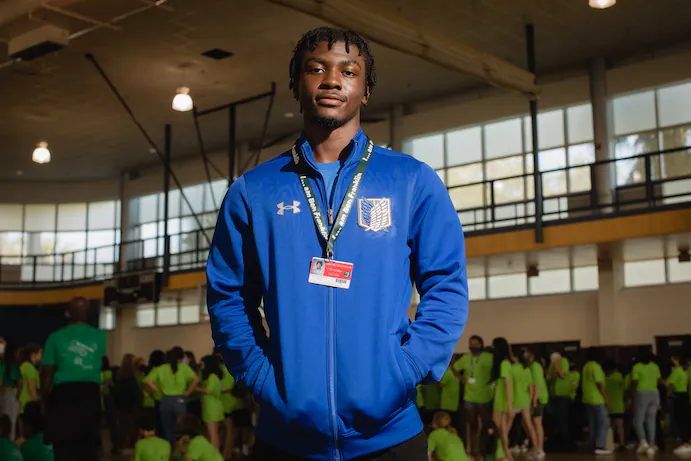
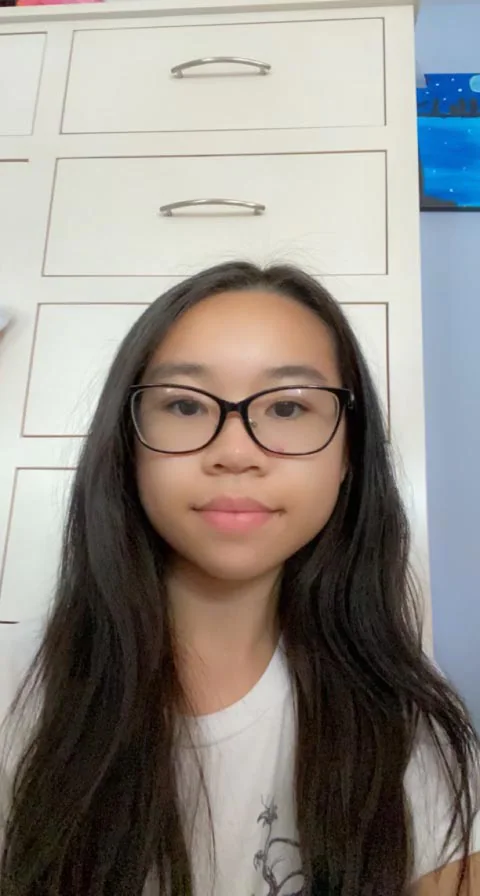
Catherine Wong, 15, 10th grade, Los Altos High School in Los Altos, Calif.
I was in eighth grade when the pandemic started. I was really happy, actually, when the schools first closed down. There was absolutely no organization, so basically there was no school. Before the pandemic, my whole life was basically homework and getting good grades. I would sometimes work until 11 p.m. It was very high-stress.
But when high school started virtually, it was just less serious. It was more, like, stress-free and flexible. They shortened the amount of time that we had in school. The tests were open-book, so they weren’t really reflections of how much you could memorize. It was just more about applying what you learned. Most of my classes didn’t have finals because my teachers all decided to be nice about it because of covid. They were actively trying to help us not fail.
It kind of made me see how crazy I was before — like, every single day I’d be doing homework forever. It was kind of obsessive. But during virtual school, I had a lot more free time. I did a lot of clubs. I did speech and debate, mock trial. I started knitting.
Now that I’m back in school, a lot of my teachers enforce the fact that they’re reverting back to how it was before the pandemic. It’s pretty stressful. The homework load is definitely a lot more. But I’m not as stressed out as I was before. My focus is less on good grades now regarding colleges because over the pandemic, I was able to see how they don’t only care about good grades. There are other factors that come into play.
I think, to an extent, I don’t want my life to be just “you got to get good grades.”
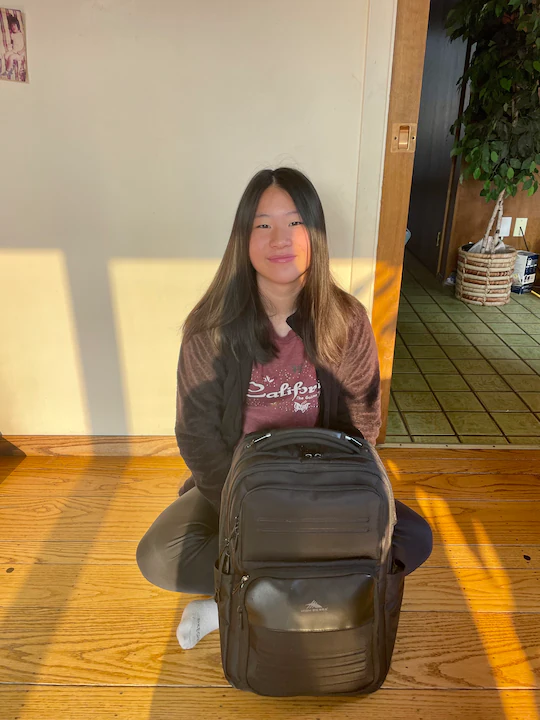
Gemma Lim, 16, 11th grade, Syosset High School in Syosset, N.Y.,
When I was at home, it was hard to not only pay attention but understand what was happening in school. Being at home every day felt monotonous. So I just had no motivation to do anything in school.
When virtual learning first started, I tried brushing my teeth, getting dressed and going downstairs to eat breakfast before going to class. But after a while, I just started getting out of bed. My procrastination got worse, and I started turning in assignments late. I was supposed to be taking this hands-on class where we would be building sets for the school plays. But since I wasn’t there, all I did was watch them build sets from home, on my computer. I couldn’t do anything from home. I just sat in silence the whole period.
Everyone was still trying to figure out how everything worked. One of my teachers didn’t realize that they were muted. So the whole class, we couldn’t hear them. And I guess they had our volume off, so they couldn’t hear us. So it was kind of just us waving on our cameras and being like, “Hey, you’re muted!” Chemistry was really hard. Our teacher would walk around to the front of the class to write on the board. And since her computer was in one spot, I wouldn’t be able to hear her.
I had to go to a lot of guidance counselor meetings because my grades were dropping. All I could do is sit there and be like, “How the heck did this happen?” And then, “How do I fix it?” But also, in my head I was like, “Why did I do this to myself?” I did so horribly, and I can never get those grades back. The counselor asked me how I felt. I was staring at her over the Google Meet because I couldn’t answer her. I don’t know how I feel.
During class I would listen, but it felt like everything was going in one ear and out the other, and I couldn’t keep any of the information. Before the pandemic, I loved playing the violin. Then when the pandemic came, I had no motivation, and then on top of that everything just felt like work. So playing the instrument just wasn’t fun anymore for me.
When school reopened last school year, I had the option of going back to in-person classes. ButI didn’t want to go back to school. I honestly didn’t want to see my teachers because I knew that they knew that I was failing, and I didn’t want to see them face to face after that.
I’m trying to think of something positive. I was able to talk to my friend who was in my class, and made my friendship better with her. I probably wouldn’t have learned that I like creative writing. Being in that class was really nice. But other than that, it just kind of passed very quickly. So many people are saying how 2020 just didn’t exist. There is not much I can say that is positive about it.
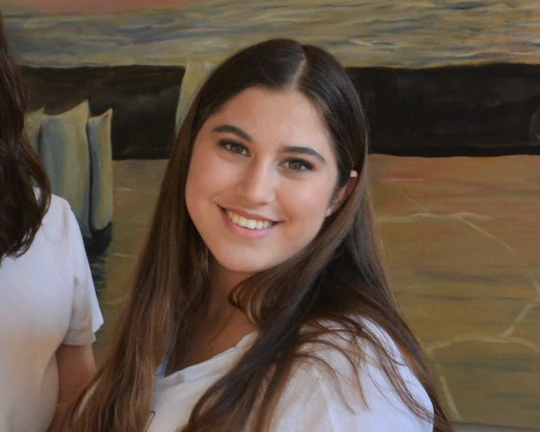
Tala Saad, 16, 11th grade, Kentucky Country Day School in Louisville
Strictly numbers-wise, I think it negatively impacted my academics. I’m starting to find out this year that there’s a lot of foundational stuff that we just didn’t have the time to get to in a virtual setting. Virtual school was definitely more challenging. Just trying to focus on what was happening virtually … there was always something chaotic globally happening that was drawing your attention away from school.
French was one of the most difficult subjects to learn virtually. Just kind of the stress of learning a world language through a virtual setting, when so much of it is dependent on context and talking to people and engaging yourself in the language. During my French final freshman year, my WiFi kept cutting out, my computer was dying, and the paper I was writing on, the ink smeared. My teacher called me after watching me through the Google Meet. She said: “You know, I can see you’re clearly stressed. You’re panicking. Go outside. Take a walk.” She let me retake the test.
Then we get to sophomore year, and we’re still virtual, and it just kind of felt like this was never-ending. You know, I think people, including myself, were genuinely thinking that we were going to go through all four years of high school online. And you know, it’s the time that everybody’s like, “These are some of the best years of your life.” And all of the sudden, your time got so much shorter.
Did the pandemic change me? Oh, 100 percent. I used to be an athlete, and that was my main thing before this. There was school, and there was soccer. I was always interested in engineering, and so when we went virtual, I took home the school’s 3-D printer. My dad is a pulmonologist, and he is in the covid unit. They needed face shields. So I started printing them. What was meant to be like 15 or 20 face shields, just to see if we could do it, exploded into over 600.
I’m part of the Kentucky Student Voice Team. We serve as advocates for students across Kentucky. I wish that policymakers would listen to us more. The absolutely critical part that somehow people seem to keep missing is — go to the students, talk to the students. Because nobody knows what’s best for students and what the students need better than the students themselves.
Liv Koulish, 18, freshman, New York University (2021 graduate of Baltimore City College high school)
I would say it’s way more nuanced than just negative or positive. I can’t tell you one thing I learned on virtual school, but I can tell you a whole bunch of things that I learned about myself and about the world around me — which I feel like in a lot of ways, it’s a lot more important than the stuff that we were learning in school at that time.
Still, I feel like doing virtual school was actually in some ways very helpful for me because it gave me more time by myself to kind of explore what I personally wanted to do. Before the pandemic, I was very involved in a lot of things in my school. I was a very social person.
I used to run track and play lacrosse, and I would always be at school. I would have to wake up very early to take a 5 a.m. bus. After school I would either have a meeting with [youth activist group] GoodKids MadCity or speech and debate, and then I would rush off to sports practice. I was absolutely exhausted.
When the pandemic happened, it really slowed me down. I’m trans, and I feel like being alone for the past two years has helped me come to terms with it. As a nonbinary person of color, there was a lot I hadn’t unpacked. I was struggling a lot with just understanding myself as a trans person and understanding that it was okay to be trans, like, period. High school is intense — like, it is not a safe place to figure out who you are as a trans person.
But I also failed a class for the first time. I was busy finishing up requirements for my International Baccalaureate diploma, and a month later I got my report card, and it said I was failing English. And I was like, what? Apparently there was some diorama we had to do, and I didn’t end up doing it.
I’m starting to really love the person I’m becoming. And I feel like I wouldn’t have started to become this person if it weren’t for the pandemic. So yes, it comes with some baggage, but at the same time I kind of found some beauty about it in some ways.
Mandell Blackstone, 17, junior, Benjamin Franklin High School in New Orleans
I started off sophomore year at Benjamin Franklin virtually. We took four classes a semester, and instead of 90-minute classes, they were 45 minutes. It was less overwhelming. But it was strange starting a new school virtually. I went to campus to grab a laptop from the school, and other than that, I only went onto campus for basketball. Other than that, nobody was really on campus.
I had to take a shower, get something to eat and make sure I got everything ready for the day after. And then I had to do my homework. I would usually stay up until 1 a.m. When they went online, it was a big change for everyone. It was way more work than in-person.
One of the main struggles was being able to stay focused while also at home and being able to sit in front of the screen and just listen. Sometimes it would just go in one ear and out the other. It was a bit difficult. I was not good at paying attention on virtual.
Sophomore year, I didn’t really socialize as much because we were mostly online. You just see people’s faces in a box. You don’t really talk to them that much. Junior year, that’s when I started to socialize more in-person because in-person is really my thing. Some people like socializing online, but in-person is my forte.
The biggest challenge of the pandemic was not that I was depressed but just, every day became the same thing. It kind of became, like, boring and saddening because this isn’t what I’m used to. This isn’t what I want. Mental health and staying focused, all of that was a bit challenging. Just waking up and going on a computer screen for hours — it was very challenging.
The pandemic definitely changed how schoolwork and classwork were distinguished, and how it was given and received. Covid gave them the chance to see that, hey, our kids actually learn better when they have a little bit of a break. So now on Fridays no homework can be assigned, and we just review.P
Photo editing by Mark Miller.5 CommentsGift Article
By Moriah BalingitMoriah Balingit is an education reporter for The Washington Post, where she has worked since 2014. She previously covered crime, city hall and crime in city hall at the Pittsburgh Post-Gazette. Twitter
 Posts by Paul Costello1
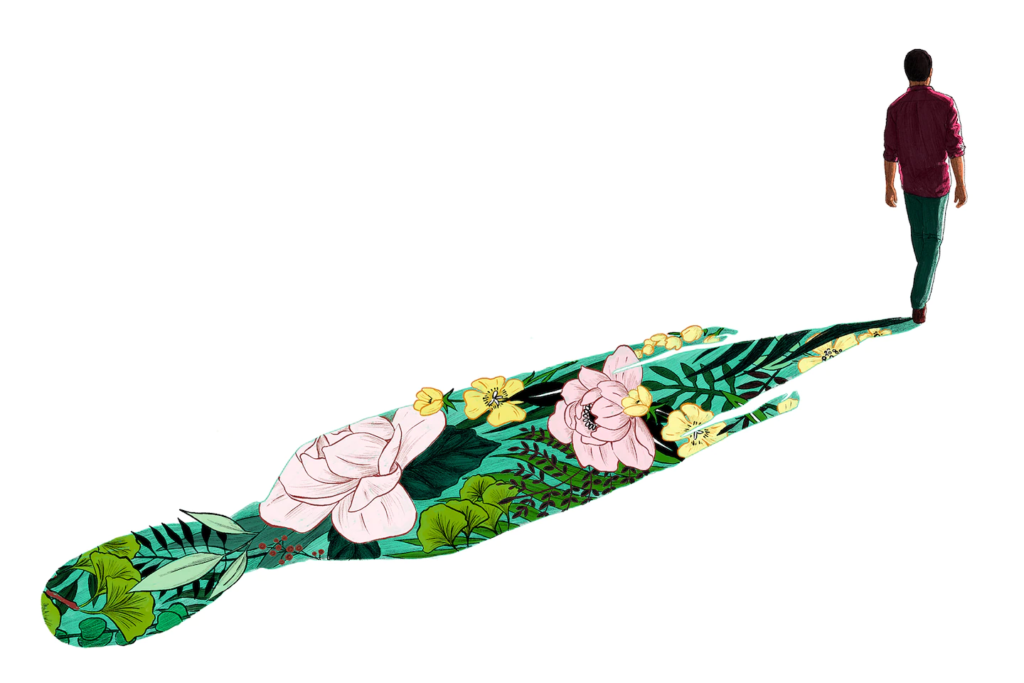
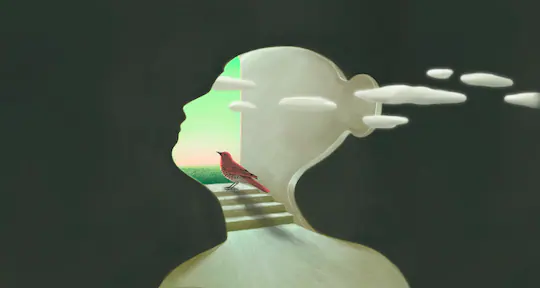


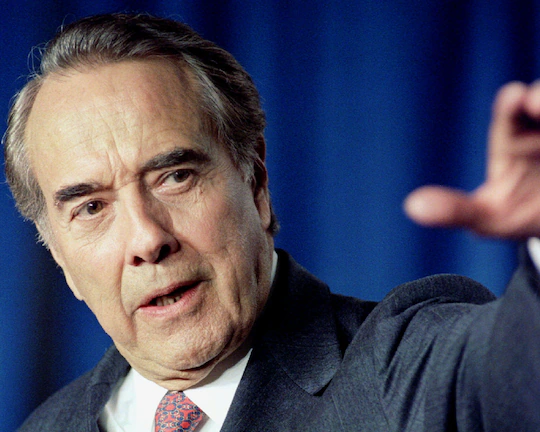
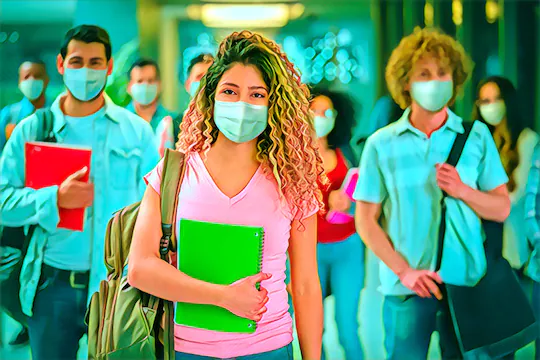


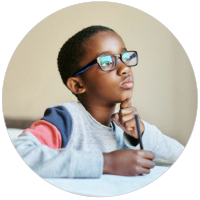
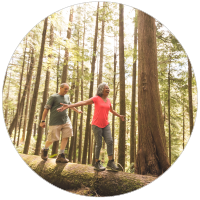
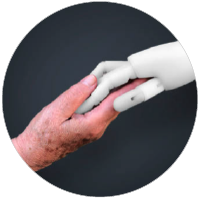
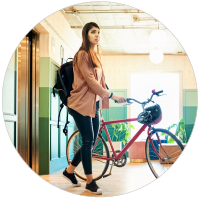

![A New Map of Life [Webinar] - YouTube](https://i.ytimg.com/vi/Mc8sLjgJMfw/hqdefault.jpg)