Contributing Opinion Writer New York Times November 28th 2021
Every year on Thanksgiving, my children experience something I rarely did when I was growing up. They see their father, mother and siblings all gathered around a family meal with plenty of food to spare. It is so utterly normal to them that they do not even note it. Thanksgiving is just another day of warmth and security.
I have many happy memories of the meals prepared by my single mother and my extended family during the holidays. I know well the debate between turkey and ham as the central dish. I was taught to recognize the difference between good and mediocre macaroni and cheese. I remember spades tournaments, games of dominoes and the rich tenor of Black male laughter. My family found happiness even when it was hard to come by.
The difference between my childhood Thanksgivings and those of my kids is the world that existed around the holiday. My mother was diagnosed with a brain tumor when I was in elementary school; she couldn’t work full time, so we lived mostly on government assistance. Our home was in Huntsville, Ala., some 100 miles northeast of Birmingham, the site of so many pivotal events of the civil rights movement. My little corner of the city, Northwest Huntsville, still bears the scars from redlining and the inadequate desegregation of its schools during the civil rights era.
Violence complicated school, parties and sporting events. As far back as I can remember, I’ve known how to look into a person’s eyes and tell the difference between someone who is willing to fight and someone who is comfortable with much worse.
I loved my neighborhood and fought anyone who tried to reduce us to a series of stereotypes. But the violence exhausted me. I felt as if it would kill me if I didn’t leave — maybe not physically but spiritually. I needed more. I needed space.
Education was a path toward finding that space, and, in some sense, I succeeded. I made it to college and graduate school, and then became a professor. But now I find myself in a difficult, bewildering position: My children do not know how to read a room, observe the set of a jaw or assess the determination of a glare. They wave at strangers and are apt to start up conversations, assuming that the other person bears them good will. They speak about college and futures as lawyers, doctors and teachers as a matter of course. They open the refrigerator and expect to find food. And I sometimes find that I don’t know how to be their father.
This tension is pressing, because this fall, after years as nomads — first because of my wife’s military career and later because of the rough and tumble world of academia — we purchased a beautiful home that we expect to live in for a while. Two of our children entered a private Christian school. We have obtained what many consider to be the American dream. I’m not sure what comes next for me or for them. What has been lost among all the things we have gained?
I can tell them stories of growing up without enough to eat and moving from home to home because we couldn’t afford to pay our rent. I can speak to them about having classmates killed. I can teach them about living in areas defined by redlining and food deserts, but they’ve never had white bread, government cheese or fruit punch as steady parts of their diets. These sound like things experienced by a character in a play, not a part of the life lived by their father.
My children do not understand my world, and I do not understand theirs. I do not know what it’s like to be a child waking up in a home with two college graduates at the helm. I do not know what it’s like to expect birthday parties, Christmas trees (real, not plastic) and tons of presents. I don’t know how things like family vacations or trips overseas spark young imaginations. I didn’t take my first plane trip until college.
I don’t know what it’s like to spend so much time unafraid. Sometimes, I go to my children’s rooms at night and watch them sleep, just to see what it looks like to have dreams that are seemingly so free of nightmares.
I am who I am because I had to struggle and suffer. I came from the mud, and even now I remember how the dirt tastes. When my mother told me that my grandfather grew up as a tenant farmer, I could drive past cotton fields in Alabama and imagine what his life was like. The land was bursting with memory. My children and I have returned to the South and to the very neighborhood where I grew up. I once drove my two oldest kids to the home I used to live in. But the land, the dirt and the concrete don’t speak to them the way they do to me. The ghosts do not haunt them.
I don’t want to fall into the trap of treating poverty as some kind of learning experience. Black and brown people need to have paths to success that don’t involve overcoming a legacy of racism and structural injustice. We need more ordinary roads to flourishing.
And yet, I cannot help believing that my children have lost something: the determination born of suffering. I wish that I could give them that feeling. That suffering was the context within which my mother taught me about the value of education. It formed the background of my pastors’ sermons in the Black churches of my youth. The only God that I have ever known was one who cared about my Black body and my Black soul. That suffering was a unifying factor in all my deepest friendships. Those bonds are special because of what we survived.
How do you parent when you were raised in a context of fear and your children are not afraid? (It’s an odd dilemma when you’ve worked your entire life to ensure that they will not be.) I am not sure. Ask me in a couple of decades. I do know that I can begin by realizing that I don’t have to parent them out of my own fear. Not everything Northwest Huntsville taught me was good for me. To this day, I find it difficult to trust and relax. The hard exterior that I developed is of little use when my daughter or son needs a hug.
Still, I can teach my children the most important lesson my mother taught me: Our circumstances do not determine our worth. My kids are not in some ontologically different category than poor kids. If they are ever tempted to look down upon others, I remind them to see the face of their father on the visages of the poor.
The life I live is the complicated legacy of a survivor. I want to instill in my children the sense of Black possibility and responsibility that arises in the hearts of those who escaped the fire. It’s the fierce urgency born of a gratitude to God that we survived, coupled with the knowledge that it shouldn’t be that hard. It is a message that I needed when my belly was empty. I hope that my children listen now that their bellies are full.
At my family’s Thanksgiving, we all go around the table and name something we are grateful for. I am thankful for my wife and children. I am thankful for the life that they live. But I am also thankful for the things I suffered that made me who I am and for the ways that such suffering does not let you go. It ties you to all the other hurting people of the world. It gives your success a vocation and a purpose: to create more happy families gathering for family meals.
Single-family zoning preserves century-old segregation, planners say. A proposal to add density is dividing neighborhoods.
By Katherine Shaver November 20, 2021 at 6:00 a.m. EST Washington Post
On the edge of downtown Silver Spring, Dan Reed and his neighbors have been discussing how the Maryland suburb should look and feel, conversations that have flared into sometimes heated debates over race, class and the pace of change.
Reed bristles when he hears that allowing more multifamily housing and townhouses like his would “disrupt, destroy and displace” neighborhoods of single-family houses. To Reed, an urban planning consultant, it’s the same language used to enact 20th-century zoning codes, still in use today, that effectively perpetuated segregation by pricing out lower-income residents.
It’s fine to argue about the effects of increasing density in neighborhoods, Reed said, “But all of the stuff we’re talking about is built on this foundation of racism and exclusion. We can’t escape it.’”
Montgomery County planners agree with him. Eyeing a shortage of housing and soaring home prices, they have proposed changing zoning to make it easier to build duplexes, triplexes, townhouses and small apartment buildings alongside the suburban ideal of detached houses with ample yards. For a century, they say, limiting lots to one house has not only driven up housing costs by restricting the supply of land, but prolonged de facto segregation and the race gap in generational wealth derived from homeownership.
If changes are approved, Montgomery would join a growing movement nationwide that seeks to promote racial equity and add more lower-cost housing by abolishing or relaxing single-family zoning. Efforts gained traction last year following the murder of George Floyd by a Minneapolis police officer.
The idea of building more homes closer together is testing the essence of suburbia — places born of a quest for living space, greenery and freedom from crowds. It has ignited a firestorm in liberal Montgomery, a once majority-White, upscale bedroom community to the nation’s capital that has prided itself on progressive inclusivity as it becomes more racially diverse and less wealthy.
“It’s a really thorny issue,” said Montgomery planning director Gwen Wright. “I think many people believe the purpose of a suburb is to provide one house on one lot with a picket fence and privacy.”
At least 10 cities, including Minneapolis and Portland, have loosened single-family zoning laws or are considering doing so. New laws in Oregon and California require cities statewide to allow for different housing types in single-family zones, while Arlington County is studying the idea and Prince George’s County is about to. Similar zoning proposals died in recent Maryland and Virginia legislative sessions.
The Biden administration proposed $5 billion in grants for governments that eliminate state and local zoning it says “contributes to the racial wealth gap” and restricts lower- and moderate-income housing. The social spending plan that passed the House on Friday includes a reduced $1.75 billion for such grants.
“When you exclude people based on income, you are also excluding people based on race,” said Jenny Schuetz, a housing economist at the Brookings Institution. “That may not be the intent, but that’s the effect.”
But what might sound like a laudable goal has proved a tough political fight, even in left-leaning jurisdictions facing severe housing shortages.Advertisement
In the District, planners recommended the city allow more duplexes, triplexes and other “gentle density” in single-family zones — especially in higher-cost areas near transit, jobs and schools — when recently updating a long-term growth plan. However, the D.C. Council sidelined the proposal, calling for additional studies following opposition from residents in single-family neighborhoods, both majority-Black and White.
Andrew Trueblood, director of the D.C. Office of Planning, said the idea might have fizzled because it came up late in a years-long process, adding that planners will try again when the plan is rewritten in 2025. Nexttime, he said, they will explore the idea neighborhood by neighborhood.
“Having these more nuanced, important discussions is something we’re going to have to do,” Trueblood said. “But I think it’s going to be hard. There are going to be people who feel threatened one way or another, on both sides.”
A ‘toxic atmosphere’ around zoning
In Montgomery, any zoning change would take effect countywide. However, the issue has captured particular attention in neighborhoods around downtown Silver Spring because relaxing single-family zoning also is being considered as part of updating the area’s community plan.
It could be the first such plan in the county, planners wrote, “to acknowledge and begin to address the deep disparities in wealth and homeownership that were shaped by a legacy of discriminatory lending practices, restrictive covenants and single-family zoning and its secondary impacts on neighborhoods that is still being felt today.”
Some zoning change advocates have accused opponents of being “lip-service liberals” who stick Black Lives Matter signs in their front yards but resist the possibility of more economically or racially diverse neighbors. Opponents often are portrayed as older, mostly White, longtime residents with the political power to exclude others. At a recent rally outside county planners’ headquarters in Wheaton, about 40 protesters carried signs that read “Save Our Neighborhoods” and shouted, “Stop rezoning!”
“I’ve been doing this stuff for about 20 years in Montgomery County, and we’ve never had this kind of toxic atmosphere around a particular issue,” said Alan Bowser, president of the Montgomery County Civic Federation.Advertisement
The group has said altering single-family zoning would cause “drastic and unprecedented changes” to neighborhoods, spark gentrification and not provide truly affordable housing.
Bowser, an attorney who lives east of downtown Silver Spring, said he and other residents understand the “terrible” racist history of some neighborhoods, including those that had racial covenants. He said the house he bought 26 years ago for $185,000 probably would fetch more than $750,000, but that doesn’t mean he or his neighbors are exclusive or wealthy.
“These neighborhoods aren’t all-White — they’re not even affluent,” said Bowser, 69, who is Black. “My street is a bunch of young couples with kids. There are Ethiopians, African Americans, a woman from the Congo. Our neighborhood in East Silver Spring is very diverse, so I don’t see in 2021 the segregated aspects to it. If anything, it’s segregated not by racial divisions, but it’s the ability of people to buy these houses.”
Reed, who is half-Black and half-Indian — and who lives a mile from Bowser — said opponents don’t appreciate that today’s race and wealth gaps between neighborhoods often stem from segregation.
Reed said he could barely afford the $445,000 townhouse he and his partner bought in East Silver Spring in 2019 — it took searching for two years, working five jobs between them, and building up equity in a condo the county had required the developer to set aside as lower-income. Across the street from his townhouse community are detached houses that sell for more than $700,000, often above asking price, he said.Advertisement
On historical maps showing where redlining occurred, he said, “The red line went right down my street. So it’s no surprise that 70, 80 years later [this] whole stretch was apartment buildings and the townhouses where I live. The legacy of these things remains intact, and we have to confront that.”
Gray Kimbrough, an economist and fellow East Silver Spring resident, said more people need access to the kind of home he and his wife bought for $360,000, which they recently sold after nine years for an “absurd” $780,000. Soaring home prices, he said, are a direct result of a housing supply limited by a zoning code that grew out of racial covenants.
“It has the impact of excluding people that are more likely to be non-White and poorer than you,” said Kimbrough, 40, who is White. “Maybe [opponents of relaxing single-family zoning] don’t want to be racist, but that’s the impact of what they’re doing.”Advertisement
Longtime residents say they can’t speak publicly about wanting to retain the spacious, relatively bucolic feel of their neighborhoods without being unfairly labeled as racist or elitist.
“It’s completely untrue, and it’s hurtful,” said Bill Scanlan, president of the Woodside Civic Association. “It’s a message that’s very effective, but it’s untrue.”
During a recent tour of Woodside, Scanlan said many residents move there because it’s a 10-minute walk to Silver Spring’s Metro station, ethnic restaurants and a vibrant atmosphere. At the same time, he said, they enjoy homes with large yards for kids to play in. Detached houses in Woodside have sold for an average $1.17 million this year, while townhouses have fetched an average of almost $812,000, according to data from real estate broker Liz Brent.
Scanlan and some other Woodside opponents of looseningsingle-family zoning say they support building affordable, subsidized townhouses and apartments on a county-owned parcel along Georgia Avenue at the edge of their neighborhood. But they say there is no evidence that allowing higher-density housing at market rates would make their community more economically or racially diverse.Advertisement
A county analysis showed that — partly because of high land costs — a new large duplex in or near downtown Silver Spring would sell for about $855,000. A developer told officials in the Town of Chevy Chase that new duplexes there could sell for $1.23 million — less expensive than many new single-family houses but beyond the reach of most buyers.
That would help developers and home builders, say opponents, while residents would be left with the consequences of denser housing: more parked cars clogging streets, fewer trees, stressed water and sewer pipes, more students jamming overcrowded schools and more flooding from storm water running off larger parking areas. Worse yet, they say, is the planners’ proposal to allow some higher-density housing “by right” — meaning builders would no longer have to seek planning board approval or solicit public input, leaving neighbors unable to object.
“We’re not against duplexes, or triplexes for that matter,” said Scanlan, 65, a retired broadcaster who is White. “We’re concerned about the impact of density on a lot of things in the neighborhood.”
Kimblyn Persaud, founder of EPIC of MoCo and a leader of the opposition, said she’s worried her Wheaton neighborhood, with lower land prices than closer-in areas like Silver Spring and Bethesda, would be among the first pursued by developers.
Persaud, who is Black, said her neighborhood is already racially and economically diverse. However, she said, she’s worried luxury duplexes would replace older, smaller and more affordable houses, driving up property taxes while displacing the lower-income residents whom planners aim to help.
“We have affordable housing now, and we want it to be protected,” Persaud said. “We don’t want gentrification on such a large scale.”
Montgomery planners say new, unsubsidized duplexes, triplexes and quadplexes would provide more “attainable” options for middle-income buyers, as opposed to affordable housing for those with lower incomes.
The alternative, planners say, is continuing to see more larger and pricier custom homes — often dubbed “McMansions” that sell for up to $3 million — that have been replacing smaller, older and less expensive houses torn down in sought-after inner suburbs.
The county would still need to pursue more subsidized housing for lower-income residents, Wright said.
Under the preliminary Montgomery proposals being considered, duplexes, triplexes and quadplexes would have to be “house-scale,” with the same height limitations and setback requirements of detached homes. They also would be required to blend with neighborhoods, possibly such as by having one door at the street entrance.
Quadplexes would be limited to within a mile of Metro, future Purple Line or other rail stations. They also could be built within 500 feet of a major road with a planned Bus Rapid Transit (BRT) line, as well asnear Connecticut Avenue and part of River Road inside the Capital Beltway.
Stacked flats, townhouses and apartment buildings with up to 19 units — whichcould be up to four stories high — would be allowed on some single-family lots that abut those future BRT corridors, as well as Connecticut Avenue and part of River Road inside the Beltway. These larger structures would require planning board approval, as well as public input. Minimum off-street parking requirements, which are two spaces per single-family house, could be reduced for higher-density homes, based on their proximity to transit.
Wright said planners expect that growth in new “missing middle” housing would be “incremental,” based on the 200 or so houses razed in the county each year.
Housing experts say cities that have eliminated or relaxed single-family zoning haven’t seen a flurry of duplex and triplex construction.
Rebecca Lewis, an associate planning and policy professor at the University of Oregon, said it’s too early to know the full effects of Oregon’s 2019 law, which allows up to four units per single-family lot, depending on a city’s population.
Zoning is one of many factors that determine the cost — and pace — of new home building, she said. Even so, Lewis said, other benefits of opening up single-family neighborhoods, such as promoting racial equity and combating climate change by helping more people live closer to mass transit and jobs, could outweigh potential negatives.
“It’s not going to change neighborhoods overnight,” Lewis said. “It’s going to take decades to really show an impact, and that impact is going to be gradual. I think that’s one way to address the sort of fear-based concerns about neighborhood change and gentrification.”
Experts say it’s also too soon to know how much, if at all, zoning changes can better integrate single-family neighborhoods racially or economically. Development trends can take decades to play out as homes turn over, experts say, and it can be difficult to separatethe effects of zoning from other factors in the housing market.
A study by Iowa State University assistant planning professor Daniel Kuhlmann found that property values in Minneapolis had increased 3 to 5 percent one year after the city eliminated single-family zoning in late 2018. But researchers say longer-term data will be necessary to determine whether, or how quickly, the overall housing supply becomes more affordable, infrastructure gets overwhelmed or residents get priced out.
“A lot of us are interested in racial equity, and we hope these changes might result in more integrated neighborhoods,” said Yonah Freemark, a land use and transportation researcher at the Urban Institute. “Frankly, there’s very little evidence that shows that if you change the zoning, you’ll make [neighborhoods] more integrated. We need more evidence on that.”
Montgomery planners say they aim to recommend any zoning code changes to the county council by the end of the year, and both the council and planning board would hold public hearings before any votes. The idea also is included in a proposed update of the county’s long-term growth policy document, known as Thrive Montgomery 2050.
Montgomery council member Will Jawando (D-At Large), who is Black, said the county must relax single-family zoning, as well as stabilize rents for lower-income residents. He said developers should help pay to fix problems that additional housing can impose on aging infrastructure and crowded schools.
But Montgomery, he said, also must reckon with its discriminatory past.
“I don’t think it’s helpful to beat people over the head and say ‘The only reason you’re against this is because you’re racist,’ ” Jawando said.“Are there people who are against this because they’re racist? Sure. But is everyone? No. I think it’s more that where you live is deeply personal, and change is hard.”
Today’s guest post is the first in our AmeriCorps Alums Founders Club series and comes to us from Brad Meltzer’s 20th anniversary of AmeriCorps speech with Volunteer Florida. Brad is the #1 New York Times bestselling thriller writer of The Inner Circle, and the host of Lost History on H2. His non-fiction children’s book include I Am Amelia Earhart, I Am Abraham Lincoln, and I Am Rosa Parks. Find more about him at BradMeltzer.com and @BradMeltzer.
When I was 24, I thought I was invincible.
When I was 24, I was dating the most beautiful girl at Harvard. (I knew her before Harvard. She was my high school sweetheart. Now she’s my wife.)
When I was 24, I had $30,000 in outstanding student loans.
When I was 24, I wanted to direct movies (I had just seen this new movie PulpFiction); I wanted to meet JFK (I had just seen Forrest Gump); and I wanted to go to prison (Shawshank Redemption.) It was a good year for movies.
When I was 24, I wanted to write novels.
Brad speaks at Volunteer Florida’s 20th anniversary of AmeriCorps event. (Photo Credit: Volunteer Florida)
When I was 24, my mom hadn’t died from breast cancer.
When I was 24, my dad hadn’t died from heart disease.
When I was 24, I wanted to vote for Nelson Mandela, who that year was elected the first black president of South Africa.
When I was 24, I didn’t care what anyone thought about me. Unless it hurt.
When I was 24, I never filled my car up all the way at a gas station in order to save money.
When I was 24, I got 24 rejection letters on my first novel. And when I was 24, I said, “I don’t care. If they didn’t like that book, I’ll write another. And if they don’t like that one, I’ll write another.” A week later, I started on my second novel, The Tenth Justice. That one actually sold.
When I was 24, I volunteered for a service day put on by this organization called City Year.
When I was 24, I firmly believed that anything was possible.
When I was 24, a man named Eli Segal—my mentor—asked me to co-write an oath for this brand new organization they were calling AmeriCorps. It’s the oath that’s still taken today. To this day, it’s one of the things I’m most proud of working on.
When I was 24, I had no idea that I would watch the words I wrote come out of the mouths of George H.W. Bush, Bill Clinton, George W. Bush, and Barack Obama.
When I was 24, my favorite line of the oath was this one: “Where there is adversity, I will persevere.” It was strong. It was defiant. It never quit.
Today, 20 years later, I love the next line just as much: “I will carry this commitment with me, this year and beyond.”
Back then, it was a hope. Today, it’s a reality.
Happy 20th birthday, AmeriCorps. I owe you forever for what you gave me. And I owe Eli even more.
Making sure our own needs are met is as important as taking care of those we love most. When turning your attention toward yourself feels challenging, there are simple ways to move through the discomfort. Explore our new guide for tips, practices, and reminders on how to engage in self-care.
Self-care means asking yourself what you need and following through on the honest answer. Practicing self-care can be as simple as getting to bed earlier on a work night, or as hard as taking a look at some of the habits you’ve created for yourself and their long-term effects.
What Is Self-Care?
Self-care is the practice of taking an active role in protecting our own well-being, pursuing happiness, and having the ability, tools, and resources to respond to periods of stress so that they don’t result in imbalance and lead to a health crisis. Self-care means asking yourself what you need, and following through on the honest answer. Self-care can be as simple as getting to bed earlier on a work night, or as hard as taking a look at some of the habits you’ve created for yourself and their long-term effects.
The History of Self-Care
The “radical” concept of self-care was born during the civil rights era, a time when brave individuals were fighting the relentless enemies of prejudice and discrimination. These American heroes created the first real communities of care, standing strong together in the face of seemingly impossible challenges and unspeakable treatment.
It can’t be lost on us that one of the concepts they were fighting for was (and remains) the basic human right to self-care. People of color were often denied medical treatment at hospitals and healthcare centers. The government had turned its back on them. Self-care, quite literally, became a matter of life and death. They were fighting an exhausting battle and the only support to be found was in each other and within themselves.
The basic idea of being able to care for oneself, of having the time, money, and resources necessary to do so, was born out of the civil rights movement.
How to Build a Self-Care Movement
1) Let’s destigmatize mental health. We need to change the way we look at mental health and make sure every person has access to the caregivers, transportation, treatment, and funds needed to properly address mental health.
2) Commit to sharing your self-care knowledge. We all have daily routines and personal challenges. But let’s stop trying to go it alone. When we take the time to create space in our schedules for others; when we organize and meet up with our friends and social groups; even when we exchange a few thoughtful emails, we’re building communities of care and, therefore, fueling the self-care revolution.
3) Help define the standards. The slow adoption of self-care in our culture is in big part due to a lack of definition. We don’t know what the standards of self-care are, or should be, because they’ve never been clearly established. Once we define the standards for self-care, it will legitimize our cause by providing a clear roadmap for people to follow. They’ll be able to create a plan, measure their progress, and make changes along the way based on realistic and achievable goals.
4) Understand that exhausted leadership is poor leadership. Exhaustion leads to shorter attention spans, increased emotional volatility, and poor decision making—Not exactly the qualities of a great leader. That’s why it’s vital that our efforts in leading the self-care movement are sustainable. If we burnout, it will be replicated by our staff, volunteers, children, and others in our sphere of influence. To create a culture of self-care we must be willing to model a sustainable work pace.
5) Ask reflection questions to yourself and your team. In the effort to move from reflection to action, and to build momentum to climb that next peak, we should ask ourselves key questions that will help us improve our own self-care habits and that of those around us. These questions may include:
How does the quality of my leadership diminish due to the lack of my own self-care?
Which habit(s) negatively impact my self-care and what new behavior can I substitute it with?
Do I have a self-care plan in place to ensure I follow-up on this new behavior and have I shared this plan with others who will hold me accountable?
How will I track my progress along the way?
How can I best support my staff/volunteers/friends/family members in their endeavors?
The modern self-care movement needs to start as a practice to avoid burnout, rather than as a response to it. The movement must demand that individuals put their health and wellness first without feeling guilty for doing so.
Why Is Self-Care Important?
Self-care can be an intervention tool that keeps you from being completely sucked into the vortex, saving you when you find yourself standing on the precipice gazing into the dark abyss.
3 Reasons You Need a Self-Care Plan
A Self-Care Plan is a fail-safe, created by you, and filled with your favorite self-care activities, important reminders, and ways to activate your self-care community. Here’s why it’s important to create your own Self-Care plan:
1) Customizing a Self-Care Plan is a preventative measure. By designing a roadmap that is unique to you, in moments when you’re NOT in crisis, you’re directing your best self to reflect on what you may need (and have access to) in your worst moments. The reality is that only YOU know how intense your stress levels can get and what resources are available to you.
2) Having a plan takes the guesswork out of what to do and where to turn in moments of crisis. From a mindfulness point of view, it helps you respond instead of react to the situation at hand. When you have a plan in place, you’ll feel more in control of your circumstances and life won’t feel quite as chaotic. (It also makes it easier to ask for help from those you share your plan with.)
3) A Self-Care Plan helps you stay the course. You’ll find it far easier to stick to your personal care strategy and avoid falling into the trap of making excuses. Having a plan helps you establish a routine, ensuring that you and your self-care partners don’t wind up in isolation. Instead you can check in with each other, hold each other accountable, and share the responsibility to support one another.
How to Create a Self-Care Plan
Your Self-Care Plan is a roadmap that you can carry in your back pocket. It’s there to help you walk your talk as well as help you find your way back to equilibrium by providing a clearly defined route back home if you find yourself on off-track.
1) First, create an activity list organized around different parts of your life. One of the easiest ways to start is by breaking up this daunting task into several categories, for example:
Work
Physical Fitness
Emotional Life
Relationships & Community
For each area above, write down the activities or strategies that you can call on, that are authentic to you and contribute to your well-being.
Some examples include spending time with friends, being active, mindfulness meditation, and finding the confidence to create healthy boundaries (here’s a template). Have fun, be creative, and most importantly, be real with yourself about what works for you and what doesn’t.
2) Second, note any barriers that may be in your way and how to shift them. As you write down each activity, ask yourself what barriers might get in the way of you being able to accomplish it.
3) Third, share your plan with your closest friends. Don’t forget to rely on your network of self-care buddies, your community of care.
How to Practice Self-Care
The main idea is that neither “fighting” nor “fleeing” are sustainable. More than that, they are responses we can move away from, we can evolve beyond. We often hear that our brains are hard-wired for fight-or-flight, that “we evolved this way,” but we know now that we continue to evolve. Our brains can be rewired.
How can we evolve beyond fight-or-flight? By choosing to move toward two new responses: empathy and action, which all starts with self-care.
A Few Ways to Practice Self-Care Today
Grass-roots meditation activist Shelly Tygielski offers three ways to practice self-care so we can recharge, refresh, and rewire for action.
Allow yourself to (finally) unplug from the news and social media for a few days. Turn off your alerts and push notifications, turn off the TV, and don’t access social media. If you must access it for work or otherwise, limit your time and do not engage or comment on posts. It’s not forever—it’s a few days of peace and being off the grid.
Recognize when you are in need of self-care and then respond to that need. Sometimes taking time for self-care may impact the lives of those around you (for example, you need to take the day off from work or ask for someone to watch the kids). Inform those around you that you are responding to a personal need but do not feel the need to ask for permission.
Have a self-care checklist ready that has dozens of options tailored just for you. These self-care options can range from scheduling a mid-day call with a friend to drawing a bubble bath. Having this list ready is important because when you are on the verge of burnout, you may not have the capacity to come up with the options at that moment.
The Most Courageous Self-Care Act: Learning to Say, “I Need Help”
Are you the type of person who’s too busy driving from place to place to stop and fill that gas tank with the beaming low fuel light? Too busy rushing about to take a moment? Too guilty to take a pause even though it’s clear you need one? Perhaps, you don’t feel empowered enough to demand a break? Or, maybe you’re just so caught up in your day that it’s easier to ignore all the signs telling you it’s time to pause, breathe, and assess the situation.
Being able to identify the need for a “personal moment” is critical. However, the reality is most of us are already pretty good at this part of the equation. Where we tend to fall short is acting on our own recognition. It’s not enough just to notice that low fuel light inside your head. You have to do what it’s telling you—pull over, put it in park, and refuel. This isn’t always easy and, in fact, often requires a good bit of personal courage.
3 Self-Care Tools for Claiming Your Healing Time
1) The Confession Statement: Name it to Tame It
In a nutshell, the “name it to tame it” or “confession statement” allows you to acknowledge your fears internally, while openly admitting your needs to a confidant. A confession statement might go something like this:
“I’m a little nervous to admit this and I hope you will accept it, but I need to take a step back. I need a quiet moment to find clarity of mind and spirit.”
You, the confessor, finds a welcoming and non-judgmental ear. Your confidant knows that he or she is being trusted with your vulnerability, freeing you of burdens that inhibit your self-care. It’s a pretty good feeling all around.
2) The Pre-Ask: Asking For Help or Space Before You Actually Need It
Most people refuse to ask for help or acknowledge that they need a little space until their anxiety is already at a boiling point. Let’s go back to the “low fuel” light analogy. When the light comes on, you know you’ve only got about 30 miles before running out of gas. But, hey, that’s still 30 miles! No need to start looking for a gas station immediately. Why worry about what’s going to happen down the road, right? In the case of self-care, it’s the accumulation of stressors that haven’t been addressed that flick on that light. These stressors get more and more critical as you head down life’s road, piling up and piling on until you find yourself with an empty tank—or burnout.
In other words, don’t wait too long. Let those you trust know when you feel like you’re approaching the point of needing help or a step back. Give them time to ready themselves so that they can be more effective when you do reach out.
A pre-ask invites someone to accept your request for help, space, or time before you actually ask for it.
3) The Kindness Factor: Remember That People Love To Help
Think about the last time you helped someone, or were willing to recognize their need for space. Chances are you came out of the experience feeling a powerful sense of gratification, goodwill, and pride. That’s because we humans actually love helping each other. We’re hard-wired for empathy. We like doing good things for one another, which is why acts of kindness large and small happen all around the world every single day.
It stands to reason, therefore, that there are plenty of people in your life who at one time or another would have been happy to help you had they been asked. They would have gladly watched your kids, assisted with the project you were stuck on, or just given you the space you needed to take a moment of reflection. The problem was never their willingness to help you. The problem was and is your fear and inability to reach out with the ask.
People who want to help are out there. But you have to open the door and invite them inside.
Emotional Self-Care for Difficult Times
Acknowledge the hopelessness you feel, refrain from wearing a mask of happiness, remember that nothing is permanent and that clinging to anything—whether it be hopelessness and despair or our plans to change the world—confines us to suffering.
This too shall pass.
How to Engage in Emotional Self-Care
1) Connect with others who are passionate about the same issues. Whether it’s your self-care buddies, community of care, or a local organization or campaign you are volunteering for, surround yourself with people who can understand how you feel. Venting alone doesn’t help. But combine complaining with action? There is a winning recipe!
2) Put good deeds back into the universe—directly. Focus on creating that human connection, on giving back, and on showing others that there is still kindness in the world.
3) Curate your methods of staying informed. Truly evaluate how much news you are absorbing and be mindful of how the news affects you—physically, mentally and emotionally.
How to Manage Difficult Emotions Without Suppressing Them
When it comes to regulating difficult emotions, there are two ways most people respond: they act out or they suppress. If you act out with a strong emotion like anger, you will most likely create undesirable consequences in your relationships, your work, and even your play. The ripple effects of acting out usually provoke more anger around you, which leads to more difficulty. The consequences of suppressing those big emotions can be even more dangerous.
What many people aren’t aware of is that there’s another way to regulate our emotions: Feel the feeling in real time.
On one level, emotions are like energy waves, varying in shape and intensity, just like ocean waves. Their nature is to arise and pass away pretty quickly, like all natural phenomena. If you attempt to interrupt this process, through acting out or suppressing, several things can happen. Tragically (and ironically), efforts to “talk yourself out of your emotions” often results in “increased rumination and perseveration.” In other words, you will keep thinking about and holding onto those emotions you’re trying to avoid. Anyone who’s had a deep tissue massage has empirical evidence for how the body holds suppressed feelings. Suppression gets held in the body and creates a host of downstream effects including anxiety, depression, stress-related illness, all the way to substance abuse and suicide
The Embarrassing Truth of Self-Care
Contributing editor, Anne Alexander, shares some cringeworthy reasons why self-care might just be something worth considering.
Self-care can be a touchy subject. It certainly was for me.
I used to think that “self-care” was for privileged, entitled, lucky folks who were out of touch with the lives of real people. And that made me angry. Jealous and snarky. I conjured self-care as something for Lululemon-wearing stay-at-home mommies heading off to pilates vs harried, hectic, frantic single working mothers like me who were barely keeping it together.
Yep, I was one of those people who sneered at self-care.
Instead, I ran myself ragged, giving all of my time, energy and attention to my work, my kids, keeping up with my bills, the house, the dog, until my frantic, precarious world exploded in one horrifying moment. I got “downsized.” Let go. Laid off from a job that I had moved my family hundreds of miles to take, the one that paid my bills, kept a roof over our heads, where I loved my colleagues, where I tap-danced like mad to turn around the company’s stomach-churning financial problems. In one short conversation, I got jolted out of a job that I thought was the center of my being.
As the shards of my life got blown to smithereens, I discovered—if I’m being embarrassingly honest with you—that there had been one very important missing ingredient all along. That ingredient was self-love.
Self-love. Ugh. Another awkward subject. Self-love is even harder to talk about than self-care. In fact, the sound of self-love can still give me the creeps; it makes me feel weak, pathetic, and vulnerable. Like it’s an admission to being such a loser that no one loves you, so you’ve got to love yourself your own damn self. How pathetic is that?
Well, pathetic, or not, what I learned is that ultimately, everything, including self-care, grows out of self-love. You first have to care enough about yourself to take care of yourself. You have to know that you matter in order to treat yourself like you do. And for some people, like yours truly, learning that was a long, slow journey with a priceless payoff.
Self-Care Practices to Use Every Day
Rethinking Our Self-Care During the Pandemic
Shelly Tygielski explains why intentional care for yourself is needed, now more than ever.
Besides disinfecting and washing my hands, I made a list of the best ways I could take care of my heart and spirit in these times, putting that proverbial oxygen mask on first before I tend to my family, my community, and the world.
Here are eight things that are on my extensive list:
1. Stick with my normal, daily meditation practice. It’s easy to lose track of time when the days blend into one another, but now more than ever, my twice daily meditation practice (20 minutes at a time) is so important. Also, I no longer have the excuse “I don’t have time” these days—all I seem to have is time, I just need to remain disciplined.
2. Maintain contact virtually by creating a schedule. Now is a great time to make sure that we check on the ones who matter to us, and those who we rarely get to see in person because they are so far away. However, it’s very easy to lose track of time—especially across time zones—so having a set schedule of times to check in, hang out and even eat “dinner” together can help to restore some social structure to the day.
3. Get outdoors. If you are blessed to live in a place where there are parks or waterfronts (that are not closed during the pandemic) and you can access them with walks, runs, and bikes, it’s a blessing that should not be squandered. Each day I commit to getting outdoors and moving for at least an hour, plus taking a barefoot walk on grass.
4. Give myself permission to cry. This is actually a point on my usual Self-Care Plan, which seemed appropriate to migrate over in these times. I know that I will inevitably feel sad, disheartened, or downright hopeless at times, but I also know that giving myself permission to feel these emotions fully and turn towards my suffering will help me release any pain or tension and help me see the sun through the clouds once again.
5. Create a venting-hour. Just like some families have adopted a “happy hour,” we’ve adopted a “venting hour.” It sometimes only lasts five minutes but being that we are all stuck together in close quarters for the next few weeks or months, we make sure that there is an “airing of grievances,” (just like in Seinfeld’s fictitious holiday, Festivus), so that nobody keeps anything inside. I found that it reduces the build-up of tension and makes sure that there is no resentment, which is possible for even the kindest amongst us.
6. Limit how often and through what means I access the news and information. I have personally noticed how I feel when I watch the news or hear certain people speak, so now, I limit myself to 30 minutes of news per day on the television with a news anchor and station I trust. Otherwise, I mostly get my news online by reading articles and transcripts of press conferences. I also make sure to not watch the news before I go to bed, because it can get me all worked up, which is counterproductive.
7. Be of service to others without depleting myself. Within a few days of people in my community being laid off, I started to get emails and see posts on social media from my friends and community members who were scared about having their basic needs met—food, medicines, and other essentials. I realized that because I did not share those concerns, I am in a position of privilege to help others and that I can use my platform to help neighbors, community members and even strangers. I put my grass-roots activism skills to work and launched the Pandemic of Love project, a mutual aid community that has connected more than 10,000 families in need with patrons who can offer help.
8. When all else fails, ask myself: “What do I need at this moment?” This is my default question—the one I immediately ask myself when I sense that I am not feeling right, physically or mentally. I just pause, take a long, slow deep breath and ask myself this question. In this space between, I almost always find the answer.
Each day, invariably, I find myself looking at this list. It provides me with a measure of comfort, reminds me that I am in control, and that in times of crisis, I have the choice to either be my own worst enemy, or my best ally. I choose the latter.
4 Self-Care Habits to Practice at Work
We are our own worst critic—and it could be holding us back in the workplace. Here are four ways to stop being so hard on ourselves and use simple moments during the day to wind down when we feel overwhelmed.
Practicing self-compassion is as important as applying compassion to others. When feeling self-compassion becomes challenging, try the following approaches:
1. Use lunch as an act of self-care. When you eat, take a moment to notice this nourishment you’re giving yourself. You have the power to choose to eat something that makes you feel good. Bonus: research shows that when you make a healthy food choice, noticing the positive feelings this gives you serves to reinforce the behavior, making you more likely to choose healthy foods the next time.
2. Remember that, just like you, we all feel like frauds. When you find yourself in self-deprecation mode, calling yourself names, telling yourself that you can’t do something well enough, and generally being a bully to yourself, remember that most people suffer from this “imposter syndrome,” the feeling that we are just pretending, that we don’t really belong, that we will be found out, that our true inadequacy will become obvious to the people around us, who are, for some reason, being tricked for the time being. The fact is that everyone you work with, no matter how self-assured they seem, experiences self-doubt. This is the human condition. And these are just thoughts, so you don’t have to believe them.
3. Be a friend to yourself. As corny as that may sound, it’s a trick my business school students have found incredibly useful. When you notice you’re being hard on yourself over a problem, imagine a dear friend coming to you with the same problem. How would you respond? How would you offer support? What would you say? How would you regard your friend? Now try giving these responses to yourself.
4. Ask for help. Many of us are caught up in the idea that we need to “be a professional,” which we equate as being stoic, handling things on our own. In this mind-set, we don’t think to ask for kindness or validation. In fact, we would likely refuse to accept it. Over time, though, this “I’ve got this” attitude begins to wear thin, and we realize we can’t do our jobs alone. Experiment with giving someone else the chance to support you. If this is a completely foreign idea to you, then I suggest you do it even more. People like to help! Think of how you feel when you get to help others. Helping people makes us feel good about ourselves and connected to others. So, instead of defaulting to “No, thanks” or “It’s okay, I’m fine” when someone offers you something, try saying yes.
The school year is under way and as educators, students, and families fall into a new, yet familiar rhythm, the business of learning begins. Despite many teachers’ best planned lessons, best decorated boards, and most innovative stations, they may be dismayed to find that some of their students are simply not learning, are having trouble paying attention, or are even too emotionally dysregulated to engage in the basics of math, writing, and reading. There are a lot of good reasons this could be going on, and we often jump to ADHD, ODD, laziness, or any number of common “culprits” behind such behaviors. While we’re quick to label, we often forget to investigate why those behaviors might be showing up in the first place, and frequently overlook the impact of toxic stress and trauma on our students.
How Stress and Trauma Affect the Brain
When we think about our students’ learning brains, we might imagine an upstairs and a downstairs. The upstairs brain, namely the prefrontal cortex (PFC), is our academic brain, and helps us with executive functioning skills like planning, organizing, regulating, and inhibiting impulses. The downstairs brain consists of our limbic system (including the amygdala), which is responsible for our fight/flight/freeze response and bypasses the PFC so our bodies can respond quickly to threats of danger (perceived or real). What does this look like?
Cortisol and adrenaline, stress hormones, flood the brain
The muscles contract and eyes dilate
Palms may get sweaty
Heart rate increases
The body is ready to fight, run away, or freeze to survive. The most critical thing to remember is that our brains and bodies are wired for survival. Even though we’re not all necessarily facing predatory animals in the wild, our brains respond the same way to other events in our lives. When the brain is under stress and feels like it needs to be in fight/flight/freeze mode, the upstairs brain turns off, and the body relies on the downstairs brain. That means those higher-order, executive functioning skills are inaccessible. Usually, a stressful event results in a brief elevation of cortisol, and this can help us perform better (think: “getting in the zone” for a sports game, performance, or test). While good in small doses, large amounts of stress can be toxic for our brains and bodies. When we’re faced with trauma, our brains are constantly in this state of toxic stress.
Trauma can include one of the Adverse Childhood Experiences (ACEs) identified by researchers in a CDC-Kaiser Permanente Study. These are:
Emotional, physical, or sexual abuse
Neglect
A parent who is incarcerated, gets a divorce, has a mental illness, has experienced domestic violence, or abuses alcohol or drugs
Trauma can also include witnessing community or neighborhood violence, bullying, immigration/migration/refugee status, and institutional trauma (from the foster care system or juvenile detention), among other toxic stressors.
Change the future of education. Educators, explore how to bring mindfulness to your K-12 classroom.
In the chronically stressed brain, the cortisol tap is always on, flooding the system, and acts like poison to the brain of a developing child. When cortisol is present, energy and resources that should be used to make new connections for learning are instead rerouted to the parts of the brain dedicated to survival. Meanwhile, the amygdala becomes even more sensitive once it is activated, meaning a traumatized child may have hair-trigger responses to unprocessed emotional memories related to their trauma or stressors.
How Students Respond to Trauma
Imagine you have experienced a major trauma without a safe adult to help you process your feelings and experiences. Now, imagine that you are in a classroom with a new teacher, 25-30 new peers, and a lot of expectations to behave in a certain way. How would you respond?
Unfortunately, many of our students deal with this exact situation every day. An estimated 45% of children have one or more ACEs; approximately 10% have three or more. Yet, only about 20% of children with mental, emotional, or behavioral disorders actually receive care from a specialized mental health care provider, like a psychiatrist or psychologist. In the absence of support, children develop survival mechanisms that help them control their environments and feel safe. All individuals have very different methods of coping with difficult situations.
A good number of us are “internalizers,” meaning we prefer to keep to ourselves. We might hide our feelings from others, or push them down and away. Others are “externalizers,” meaning we seek to express our emotion outside of ourselves, perhaps through our behaviors, actions, and interactions with others. In either case, pure, unprocessed emotion or traumatic experiences can cause damage. Keeping things bottled up can lead to depression or anxiety. Spewing feelings out can lead to aggressive encounters and words or actions that feel out of control.
8 Practices Teachers Can Use to Support Students
Luckily, as Eric Jensen, author of Teaching with Poverty in Mind, stated, “the brain that is susceptible to adverse environmental effects is equally susceptible to positive, enriching effects.” This means, you, as a teacher can help the student. While you may not be a therapist or cannot change the history of your students, you can help them to feel safe, valued, calm, and hopeful in your classroom. That’s pretty powerful. Here are a few ideas to create that in your classroom using a mindful approach.
Take a deep breath, and shift your frame of reference for students. Rather than asking “What is wrong with this child?,” ask, “What has happened to this child?” You may not get straight answers about this, but trauma-informed teachers don’t need to know what the trauma is to know how to understand, support, and encourage a child.
Create awareness by understanding the trauma response. Hyper-vigilance, fear, shame, and guilt are typical reactions to trauma. Corresponding behavior is usually not purposefully manipulative, defiant, or avoidant. Rather, it is adaptive and functional for the child for him/her to get what they need. Understanding behavior this way can help you think through other ways for your students to get their needs met.
Practice self-awareness by knowing your own triggers and know how to regulate yourself. You can help a child regulate their bodies when you regulate yours. It’s a bit like a superpower, and it has a fancy name: interpersonal neurobiology, but the concept is quite simple. When an adult is calm, regulated, and using their prefrontal cortex, students can co-regulate with the adult, helping to calm their own limbic structures and engage their prefrontal cortex. In other words, by being in the presence of a calm and regulated adult, children can become calmer and their brains and bodies can learn from the adult’s regulation.
Build relationships with students not based on academics. Find out what they like to do, who their favorite pop or rap star is, and what movie they want to watch. You’ll find that once your students know you care about them as people, they’ll care about what you say and teach them.
Teach your students about their brains, their stress response system, and basic coping skills they can access in your classroom, like soothing themselves, breathing mindfully, and asking for help.
Create a space for calming down. A calm corner is a place in your classroom where students can go to de-stress or help regulate themselves after experiencing a big emotion. Calm corners should never be used as punishment, but only as a tool to help students. You can include stress balls, paper to tear up, sand timers, Hoberman spheres, mirrors to identify emotions, and other mindful tools.
Provide students with choices. This can be as simple as asking, “Do you want to use a pen or pencil?” or “Would you like to sit over here by me, or by the bookshelf where it’s less distracting?” Most children, especially those who have experienced trauma, have had very few opportunities to make their own choices. By ensuring their voices are heard and giving them options, students can feel a greater sense of power and agency, thus calming their limbic systems down.
Be aware of potential triggers when practicing mindfulness with your students. For instance, give them the option to look down at their hands or the floor rather than closing their eyes, as keeping their eyes closed may be a trigger. Additionally, ensure that all mindfulness practices are an invitation and a choice. If a student is not able or willing to participate in a breathing exercise or mindfulness activity, do not force them to or threaten disciplinary action. Rather, take a moment to get below their eye level, let them know you are there for them, and give them a suitable alternative choice.
Above all, know that you cannot control the experiences, fears, and traumas with which your students enter your classroom. You can, however, influence how safe you help them feel with you and in your room.
For more ideas, check out some of these great resources on trauma-informed teaching and trauma-informed classrooms.
Dr. Poonam Desai is a Certified Instructor of Mindfulness, with more than 300 hours of training completed. She has maintained a practice of Vipassana Meditation, as taught by S.N. Goenka, for over ten years and has completed six 10-day meditation retreats in addition to several other shorter retreats. Dr. Desai is a licensed psychologist and a licensed specialist in school psychology in the state of Texas. She has worked in the fields of education and mental health for over ten years and was a mental health trainer and psychologist at Momentous Institute. She believes mindfulness and compassion are the two things that will change the world, but also that the first revolution is always internal.
Essential Trauma-Informed Teaching Strategies for Managing Stress in the Classroom (and Virtual Classrooms) By The Editorial Team
According to the National Child Traumatic Stress Network (NCTSN), child trauma is when a child witnesses or is involved in an event and, as a result, feels intensely threatened. A traumatic event or situation exceeds an individual’s ability to cope. Several types of psychological or physical trauma can lead to extreme distress. Sources of trauma can include (but are not limited to) bullying, natural disasters, and sexual abuse. The National Survey of Children’s Health states that 35 million children in the United States have experienced one or more types of childhood trauma.
One way to consider trauma is as a continuum in frequency and severity, from a single event to multiple events occurring over and over again. The three types of traumas are acute, chronic, and complex. Acute trauma occurs as an isolated event, such as a severe accident, medical procedure, or being a victim of a crime. Chronic trauma is when stressful or threatening events are experienced repeatedly, such as domestic violence. Complex trauma results from multiple and ongoing traumatic events such as abuse or neglect, living with alcoholism or substance abuse, and suffering from financial, food, and/or housing instability.
Impacts of trauma
Trauma has both short and long-term effects on a child’s brain and body. Reactions to acute trauma may include shaking, crying, or being easily startled. It may be easier to see and understand a child’s response to an acute traumatic event because it happens immediately, and one can grasp the reason why the child is distressed.
Chronic and complex trauma can be more challenging to detect in the classroom. A child may appear to be reacting to the situation at hand, but in reality they’ve been triggered by something else. Trauma can affect the body and brain in the following ways:
Body development: Trauma can lead to living in a near-constant state of extreme stress or fear. This heightened stress response means the child or adolescent can seemingly overreact emotionally, behaviorally, and/or physically to something that another child may not consider stressful. Children who have been traumatized may also over-respond to stimuli and be extremely sensitive to light and sounds.
Brain development: Trauma often leads to difficulties with language, communication, and processing new information. Reasoning skills are often delayed because of trauma as well.
Emotions: Emotional struggles are common with a trauma history. Children or teens may have difficulties expressing and managing their emotions, quickly exploding and struggling to calm down once upset.
Behavior: Trauma affects the ability to develop healthy attachments and relationships. Distrust, manipulation, argumentative behavior, and impulsivity can be common in youth who have been traumatized.
The trauma-informed approach
The Substance Abuse and Mental Health Services Administration (SAMHSA) reports that approximately one in every four children will experience a traumatic event before the age of 16. This means each classroom could have multiple children struggling to deal with various traumas. To create a trauma-sensitive school, where every classroom is safe, healthy, engaging, and challenging for each student, educators must incorporate a trauma-informed approach. This involves first learning about trauma and how it affects children’s behaviors, learning, and relationships. Then educators set about intentionally creating an atmosphere that supports each student, demonstrates empathy, and teaches resilience.
What is being trauma-informed?
First and foremost, being trauma-informed means that one has a level of understanding about trauma and its impacts on an individual’s brain, body, emotions, and behavior. It is a commitment to learning more about trauma and viewing the individual as a person and not their behavior. Without being trauma-informed, a teacher may misinterpret a child or teen’s behavior in the classroom. Being trauma-informed recognizes that the undesirable behaviors are attempts to soothe emotional dysregulation, and this is often done unconsciously on the part of the trauma-impacted individual. It shifts the question from “What is wrong with this child?” to “What has happened to this child?”
Having a trauma-informed lens
A trauma-informed lens is a perspective of how the instructor views the child and the classroom. With a trauma-informed perspective, a teacher can consider alternatives as to why a student might be acting in a certain way, and the teacher can respond in a way that will not cause additional trauma to the child.
Guiding principles of trauma-informed care
SAMHSA released a report containing the six guiding principles of trauma-informed care. Both in-person and virtual classrooms can apply these guiding principles. These principles include:
Safety: Throughout the school and in each classroom, all people (administration, staff, and students) need to feel physically and psychologically safe.
Trustworthiness and transparency: Decisions are made and implemented with the primary goal of building and maintaining trust between administration, staff, students, and their families.
Peer support and mutual self-help: An atmosphere of support is key to building trust and empowerment and in establishing safety.
Collaboration and mutuality: Everyone—administration, staff, and teachers—has an essential role in developing a trauma-sensitive school. This responsibility is not just for those in therapeutic positions; instead, everyone must do the work to create a trauma-informed workplace.
Empowerment, voice, and choice – everyone in the school strives to empower others and recognizes that each student is unique, and both require and deserve an individualized approach. For example, when emotionally dysregulated, a student may be asked what they need to feel better. Providing the student an opportunity to use their voice and select what they want or need empowers the child or teen to recognize what they need, express those needs, and feel calm and heard when those needs are met.
Cultural, historical, and gender issues – Ignoring stereotypes and biases and ensuring that both teaching and other interactions with students and staff are culturally sensitive and responsive is a crucial part of trauma-informed schools.
One must note that these elements of trauma-informed care are not merely a one-time task to be checked off of a list. Instead, a true trauma-informed approach is a series of ongoing, deliberate interactions that put the child as an individual at the forefront and not the exhibited behavior.
Trauma-informed best practices in the classroom
Studies have shown that classrooms can implement several best practices to maximize the support that students need. These evidence-based trauma interventions include:
Recognize the signs of trauma
Signs of trauma in the classroom may include a child having difficulty focusing, struggling with creating and maintaining friendships, being overly tired, and/or having poor self-regulation. Students with excessive absences, changes in their school performance, and withdrawing from activities or others may also be signs that a child has been affected by trauma.
Provide consistency and structure
Daily schedules should be structured and contain elements of academics, entertainment or play, and physical exercise or movement. Also, weaving in aspects of self-regulation skill building such as breathing exercises, mindfulness and journaling can be quite helpful so that students can learn to develop these skills and implement them on their own as needed. Consistency is key to helping a child feel secure.
Providing an overview each day of the schedule and lessons for the day can also reduce anxiety for those children and teens who may become easily distracted, wondering or fearing what might come next. This quick and straightforward task may help return a bit of control to the child as they can mentally prepare for the day.
These tips also apply to virtual classrooms. Consistency and structure can also be provided by setting expectations and goals together as a class, define responsibilities, and regularly checking in with virtual students to see how they are faring.
Utilize social-emotional learning
Social-emotional learning, also called SEL, is the process through which students develop skills in critical areas. These areas include self-awareness, self-control, social awareness, interpersonal skills such as feeling and demonstrating empathy for others, effective listening and communication, and making responsible decisions. SEL skills are critical for student success in school, life, and future work.
When reading a story to the class, discuss how characters might think or feel.
Assigning responsibilities and tasks to each student builds a sense of self-worth.
Starting the day with an affirmation can set the tone for a positive learning environment as it encourages positive self-talk and promotes a growth mindset.
Journal exercises help students identify and express their feelings or opinions, and group discussions can promote healthy and respectful disagreements.
Use restorative practices over zero-tolerance policies
Trauma-informed programs realize that zero-tolerance policies are ineffective and harmful. Zero-tolerance policies focus on the offense and are rooted in punishment. The child or teen is punished for committing an infraction with detention, suspension, or expulsion. It removes the student from the classroom environment but does not consider the student as an individual and what might have led to the misbehavior. Zero-tolerance policies disproportionately affect students of color, perpetuate the school-to-prison pipeline, and do not provide the support or services the struggling student needs to achieve.
Rather than a single technique or tactic, restorative justice is a paradigm shift in how schools consider discipline and how students who break the rules are perceived and addressed. The goal is to create a new disciplinary system that is highly supportive while also being highly controlled. This system is rooted in respect, healing, empathy, and accountability. Restorative practices seek to do just that – restore relationships and environments. Instead of focusing on punishing the offending student, the focus shifts to repairing relationships between the offending student and the victim or repairing physical damage that may have occurred.
Restorative practices use support systems, including talking circles and peer juries, to create an environment where the student can hear how their actions affected the other party, and the offending student can respond. This approach humanizes both parties and encourages keeping the misbehaving student in the fold rather than excluding them from the school community. It also allows the student to be involved in finding a way to make amends instead of having a punishment doled out upon them. Restorative practices rebuild a traumatized student’s relationships with authority figures, reform their belief in fairness, and build their capacity for conducting themselves with integrity.
Research shows that school-wide use of restorative practices has long-term, positive impacts on student behavior, attendance, and achievement. Drop-out and truancy rates decline, and students report being happier while in school. Utilizing this trauma-informed positive behavior support can create an entirely different school environment, especially for students affected by trauma.
Implement a trauma-informed pedagogy
Trauma-informed pedagogy is the practice that keeps trauma and how it affects learners at the forefront when designing and implementing teaching strategies. For instance, during this time of uncertainty and social isolation with the COVID 19 pandemic, educators can recognize that these stressors may compound upon existing trauma and lead to students having a more challenging time completing even basic tasks, being motivated, and engaging with other students.
A trauma-informed pedagogy also provides content warnings before discussing potentially triggering topics. The educator also prepares themselves in advance on how to respond if a student is triggered. It allows students to opt-out of participating in these discussions and reassures students that they can opt-out without any penalties. Trauma-informed pedagogy also describes and teaches grounding techniques for students who may feel overwhelmed. These types of practices help to create a safe and supportive learning environment for all students.
Teacher self-care while being trauma-informed
In order to create a supportive, trauma-informed classroom, it is imperative that instructors not only identify and deal with their own trauma but also regularly engage in self-care. Self-care techniques can vary based on the educator’s preferences, but examples include exercise, traveling, reading, meditation, yoga, seeing a therapist, and participating in creative or artistic pursuits, such as dancing or painting.
Secondary traumatic stress
Failure to prioritize self-care can lead to burnout or secondary traumatic stress. This is significant stress that develops as a result of caring for others with a history of trauma. Hearing about various traumas each day can weigh on an educator, resulting in both physical and mental difficulties that can severely interfere with one’s life.
Warning signs of secondary traumatic stress include:
Difficulties sleeping/having nightmares
Excessive fatigue
Physical aches and pains
Lack of motivation and/or decreased productivity
Difficulties concentrating
Isolation – avoiding people or activities that once brought joy
Feelings of anxiety, hopelessness, or anger
Secondary traumatic stress is not a permanent condition. Prioritizing self-care, talking to supportive family, friends, and professionals, and finding healthy outlets to relieve the stress can all help. In time, these difficulties can resolve, allowing for a clear and healthy mindset ready to support and encourage hurting students.
Professional development and training
Training is necessary in order to develop a trauma-informed classroom. Professional development training is a perfect opportunity to learn about trauma and examine ways to build a supportive environment and trauma-informed communication skills.
Trauma-informed professional development and training topics
Trauma-informed training for teachers can include a variety of topics surrounding trauma, including:
The different types of trauma
How trauma affects a child’s development
Ways trauma can manifest in student’s actions in the classroom
How to and how not to respond to undesirable behaviors
Developing a trauma-sensitive classroom
Developing a trauma-informed lens and teaching pedagogy
School-wide techniques and programs that can be implemented to be responsive to both student and staff stress and trauma
For those who want to become even more well-versed in recognizing and managing trauma-based challenging behaviors in the classroom, options exist for both post-graduate certificates and even a degree in trauma-informed teaching. Spending time learning as much as possible about trauma and how to best support traumatized children in the classroom can have positive and lasting results on both students and the educator.
Byer, L. (2016). Restorative practices in the school setting: A systematic review. Retrieved from Sophia, the St. Catherine University repository website: https://sophia.stkate.edu/msw_papers/564
Brother Hatchel doesn’t see so well anymore. And he has a prosthetic leg. So brothers Navy and Klugh guide him along the outdoor railing of the historic school where their fraternity chapter meets.
Using two canes, Hatchel, 74, who is wearing his black-and-gold Alpha Phi Alpha ball cap, maneuvers down the walkway, with Navy, 76, and Klugh, 74, guiding him: Turn right, careful, watch your step.
The three Silver Spring men have been “brothers” most of their lives — members of the same elite black fraternity as the Rev. Martin Luther King Jr. And as they anticipated the dedication of the $120 million King memorial , they were proud to point out that the idea was born in a modest brick rambler on East-West Highway.
Thursday night, officials announced that because of Hurricane Irene, the dedication of the memorial will take place not on Sunday as expected, but in September or October.
In 1984, members of the local Alpha chapter — Iota Upsilon Lambda — hatched the plan for what has become the granite memorial at the Tidal Basin.
There, over coffee in the dining room of an Alpha member and American diplomat named George H. Sealey Jr., a half-dozen chapter members asked the question: Why not a memorial to King on the Mall?
Now, 27 years later, as the idea bears fruit, only two of the original six are alive. Many of the chapter brothers of that generation — men who grew up with segregation and who guided the fledgling project — are elderly and frail.
But this month, sitting at a table in their meeting hall, Robert Hatchel, a retired school principal, Harold Navy, a retired architect, and Andrew Klugh, a retired government mathematician, recalled how the plan began and the early obstacles it faced.
Navy is one of the two living original planners, according to the three men and the fraternity. The other is Eddie L. Madison Jr., a former government and communications executive, who lives in Eugene, Ore.
The others, in addition to Sealey, were Alfred C. Bailey, Oscar Little and John Harvey.
The gathering place was Sealey’s dining room.
“We used to meet like twice a month,” Navy said. “We would all come in after dinner, and we would have coffee. . . . We started, and every month we would make some progress. It was like a stepping ladder.”
“We had never had a black honored on the Mall,” he said. “Here was Martin Luther King, in our generation. We thought this was a man that was a quality individual that had given his life to try to have betterment of the races.”
In addition, King had been a member of Alpha Phi Alpha. “That was another motivational step for us,” Navy said. “It was a brother that we want to see honored.”
Alpha Phi Alpha is the first intercollegiate Greek-letter fraternity established for African Americans. It was founded at Cornell in 1906 and is open to qualified applicants long after they have left college. It was Alpha Phi Alpha that created the foundation that went on to build the memorial.
Navy and Klugh were Alphas when they attended the 1963 March on Washington and had heard King deliver his “I Have a Dream” speech.
Navy was one of the spectators who climbed a tree along the Lincoln Memorial reflecting pool to get a better view. “I had never seen such a crowd in my life before,” he recalled.
Klugh said: “I came back from that march so pumped up and so proud to be an American that particular day. It was amazing.”
Sealey, who died in 2004 at age 82, was a World War II veteran, a member of the Peace Corps and the Foreign Service, and a man of ideas.
“George came up with the idea” for the memorial, Klugh said. “He started talking to people, and as it began to mushroom he brought other people in, like brother Navy here and others, to be a part of that group.”
Later in 1984, the chapter brought the idea to an Alpha convention in Cleveland.
“The membership didn’t support it initially,” said the fraternity’s current general president, Herman “Skip” Mason Jr. “Because it was a really ambitious project.”
But after gaining broader support, the fraternity embraced it. “Then it began to take a life of it’s own,” he said.
And always behind it stood the brothers of Iota Upsilon Lambda.
The chapter was formed in 1970 and it won the chapter-of-the-year award seven times in a row. “We had a lot of independent thinkers,” Navy said. “We were taught as young brothers, ‘There’s nothing you can’t do.’ ”
Still, some of the men had doubts about the memorial. “I didn’t know what would happen,” Hatchel said.
Navy said he never doubted, but also never expected a memorial so huge it’s “a shocker.”
“Here is a man we honored, and we started years ago trying to make it happen,” he said. “I did not ever think we would have something so grandiose with such a permanent location,” and not far from where he watched the King speech from a tree almost 50 years ago.
All three men have visited the memorial. Hatchel has felt the rough surface, and chief architect Ed Jackson Jr., also an Alpha, described the memorial for him.
“It’s kind of like, ‘Pinch me,’ ” Hatchel said. “I don’t feel like it’s really true, but it is.”
By Michael Gerson
Columnist Washington Post
November 8, 2021 at 2:39 p.m. EST
Among other things, the birth of America was one of history’s greatest acts of hypocrisy. A nation dedicated to the proposition that “all men are created equal” was at the time also a prison for hundreds of thousands. Randomly place a pin on the country’s historical timeline and you are likely to hit some crisis related to this founding defect.
Opinions to start the day, in your inbox. Sign up.
In the early days of the republic, it was not uncommon to ask if the American form of government was worth saving. Abolitionists such as William Lloyd Garrison and a young Frederick Douglass regarded the U.S. Constitution as a pro-slavery document. The Constitution, “dripping as it is with human blood,” Garrison proclaimed, was the most “heaven-daring arrangement ever made by men for the continuance and protection of a system of the most atrocious villainy ever exhibited on earth.”
Clearly, critical race theory was not required to raise questions about the systemic nature of American racism. Garrison condemned any participation in the constitutional system, including voting, as a compromise with evil. Some Black leaders of the time found the American experiment so fundamentally corrupt that they advocated Black separatism and the return of Black people to Africa.
Uncomfortable conversations about racism are an inbuilt feature of American life. And they have resulted in certain categories of modern thought.
First, there are those who believe that, through the cataclysm of the Civil War and the triumph of the civil rights movement, the United States has largely fixed its structural defects. The 14th Amendment, 15th Amendment, Civil Rights Act of 1964 and Voting Rights Act of 1965, in this view, now provide a relatively level playing field for human accomplishment. Racism has become a matter of individual citizens holding prejudicial views. Therefore, the purpose of historical education is to inculcate colorblindness.
Second, there are those who believe that racism has been baked into American society for hundreds of years and will not be easily removed. The cumulative results of bias, in this view, can be seen in American institutions — housing, justice, lending, policing, education, wealth accumulation — that put many minorities at severe disadvantage from the moment of their birth. Therefore, fighting racism requires a positive effort to expose and undo systemic racism. This is not merely a matter of cultivating certain attitudes; it dictates positive actions against injustice.
Third, there are those — mainly in academia but not limited to it — who believe that American democracy and liberal individualism more broadly remain a cover or excuse for racial and economic exploitation. This is not only a critique of American institutions but also of American ideology. A free, equal, democratic society, in this view, is not an ideal that the White majority fails to meet; it is a myth used by the powerful to maintain power. And only the application of greater power to overthrow the existing order is an adequate response.
The first view — which seems to be held by many conservative parents — strikes me as badly inadequate. Colorblindness is an important commitment for individuals. It is not a sufficient tool for understanding the legacy of racism. I should have been taught as a child (but was not) that my monochrome suburban life was not a natural or neutral condition. It was constructed by generations of laws and rules that surrounded me with working institutions and segregated the community in which I lived.
The problem comes when the second and third views get conflated in practice. There are fringe forms of anti-racism that engage in a kind of power game. The purpose is to cultivate guilt and encourage ritual self-denunciation leading to self-disempowerment — a goal that should override every liberal norm, premise and institution.
I don’t see much evidence that this mode of education is widespread in American public schools. But it would be a troubling development. This is not only because it would offend some White parents. It would make genuine historical education about our country’s racial past, and genuine efforts to address ongoing injustices, more difficult.
Some of the most important questions related to racism were present from the start: Could the deep defects of this country be addressed by the more determined application of American ideals? Or were those ideals merely excuses for exploitation and bigotry?
The older Douglass answered differently than his younger self. He eventually broke with Garrison over the nature of the Constitution. “Interpreted as it ought to be interpreted,” Douglass said, “the Constitution is a glorious liberty document.” His fight for an anti-slavery Constitution and his embrace of political abolitionism shaped his century.
Douglass remains the model for dealing with racism — in his righteous anger at systemic corruption in the American experiment, and in his belief in the redeeming power of American ideals and institutions. A sound education will cultivate both.
As children grow older, play remains important for learning and development. Read how to encourage play for children.
Play is often defined as children’s work. It is through play that children organize and make sense of the world. Play also helps children work through tensions in their lives. Play brings out children’s creativity and so much more.
Think of the importance of play in your own life. As a child, you probably engaged in active play like riding bikes, climbing trees, or jumping rope. You probably also engaged in quieter play like drawing pictures, playing board games, and constructing elaborate structures. You learned much from these experiences, including building your strength and imagination, taking turns, and following rules. Many of us can appreciate the value of play for children under five, but it might still be a stretch to appreciate play for school-agers. And yet, play continues to be important in the lives of children as they enter school. As a matter of fact, play continues to be important even for adults.
WHY IS PLAY IMPORTANT?
Lev Vygosky is one of the foremost child development theorists. Vygotsky believed that play was critical for children’s development. Jean Piaget, another key theorist in children’s development, sees play as building vocabulary, concentration, flexibility, and empathy, among other qualities. Stuart Brown, yet another theorist, describes properties of play. According to Brown, true play is apparently purposeless, voluntary, and free from time constraints. Note that he says “apparently purposeless,” with “apparently” being the key word. Many of us are goal-focused and outcome-driven and might have trouble justifying an activity that is apparently purposeless. Yet we all need unstructured play time, and school-agers are no exception. We also know that while play may look purposeless, it helps children in so many ways. Consider these examples of children learning through play:
Sylvie had a recent visit to the hospital. When she comes home, her dad finds that she loves to play hospital, where she is the doctor and one of her friends or parents is the patient. Sylvie is using dramatic play to work through the stress of being hospitalized.
Michel is into building. Whether it is connecting blocks or straws and clay, Michel builds elaborate structures. He is learning about engineering as he makes his structures. Sometimes his friend, Manuel, helps during their playdates. When that happens, they both also learn cooperation and collaboration.
Dominique loves to play in the dirt. She digs, makes mud pies, crafts structures, and gets really dirty. Dominique’s creativity is developing as she forms structures with mud.
LEARNING THROUGH PLAY
So how do we encourage play for school-age children?
Make sure children are not over-scheduled. Leave time for open-ended, unstructured play.
Engage in play with your child when you can. Be willing to participate in pretend play; dress up, act silly, and be creative.
Follow your child’s lead. Take direction from your child and strive to follow what she wants to do, not necessarily what you want to do.
Respect when children want to play on their own. Sometimes children at play want to be on their own and sometimes they want to play with others. As children play and learn, be sure to look in occasionally to see if their preferences have changed and they are now looking for a playmate.
Provide “loose parts.” Loose parts are exactly what they sound like: they are typically lots of small pieces that can be played with in open-ended ways. Often, but not always, they are natural items. They tend to spur children’s creativity because there is no one right way to play with them. Here are just a few examples of loose parts:
A basket of small smooth pebbles of different colors
A small container of fabric scraps of different colors and textures
Small blocks, spools, or balls collected in a basket
A collection of shells, corks, wood pieces, or nuts in the shell
The importance of play doesn’t diminish as preschoolers become school-age children. Remember that play is how children learn and offer plenty of chances for schoolagers to play.
MORE ON PLAY:
Learn about the importance of outdoor play for development and find activities to do with your school-aged child.
 Posts by Paul Costello1

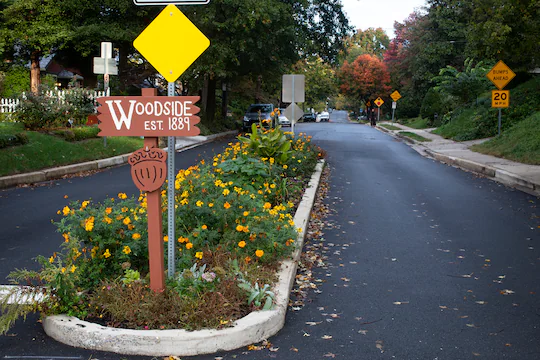





 By Michael Gerson