Loading

Posts by Paul Costello1

Feeling Stuck? Five Tips for Managing Life Transitions

Whatever the wolf is that disrupts your story, here are ways to emerge as the hero.

By Bruce Feiler July 16, 2020 New York Times

The Italians have a wonderful expression for how our lives get upended when we least expect it: “lupus in fabula.” It means “the wolf in the fairy tale.” Just when life is going swimmingly, along comes a demon, a dragon, a diagnosis, a downsizing. Just when our fairy tale seems poised to come true, a big, scary thing threatens to destroy everything around it.

Today, for the first time in over a century, the entire planet is confronting the same wolf at the same time. In the United States alone, more than 130,000 families have lost loved ones; tens of millions of us have lost jobs, or may be rethinking our careers or where we want to live. We are reconsidering how we care for our families, what gives us meaning. The way we cope with such changes is called a “life transition,” and learning to master these challenging periods just may be the most essential life skill each of us needs right now.

I spent the last five years talking to people about the biggest transitions of their lives. Spurred by a back-to-back-to-back set of personal crises — a cancer diagnosis, a near bankruptcy, a suicide attempt by my father — I crisscrossed the country, collecting the life stories of hundreds of Americans in all 50 states who had been through wrenching life changes. I then spent a year combing through those stories, teasing out patterns and takeaways that can help all of us battle our wolves more effectively.

What I learned is that massive life disruptions — or “lifequakes,” as I call them — strike people in the core of their being. They create meaning vacuums, in which we feel frightened, overwhelmed and stuck.

A transition is how we get unstuck. A lifequake may be voluntary (we leave a bad marriage, start a new enterprise) or involuntary (we get laid off, become ill), but the transition must be voluntary. We must choose to take the steps and go through the process of turning our fear and anxiety into renewal and growth.

So what tools are most effective? Based on the patterns I found in my research, here are five tips that you or a loved one can use right now that will make whatever life transition you’re experiencing go more efficiently.

Once you enter a transition, you often feel either chaotic and out of control or sluggish and stuck in place. But my conversations suggest there is surprising order to these times.S

For starters, transitions have three phases. I call them “the long goodbye,” in which you mourn the old you; “the messy middle,” in which you shed habits and create new ones; and “the new beginning,” in which you unveil your fresh self. These phases need not happen in order. Each person tends to gravitate to the phase they’re best at (their transition superpower) and get bogged down in the one they’re weakest at (their transition kryptonite).

While 40 percent find saying goodbye the hardest, others are quick to shut doors. While nearly half say the messy middle is hardest, others relish it. Jenny Wynn, a minister in Scottsdale, Ariz., initially resisted the call to replace her senior minister at a previous church after he died suddenly. But once she accepted, she thrived. She took a sabbatical, began drawing, had his office repainted. “I needed time to transition my own thinking,” she said, “and I needed the congregation to transition how they thought of me.”

I asked all the people I interviewed the greatest emotion they struggled with during their transition. At 27 percent, fear was the most popular reaction, followed by sadness and shame. Some people coped with these emotions by writing down their feelings; others plunged into new tasks.

But nearly eight in 10 said they turned to rituals. They sang, danced, hugged, purged, tattooed, sky-dived, schvitzed. They changed their names, went to sweat lodges, got tattoos.

Following a brutal year in which she lost her job in Hollywood, had a blowup with her mother, and went on 52 first dates, Lisa Rae Rosenberg jumped out of an airplane. “I had a terrible fear of heights, and I thought, if I can figure this out, I can figure anything out.” A year later she was married with a child.

Ritualistic gestures like these are especially effective during the long goodbye as they’re statements — to ourselves and to others — that we’ve gone through a change and are ready for what comes next.

Once we enter the messy middle, we shed things: mind-sets, routines, delusions, dreams. Like animals who molt when they enter a new phase, we cast off parts of our personality or bad habits.

After Michael Mitchell, a hard-driving urologist from Wisconsin, retired from four decades in medicine, he had to dispense with the idea that he should always be doing something constructive.

After Loretta Parham, a librarian in Atlanta, lost her daughter in a car accident and stepped in to raise her granddaughters, she had to give up merely indulging them and instead become more of a disciplinarian.

After John Austin stepped down from 25 years as a Drug Enforcement Administration agent, he had to get used to not having a gun. “Wait, now I have to persuade people to listen to me? I used to be able to compel them.”

Shedding is a way to clear out some unwanted parts of our lives to make way for the new parts to come.

In a pattern I didn’t see coming, a remarkable number of people I interviewed turned to creativity while undergoing the shifts in their lives. They start to dance, cook, paint; they write poems, thank-you notes, diary entries.

At the moment of greatest chaos, they respond with creation.

Sarah Rose Siskind, a firebrand intellectual from California, learned to play the ukulele while going through a depression after leaving her job as a writer at Fox News and renouncing her conservative views.

Dwayne Hayes, a computer programmer in Michigan, was so shaken after his wife gave birth to stillborn twins that he quit his job and started a magazine about fatherhood.

Helen Kim, who stepped down from teaching college biology in the wake of her stomach cancer, fulfilled a girlhood dream by taking classes in adult ballet.

What people seem to crave from these acts is what creation has represented since the dawn of time: a fresh start.

A life transition is fundamentally a meaning-making exercise. It is an autobiographical occasion, in which we are called on to revise and retell our life stories, adding a new chapter in which we find meaning in our lifequake. The lifequake itself may have been positive or negative, but the story we tell about it has an ending that’s upbeat and forward-looking.

And that may be the greatest lesson of all: We control the stories we tell about our transitions. Instead of viewing them as periods we have to grind our way through, we should see them for what they are: healing periods that take the frightened parts of our lives and begin to repair them.

We can’t keep the wolves from interrupting our fairy tales, and that’s OK. Because if you banish the wolf, you banish the hero. And if there’s one thing I’ve learned it’s that we all need to be the hero of our own story.

Bruce Feiler is the author of The New York Times column “This Life.” This article is adapted from his new book, “Life Is in the Transitions: Mastering Change at Any Age.”

The Stories That Bind Us

By Bruce Feiler in the New York Times

  • March 15, 2013
Happy Families Cartoon Stock Photo, Picture And Royalty Free Image. Image  89410501.

I hit the breaking point as a parent a few years ago. It was the week of my extended family’s annual gathering in August, and we were struggling with assorted crises. My parents were aging; my wife and I were straining under the chaos of young children; my sister was bracing to prepare her preteens for bullying, sex and cyberstalking.

Sure enough, one night all the tensions boiled over. At dinner, I noticed my nephew texting under the table. I knew I shouldn’t say anything, but I couldn’t help myself and asked him to stop.

Ka-boom! My sister snapped at me to not discipline her child. My dad pointed out that my girls were the ones balancing spoons on their noses. My mom said none of the grandchildren had manners. Within minutes, everyone had fled to separate corners.

Later, my dad called me to his bedside. There was a palpable sense of fear I couldn’t remember hearing before.

“Our family’s falling apart,” he said.

“No it’s not,” I said instinctively. “It’s stronger than ever.”

But lying in bed afterward, I began to wonder: Was he right? What is the secret sauce that holds a family together? What are the ingredients that make some families effective, resilient, happy?

It turns out to be an astonishingly good time to ask that question. The last few years have seen stunning breakthroughs in knowledge about how to make families, along with other groups, work more effectively.

Myth-shattering research has reshaped our understanding of dinnertime, discipline and difficult conversations. Trendsetting programs from Silicon Valley and the military have introduced techniques for making teams function better.

The only problem: most of that knowledge remains ghettoized in these subcultures, hidden from the parents who need it most. I spent the last few years trying to uncover that information, meeting families, scholars and experts ranging from peace negotiators to online game designers to Warren Buffett’s bankers.

After a while, a surprising theme emerged. The single most important thing you can do for your family may be the simplest of all: develop a strong family narrative.

I first heard this idea from Marshall Duke, a colorful psychologist at Emory University. In the mid-1990s, Dr. Duke was asked to help explore myth and ritual in American families.

Myths and Realities about Culture and Families: Examples of Latin families  - FFI Practitioner

“There was a lot of research at the time into the dissipation of the family,” he told me at his home in suburban Atlanta. “But we were more interested in what families could do to counteract those forces.”

Around that time, Dr. Duke’s wife, Sara, a psychologist who works with children with learning disabilities, noticed something about her students.

“The ones who know a lot about their families tend to do better when they face challenges,” she said.

Her husband was intrigued, and along with a colleague, Robyn Fivush, set out to test her hypothesis. They developed a measure called the “Do You Know?” scale that asked children to answer 20 questions.

Examples included: Do you know where your grandparents grew up? Do you know where your mom and dad went to high school? Do you know where your parents met? Do you know an illness or something really terrible that happened in your family? Do you know the story of your birth?

Dr. Duke and Dr. Fivush asked those questions of four dozen families in the summer of 2001, and taped several of their dinner table conversations. They then compared the children’s results to a battery of psychological tests the children had taken, and reached an overwhelming conclusion. The more children knew about their family’s history, the stronger their sense of control over their lives, the higher their self-esteem and the more successfully they believed their families functioned. The “Do You Know?” scale turned out to be the best single predictor of children’s emotional health and happiness.

“We were blown away,” Dr. Duke said.

And then something unexpected happened. Two months later was Sept. 11. As citizens, Dr. Duke and Dr. Fivush were horrified like everyone else, but as psychologists, they knew they had been given a rare opportunity: though the families they studied had not been directly affected by the events, all the children had experienced the same national trauma at the same time. The researchers went back and reassessed the children.

“Once again,” Dr. Duke said, “the ones who knew more about their families proved to be more resilient, meaning they could moderate the effects of stress.”

Why does knowing where your grandmother went to school help a child overcome something as minor as a skinned knee or as major as a terrorist attack?

How to trace your family tree | Financial Times

“The answers have to do with a child’s sense of being part of a larger family,” Dr. Duke said.

Psychologists have found that every family has a unifying narrative, he explained, and those narratives take one of three shapes.

First, the ascending family narrative: “Son, when we came to this country, we had nothing. Our family worked. We opened a store. Your grandfather went to high school. Your father went to college. And now you. …”

Second is the descending narrative: “Sweetheart, we used to have it all. Then we lost everything.”

“The most healthful narrative,” Dr. Duke continued, “is the third one. It’s called the oscillating family narrative: ‘Dear, let me tell you, we’ve had ups and downs in our family. We built a family business. Your grandfather was a pillar of the community. Your mother was on the board of the hospital. But we also had setbacks. You had an uncle who was once arrested. We had a house burn down. Your father lost a job. But no matter what happened, we always stuck together as a family.’ ”

Dr. Duke said that children who have the most self-confidence have what he and Dr. Fivush call a strong “intergenerational self.” They know they belong to something bigger than themselves.

Leaders in other fields have found similar results. Many groups use what sociologists call sense-making, the building of a narrative that explains what the group is about.

Jim Collins, a management expert and author of “Good to Great,” told me that successful human enterprises of any kind, from companies to countries, go out of their way to capture their core identity. In Mr. Collins’s terms, they “preserve core, while stimulating progress.” The same applies to families, he said.

Mr. Collins recommended that families create a mission statement similar to the ones companies and other organizations use to identify their core values.

The military has also found that teaching recruits about the history of their service increases their camaraderie and ability to bond more closely with their unit.

Cmdr. David G. Smith is the chairman of the department of leadership, ethics and law at the Naval Academy and an expert in unit cohesion, the Pentagon’s term for group morale. Until recently, the military taught unit cohesion by “dehumanizing” individuals, Commander Smith said. Think of the bullying drill sergeants in “Full Metal Jacket” or “An Officer and a Gentleman.”

But these days the military spends more time building up identity through communal activities. At the Naval Academy, Commander Smith advises graduating seniors to take incoming freshmen (or plebes) on history-building exercises, like going to the cemetery to pay tribute to the first naval aviator or visiting the original B-1 aircraft on display on campus.

Dr. Duke recommended that parents pursue similar activities with their children. Any number of occasions work to convey this sense of history: holidays, vacations, big family get-togethers, even a ride to the mall. The hokier the family’s tradition, he said, the more likely it is to be passed down. He mentioned his family’s custom of hiding frozen turkeys and canned pumpkin in the bushes during Thanksgiving so grandchildren would have to “hunt for their supper,” like the Pilgrims.

“These traditions become part of your family,” Dr. Duke said.

Decades of research have shown that most happy families communicate effectively. But talking doesn’t mean simply “talking through problems,” as important as that is. Talking also means telling a positive story about yourselves. When faced with a challenge, happy families, like happy people, just add a new chapter to their life story that shows them overcoming the hardship. This skill is particularly important for children, whose identity tends to get locked in during adolescence.

The bottom line: if you want a happier family, create, refine and retell the story of your family’s positive moments and your ability to bounce back from the difficult ones. That act alone may increase the odds that your family will thrive for many generations to come.

______________________________________________________________________________

“This Life” appears monthly in Sunday Styles. This article is adapted from Bruce Feiler’s recently published book, “The Secrets of Happy Families: How to Improve Your Morning, Rethink Family Dinner, Fight Smart, Go Out and Play, and Much More.”


History of Silver Spring MD

147th Anniversary of the Burning of Falkland Mansion | Silver Spring, MD  Patch

Free Genealogy » Black Genealogy » Slave Narrative of Lucy Brooks

Slave Narrative of Lucy Brooks

Leave a Comment / Black GenealogyMaryland

Interviewer: Guthrie
Person Interviewed: Lucy Brooks
Location: Forest Glen, Maryland
Place of Residence: Forest Glen, Montgomery County, Md.

References: Interview with Aunt Lucy and her son, Lafayette Brooks.

Aunt Lucy, an ex-slave, lives with her son, Lafayette Brooks, in a shack on the Carroll Inn Springs property at Forest Glen, Montgomery County, Md.

To go to her home from Rockville, leave the Court House going east on Montgomery Ave. and follow US Highway No. 240, otherwise known as the Rockville Pike, in its southeasterly direction, four and one half miles to the junction with it on the left (east) of the Garrett Park Road. This junction is directly opposite the entrance to the Georgetown Preparatory School, which is on the west of this road. Turn left on the Garrett Park Road and follow it through that place and crossing Rock Creek go to Kensington. Here cross the tracks of the B.&O. R.R. and parallel them onward to Forest Glen. From the railroad station in this place go onward to Forest Glen. From the railroad station in this place go onward on the same road to the third lane branching off to the left. This lane will be identified by the sign “Carroll Springs Inn”. Turn left here and enter the grounds of the inn. But do not go up in front of the inn itself which is one quarter of a mile from the road. Instead, where the drive swings to the right to go to the inn, bear to the left and continue downward fifty yards toward the swimming pool. Lucy’s shack is on the left and one hundred feet west of the pool. It is about eleven miles from Rockville.

Lucy is an usual type of Negro and most probably is a descendant of less remotely removed African ancestors than the average plantation Negroes. She does not appear to be a mixed blood—a good guess would be that she is pure blooded Senegambian. She is tall and very thin, and considering her evident great age, very erect, her head is very broad, overhanging ears, her forehead broad and not so receeding as that of the average. Her eyes are wide apart and are bright and keen. She has no defect in hearing.

Following are some questions and her answers:

“Lucy, did you belong to the Carrolls before the war?” “Nosah, I didne lib around heah den. Ise born don on de bay”.

“How old are you?”

“Dunno sah. Miss Anne, she had it written down in her book, but she said twas too much trouble for her to be always lookin it up”. (Her son, Lafayette, says he was her eldest child and that he was born on the Severn River, in Maryland, the 15th day of October, 1872. Supposing the mother was twenty-five years old then, she would be about ninety now. Some think she is more than a hundred years old).

“Who did you belong to?”

“I belonged to Missus Ann Garner”.

“Did she have many slaves?”

“Yassuh. She had seventy-five left she hadnt sold when the war ended”.

“What kind of work did you have to do?”

“O, she would set me to pickin up feathers round de yaird. She had a powerful lot of geese. Den when I got a little bigger she had me set the table. I was just a little gal then. Missus used to say that she was going to make a nurse outen me. Said she was gwine to sen me to Baltimo to learn to be a nurse”.

“And what did you think about that?”

“Oh; I thought that would be fine, but he war came befo I got big enough to learn to be a nurse”.

“I remebers when the soldiers came. I think they were Yankee soldiers. De never hurt anybody but they took what they could find to eat and they made us cook for them. I remebers that me and some other lil gals had a play house, but when they came nigh I got skeered. I just ducked through a hole in the fence and ran out in the field. One of the soldiers seed me and he hollers ‘look at that rat run’.”

“I remebers when the Great Eastern (steamship which laid the Atlantic cable) came into the bay. Missus Ann, and all the white folks went down to Fairhaven wharf to see dat big shep”.

“I stayed on de plantation awhile after de war and heped de Missus in de house. Den I went away”.

“Ise had eight chillun. Dey all died and thisun and his brother (referring to Lafayette). Den his brother died too. I said he ought ter died instid o his brother.”

“Why?”

“Because thisun got so skeered when he was little bein carried on a hos that he los his speech and de wouldt let me see im for two days. It was a long time befor he learned to talk again”. (To this day he has such an impediment of speech that it is painful to hear him make the effort to talk).

“What did you have to eat down on the plantation, Aunt Lucy?”

“I hab mostly clabber, fish and corn bread. We gets plenty of fish down on de bay”.

“When we cum up here we works in the ole Forest Glen hotel. Mistah Charley Keys owned the place then. We stayed there after Mr. Cassidy come. (Mr. Cassidy was the founder of the National Park Seminary, a school for girls). My son Lafayette worked there for thirty five years. Then we cum to Carroll Springs Inn”.

http://montgomeryhistory.org/wp-content/uploads/2016/09/Vol12No1_MCStory.pdf

https://www.loc.gov/resource/mesn.080/?sp=4&st=text

https://montgomeryplanning.org/wp-content/uploads/2019/04/MPI_Cem_Form_Mt_Zion_Cem.pdf

https://mcatlas.org/filetransfer/HistoricPreservation/Cemeteries/327_River-Road-Moses_Bethesda/research/final2forgotten_african_american_community_of_river_road.pdf

content/uploads/2019/04/MPI_Cem_Form_Mt_Zion_Cem.pdf

https://cdn.website-editor.net/020d9c979f77483189db333592c7de7f/files/uploaded/History%2520of%2520Montgomery%2520County%252C%2520Maryland.pdf

https://bethesdamagazine.com/bethesda-magazine/november-december-2009/where-slavery-slept-2/2/

Recruiting 2021-11 Team

Edit

This image has an empty alt attribute; its file name is AdobeStock_246435405-scaled-1024x683.jpg

SERVICE BRINGS THE COMMUNITY TOGETHER!

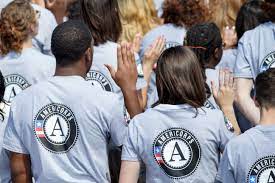
Project CHANGE Montgomery is the original Montgomery County MD program of AmeriCorps, America’s “Domestic Peace Corps” for more than 20 years. AmeriCorps members serve the county’s most under-served K-12+ students inspiring them to believe in themselves enough to achieve. Project CHANGE uses its own phone app called MYSCORE, the innovative SEL tool that allows students to self-assess their growth in the 5C’s and reach out to the members to help them grow more confident, curious, collaborative, courageous and career/future focused learners.

______________________________________________________________________________________________________________________________________________________________________________________________________________________________

BENEFITS
In return, AmeriCorps members receive:

  • 300 hours of Training, peer-to-peer coaching, and professional development and mentoring
  • Living stipend of $18,000 per year
  • $6,345 educational scholarship
  • Health Insurance
  • Preference in hiring in many organizations and agencies
  • Child Care if qualified
  • Student loan forgiveness for the duration of the service
  • Lifelong friends who experience the challenges together
  • Invaluable experience of the local education/non-profit sector

Positions are full time (1700 hours over 12 months (August 2021 to August 2022) and some positions are Half Time (900 hours over a year.)S

MCPS

Montgomery County Public Schools (MCPS) with 165,000+ Students enrolled, is one of the nations largest school districts and it grows every year. But since March 2020, all schools have shutdown, leaving kids cut off from their peers, depriving them of normal healthy social outlets. The virtual platforms of learning might be able to teach math or science but they cannot make up for losses in Social/Emotional learning, the very skills students need most to deal with the crisis. This is where you come in. “Back to Normal” is a misnomer given what so many students have missed out on.

____________________________________________________________________________________________________________________________________________________________

Every child needs one on one attention, especially struggling students, who battle to believe in themselves. Project CHANGE is dedicated to the 5C’s curriculum that says every student needs to grow in Confidence, Curiosity, Collaboration, Courage and Career/future focused learning. Guided by internationally known teachers, the best narrative and coaching faculty in the region, the Project CHANGE 2021-22 team will serve together to tackle the COVID19 challenge to learning. By serving directly in schools and in after-school programs with leading non-profit organizations, AmeriCorps members commit to a year serving students so that they not just catch up, but “catch on fire” with taking the lead in their own learning.

For 20 years, AmeriCorps Project CHANGE Montgomery has combined a traditional AmeriCorps placement with the most innovative training and supervision drawn from the complementary disciplines of the narrative method and peer to peer executive coaching. 2021-21 will offer the same amazing faculty that includes Disaster Relief specialist Mary Fowler (Trauma informed teaching) performer and author Noa Baum, (on how to tell a story) Therapist Jonathan Zeitlin (Mindfulness and Zen) executive master coach Lynn Feingold ( the art of peer to peer coaching) Lockheed Martin retired manager John Dold (Building a Team) author and Professor, Dr. Jean Freedman ( How Improv can improve performance) Women’s Business Coach, Maria Mcelhenny (Financial Literacy) and many others. This outstanding team has been brought together under the leadership of world authority on narrative method and Project CHANGE director, Paul Costello.

_____________________________________________________________________________________________________________________________________________________________

AmeriCorps Members are assigned to one of our outstanding nonprofit and educational organization partners:

My Y Story - Quinton

YMCA Youth & Family Services (YMCA-YFS) – YMCA-YFS is a community-based, comprehensive social services branch of the YMCA Metropolitan Washington. YFS provides school and community-based prevention and early intervention services to at-risk and under-served children and families from across Montgomery County, MD. YFS programs address basic social-service needs, teach fundamental life skills and assist participants in making healthy choices. The YMCA coordinates after-school programs for children, K-12.

AmeriCorps members serve as program assistants and coordinators at Benchmarks, serving middle school students.

____________________________________________________________________________________________________________________________

Family Learning Solutions (FLS) – FLS provides services at Neelsville Middle School and at Gaithersburg High School. FLS offers tutoring to students referred by school personnel and juvenile court professionals. There is a need for bilingual AmeriCorps members to ensure that students and households struggling with English can access needed services. FLS also offers a special mentoring program for girls (6 – 12 grades) to ensure that they are equipped with essential life skills to thrive in their lives, personally, academically, and professionally. A safe, empowering, and supportive environment is provided as students cultivate authentic connection with themselves and others. 

AmeriCorps members can serve as a tutor for referred students and/or work as a mentor in the program for girls (6 – 12 grades).

_____________________________________________________________________________________________________________________

Arts on the Block | Montgomery County Volunteer Center

Arts on the Block (AOB) – AOB is an entrepreneurial nonprofit organization that provides a unique model of youth development and community engagement through public art. AOB is the only organization in the Washington, DC area offering youth of diverse backgrounds the opportunity to learn first-hand about the intersection of art, design, and business by engaging in real-world projects. Today, more than 100 AOB apprentice-created projects — from park benches to large-scale murals — grace public and private spaces throughout the area. 

One AmeriCorps member will assist the AOB cohort of passionate individuals in providing opportunities for creative youth in Montgomery County and beyond. This is a perfect placement for a budding artist.

___________________________________________________________________________________________________

MONTGOMERY HOUSING PARTNERSHIP INC - GuideStar Profile

Montgomery Housing Partnership (MHP) – MHP serves more than 1,400 families in Montgomery County. They house people, empower families, and strengthen neighborhoods. Since 1989, Montgomery Housing Partnership’s mission is to preserve and expand quality affordable housing in Montgomery County. They advance their mission through three key strategies; by acquiring, rehabilitating, building and managing quality affordable housing, by developing and implementing community life programs to improve the quality of life and increase opportunities for our residents, and by collaborating with concerned citizens and businesses, public officials and community organizations to build strong, vital neighborhoods. 

Two AmeriCorps members coordinate and supervise preschool and after school programs for students who live in these properties.

____________________________________________________________________________________________________________________________________________________

Student Services - Psychological Services - Montgomery County Public Schools,  Rockville, MD

The MCPS Restorative Justice Unit – Restorative Justice is an approach to building community, self-care, and conflict resolution. It’s a social justice platform that allows students to:

  • Actively engage and problem-solve physical, psychological, social and disciplinary issues that affect themselves and the community.
  • Take responsibility for their actions.
  • Work with those affected to restore and/or repair the members and community who were harmed as a result of those actions.

Two AmeriCorps members assist The MCPS Restorative Justice Unit in preparing and engaging all stakeholders in restorative practices through meaningful trainings, school-level support, collegial collaboration, and supported community partnerships.

_______________________________________________________________________________________________________________________

MCPS Times Report 1/26 – ReachForTheWall

Montgomery County Public Schools (MCPS) – MCPS is searching for classroom support to the teachers and students in the highest needs schools in the County, which include:

  • Kemp Mills Elementary School (Requires a Spanish Speaker)
  • Sligo Middle School
  • Jackson Road Elementary School
  • Thomas Edison School of Technology
  • Saturday School

Seven AmeriCorps members will serve as assistants in the classrooms and provide direct support to the teachers and students.

_____________________________________________________________________________________________________________________________________

\

George B. Thomas Sr. Learning Academy, Inc. - Saturday School | Montgomery  County Volunteer Center

George B. Thomas Sr. Learning Academy (GBTLA) – GBTLA is often called Saturday School and is open to all students in Montgomery County. Saturday School is a sixth day of academic instruction with certified teachers in a nurturing and supportive environment. The Curriculum is aligned with that of Montgomery County Public Schools: Grades 1 through 8 focus on reading, language arts and math, Grades 9 through 12 focus on core subjects (English and Math); support for High School Assessments; HSA Bridge support available at select sites. College and career readiness is emphasized. 

The AmeriCorps member is involved in student- parent outreach and communication with an emphasis on the Latino community which has not yet participated in large numbers in this Saturday learning opportunity.

_____________________________________________________________________________________________________________________________________

Community Bridges – Empowering Girls, Building Leaders for the Community

Community Bridges –  Community Bridges is a non-profit organization that helps empower girls from diverse backgrounds to become exceptional students, positive leaders, and healthy young women. Community Bridges envision an inclusive community where each person is valued and has abundant opportunities to improve themselves and the world around them. The following principles guide all their work. The organization believes in:

  • Endless Potential: Individuals are encouraged and given opportunities to explore limitless possibilities in order to actualize their dreams.
  • Strength-Focused Thinking: Everyone is in possession of assets that can be mobilized to promote collective action in schools and communities.
  • Resourcefulness: Barriers can be overcome by applying enterprising strategies to define resourceful ways to accomplish goals.
  • Multidimensional Approaches: The world is interconnected and whole-systems thinking ensures the success for those involved.

Three AmeriCorps members serve over 450 girls from Grades 4-12 in the after-school program, covering Elementary, Middle and High School.

________________________________________________________________________________________________________________________________________

Career Readiness Education Academy (CREA) - Montgomery County Public Schools,  Rockville, MD

The Career Readiness Education Academy (CREA) – CREA is an academic and career readiness education program for older ESOL students in MCPS. Students in CREA are provided with opportunities to prepare for the GED exam, learn valuable work skills, and earn industry certifications. Students are referred to CREA if they are at least 18 years old and unlikely to meet all graduation requirements prior to turning 21 and/or if they are interested in pursuing an alternative pathway to a high school diploma via GED preparation. The CREA program is currently offered at both Seneca Valley High School and Thomas Edison High School of Technology as a full-day or evening program. Having these two program options provides students who need to work or care for their own children with an opportunity to continue their education in MCPS until they turn 21. Students who participate in either CREA program are considered full-time MCPS students. 

One AmeriCorps members will assist in tutoring students and providing support to the program educators.

________________________________________________________________________________________________________________________________

MCPS Recovery and Academic Program (RAP) – RAP is a partnership between Montgomery County Public Schools (MCPS) and Sheppard Pratt Health System to connect youth with academic and substance use recovery support services. The program pairs academic coursework from MCPS with recovery support services provided at The Landing, Family Services’ recovery clubhouse. RAP helps students continue working toward graduation in a safe and supportive environment during the day while learning the necessary skills needed to maintain sobriety in the afternoons and evenings. It is free of charge to Montgomery County youth and accepts referrals from MCPS, juvenile drug court, and other non-profit agencies. 

One AmeriCorps members from Project CHANGE will assist the RAP participants in academic tutoring and mentoring and offer support to the program staff as needed.

_________________________________________________________________________________________________________________

NEXT STEPS-INFORMATION SESSIONS

All applicants must be high school graduates and American citizens or permanent residents. Send a copy of your resume and a letter of interest and be prepared for an interview over June/July and attend a ZOOM information session on one of these dates:  June 11, June 24, July 7th, July 20th. Links to the ZOOM are below. 

DETAILS TO ATTEND AN INFORMATION SESSION ON ZOOM


Wednesday July 7th 2.00pm-3.30pm    https://us02web.zoom.us/j/88317577100

Tuesday July 20th 10.30am-12pm    
https://us02web.zoom.us/j/85645207166


APPLY on Indeed here
 Email us at americorpsmontgomery@gmial.com

All members will be serving with MCPS schools and partner organizations that must abide by the Montgomery County Health and Safety Guidelines.

Apply 2021-22

Edit

This image has an empty alt attribute; its file name is AdobeStock_246435405-scaled-1024x683.jpg

SERVICE BRINGS THE COMMUNITY TOGETHER!

Project CHANGE Montgomery is the original Montgomery County MD program of AmeriCorps, America’s “Domestic Peace Corps” for more than 20 years. AmeriCorps members serve the county’s most under-served K-12+ students inspiring them to believe in themselves enough to achieve. Project CHANGE uses its own phone app called MYSCORE, the innovative SEL tool that allows students to self-assess their growth in the 5C’s and reach out to the members to help them grow more confident, curious, collaborative, courageous and career/future focused learners.

______________________________________________________________________________________________________________________________________________________________________________________________________________________________

BENEFITS
In return, AmeriCorps members receive:

  • 300 hours of Training, peer-to-peer coaching, and professional development and mentoring
  • Living stipend of $18,000 per year
  • $6,345 educational scholarship
  • Health Insurance
  • Preference in hiring in many organizations and agencies
  • Child Care if qualified
  • Student loan forgiveness for the duration of the service
  • Lifelong friends who experience the challenges together
  • Invaluable experience of the local education/non-profit sector

Positions are full time (1700 hours over 12 months (August 2021 to August 2022) and some positions are Half Time (900 hours over a year.)S

MCPS

Montgomery County Public Schools (MCPS) with 165,000+ Students enrolled, is one of the nations largest school districts and it grows every year. But since March 2020, all schools have shutdown, leaving kids cut off from their peers, depriving them of normal healthy social outlets. The virtual platforms of learning might be able to teach math or science but they cannot make up for losses in Social/Emotional learning, the very skills students need most to deal with the crisis. This is where you come in. “Back to Normal” is a misnomer given what so many students have missed out on.

____________________________________________________________________________________________________________________________________________________________

Every child needs one on one attention, especially struggling students, who battle to believe in themselves. Project CHANGE is dedicated to the 5C’s curriculum that says every student needs to grow in Confidence, Curiosity, Collaboration, Courage and Career/future focused learning. Guided by internationally known teachers, the best narrative and coaching faculty in the region, the Project CHANGE 2021-22 team will serve together to tackle the COVID19 challenge to learning. By serving directly in schools and in after-school programs with leading non-profit organizations, AmeriCorps members commit to a year serving students so that they not just catch up, but “catch on fire” with taking the lead in their own learning.

For 20 years, AmeriCorps Project CHANGE Montgomery has combined a traditional AmeriCorps placement with the most innovative training and supervision drawn from the complementary disciplines of the narrative method and peer to peer executive coaching. 2021-21 will offer the same amazing faculty that includes Disaster Relief specialist Mary Fowler (Trauma informed teaching) performer and author Noa Baum, (on how to tell a story) Therapist Jonathan Zeitlin (Mindfulness and Zen) executive master coach Lynn Feingold ( the art of peer to peer coaching) Lockheed Martin retired manager John Dold (Building a Team) author and Professor, Dr. Jean Freedman ( How Improv can improve performance) Women’s Business Coach, Maria Mcelhenny (Financial Literacy) and many others. This outstanding team has been brought together under the leadership of world authority on narrative method and Project CHANGE director, Paul Costello.

_____________________________________________________________________________________________________________________________________________________________

AmeriCorps Members are assigned to one of our outstanding nonprofit and educational organization partners:

My Y Story - Quinton

YMCA Youth & Family Services (YMCA-YFS) – YMCA-YFS is a community-based, comprehensive social services branch of the YMCA Metropolitan Washington. YFS provides school and community-based prevention and early intervention services to at-risk and under-served children and families from across Montgomery County, MD. YFS programs address basic social-service needs, teach fundamental life skills and assist participants in making healthy choices. The YMCA coordinates after-school programs for children, K-12.

AmeriCorps members serve as program assistants and coordinators at Benchmarks, serving middle school students.

____________________________________________________________________________________________________________________________

Family Learning Solutions (FLS) – FLS provides services at Neelsville Middle School and at Gaithersburg High School. FLS offers tutoring to students referred by school personnel and juvenile court professionals. There is a need for bilingual AmeriCorps members to ensure that students and households struggling with English can access needed services. FLS also offers a special mentoring program for girls (6 – 12 grades) to ensure that they are equipped with essential life skills to thrive in their lives, personally, academically, and professionally. A safe, empowering, and supportive environment is provided as students cultivate authentic connection with themselves and others. 

AmeriCorps members can serve as a tutor for referred students and/or work as a mentor in the program for girls (6 – 12 grades).

_____________________________________________________________________________________________________________________

Arts on the Block | Montgomery County Volunteer Center

Arts on the Block (AOB) – AOB is an entrepreneurial nonprofit organization that provides a unique model of youth development and community engagement through public art. AOB is the only organization in the Washington, DC area offering youth of diverse backgrounds the opportunity to learn first-hand about the intersection of art, design, and business by engaging in real-world projects. Today, more than 100 AOB apprentice-created projects — from park benches to large-scale murals — grace public and private spaces throughout the area. 

One AmeriCorps member will assist the AOB cohort of passionate individuals in providing opportunities for creative youth in Montgomery County and beyond. This is a perfect placement for a budding artist.

___________________________________________________________________________________________________

MONTGOMERY HOUSING PARTNERSHIP INC - GuideStar Profile

Montgomery Housing Partnership (MHP) – MHP serves more than 1,400 families in Montgomery County. They house people, empower families, and strengthen neighborhoods. Since 1989, Montgomery Housing Partnership’s mission is to preserve and expand quality affordable housing in Montgomery County. They advance their mission through three key strategies; by acquiring, rehabilitating, building and managing quality affordable housing, by developing and implementing community life programs to improve the quality of life and increase opportunities for our residents, and by collaborating with concerned citizens and businesses, public officials and community organizations to build strong, vital neighborhoods. 

Two AmeriCorps members coordinate and supervise preschool and after school programs for students who live in these properties.

____________________________________________________________________________________________________________________________________________________

Student Services - Psychological Services - Montgomery County Public Schools,  Rockville, MD

The MCPS Restorative Justice Unit – Restorative Justice is an approach to building community, self-care, and conflict resolution. It’s a social justice platform that allows students to:

  • Actively engage and problem-solve physical, psychological, social and disciplinary issues that affect themselves and the community.
  • Take responsibility for their actions.
  • Work with those affected to restore and/or repair the members and community who were harmed as a result of those actions.

Two AmeriCorps members assist The MCPS Restorative Justice Unit in preparing and engaging all stakeholders in restorative practices through meaningful trainings, school-level support, collegial collaboration, and supported community partnerships.

_______________________________________________________________________________________________________________________

MCPS Times Report 1/26 – ReachForTheWall

Montgomery County Public Schools (MCPS) – MCPS is searching for classroom support to the teachers and students in the highest needs schools in the County, which include:

  • Kemp Mills Elementary School (Requires a Spanish Speaker)
  • Sligo Middle School
  • Jackson Road Elementary School
  • Thomas Edison School of Technology
  • Saturday School

Seven AmeriCorps members will serve as assistants in the classrooms and provide direct support to the teachers and students.

_____________________________________________________________________________________________________________________________________

\

George B. Thomas Sr. Learning Academy, Inc. - Saturday School | Montgomery  County Volunteer Center

George B. Thomas Sr. Learning Academy (GBTLA) – GBTLA is often called Saturday School and is open to all students in Montgomery County. Saturday School is a sixth day of academic instruction with certified teachers in a nurturing and supportive environment. The Curriculum is aligned with that of Montgomery County Public Schools: Grades 1 through 8 focus on reading, language arts and math, Grades 9 through 12 focus on core subjects (English and Math); support for High School Assessments; HSA Bridge support available at select sites. College and career readiness is emphasized. 

The AmeriCorps member is involved in student- parent outreach and communication with an emphasis on the Latino community which has not yet participated in large numbers in this Saturday learning opportunity.

_____________________________________________________________________________________________________________________________________

Community Bridges – Empowering Girls, Building Leaders for the Community

Community Bridges –  Community Bridges is a non-profit organization that helps empower girls from diverse backgrounds to become exceptional students, positive leaders, and healthy young women. Community Bridges envision an inclusive community where each person is valued and has abundant opportunities to improve themselves and the world around them. The following principles guide all their work. The organization believes in:

  • Endless Potential: Individuals are encouraged and given opportunities to explore limitless possibilities in order to actualize their dreams.
  • Strength-Focused Thinking: Everyone is in possession of assets that can be mobilized to promote collective action in schools and communities.
  • Resourcefulness: Barriers can be overcome by applying enterprising strategies to define resourceful ways to accomplish goals.
  • Multidimensional Approaches: The world is interconnected and whole-systems thinking ensures the success for those involved.

Three AmeriCorps members serve over 450 girls from Grades 4-12 in the after-school program, covering Elementary, Middle and High School.

________________________________________________________________________________________________________________________________________

Career Readiness Education Academy (CREA) - Montgomery County Public Schools,  Rockville, MD

The Career Readiness Education Academy (CREA) – CREA is an academic and career readiness education program for older ESOL students in MCPS. Students in CREA are provided with opportunities to prepare for the GED exam, learn valuable work skills, and earn industry certifications. Students are referred to CREA if they are at least 18 years old and unlikely to meet all graduation requirements prior to turning 21 and/or if they are interested in pursuing an alternative pathway to a high school diploma via GED preparation. The CREA program is currently offered at both Seneca Valley High School and Thomas Edison High School of Technology as a full-day or evening program. Having these two program options provides students who need to work or care for their own children with an opportunity to continue their education in MCPS until they turn 21. Students who participate in either CREA program are considered full-time MCPS students. 

One AmeriCorps members will assist in tutoring students and providing support to the program educators.

________________________________________________________________________________________________________________________________

MCPS Recovery and Academic Program (RAP) – RAP is a partnership between Montgomery County Public Schools (MCPS) and Sheppard Pratt Health System to connect youth with academic and substance use recovery support services. The program pairs academic coursework from MCPS with recovery support services provided at The Landing, Family Services’ recovery clubhouse. RAP helps students continue working toward graduation in a safe and supportive environment during the day while learning the necessary skills needed to maintain sobriety in the afternoons and evenings. It is free of charge to Montgomery County youth and accepts referrals from MCPS, juvenile drug court, and other non-profit agencies. 

One AmeriCorps members from Project CHANGE will assist the RAP participants in academic tutoring and mentoring and offer support to the program staff as needed.

_________________________________________________________________________________________________________________

NEXT STEPS-INFORMATION SESSIONS

All applicants must be high school graduates and American citizens or permanent residents. Send a copy of your resume and a letter of interest and be prepared for an interview over June/July and attend a ZOOM information session on one of these dates:  June 11, June 24, July 7th, July 20th. Links to the ZOOM are below. 

DETAILS TO ATTEND AN INFORMATION SESSION ON ZOOM


Wednesday July 7th 2.00pm-3.30pm    https://us02web.zoom.us/j/88317577100

Tuesday July 20th 10.30am-12pm    
https://us02web.zoom.us/j/85645207166


APPLY on Indeed here
 Email us at americorpsmontgomery@gmial.com

All members will be serving with MCPS schools and partner organizations that must abide by the Montgomery County Health and Safety Guidelines.

The deadly race riot ‘aided and abetted’ by The Washington Post a century ago

A front-page article helped incite the violence in the nation’s capital that left as many as 39 dead

By Gillian BrockellJuly 15, 2019 at 7:00 a.m. EDT27

The man attacked Louise Simmons in the afternoon, as she was leaving the Washington school where she taught. He had ridden up on a bicycle, leapt off and started pummeling her, she said. He dragged her toward a grove of trees; Simmons fought back until she was able to escape. It’s unclear how good a look she got of his face, but she could tell that, like her, he was black.

On that day, June 25, 1919, there were four major newspapers in the nation’s capital competing for readers. The Washington Herald published a small item about the attack on Simmons on page two, under the headline “Negro attacks negress.” The Washington Times ran a longer story but buried it in the back of the paper. The Evening Star and the smallest paper of the four — The Washington Post — didn’t mention it.

Five days later, a white woman said she was attacked by a black man, and the response was complete fury.

What followed was weeks of hysteria ginned up by the media, the arrest of hundreds of innocent black men, a riot that left as many as 39 dead and 150 injured, and put two black men in prison for decades for crimes they most likely did not commit.

The white woman, Bessie Gleason, said she was walking through the woods near her Takoma Park home when a black man leapt from the bushes, beat her with a club and choked her until she lost consciousness.

Police told newspapers another white woman had been accosted the same day. Different papers gave varying descriptions of the incident. In one, she merely saw a black man and ran away screaming. In another, the man “embraced” her, and she screamed until she was rescued by a white soldier.

In Tulsa, a century-old race massacre still haunts Black Wall Street

Soldiers crowded the city that summer, both white and black. Most had just been demobilized after returning from fighting in World War I, but they were allowed to continue wearing their uniforms while they looked for work. Some were still active-duty servicemen who suddenly didn’t have much to do.

The lines between soldier and citizen were blurred, but white residents were anxious to reestablish the order of white rule over any black veterans who may have forgotten “their place,” according to historian David F. Krugler in the journal “Washington History.”

Plus, while the men had been overseas, the District had gone dry, its prohibition on alcohol preceding the rest of the country. White soldiers looking for a drink ventured into the rough Southwest neighborhood of Bloodfield, where, according to Krugler, “black entrepreneurs controlled the illicit liquor trade.”

On July 5, newspapers reported the serial attacker struck again. Another white woman, Mary Saunders, said she was assaulted by a black man just over the District line in Maryland near Chevy Chase Circle.

The District’s chief of police told newspapers he was sure the crimes were all committed by the same perpetrator. He assigned 40 officers to investigate. Then 60 more. Then he authorized hundreds of volunteers from a wartime amateur patrol called the Home Defense League to join in the manhunt.

Over the next week, hundreds of black men were rounded up by police and league volunteers as possible suspects. According to Krugler, many were taken from their homes without warrants.

“Negro fiend pursued by 1,000 posse,” a Herald headline read. Days later, the paper reported “a group of white-hooded figures” were “riding at night, keeping undesirables indoors and spreading the fear of justice through the community.” The Ku Klux Klan “of reconstruction days” had been “revived,” the Herald declared.

On July 9, the National Association for the Advancement of Colored People sent a letter to the four newspapers, pleading with them to tone down the rhetoric, and warning that they were “sowing the seeds of a race riot by their inflammatory headlines.”

The warning was justified. Already that summer, race riots had erupted in Charleston, S.C., Longview, Tex., and New London, Conn. By fall, there would be two dozen more — in Chicago, Omaha, and Elaine, Ark. In addition, by mid-September, white mobs had lynched at least 43 African Americans, according to a Department of Labor report. Seven black veterans were lynched in their Army uniforms.

Vandals damage historical marker commemorating 1917 uprising by black soldiers

The morning the NAACP sent its letter, Louis Randall, a 22-year-old deacon in a black Baptist church, was walking across the Connecticut Avenue bridge in Northwest Washington when he was spotted by detectives. He ran, was caught and struggled to break free.

“I didn’t do it!” The Post reported him shouting, which detectives said was “strong evidence” against him, for how could he have known what he was denying unless he had actually done it?

Police Inspector Clifford Grant, like the chief of police, told the press only one man was responsible for all the attacks. But a few days later, when two white boys told police they had seen Forest Eaglen, a 20-year-old country club golf caddie, near Chevy Chase Circle, the inspector changed his story: Randall was the culprit for the attacks on Simmons and Gleason, and Eaglen had assaulted Saunders.

Then, on July 18, a young white newlywed was walking home from her job at the Bureau of Engraving and Printing when she encountered two black men. The four newspapers wrote wildly different versions of what happened — from verbal insults to a violent robbery — but she told police some kind of confrontation occurred.

Her husband, a civilian working for the Navy, overheard police say they had questioned a black man named Charles Ralls and became convinced of his guilt, the Evening Star reported. The next day, a Saturday, the husband enlisted more than a hundred friends, soldiers and veterans to hunt for Ralls. When night fell, they marched across the Mall toward Bloodfield armed with clubs and lead pipes, vowing to “clean it up.”

The forgotten story of an African American girl accused of murdering a police officer

They found Ralls walking with his wife and beat them both. The couple fled into their home, and the mob surrounded it, firing shots, pushing at the door and assaulting anyone else unlucky enough to pass by. One man was hospitalized with a fractured skull.

Officers from three police stations, a provost guard and a Marine detachment finally dispersed the crowd, but according to retired Post journalist Peter Perl, who researched the riots in the 1980s, police “arrested more blacks than whites, sending a clear signal about their sympathies.”

The next night was worse. The mob grew — emboldened by the halfhearted response from the authorities — and spread throughout the city, yanking black men, women and children off streetcars for beatings. One man was assaulted in front of The Post, another in front of the White House.

Down Pennsylvania Avenue, a brand-new dean at Howard University, historian Carter G. Woodson, narrowly escaped harm by hiding in the shadows as a white mob approached.

Others weren’t so lucky. Woodson later recalled what he witnessed: “They had caught a negro and deliberately held him as one would a beef for slaughter, and when they had conveniently adjusted him for lynching, they shot him. I heard him groaning in his struggle as I hurried away as fast as I could without running, expecting every moment to be lynched myself.”

The next morning, the city executive — Washington did not elect a mayor at the time — condemned the rioters and sensationalist coverage, saying “it is the duty of every citizen to express his support of law and order by refraining from any inciting conversation or the repetition of inciting rumor and tales.”

Then came an item on the front page of The Post, under the headline “Mobilization for Tonight.” “Every available service man” had been requested to meet on Pennsylvania Avenue between 7th and 8th streets, it read. “The hour of assembly is 9 o’clock and the purpose is a ‘clean-up’ that will cause the events of the last two evenings to pale into insignificance.”

Later, the NAACP blamed this article more than any other for the mayhem that followed. In his 1977 book about the history of The Post, legendary reporter Chalmers Roberts called it “highly provocative and shamefully irresponsible.”

An estimated 500 guns were sold that day, but it turns out they were bought mainly by black residents. And when the police forced gun dealers to stop selling, black organizers arranged an “underground railway” of firearms and ammunition from Baltimore, according to Krugler. A black citizens group distributed leaflets urging “our people . . . to go home before dark and to remain quietly and to protect themselves.”

White cavalry and Marine units were deployed across the city, but it was unclear whether they would be fighting the mob or joining it; some of the servicemen who were called in had rioted the night before.

Black residents suspected the target that night would be LeDroit Park, the prosperous black neighborhood next to Howard University. Two thousand black veterans and their compatriots formed a line of defense down Florida Avenue/U Street from 6th to 14th streets, facing south. They were armed.

As the sun set, Krugler wrote, skirmishes broke out. A white mob chased a black delivery driver; a band of black men boarded streetcars and assaulted uniformed Marines.

The police ordered the line of black veterans to disperse; they refused. Officers jabbed at the veterans with bayonets; it didn’t work. Then the police drew their weapons, and shots rang out — perhaps from the black sharpshooters stationed on the roof of the Howard Theater. An officer fell to the ground. The police opened fire; the black veterans returned it as they retreated.

It continued like this through the short summer night. A black veteran shot into the crowd chasing him and killed a man. A white conductor stopped his streetcar and shot at a black passenger. A 17-year-old black girl shot a police officer dead after he entered her family’s home without a warrant. A vigilante in the Home Defense League shot and killed the son of a beloved black messenger for the House Speaker. He had come back from the war only 10 days earlier.

The day 30,000 white supremacists in KKK robes marched in the nation’s capital

The next day, President Woodrow Wilson, an avowed segregationist who had been sick for days with severe diarrhea, took decisive action, ordering thousands of troops from surrounding bases to descend on the city.

Mobs gathered again that night, but something finally happened to dampen the rampage: a heavy summer rain.

Nine people were killed in the rioting; 30 more later died from their wounds, according to Perl’s account. Of all the race riots to erupt that summer, the one in Washington holds a peculiar distinction — it’s believed to be the only one with as many white casualties as black, or more.

A week later, with headlines now fixed on rioting in Chicago, more than a thousand black residents packed into the Howard Theater to form a defense fund for people of color arrested during the riots. The Post quoted an organizer named William T. Ferguson saying he believed the police, city leaders and “the reporters of Washington newspapers were aware of the approaching riot and aided and abetted it.”

It’s unclear if the defense fund was ever used to help Forest Eaglen or Louis Randall, who spent the four days of the riot in the D.C. jail. If it was, then it didn’t work.

Early in the investigation, Grant, the police inspector, told newspapers that Eaglen’s alibi — he claimed he was playing pool downtown at the time Saunders was attacked — had checked out “in part.” And Grant had “readily admit[ted]” to reporters he was “skeptical” of Randall’s guilt. All three women were initially uncertain when asked to positively identify Eaglen or Randall.

But by the time of the young men’s respective trials that winter, the uncertainty was gone. The women identified Eaglen and Randall as their assailants.

Eaglen, who was tried in Maryland, was found guilty and sentenced to 20 years.

Randall was convicted in two separate trials; for the attack on Simmons, the black teacher, he was sentenced to 15 years in federal prison. For the attack on Gleason, he was sentenced to death. He was twice given an execution date before President Wilson commuted his death sentence to 30 years, to be served consecutively with his other term.

Seven months after the riot, a music teacher named Gertrude Mann was found beaten to death in the woods near Connecticut Avenue. A year after the riot, a police officer noticed a 22-year-old black man named William Henry Campbell testing doorknobs in Columbia Heights in Northwest Washington. Detectives searched his home and found $2,000 worth of women’s jewelry in a bag tucked into his chimney.

He confessed not only to killing Mann but to dozens of other robberies and assaults, including those on Saunders, Gleason and Simmons. When investigators suggested he was lying about the other attacks to do Eaglen and Randall “a favor,” he offered to go to the scene of each crime to explain how he committed them, according to the Washington Times.

Campbell recanted his confessions once he was provided with an attorney. He was convicted of killing Mann and hanged.

When Campbell was first arrested, the Times said Eaglen and Randall’s attorneys planned to file paperwork requesting pardons.

Two years after the riot, on August 19, 1921, the Times had an exclusive: Gleason was now unsure if it was Randall or Campbell who had attacked her.

That’s the last time Eaglen or Randall made it into a local paper.

Census records show that in 1930, Forest Eaglen was still in the Maryland Penitentiary in Baltimore. An archivist for the Maryland State Archives was unable to find a record of his release, pardon or death, which he called “puzzling.” No other records that could shed light on what happened to him have yet been found.

In 1930 and 1940, the last year for which census records are publicly available, Louis Randall was in federal prison in Atlanta. A Social Security record indicates a man with the same name and birth year died in Washington in 1974; it is unclear if this is the same man.

If Randall had served his full 45-year sentence, he would have been released around 1965. It is possible he was back in Washington for the next major riot in 1968.

Read more Retropolis:

1968 riots: Four days that reshaped Washington

The day 30,000 white supremacists in KKK robes marched in the nation’s capital

Death of ‘a devil’: The white supremacist got hit by a car. His victims celebrated.

When Portland banned blacks: Oregon’s shameful history as an ‘all-white’ state

‘Fearless’ Ida B. Wells honored by new lynching museum for fighting racial terrorism

Why Congress failed nearly 200 times to make lynching a federal crime27 Comments

Image without a caption

By Gillian Brockell Gillian Brockell is a staff writer for The Washington Post’s history blog, Retropolis. She has been at The Post since 2013 and previously worked as a video editor.  

Silver Spring Civil Rights Museum???

This image has an empty alt attribute; its file name is crivellas-matchbook-cover-ebay.jpg

This entry was posted in Silver Spring and tagged historic preservationHistoryMontogmery County (Md.) by David Rotenstein.

Crivella’s Wayside Inn. Tucked away in the 1000-block of East West Highway near downtown Silver Spring, Maryland, this former restaurant was the scene of non-violent civil rights protests between 1962 and 1965. Montgomery County in 2006 bought the former Crivella’s Wayside Inn. After holding listening sessions with members of Silver Spring’s historic Black community, county leaders worked with the Smithsonian Institution’s National Museum of African American History to collect stories, artifacts, and design exhibits to tell the story of Silver Spring’s Black communities, from colonial plantations and enslavement through Reconstruction, Jim Crow, and the civil rights movement.

That’s what a journalist writing about a new Silver Spring Civil Rights Museum might have written had there been a museum developed in the former Crivella’s space. Instead, Montgomery County officials demolished the former restaurant and erased its history. This post explores a lost opportunity for Montgomery County to confront its segregationist history and seek reconciliation with its African American residents, past and present.

Crivella’s Wayside Inn

In early 1962, a U.S. Department of Labor employee whose office had recently moved to Silver Spring from Washington decided to have lunch at nearby restaurant. Just a few weeks earlier, the Montgomery Council had enacted an open accommodations law making it illegal to discriminate on the basis of race.

Crivella’s was owned by Samuel A. Crivella Sr. (1904-1980). His parents, Nunzio and Sarah Crivella, were Italian immigrants who settled in Baltimore in 1901. Nunzio identified himself as a butcher in immigration documents. He became a grocer in the United States. By 1910, the family was living on H Street N.E. in Washington, D.C.

H Street was was a diverse ethnic community with many European immigrants: German and Russian Jews and Italians. Nunzio quickly accumulated enough wealth to begin buying several properties in the corridor. He opened his own grocery store and his family lived in homes they owned.

Crivella’s Market operated at 10th and H streets for several years. Nunzio’s sons joined him in the business and they traded as N. Crivella and Sons: Joseph (born in Italy in 1896) and later Samuel (born in Baltimore in 1904). Nunzio and Sarah’s other son, Tony, becacme a barber. The couple also had two daughters, Rose and Jenny.

According to an obituary, Nunzio Crivella retired in 1932 and died a decade later, in 1942. His sons, Joseph and Sam, succeeded him in the family business.

By the late 1930s, Sam and a partner, Louis Pisapia, appear to have been renting a Georgia Avenue storefront on Georgia Avenue in Silver Spring, just north of the District of Columbia. He called it the “Wayside Market.” In the late 1930s, the market appeared in several newspaper articles, including one in 1937 about a robbery. In 1944, the federal government ordered the store closed for three weeks for violating war rationing regulations.

Around the same time that the Wayside Market was operating, a restaurant in a new building on East-West Highway was opening up. According to newspaper coverage of its liquor license applications, it was called the “Wayside Inn.” There is no available documentation to show a connection to Crivella prior to 1948.

Samuel Crivella obituary photo. The Washington Post, May 10, 1980.

In July 1948, Sam Crivella bought a rectangular lot at 1008 East-West Highway. Already the site of the “Wayside Inn,” Crivella kept the name (perhaps because he might have had a financial interest in it before buying the real estate) and continued to do business there until he retired in the late 1950s.

Sam Crivella and his wife Roselea had two children: a son, Samuel Jr., and a daughter, Mary. The junior Sam Crivella took his father’s place as the restaurant’s manager. The elder Crivella had already stepped away from the restaurant and was enjoying his retirement when the family’s business began appearing in court documents and headlines, his daughter told me in 2017.

Samuel Crivella Jr. was in charge of the restaurant in early 1962 when the Montgomery County Council enacted an open accommodations law. The law prohibited discrimination on the basis of race in public places in the county, including parks, hospitals, lodging establishments, and “all restaurants, soda fountains and other eating or drinking establishments.” Prior to that point, business owners could serve or decline to serve anyone they wished.

Montgomery County Open Accommodations Law.

The new law, titled “Elimination of Discrimination in Places of Public Accommodation” (Ordinance No. 4-120), became effective in February 1962, a few months after the U.S. Department of Labor moved several hundred office workers from downtown Washington, D.C., to Silver Spring.

Office building at 8701 Georgia Avenue, Silver Spring, Maryland. Shortly after the building was completed, the U.S. Department of Labor announced that it was leasing space there and in another building on Eastern Avenue. The move involved 620 employees, including 150 to 200 African Americans. This eight-story modern office building was designed by Washington architect Edwin Weihe. According to the Montgomery County Historic Preservation Office, the building is historically significant for its architecture: its design by Weihe and as an “early local example of the glass curtain wall office building.”

More than 200 African Americans were among the agency staff transferred. That point wasn’t lost on journalists who noted that Silver Spring was rigidly segregated. “Silver Spring has a very small Negro population,” wrote the Washington Post in October 1961. “A recent study by the Montgomery County Human Relations Commission showed that some eating establishments will accept Negro patronage and some will not.”

The Washington Post, October 17, 1961.

The Black press at the time was more blunt in its take on the move. Jet magazine reported in November 1961, “More than 300 Negroes were among 1,000 Labor Dept. employees shifted from Washington to new work quarters in exclusive, nearly all-white Silver Spring.” The headline read, “Goldberg Integrates Swank White Md. Suburb.”

Crivella’s Wayside Inn became the first battleground where the county’s new public accommodations law was challenged and Department of Labor employees led the charge.

Integrating Silver Spring: Roscoe Nix and Crivella’s

“Denying that the shift is a calculated attempt to integrate suburbia, a Department spokesman said Labor Sec. Arthur J. Goldberg is not unhappy at what he called ‘an unintended dividend of social progress,’” wrote Jet magazine, in its coverage of the Department of Labor’s Silver Spring move. There’s a direct through line connecting the fall 1961 agency move to the 1962 Montgomery County Open Accommodations law to the civil rights actions that took place at Crivella’s starting in the spring of 1962.

Roscoe Nix. Source: Montgomery County Volunteer Center.

Roscoe Nix (1921-2012) was born in Greenville, Alabama. He attended Alabama A&M University for three years before enlisting in the army during World War II. After the war, he graduated from Howard University. He was working in the Department of Labor in 1961 when his office relocated to Silver Spring.

Historian Bruce Johansen interviewed Nix for a dissertation on Silver Spring. He recounted the decision in 1962 to eat at Crivellas. Johansen wrote,

Roscoe Nix was well aware that Montgomery County had passed the ordinance and knew of the tavern exemption, but mainly because Crivella’s Wayside Restaurant was not a bar, he could see no reason why he and an African American friend should not lunch at the downtown Silver Spring family-owned business. “I had a friend who was a minister who came out to have lunch with me one day,” he remembers. “We were looking for a place to eat lunch and spotted one.” The friend asked if they were welcome to go inside, to which Nix replied, “Sure, we can go in there.” So they did. He recounts what happened next:

We went in there and immediately this waitress came over and told us ‘all of these places are reserved, so you can’t sit down.’ So we left. He [the friend] said, ‘I think she’s lying.’ So what we did, we had a friend who looked Caucasian and we decided that we were going to go in there at around 11:45, this may have been a couple of days or a week later even. And we said to her, ‘Get something on the table, whatever it is.’ The quickest thing she could get was something she didn’t like, onion soup.

After Peggy, a co-worker from the Labor Department, had placed her order, Roscoe entered with a second African American woman friend. This other woman, he said, “was obviously black. And the two of us, we went in and she [Peggy] said, ‘Come on over and have a seat.’ The waitress said, ‘you can’t sit there.’ And we said, ‘Why?’” At their request, the waitress brought the manager to them. “He said, ‘This is a private club,’” to which Peggy responded, “Well, I’m not a member of the club.” The manager told Peggy that there would be no charge for her soup and then called the police. As Nix remembers, the officer was polite but said that there was nothing he could do about the refusal of service. “Trying to be nice, he said, ‘Well, you know, they can refuse to serve you. They can refuse to serve a dirty white man.’ So we left.” Bruce Johansen, Imagined Pasts, Imagined Futures: Race, Politics, Memory, and the Revitalization of Downtown Silver Spring, Maryland, pp. 319-320.

That episode triggered three years of proceedings before the Montgomery County Human Relations Commission and litigation. It is hailed as a pivotal point in Montgomery County and Silver Spring’s civil rights history. The subsequent protests included sit-ins and demonstrations that attracted Washington civil rights leader Julius Hobson.

Baltimore Afro-American, May 5, 1962.

Roscoe Nix’s leadership in that moment set him on a trajectory to spend the remainder of his life in civil rights. He left the Labor Department and went to work for the U.S. Justice Department’s Community Relations Service, which focused on conflict resolution in cities experiencing civil unrest. He became the Maryland Human Rights Commission’s executive secretary in the late 1960s and in 1974 he became the first African American elected to the Montgomery County School Board. Nix also served as the Montgomery County Chapter of the NAACP president for a decade (1989-1990) and in 2001 he was inducted into the Montgomery County Human Rights Hall of Fame.

Yet, despite the significant events that took place at Crivella’s, in downtown Silver Spring there are no commemorative plaques, markers, or monuments celebrating Nix’s achievements and the civil rights movement in the Washington suburb.

The Silver Spring Civil Rights Museum

The Crivella family sold the restaurant in 1978. They rented the space to a series of businesses, including a car rental agency and video store, before selling the property in 2006 to Montgomery County. The building had been surveyed in for the Silver Spring Central Business District Historic Sites Survey. The historic preservation consultants working under contract to the Montgomery County Planning Department documented the former Crivella’s restaurant in a three-page Maryland Historic Trust Determination of Eligibility Form.

Former Crivella’s restaurant, 1008 East-West Highway. Maryland Historic Trust Determination of Eligibility Form, 2002.

According to the survey, which was published in 2002, the property was not eligible for listing in the National Register of Historic Places. The form contained no narrative statement about the building’s history. According to the survey,

This is a 1-story brick building that has been heavily altered. It has a flat roof that has been decorated with a small asphalt shingled porch roof supported by wrought iron railings. The majority of the structure has been faced with T-11 siding and all windows and doors have been replaced with large aluminum sash insulated windows.

2002 Historic Resources Survey form.

Montgomery County government held onto the vacant building for several years before demolishing it in 2008 or 2009 to complete a new pedestrian master plan for the neighborhood. The county rebranded the new space “Bottleworks Lane” to commemorate two historic bottling works that had been located nearby. A local blogger captured its opening in 2009 with local dignitaries (Reemberto Rodriguez, Jamie Raskin, Isiah Leggett, Chris Van Hollen, and Nancy Floreen, left to right) cutting a string with plastic bottles suspended from it.

Bottleworks Lane Ribbon cutting ceremony, December 18, 2009. Dan Reed on Flickr.

Montgomery County lost a tremendous opportunity to tell Roscoe Nix’s story and the history of the civil rights movement’s efforts to strangle Jim Crow in Silver Spring. To learn about segregation in Silver Spring, the Black experience, Roscoe Nix, and the civil rights era, folks need to read obscure dissertations and academic articles. They won’t find these stories in the downtown Silver Spring Heritage Trail markers or in books about Silver Spring history or in public art commemorating other notable Silver Spring residents and events.

Isn’t it about time Silver Spring stepped up and confronted its racist past and its racist presentation of history and celebrated the community’s significant civil rights achievements?

Former Crivella’s Wayside Inn site/Bottleworks Lane, August 2016.

© 2020 D.S. Rotenstein

Shortlink for this post: https://wp.me/p1bnGQ-3Bh

Systemic Racism? A conservative weighs in.

Opinion: I’m a conservative who believes systemic racism is real

Opinion by Michael Gerson Columnist June 21, 2021 at 1:48 p.m. EDT844

The phrase “systemic racism,” like “climate change” and “gun control,” has been sucked into the vortex of the culture war. The emotional reaction to these words seems to preclude reasoned debate on their meaning.

But a divisive concept can be clarifying. I know it has been for me: I don’t think it’s possible to be a conservative without believing that racism is, in part, structural.

Most on the American right have dug into a very different position. They tend to view racism as an individual act of immorality. And they regard the progressive imputation of racism to be an attack on their character. In a free society, they reason, the responsibility for success and failure is largely personal. They’re proud of the productive life choices they’ve made and refuse to feel guilty for self-destructive life choices made by others.

It’s an argument that sounds convincing — until it’s tested against the experience of our own lives.

I grew up in a middle-class neighborhood of a middle-class suburb in a Midwestern city. I went to a middle-class high school, with middle-class friends, eating middle-class fried bologna sandwiches. And for most of my upbringing, this seemed not only normal but normative. I assumed this was a typical American childhood.

Only later did I begin to see that my normality was actually a social construction. By the time I was growing up in the 1970s, St. Louis no longer had legal segregation. But my suburb, my neighborhood and my private high school were all outcomes of White flight. The systems of policing, zoning and education I grew up with had been created to ensure one result: to keep certain communities safe, orderly and pale.

I had little hint of this as a child. It seemed natural that I hardly ever met a person of color in a racially diverse city or seldom met a poor person in a place with some of the worst poverty in the country. All I knew was that I shouldn’t get lost in certain neighborhoods or invite Black people to the private pool where we were members. (My brother did once, and there was suddenly a problem with processing our membership card.)

But none of this was neutral or normal. Systems had been carefully created to ensure I went to an all-White church, in an all-White neighborhood, while attending an all-White Christian school and shopping in all-White stores. I now realize I grew up in one of the most segregated cities in the United States.

Was this my fault? Not in the strictest sense. I didn’t create these systems. But I wish I had realized earlier that these systems had created me.

This is what I mean by systemic racism. If, on my 13th birthday, all the country’s laws had been suddenly, perfectly and equally enforced, my community would still have had a massive hangover of history. The structures and attitudes shaped during decades and centuries of oppression would still have existed. Legal equality in theory does not mean a society is justly constituted.

For me, part of being a conservative means taking history seriously. We do not, as Tom Paine foolishly claimed, “have it in our power to begin the world over again.” We live in an imperfect world we did not create and have duties that flow from our story.

There is an important moral distinction between “guilt” and “responsibility.” It is not useful, and perhaps not fair, to say that most White people are guilty of creating social systems shaped by white supremacy. But they do have a responsibility as citizens, and as moral creatures, to seek a society where equal opportunity is a reality for all.

It is true that “wokeness” can be used as a political weapon. It is true that shame culture can be cruel and misdirected. And, as a conservative, I believe that equal opportunity, rather than mandated economic equality, is the proper goal of a free society. But what if we are (to employ a football analogy) not 30 yards away from the goal of equal opportunity in the United States, but 70 yards? What if equal opportunity is a cruel joke to a significant portion of the country? Shouldn’t that create an outrage and urgency that we rarely see, and even more rarely feel?

Though our nation is beset with systemic racism, we also have the advantage of what a friend calls “systemic anti-racism.” We have documents — the Declaration of Independence, the Bill of Rights, the 14th Amendment — that call us to our better selves. We are a country that has exploited and oppressed Black Americans. But we arealso the country that has risen up in mass movements, made up of Blacks and Whites, to confront those evils. The response to systemic racism is the determined, systematic application of our highest ideals.

Read more:

Michele L. Norris: Here come the Juneteenth knickknacks. Where are the lesson plans?T

PROCLAMATION-JUNETEENTH

Montgomery County Maryland

Where to celebrate Juneteenth in the Twin Cities and beyond (2020)

WHEREAS, on June 17, 2021, President Joe Biden signed the bill establishing Juneteenth National Independence Day a federal holiday; and

WHEREAS, in 1860, Montgomery County had a population of 18,322, including some 5,500 slaves and 1,500 free blacks. Maryland would remain a slave-holding state until the Maryland Constitution of 1864 outlawed slavery on November 1, 1864; and

WHEREAS, Juneteenth has come to symbolize freedom for many African Americans just as the Fourth of July means freedom to all Americans; and

WHEREAS, Juneteenth is one of several freedom-day celebrations commemorating the signing of the Emancipation Proclamation of 1863 and celebrates the notification of the last slaves in Galveston, Texas by General Gordon Granger on June 19, 1865, almost two and a half years after President Lincoln signed the Emancipation Proclamation; and

WHEREAS, throughout our nation, Juneteenth is celebrated annually as a historical and memorable tribute to our country’s African American heritage and triumph of the human spirit over the cruelty of slavery; and

WHEREAS, the Quakers in Montgomery County actively participated in the freedom of slaves and were the first to provide secret trails to the Underground Railroad and safe houses leading to Canada and freedom; and

WHEREAS, tonight we honor the life-long contributions made by Dr. Elwood Raphael Gray, Willie Mackey King, Reverend Dr. Sterling King Jr., John Macklin, and Dr. Hercules Pinkney who have served to further the cause of social justice, inclusion, and a more harmonious Montgomery County; and

Where to celebrate Juneteenth in the Twin Cities and beyond (2020)

WHEREAS, Montgomery County is proud to join in honoring Juneteenth with this twenty fourth countywide celebration to promote and enhance the unity and spiritual strength that brought Africans out of slavery and sustained their dignity and perseverance to the present day.

Signed this 19th day of June in the year 2021 Marc Eirich, as County Executive,

and Thomas Hucker, as Council President proclaim June 19, 2021 as JUNETEENTH in Montgomery County.

This image has an empty alt attribute; its file name is Montgomery-County-MD-Logo.jpg

We encourage all residents to observe the 156th anniversary of this historic day. &�£:R✓

V MARC ELRICH County Executive

;LJ(L_ TOM HUCKER Council President