Parents report fewer negative effects on children’s physical health and math, reading, science skills byMegan Brenan March 13 2025 Gallup
WASHINGTON, D.C. — Looking back on the COVID-19 pandemic’s impact on their school-age children, U.S. parents are more likely to report negative social and emotional issues than academic or physical health troubles.
Gallup’s latest update to its COVID-19 tracking poll finds that 45% of parents of school-age children say the pandemic has had a negative impact on their child’s social skills development. Half of them, 22%, report the social difficulty is ongoing, while the other half, 23%, say it has eased. Similarly, 42% of these parents say their child’s mental health has been negatively affected by the pandemic, including 21% who say the issue persists.
In terms of academics, at least three in 10 parents say the pandemic negatively impacted their child’s skills in math (36%), reading (31%) or science (30%), with roughly half of each group saying the effects are ongoing. Fewer parents (23%) say the pandemic negatively affected their child’s physical health.
Meanwhile, solid majorities of K-12 parents — ranging from 56% to 69% — say there was no effect on their child’s physical health or math, reading or science skills. Fewer say the same about their child’s social skills development (47%) and mental health (52%). No more than 10% of parents say their child was positively affected by the pandemic in any of the six areas measured.
These results are based on U.S. parents or guardians who have had a child in kindergarten through 12th grade within the past five years, encompassing years when schools faced significant disruption from the COVID-19 health emergency. The survey was conducted by web Feb. 18-26, using Gallup’s probability-based panel.
Previously released findings from the same poll show that while six in 10 Americans say the pandemic is over (59%), a similar percentage worry about seeing another pandemic in their lifetime (58%). In addition, 47% of U.S. adults say their life is completely back to the normal that existed before the pandemic, while 13% expect it to eventually return to pre-pandemic normalcy and 40% think life will never get back to normal.
Parents’ Assessments of Pandemic’s Impact on Children Differ Most by Grade Level
K-12 parents’ impressions of the pandemic’s impact on children diverge most based on their child’s grade level at the start of the pandemic, in March 2020.
Parents of middle school students (who were in sixth through eighth grade at the beginning of the pandemic) are more likely than parents of elementary (kindergarten through fifth grade) or high school students (grades nine through 12) to report ongoing negative effects. This is the case for all six areas compared with elementary school students, and for social skills, math, reading and science compared with high school students.
While partisans’ views of many aspects of the pandemic differ sharply, K-12 parents’ reports of its negative effects on their child’s life are similar across party lines. Differences by other demographic subgroups are minimal, aside from a significant discrepancy in the percentages of women (25%) and men (16%) reporting their child suffers an ongoing negative effect on their mental health.
Implications
In March 2020, the spread of COVID-19 caused the shuttering of U.S. schools and a switch to remote learning across the country for the remainder of the school year. Many districts remained remote for portions of the 2020-2021 school year as well.
More than four in 10 parents of K-12 students say their child’s social skills development and mental health were negatively impacted by the pandemic, and more than two in 10 say the negative effects on these children’s social and emotional development continue today. Fewer parents report adverse impacts on their child’s academics — including math, reading and science — or their physical health. Middle schoolers were the most negatively impacted.
Although parents’ perceptions show relatively minimal ongoing academic effects, government data tracking students’ performance in math, reading, science and writing since 1969 in “The Nation’s Report Card” tell a different story. The report recently found that while students have made up at least some of the ground they lost during the pandemic in math, their reading and math scores remain below pre-pandemic levels. Federal COVID-relief aid has been credited with the improvements by some, but President Donald Trump’s plan to eliminate the Department of Education could affect future funding.
To stay up to date with the latest Gallup News insights and updates,follow us on X @Gallup.
As American adolescents experience both declining mental health and rising exposure to social media, parents and researchers alike have tried to better understand the link between the two: Does social media fuel mental health struggles? Or are struggling kids more likely to turn to social media?
A new study indicates a possible answer. When researchers at the University of California at San Francisco examined social media use and depressive symptoms among tweens over a three-year period, they found that an increase in social media use predicted a future rise in symptoms of depression — but not the other way around.Advertisement
The study, published in May in the journal JAMA Network Open, followed nearly 12,000 preteens over three years starting at age 9 to 10. The lead author of the study, Jason Nagata, an associate professor of pediatrics at the University of California at San Francisco, spoke to The Washington Post about his team’s findings and observations.
Social media use jumped during the tween years, and depression symptoms followed
Daily social media use among study participants surged tenfold over those years, from about seven minutes per day at age 9, to 74 minutes per day by age 13. During that same time frame, reported depression symptoms jumped 35 percent.
“Social media does seem to be a risk factor for future depression, or worsening depressive symptoms,” Nagata says. “But kids who were already depressed didn’t necessarily report using social media more in subsequent years.” The emergence of this pattern, he says, is “a new finding.”
The data was drawn from the national Adolescent Brain Cognitive Development Study, which includes a racially and economically diverse sample of children in the largest long-term study of brain development and child health ever conducted in the U.S. Nagata says, “One of the advantages of this study, over prior studies, is that it follows these same kids, every year.”Advertisement
Other factors — such as genetics or societal influences, like the coronavirus pandemic — can also play a role in determining whether a child might develop depression, Nagata says. But while those are largely outside individual control, he notes, identifying social media as a factor is significant because “to some extent, people can make changes in their daily lives” to reduce that risk.
Efforts to restrict access to social media don’t seem to be working
“Technically, the minimum age requirement for most social media platforms is 13 years old,” Nagata says — yet at the start of their study, 20 percent of 9- and 10-year-olds had social media accounts, and by age 11 or 12, two-thirds of them did. On average, those children had accounts on three platforms, Nagata says; TikTok was the most common, followed by Instagram and Snapchat.
This is something policymakers should be aware of, he says. “To me, this study shows that age verification does not work currently. Even though we have rules and laws, it does seem like most kids are tech savvy enough that they can get around them.”
Cyberbullying is a possible driver of depressive symptoms
Using data from the same cohort of adolescents, Nagata and his colleagues also conducted a separate study — published in the Lancet Regional Health — Americas journal — that helps explain whysocial media might be predictive of depression symptoms. That study found that children age 11 to 12 who experienced cyberbullying were more than twice as likely to report experiencing suicidal ideation or a suicide attempt within the following year; they were also more than twice as likely to experiment with substance use, including marijuana, alcohol and tobacco, Nagata says.
Cyberbullying, he says, is a singular torment for tweens. “In general, with school-based bullying, you know who the perpetrator is, and they’re doing it to your face, and they’re limited to bullying activities when you’re physically in the presence of each other,” he says. But with cyberbullying, “the bullying can be constant, in your bedroom, overnight. And sometimes the bullies are anonymous. It can be adults; it can be from a fake account; it can be from somebody across the world.”
Phone use is displacing other crucial activities, like sleep
Another way that social media use might cause or intensify depressive symptoms is simply through “displacement,” Nagata says. “We only have 24 hours in the day, and the more time that kids are spending on screens and on social media, even if content is fine and they’re not being bullied — that’s still time that they’re not spending doing other things that could be good for their health, like sleep or physical activity.”Advertisement
Sleep, in particular, is critical for mental health, physical health and brain development, he says, which is why the American Academy of Pediatrics recommends that kids put phones away an hour before bedtime. “But we found that that window was the most active time of use for most of these preteens,” he says. “Right before bed, they’re messaging friends from their bedroom.”
Their research found that 63 percent of those teens reported that they had a phone or electronic device in their bedroom overnight, he says, and 17 percent said they had been awakened by notifications within the past week. “The best thing is to have the phone outside the room,” he says.
Parents need a plan — which includes evaluating their own screen use
As parents choose their battles, he adds, he recommends focusing on limits around bedtime and mealtimes. Research has also shown that when people are distracted by screens while eating, “they tend to overeat, even when they’re not hungry,” he says; and they also miss out on the opportunity to have conversation and connection with their family. “To the extent possible that we can make sure that media use isn’t affecting [a child’s] sleep, that it isn’t replacing in-person activities or physical activities — those are ways that you can really try to mitigate the harms.”
And now is as good a time as any to create a new family plan: “Depending on what kids are doing over the summer, there could be big changes in media use ahead,” he says. “So this is a good time for parents to be having these discussions.”correction
A previous version of this article incorrectly said the study was published in the American Medical Journal’s association journal JAMA. This study was published in the journal JAMA Network Open.
Are you a proper grown-up? Philosopher and founder of The School of Life, Alain de Botton, joins us with a guide to facing life’s challenges with confidence, kindness and good-natured intelligence.
True emotional maturity is a state few of us ever reach – or at least not for very long. But it may help us to try to lay out what some of its constituent parts are so that we have an idea what we might aim for.
Alain will prompt us to look at how we respond to rejection, frustration, anxiety, ambiguity and hope by asking questions such as: How much do you like yourself? Do you worry too much about the opinions of other people? What might be the best way to become a more interesting person?
By Patrick Hamilton Jun 09, 2025 The Fulcrumis a platform where insiders and outsiders to politics are informed, meet, talk, and act to repair our democracy and make it live and work in our everyday lives.
In 2019, I joined AmeriCorps National Civilian Community Corps – NCCC – a national service program that deployed young people across the country to build homes, restore ecosystems, respond to disasters, and strengthen communities. Today, that program no longer exists.
One of the last institutions uniting Americans across class, race, and region is gone. Quietly shut down. Not because it failed, but because it worked.
I was born American but raised abroad. My parents were U.S. diplomats. I grew up moving between countries, watching them try to embody the best of this country’s ideals. But I had no real sense of what it meant to live here — among the people they represented.
That changed in 2019 when I deferred college to join NCCC. I didn’t want to sit in a classroom. I wanted to build things, work with my hands, and meet the people who make up this country. I wanted to understand what it meant to be American. And through this program, I did.
They flew me to Colorado, where I met my team: Job Corps graduates, foster youth, Native Americans, kids who had been homeless just months earlier, recent high school grads like me, and college students who’d put their studies on hold. We came from everywhere — small towns, big cities, tribal lands, military families, immigrant households.
My first project was in Greeley, a working-class town on the Colorado plains, shaped by meatpacking plants and immigrant labor. That winter was brutal. The wind cut through our jackets, and when the factories were running, the smell of burned bone drifted across the snow. We lived packed into bunk beds in the basement of the local Habitat for Humanity office, learning how to build homes from the ground up. Even with blistered hands, we framed walls, installed siding, and weatherproofed roofs. And when the work was done, we handed over keys to families — many of them immigrants — who had spent years working toward the chance to own a home. I remember one woman crying as she turned the lock. That moment, standing beside my teammates and watching her step inside, made me feel part of something larger than myself.
One weekend, a local family invited us to their mountain ranch. In exchange for a home-cooked chili dinner, we hiked into the Rockies and helped cut down their Christmas tree. I stood there with chili simmering on the stove, snow falling outside, the Rockies stretching into silence. And I thought: I can’t believe this is our country.
In AmeriCorps, working side by side with strangers to build something real, I came to understand a different kind of citizenship. Not the kind you wave a flag for, but the kind lived out in calloused hands, tight budgets, and early mornings spent helping people you’ve never met. It
was unglamorous, yes, but transformative. It created a new kind of citizen — one who looks outward, who defines patriotism not by symbols but by service. By the work itself.
Later, we were deployed to the Altar Valley, a blistering stretch of southern Arizona desert near one of the most heavily trafficked migrant crossings in the country. Officially, we were there to restore habitat for endangered species like the masked bobwhite quail. But the land told other stories. We found bloodied socks. Prayer beads. Torn fabric. The debris of survival. And death – often less than a mile over the border these people had suffered so long to reach.
Outside our bunkhouse on the National Wildlife Refuge, we lived among a complicated cast: ranchers, conservationists, desert wanderers chasing freedom. We crossed paths with Border Patrol agents, local sheriffs, even armed militiamen. Some were driven by ideology, others by fear or habit. We met them in diners, on back roads, at remote checkpoints. Many were hardened by the terrain. But none spoke about immigration like politicians do. Their words came from proximity — to the desert, the desperation, and the bodies that crossed it.
AmeriCorps gave me a chance to see what most Americans — and certainly most politicians — never do: the human cost of bad policy, the quiet strength of forgotten places, and the hard truth of this beautiful, complicated country.
Our team, like all NCCC teams, became a family. We stretched $4-a-day meal stipends into celebratory dinners. We took turns cooking, led meditations on cracked basketball courts, played music, and watched the stars. Somewhere between hauling wood and washing dishes, I found not just friends but a deeper belief in what America could be.
The program changed my future. I received a $6,000 education award from NCCC. That money meant I didn’t need a second job during college. I could pay rent, buy a laptop, and throw myself into editing my college paper — work that led me to journalism, to advocacy, to where I am today.
Since 1994, more than one million Americans have served in AmeriCorps. Each year, around 75,000 participate: tutoring kids, building homes, responding to disasters, restoring trails and ecosystems. NCCC was its most hands-on branch — full-time, team-based, deeply immersive.
Some call it “soft infrastructure.” But there was nothing soft about it. It was civic scaffolding — the human backbone of our democracy. When floods came, when wildfires tore through towns, when other systems failed, AmeriCorps teams were there. Not with speeches or slogans but with boots on the ground, sleeves rolled up, doing the work.
And it worked. According to Columbia University, every $1 spent on national service returns nearly $4 to society — in reduced public spending, higher earnings, better educational outcomes, and stronger civic engagement. AmeriCorps alums are more likely to vote, volunteer, and pursue service careers.
So why kill a program like that? Because it was everything they hate: public, hopeful, effective, and fair.
The decision to dismantle NCCC was ideological vandalism, part of a broader assault on civic institutions by those who believe government is the enemy. But AmeriCorps wasn’t bloated. It wasn’t partisan. It was a pure expression of what government can do right.
And destroying it wasn’t just wrong — it was unlawful. The executive branch had no authority to eliminate AmeriCorps NCCC, a program created and funded by Congress. It wasn’t theirs to take. That’s not just overreach. It’s theft — from the public, from the communities we served, and from every young American who still dreams of serving something greater than themselves.
The shutdown wasn’t abstract. It left real people stranded. When my friends still serving were abruptly pulled from their posts — no warning, no explanation — they were left not just unemployed but disillusioned. And the communities they were serving? Abandoned. Just ask the families in Alaska whose after-school programs disappeared overnight; the towns in Mississippi where food access and outreach efforts were suddenly halted; or the conservation teams in Tahoe forced to leave trails unfinished and fragile habitats unrestored. That’s just the tip of the iceberg — cuts that will echo for years, weakening the very communities AmeriCorps existed to strengthen.
This isn’t bureaucracy gone wrong. It’s sabotage — a willful betrayal of the country these programs were built to serve.
What kind of leadership fears young people helping one another? What kind of government sees citizenship, empathy, and shared service as threats?
The kind that feeds on division. The kind that cannot survive an engaged, connected public. The kind that sees unity as danger and despair as strategy.
AmeriCorps NCCC wasn’t flashy. It didn’t make headlines. But it changed lives. It shaped mine. And it gave thousands of young Americans the tools to serve something larger than themselves.
They didn’t just end a program. They extinguished a light — one that showed us what America could still become.
Congress must investigate this violation, denounce it, and reverse it. Future leaders must restore what was lost, what has been wasted, and what never should have been destroyed to begin with. You don’t destroy something like AmeriCorps unless you’re trying to destroy the country that made it. Let history remember who did this — and why.
Patrick Hamilton is a former AmeriCorps National Civilian Community Corps member and a recent graduate of Loyola University New Orleans, where he was editor-in-chief of The Loyola Maroon, a nationally award-winning student newspaper. He writes on civic life, democracy, and public service.
By Alene Dawson June 24, 2025 Templeton Foundation
Resilience has been cast in the glow of the heroic comeback: the cancer survivor turned bestselling author, the amputee who runs a marathon, the refugee who becomes a congresswoman, the penniless single mother who becomes an environmental lawyer and saves her polluted hometown. But most resilience doesn’t make the headlines. It doesn’t always roar. Sometimes it’s the quiet decision to just keep going – to get out of bed, to show up, to begin again.
As spring concludes with a fanfare of flowers, reminding us of fresh starts, second chances and hope, let us remember that even the smallest acts of resilience matter, and through them, we rise.
Common Misconceptions About Resilience
Resilience vs Recovery
“One way to think about resilience is the ability to recover from or successfully manage obstacles, challenges, adversity – in some case trauma,” says professor Eranda Jayawickreme, a psychologist at Wake Forest University. “Being resilient doesn’t always mean bouncing back quickly. It can also mean recovering gradually.”
Psychologists often distinguish between resilience and recovery, he explains.
“Resilience means maintaining your level of functioning despite a major life challenge. It feels a bit like hardiness. You can power through without much change in your day-to-day function.”
“Resilience means maintaining your level of functioning despite a major life challenge. It feels a bit like hardiness. You can power through without much change in your day-to-day function.”
Recovery, by contrast, is when, after a challenging life event, you’re thrown off at first, reacting, trying to figure out the best coping strategies, but over time, recover and return to baseline. “Hardiness and recovery are variances of resilience,” says Jayawickreme. “The outcome is that you successfully manage or navigate that adverse experience and get back to living your life.”
You don’t have to be a superhero to be resilient
“Resilience is probably more ubiquitous than we think but it’s also more complex,” says Jayawickreme. He points to post-traumatic growth research showing that some people can experience positive changes through adversity.” Yet, he cautions, this taps into a powerful superhero myth: “The idea that bad things often transform you into someone significantly and qualitatively different and better than before; a phoenix from the ashes.”
Domains of post-traumatic growth include appreciation of life, improved relationships, personal strength, spiritual change, and discovering new possibilities. “But actual post-traumatic growth, improving beyond your original baseline, is rare. We often idealize growth,” says Jayawickreme. “Some people may develop virtues like compassion after adversity, but most either endure and return or struggle to get back to where they were.”
Psychologist George Bonanno, a professor of clinical psychology at Columbia University, outlines four typical responses to major stressors: resilience (sustained functioning), recovery (a dip then return), delayed distress, and chronic dysfunction.
Resilience & Culture
“All cultures have narratives to explain suffering, particularly unearned suffering,” says Jayawickreme. “They help address the question: Why do bad things happen to good people?”
In Buddhist contexts, karma offers one explanation. In Western cultures, a Christ-inspired idea of redemptive suffering often prevails. In Islam, suffering can be seen as a path to patience and virtue.
“Cultural narratives can help us cope with trauma in the immediate aftermath,” says Jayawickreme. They help us make meaning and minimize the impact of what happened.
Chronic vs Acute Stressors
Resilience looks different depending on type of stress. The death of a parent versus losing a promotion are very different experiences. “But we could also talk about chronic versus acute stressors,” says Dr. Kendra Thomas, a psychology of psychology at Hope College.
“Acute stressors seem so much worse, but in the long run, they might be easier to recover from,” says Thomas. “Chronic stressors, like never getting a good night’s sleep, means the body never activates its regenerative mechanisms.”
Sleep, laughter, rest, relationships, “really, really matter for resilience,” she says.
Chronic inflammation from sustained stress erodes the body’s natural mechanisms of healing and resilience.
Thomas shares an example: A child grieving a parent’s death might receive community support, rest, meals, and hugs. But a child being chronically bullied through a phone they sleep beside has no escape. Acute trauma might activate the community. Chronic stress often doesn’t and can be more damaging in the long-term.
When ‘I’m fine’ isn’t fine
“Managing stress is effortful. There’s always a cost to navigate it,” says Jayawickreme. You might be resilient in terms of life satisfaction, spirituality, depressive symptoms but not in other domains.”
People often power through the post-crises to-do lists (paperwork, funeral planning, flood clean-up), but then find themselves compulsively overeating, overspending, drinking, smoking, or numbing out zombie-scrolling online. The takeaway? For resilience, lean into constructive, nourishing tools that support healing.
Tools for Resilience: What Actually Does (And Doesn’t) Help
Having A Stiff Upper Lip
“That’s a great emergency strategy. It’s not a great life motto or a mantra,” says Thomas. Don’t let things bother you” might be a great immediate line of defense but can suppress real pain. Longterm it may resurface as resentment.
Going Through the Five Stages Of Grief
Elisabeth Kübler-Ross’s five stages of grief are well known: denial, anger, bargaining, depression, and acceptance. “The data has finally caught up to those ideas,” says Thomas. “Those emotions happen simultaneously. Those aren’t distinct stages…and they don’t lay out linearly.”
Experiencing someone passing away suddenly is different than coping with several years of a diagnosed, drawn-out illness. “Sometimes Christmas is going to be so much worse than October,” says Thomas. “Sometimes year two is harder than year one.”
Expecting a linear recovery can make people feel like something’s wrong with them, even when they’re having a common experience.
Finding Someone to Blame and Pursuing Vengeance
From “John Wick”to “The Girl with the Dragon Tattoo,” pop culture often portrays vengeance as a powerful response to trauma. “It’s so gratifying to watch those movies because it puts the victim in a position of power,” says Thomas. “But it’s shortsighted…It doesn’t include forgiveness.”
“When that person actually does gain vengeance,” she adds, “it’s usually a much emptier feeling than expected. Maybe the movie ends right before the emptiness.”
Vengeance, she says, is a human expression of the desire for justice. But it steers toward anger, not healing. “It’s not a virtue. True healing comes through justice, mercy, and forgiveness together.”
Taking Care Of Your Body
“One way we can nurture resilience is to activate the body’s regenerative mechanisms,” says Thomas. “By strengthening the body, you also strengthen the mind.” Laughter, good sleep, nutrition, exercise, even reading, these all help. Supportive relationships and emotional support, she adds, are powerful tools of resilience.
Going To Therapy
Therapy can be long-term or brief. What matters most is helping people name, reframe, make meaning of what hurts, and plan a path forward. “In our studies, we see that some people with family histories are much more likely to have problems and depression,” says Dr. Myrna Weissman, a professor at Columbia University and former World Health Organization consultant.
A strong network of people you can rely on is vital (spouse, parents, trusted friends, clergy). “People who will just let you be and talk honestly, that’s very, very important,” says Weissman.
She says that people suffering from despair often don’t really understand what’s going on. They go to the doctor for a headache or stomach pain, but what’s really keeping them up is trouble at home or work. “You need to name succinctly what’s really troubling you, and that takes practice,” she says. Therapy can offer that clarity. And sometimes, so can adversity. “You come to understand your values more deeply.”
For many around the world, therapy is a luxury. In conflict zones, Jayawickreme says, people don’t have time to process trauma. They have to move on quickly survive. In those contexts, “healing may come through community, rituals, or spiritual practice.”
Social Infrastructure and Shared Resilience
“In low-income countries, the best thing you can do to improve mental health is to give people resources,” says Jayawickreme, referencing his co-authored American Psychologist article “Rethinking Resilience and Posttraumatic Growth.”
He argues resilience is systemic as well as personal. Food, housing, education, institutions, community status, and compassionate leadership all shape our ability to recover.“It’s really important to think about how people function in a context that either promotes or inhibits resilience.”
The Power of Community Support and Interpersonal Relationships
Every expert returned to one theme: we heal in connection and community.“Sharing what you’re going through with others who’ve experienced it, too, can be helpful,” says Weissman. Churches, civic groups, and neighborhoods can offer vital support, so long as blame and bitterness don’t take over. That’s why veterans often turn to other veterans, or why 12-step programs are built on shared experience.
Community-based recovery doesn’t have to be formal. It might be a chess club, a grandparent, a trusted friend. “People thrive when they have a purpose and feel they belong,” says Thomas.
Children, she notes, need adults to help build resilience. They lack the power to change their world.
“Too often we demand resilience without offering support…We say, ‘Toughen up,’ when what builds resilience is sleep, being heard, and truly being listened to.”
Interpersonal relationships are a cornerstone of post-traumatic growth. Jayawickreme’s research also shows that values like helpfulness and respect for authority often correlate with stronger resilience, perhaps because those individuals are better at coordinating efforts and receiving support.
“Things do get better under the right circumstances,” says Thomas. “And the right circumstances are almost always community-based recovery.”
Hope: A Practice and a Virtue
Thomas led a study on hope and resilience in South Africa. The most hopeful people had faced profound loss and grief. “They told stories of adversity and pain and what they chose to do with it. That’s hope. That’s resilience.”
The Zulu word for hope is ithemba. “We translated it as virtuous hope,” says Thomas. Not just optimism, but a moral commitment to hope that shows up in action: A grandmother saving for a grandchild’s education. A parent who sacrifices. “Hope is often rooted in community.”
Jayawickreme agrees,“Being able to cultivate hope, an expectation that the future will be good or better than today is critical to resilience.”
Alene Dawson is a Southern California-based writer known for her intelligent and popular features, cover stories, interviews, and award-winning publications. She’s a regular contributor to the LA Times.
By Patrick Cook-Deegan, Founder + CEO of Wayfinder & Mike Marriner, Co-Founder + President of Roadtrip Nation
What the Class of 2025 Really Needs to Hear: Purpose Over Platitudes
We’ve all sat through those graduation speeches—ones delivered by prestigious mentor figures who supposedly have it all figured out, full of hype and platitudes meant to make students feel like the world is at their fingertips, but lacking actionable advice for next steps after graduation. And we don’t really remember a word of them, because as young adults at pivotal moments in our lives, we needed more than a speech.
The world this year’s grads are walking into is faster, messier and more uncertain than ever. Technology is rewriting industries. College costs more and is less likely to lead to a single, lifelong career, as it once did. This graduating class is facing:
The old script—get good grades, pick a major, land a job—hasn’t held up for some time. This graduation season, students don’t need hype. They need a compass.
Building Strengths Along a Purposeful Path
Career readiness too often starts with, “What do you want to do?” instead of, “Who are you becoming?” Students are often given frameworks about majors and money, but rarely the tools to explore their interests, use their strengths professionally, or meaningfully address the problems they care about.
This—a toolbox of personal and worldly exploration—is purpose. It’s the engine behind drive, engagement and resilience in school and beyond. When students connect with their interests and purpose, everything else comes into focus. In fact, a strong sense of purpose is correlated with a number of positive outcomes that can help students thrive in school and beyond, including:
As we teach students to live purposefully, commit to their interests and succeed by developing their strengths, we must consider common pitfalls and misconceptions. For instance, we have to help them understand that purpose is ever-evolving—that it’s natural for it to shift over time. Moreover, if pursuing a single cause or interest becomes detrimental, a timely pivot can keep them aligned with their values even more so than a stubbornly unwavering commitment. Incorporating these considerations into purpose learning helps students pursue their goals with intentionality and care.
Your Why Is More Important Than Your What
The two of us have both taken unexpected paths. Neither of us followed a straight line.
Initially planning to become a doctor, Mike realized the hospital setting didn’t match his strengths or interests. Instead, he followed his passion for storytelling and exploration, hitting the road in a green RV with friends to interview people about how they found fulfilling careers. After seeing how many young people lacked exposure to diverse career paths, he co-founded Roadtrip Nation to share those stories. Today, the nonprofit partners with schools and other mission-driven organizations to create media, curricula and road trip journeys that help millions of students discover their interests and pursue their own paths.
Patrick zigzagged his way toward entrepreneurship from the lacrosse fields at Brown University to human rights advocacy across Southeast Asia and classroom teaching in Oakland, CA. Following a perceived need for more purposeful K-12 education, he designed a program that equips students with the tools to manage their well-being and make values-driven decisions. Beginning as a semester-long course for high schoolers, Wayfinder has grown into a full PreK-12 curriculum, helping students connect academics to their passions and build the skills to shape their futures.
When students know themselves and their Why, they don’t need to have everything figured out; they just need a direction. The specifics—college, job titles, majors—can and will change. What sticks is personal purpose and a commitment to making the most of our interests and values.
Rethinking Readiness for the Class of 2025
Today’s students need post-graduation options that are relevant, flexible and aligned with their purpose. College is one of many great options for helping them grow their interests and develop their skills. Exposing them to even more only enhances their understanding of how they can craft meaningful paths for their lives.
Accordingly, we need to redefine graduation readiness in a way that accounts for more than just the academic readiness needed for college. Our new definition of readiness must include helping build inter- and intrapersonal skills that last, like:
This year, instead of asking graduates “What’s next?”, ask them, “What matters most to you and how can you get involved?” Instead of pushing students toward prestige, help them pursue meaning through their interests. Let’s make purpose a new starting point—for the class of 2025 and beyond. It’s not too late to give this generation the advice we never got.
Policy Currents- The newsletter for policy people June 24, 2025
According to new RAND survey data, 49 percent of students in middle and high school are losing interest during their math lessons about half or more of the time. Seventy-five percent lose interest at least some of the time. Further, 30 percent said that they have never considered themselves to be a “math person.”
“Although boredom is not unique to math, routine boredom is a problem,” says RAND’s Heather Schwartz, lead author of the study. “These findings emphasize the importance of boosting student engagement to improve academic outcomes.”
So, what could lead to high-quality, engaging math instruction? RAND researchers suggest a mix of activities that include face-to-face interactions between teachers and students, offline and online lessons, and real-world math problems. “It may sound surprising in today’s high-tech environment,” says RAND’s Robert Bozick, who coauthored the report, “but online math activities might be less motivating than face-to-face instruction.”
These findings come from the first-ever survey fielded for the new RAND American Youth Panel, which asks young people ages 12–21 about school, college, entering the workforce, and more.
April 2021 Proceedings Vol. 147/4/1,418 US Naval Institute
The United States has a history of big, bold initiatives. Americans as individuals, however, have largely forgotten them. The New Deal is barely taught in school, most students do not understand why the United States fought World War II, and the Apollo space program might be remembered as an okay Tom Hanks film. Yet, big challenges and ideas have been at the core of American exceptionalism—itself a barely-remembered concept—since the founding of the Republic.
Today, in the shadow of a devastating pandemic and what might have been the most divisive election in the nation’s history, we are again faced with very serious challenges. But unlike most of the earlier challenges—threats to our freedom, economic hardships, natural disasters—we do not see ourselves as “one nation under God.” We are divided, mistrustful, angry, and probably far more fearful than we want to admit.
The Biden administration holds hope for many, but is distrusted by almost as many—not a particularly encouraging picture. Pundits talk about the need for political bipartisanship, but that requires politicians to actually cross the aisle and compromise. The rhetoric trumps the action. Even initiatives such as rebuilding crumbling U.S. infrastructure—that supposedly enjoy nearly universal support—cannot gain traction.
Is there anything that can break the logjam? Optimists believe that those currently in positions of political power will find compromise on the margins—probably starting with infrastructure. But on bigger issues such as health care? Not likely anytime soon.
Our best hope for a return to normalcy—to listening, to reason, to compromise—might be with the next generation. But what can we do to increase the chances that people will be tolerant of opposing viewpoints, different perspectives, unconventional ideas?
One answer—often repeated but rarely acted on—is to promote shared experiences. There is talk about having a “national dialogue” about important, difficult subjects—race relations being the most commonly heard. But we don’t talk to people outside our families and small circles of friends. We don’t seek out people in different socioeconomic classes, nor are we likely to invite them in.
Unless we have to.
National Service in the United States
We know—from more than 100 years of experience—that the best way to get people from a wide variety of backgrounds and perspectives to interact is through compulsory service. Several times in our nation’s history we have seen the military draft bring people together in common cause. People who otherwise would rarely, if ever, have contact have had to work together, listen to one another, help each other to achieve a common objective. They might not have liked each other, but they served together, shared experiences, and were exposed to ideas, perspectives, biases, language, food, places, tasks that they would never have otherwise seen. And we became a better nation because of it.
The military draft is not coming back. Nor should we abandon the very successful all-volunteer military. But we can use the model to do something bigger and almost as important: We can use mandatory national service to rebuild the nation.
For more than 60 years we have seen effective voluntary programs: The Peace Corps of the 1960s was followed by AmeriCorps in the 1990s. The Peace Corps has just 7,334 volunteers annually, and only 240,000 since its inception. AmeriCorps involves about 75,000 young people annually, and slightly more than 180,000 join the military every year. That is more than 260,000 young people volunteering, a tiny percentage of those in the age cohort: there are about 4.2 million people in each one-year group, or about 25 million in the 18–22 cohort. So, bravo and thanks to those young people who choose to volunteer, but they represent 1 percent of their peers. Voluntary service is nice and noble, but it is not actually bringing most people together.
The expansion of national service is not a new subject. Congressional leaders and major think-tanks have repeatedly proposed models of universal service. The importance and benefit of service is not disputed and is perhaps accepted now more than ever. In the face of the COVID-19 pandemic, Senator Chris Coons (D-CT) introduced an expansion of national service programs to respond and recover from the current crisis. This bill, the bipartisan CORPS Act, points to national service as a path to address urgent community needs—public health, hunger, education, conservation, behavioral health. And, importantly, the bill highlights national service as an opportunity to create hundreds of thousands of meaningful employment opportunities.
The Aspen Institute, Service Year Alliance, and Brookings Institution all have bolstered this push for voluntary, but hopefully universal, service with compelling data that illustrates the ways in which an expanded ecosystem of service would benefit the United States, both as a nation and as individuals. However convincing the evidence may be, proposals for voluntary programs are just not enough. Not enough young people choose to volunteer.
Make Service Mandatory
Leaders and thinkers from across the political spectrum have proposed universal service as a means of uniting our country through shared experience. Retired Army General Stanley McChrystal, former head of the military’s Joint Special Operations Command, has been advocating for expanded service opportunities and chairing the Service Year Alliance at the Aspen Institute. National service has been the subject of op-eds in publications as diverse as The New York Times and The Hill. Times opinion writer David Brooks’ “We Need National Service. Now” was among his most popular columns; and my pieces in The Hill generated more “shares” than any article I have ever written. And, perhaps as a testament to its appeal to the younger generation, 2020 Democratic presidential candidate Pete Buttigieg advocated for universal service in his presidential campaign.
Surveys reveal there is strong support among most segments of the U.S. population for a program requiring all young people to serve a year or two in some service capacity. One recent poll conducted just after the 2020 election found that 80 percent of young people between the ages of 18 and 22 support an 18-month program of mandatory national service. And, significantly, 88 percent of their parents support it too.
There also is broad agreement that military service should remain voluntary—those who wish to carry a gun and put themselves in harm’s way would have that option. But service—whether as a teacher’s assistant, a nurse’s aide, clearing forests, or rebuilding roads—would be mandatory. Everyone would serve, with no exemptions or favoritism in assignments. As one pundit put it: everyone would be equally unhappy with their task.
Op-eds, polling, congressional initiatives, and think-tank proposals all reflect the growing demand for a national conversation on the topic. Ask Americans whether they favor mandatory national service, and most will say, “It depends on the details.” There are dozens of questions, options, iterations, combinations. Conversations must start somewhere; and this is my proposed starting point:
This design is built on ten questions. By answering each, providing some context, and a rationale for the recommended option, we have the framework for a plan. The key questions are:
1. Who would serve?
2. When?
3. For how long?
4. What would people be doing?
5. Where would people serve?
6. Would people have any choice about what work they did?
7. Would people get paid?
8. What if someone did not serve or successfully complete service?
9. What will this cost?
10. Who is going to oversee this program?
Some answers follow.
Who Would Serve?
The simple answer is everyone. There would be no exemptions and very few deferments. The rich could not buy their way out. There would be no student deferments—as there were during the Vietnam draft era—and very few medical exemptions. What is not so simple is how to deal with cases on the margins. For example, we would certainly make reasonable accommodations for the disabled; but what would qualify as severely disabled and trigger an exemption? And who would make that determination?
Some categories of people—for example, the very best athletes whose peak performance years typically correspond to their early 20s (Tom Brady notwithstanding)—might require a bit of flexibility in the types of jobs they perform. The rule should be: no special treatment. We are not talking about five years of commitment; that would deprive them of their livelihood during their prime years. I am proposing—spoiler alert—just 18 months. Young people—even those with special talents— will be asked to make small sacrifices for the common good.
When Would People Serve?
Most countries that have mandatory national service programs require everyone to begin their service at a set time—either in the year of their 18th birthday, or immediately after graduating from high school. At first glance, that seems like a pretty reasonable way to structure an American program. But it may not be the best way.
An alternative would be to require registration before one’s 18th birthday, and then have a more flexible opt-in start date at any time before a person’s 22nd birthday. There are reasonably plausible rationales for this approach.
The first is flexibility. Not everyone will be doing the same service job. Some people may join the military—which would remain a completely voluntary “branch” of the mandatory program. And the military’s training pipeline would benefit from a bit of flexibility. Second, some people would benefit from serving when they are at the younger end of the age range while others might do better with a year or two of college (or work experience) under their belts. And having some people who are a bit older—and presumably more mature—could be a good thing.
But, again, the operative principle is that everyone is going to serve, and there can be a bit of flexibility for the common good.
How Long Will People Serve?
I propose 18 months. Why 18 months? Because it is longer than a year and less than two years—the two other most commonly suggested time commitments.
Compulsory service models generally reflect this timeline. Some of the most demanding countries, such as Israel, require several years of service. The Israeli Defense Force requires a 30-month obligation for men. Others, such as France, require just one month of service for high school students during the summer. But most countries, such as Finland, Norway, and Singapore, require service in the one- to two-year range.
Eighteen months gives people time to learn their jobs and make substantive contributions doing them. It is long enough to break bad (or nonexistent) work habits and develop new routines and skills. Yet, it is not so long to be so disruptive to people’s educational or professional plans.
What Would People Be Doing?
Should people be cleaning neighborhoods, caring for the elderly, assisting in pre-k classrooms, building low-income housing or . . . fill in the blank? What is not mentioned in the above—and in any anticipated list of priorities—is military service. It is a fundamental precept that service in the military should continue to be voluntary and would, of course, constitute one of the options available for satisfying a national service commitment.
AmeriCorps already has a model of service priorities in the United States. They fall into six priority areas: disaster services, economic opportunity, education, environmental stewardship, healthy futures, and veterans and military families. In the most recent year, AmeriCorps volunteers focused their efforts heavily on the COVID-19 response. Volunteers ran contact tracing, staffed testing sites, and worked in food banks. The climate crisis has been another focus of AmeriCorps service in the recent years. Members work in environmental conservation. They respond to and help prepare for natural disasters.
America’s needs are always evolving and priorities are often forced to shift. As we decide what issues are most pressing—and where national service participants should be assigned—AmeriCorps’ existing model can serve as a framework to place young people in service roles around the country
Where Would People Serve?
For the most part, it would be better for people to work as far away from their hometowns as possible; and in environments different from their neighborhoods. People from large cities would benefit from working in rural areas. Kids who have never (or rarely) set foot in big cities would benefit from being assigned to jobs in the inner city.
The rationale for suggesting this non-comfort-zone approach is simple: Participants would be better off being exposed to people and environments unlike their own. If an important objective of the program is to give people an opportunity to meet, work with, and hopefully understand people different from themselves—and create the basis for future common ground—people need to get out of their comfort zones. That means physically, emotionally, socially, and geographically.
Would People Have a Choice about What Work They Did?
The answer to this question should be yes, but with the realistic expectation that most people will not get the job they request. In fact, there is a strong argument to be made—and a temptation to say—that jobs should be randomly assigned. There would be less gaming of the system.
Men who opt for civil service in Switzerland organize their own assignments. Once a citizen’s application for civil service is approved, conscripts apply to positions that interest them, and they organize the terms of service with their host organization or institution.
AmeriCorps is similar. In the application process, people identify specific programs, positions, and locations they are interested in. (They do not always get their choice.) Could this level of choice be maintained in a scaled and mandatory version of the system? It seems unlikely.
WouldPeople Get Paid?
Yes, people would receive a subsistence allowance, in addition to room and board. But it should not even approach minimum wage. In addition, a small payment of $100 per week should be put aside into a mandatory, untouchable savings account that would become available to the participant on completion of service. (That amount saved would yield $10,000.)
In its present form, AmeriCorps offers a small allowance and benefits to all who serve. Members are paid a living allowance of approximately $13.00 per day and are paid biweekly a sum of $181.44. Other benefits include housing, meals, limited health care benefits, childcare options, and uniforms. On successful completion of service, AmeriCorps members also are eligible for an education award of $4,725. This award is intended to pay for qualified school expenses or to repay qualified student loans.
What if Someone Did Not Serve or Successfully Complete Service?
There should be consequences for failing to serve or successfully complete service. When the basic plan was surveyed in the fall of 2020, the “stick” that was suggested for failing to serve was the person would be ineligible for any federal student loan or mortgage guarantee program. Since then, several people have commented that such punishment would only really impact less affluent people. Kids from rich families are far less dependent on government loan programs.
Consequently, the consequences would be expanded to include ineligibility to attend any college or university that receives federal funds.
What Will this Cost?
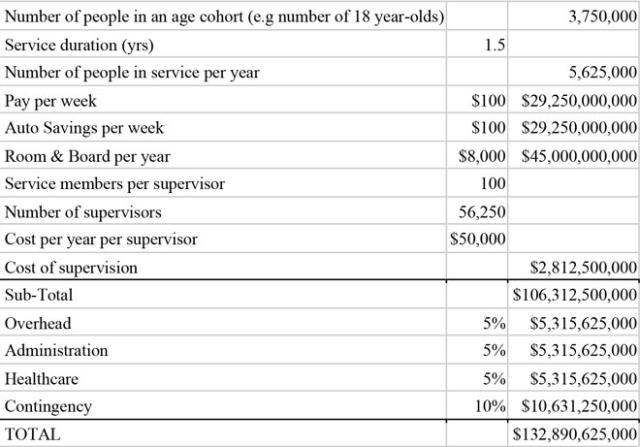
A rough, “back of the envelope” calculation of the cost of an 18-month program in which everyone participates; are paid a small $100 per week allowance and an additional $100 per week goes into a savings account; live in college-like dormitories and eat college-quality food; and receive health care is approximately $133 billion annually.
$132 billion is a lot of money. But, it is less than one-fifth the cost of annual military spending. The Department of Agriculture is the closest in size, spending $129 billion in fiscal year 2021. The 2021 budget for the Department of Veterans Affairs is $235 billion, and the budget is $60 billion for the Department of Homeland Security.
Who Oversees this Program?
The Corporation for National and Community Service (CNCS), an independent government agency, currently oversees AmeriCorps, Senior Corps, and other civilian service programs in the United States. I propose CNCS take on responsibility for this new mandatory program as well, because it already has relationships with the various state service commissions that implement AmeriCorps programs in communities across the country; and has relationships with the local agencies, and nonprofits that oversee the various AmeriCorps projects.
That is my outline of a national service program. Now it needs to be fleshed-out, debated, refined, and argued about some more. It is a starting point, not the finished design. Will it be enacted? That is for the American people to decide.
In the wake of the COVID-19 crisis, the U.S. has faced upwards of 200,000 deaths, nationwide civil rights and anti-racism protests, a growing deficit, a fractured economy, and long-term great power competition. America needs an institutional rebirth. History shows us that similar periods of institutional flourishing—like that which followed World War II—required a strong sense of domestic unity and international strength. But rather than unifying the country, the pandemic has only deepened the divisions which regional, economic, and electoral conflicts have conditioned into the population. As things stand, America will leave COVID with more strife than ever. A concerted effort to rebuild the country’s unity will be necessary before anything else is possible.
One of the most tried and tested models for creating unity across Western democracies is that of national service: a compulsory gap period, usually between one and two years, in which young adults contribute directly to the country. Nations such as Sweden, Austria, and Switzerland continue to have such programs today, and countries like France and Germany only suspended their peacetime mandatory service programs after the end of the Cold War—although most of these countries have or had civilian service alternatives before then.
A similar program implemented in the U.S. would be an effective way to reinvigorate the country’s civic ties. We could call this proposal the American Service Fellowship (ASF). Under the ASF program, it would be possible for approximately 90% of American high school graduates to enter a year of military service and for the remaining 10% or so to serve in diplomatic roles through the State Department or other agencies. This would remake and eliminate the existing draft structure, moving toward a hybrid draft and volunteer force model. It would reapportion the military recruiting budget—roughly $3 billion as of 2017—and a portion of the civil and foreign service recruiting budget of nearly $100 million.
This is not a new idea: Stanley McChrystal and Pete Buttigieg have each floated a more limited version of this proposal in recent years. But the current moment has made the necessity for institutional renewal more clear than it has ever been.
There are three reasons why now is the time for a national service program.
Why Should We Do This?
The reemergence of great power competition is one of the defining foreign policy and security issues the ASF would be well-suited to address. The ASF would not be meant to function as a military mobilization; it would instead serve as a program for military reserve and diplomatic force strengthening. Overseas military placements in logistical or technical roles combined with international diplomatic placements would prepare a key cohort to serve abroad in both security-focused and diplomatic roles.
From a military perspective, all of the service branches have been given lofty goals for force strengthening, such as attaining a 355-ship Navy, establishing the Space Force, and growing the military’s cyberwarfare capabilities. The military’s mobilization structure is fundamental to meeting the challenges of modernizing a growing force. Unfortunately, the U.S. structure is currently embodied in the antiquated Selective Service System, which was not even included as a relevant mobilization option in 2019 Joint Force planning hearings.
The Selective Service System, currently led by former Washington state senator Donald Benton, could be leveraged to a far greater extent. It has the potential to include not only men of 18-25 years of age but also women and to expand the upper age bound to 35. This is a reasonable target, especially given the resources that great power competitors such as Russia and China dedicate to national defense education. According to one CNAS scholar, nearly 3,000 Chinese higher educational institutions and 22,000 high schools annually organize students to undertake military training. In 2018, nearly 6 million Chinese college students were required to complete military training prior to starting the academic year.
Although the ASF would be a one-time commitment, it would continue for 12 months. This would make it longer, but also more concentrated than annual and repeated 2-week commitments as in China. This would give Fellows the opportunity to become familiar with the issues and skills in their area of specialty—such as maintaining domestic nuclear arsenals—on a deeper level than is possible in a short-term commitment. It would also invest in potential recruits for long-term military service, especially in areas involving cyber or other technological expertise. This has been a significant challenge for the military up to now. Marine Corps General Dennis Crall noted in a 2018 Senate hearing that it was difficult to recruit competent cyberwarfare experts across the country due to private sector competition and low numbers of qualified people. By exposing top coders to the services early on, the military would be able to increase its recruiting reach far beyond its current capabilities.
The emergence of great power competition is far from the only reason for implementing this proposal, however. Although most national service proposals focus solely on the military, a defining upgrade of the ASF should be to place the top 10% of high school graduates who apply into a diplomacy-related track overseas. This would serve to reinvigorate the Foreign Service pipeline.
This reflects a need to recruit the best talent possible to the Foreign Service, which represents America to the world. Too often, America’s most visible representatives around the world are wearing camouflage. Although the military is vitally important to American security interests, it would behoove the U.S. to project a more approachable, confident, and competent image. This initiative can expose the world to America’s future Rhodes Scholars, National Science Foundation grantees, Phi Beta Kappas, and service club presidents, and likewise expose those future leaders to international careers in government.
The State Department is currently at its lowest level of recruitment in over a decade. The ASF would give it the first chance to recruit top talent before it goes to Google, Harvard, or McKinsey. This would be a tremendous step towards rebuilding and rethinking the public sector, as career diplomat William Burns has called for, while simultaneously giving Fellows exposure to the work of America’s diplomats and special agencies.
Finally, in addition to preparing for great power competition and restoring the federal government’s non-military strength abroad, the ASF would fill a potential need for a modern-day Civilian Conservation Corps (CCC) in the post-COVID economy. If the program is revenue-neutral, and not just another deficit-increasing entitlement, it is likely to win over much popular support. One scholar estimates that reducing the size of the active-duty forces of the Army and Marine Corps with conscripted soldiers in the Reserves could save over $75 billion annually.
The ASF would be quite ambitious and probably have to involve earlier intervention in high school physical and civic education, as well as whole new institutions to absorb the new recruits. But while it may require significant effort to coordinate, in the long run, it will help to foster greater national unity and social integration by exposing citizens of all backgrounds to work for the previously distant federal government. Additionally, it can aim to decrease political radicalization by unifying recruits towards common goals and increase skills and virtue through specialized technical and physical training. The latter could potentially go a long way to combat obesity, drug addiction, and homelessness among the next generation.
How The ASF Would Work
How would the ASF structure achieve the above goals? The first step would be to comprehensively review all existing similar programs that could be subsumed or integrated into the ASF, as well as which ones might need to be discontinued altogether. One example of how this could be done would be by surveying alumni, staff, and international liaisons of past programs on a Net Promoter Score (NPS) scale. Some measures of success will necessarily be subjective, but in such cases, long-term staff members could submit briefs as to the tangible and intangible goals achieved over the last 5 years of the program and the future potential of integrating them.
As this review is being undertaken, a broad coalition of universities would need to be brought on to agree to one-year mandatory deferrals for an incoming class. This would lead to a temporary drop in the number of undergraduate students, which some universities may initially balk at; however, it would only impact one class of incoming students, as future classes would all have completed the ASF. The best way to bring universities on would be to persuade leading institutions such as the Ivy League, Stanford, MIT, and the University of California system to participate, and lobby others to follow.
A carrot-and-stick approach should be possible here. Ideally, universities could be brought on board with a combination of arguments: the ASF would increase their graduates’ post-grad employment rates, reduce their debt burdens by providing more access to government careers and loan repayment programs, and give them a stronger sense of drive and discipline that would help them in the classroom. If there are still significant concerns, it may be reasonable to provide a limited number of one-time grants to universities that can make a case that they will face significant financial shortfalls this year that threaten their long-term stability. Should this approach be inadequate, using the stick of revoking Pell Grants and reducing federal loan funding to schools which fail to comply would be a less ideal but potentially effective hardball option.
Once existing programs have been integrated into the ASF, and most universities have agreed to grant one-year deferrals to students, the next step would be to integrate applications from all military branches, entry-level non-career-appointment State Department positions, and other relevant talent or fellowship programs. A scoring system would be put into place to rank applicants based on the application responses and other factors such as GPA, test scores, extracurricular interests, and personal statements. Although all graduating high school seniors will be required to submit an application, exceptions could be granted based on extenuating factors such as grounds of conscience, medical inability, etc.
The admissions officials should target sending approximately 90% of applicants to the military, and the rest to serve overseas in diplomatic roles, broadly defined. In order to do this, Congress will need to overhaul the existing Selective Service System when enacting the ASF in order to make the ASF mandatory for all graduating high school seniors, plus non-graduates 18 and over. Military standards may need to be adjusted as well in order to accommodate varying levels of physical fitness, given the U.S.’s status as the country with the highest obesity rates in children and adults among developed countries. This has successfully been done in other developed countries, such as South Korea, Israel, Finland, and Greece, and could be remediated, at least in part, by reforming the secondary school physical education curriculum.
As mentioned above, overseas diplomatic Fellows should be top performers. The U.S. has an incentive to share America’s best students with the world and help them learn as much about their host country as possible rather than making its primary presence a military one. For reference, many top Chinese diplomats have been in the same region or even country for their whole careers, and they are able to lean on that experience when times are particularly difficult. If the U.S. had 500 Mandarin-fluent experts in its Chinese embassy and consulates, that could do wonders for U.S. diplomacy in China.
The type of work that diplomatic Fellows could do ranges from entry-level State Department roles in a consulate to positions that would encompass Fulbright teaching assistant roles or Peace Corps fellowships. Consular roles could take the form of public diplomacy or entry-level administration: running and assisting English language or other educational programs abroad, administrative work at foreign embassies and consulates, researching and writing policy briefs for political officers, and so on. Training that currently exists for the Fulbright and Peace Corps could also be integrated into the preparation for ASF diplomatic Fellows.
Some may critique this model, saying it could potentially exacerbate pre-existing inequalities in the relatively homogeneous U.S. diplomatic corps. In response, a diversity initiative may be helpful. The ASF could also implement a state-based competition like the PSAT test rather than a national standard to give the ASF a more geographically representative corps of Fellows.
In addition, the significance of the ASF to Americans from disadvantaged backgrounds should not be understated, as they will be exposed to better opportunities than may otherwise be available. After the ASF, options should be given to top performers for full scholarships and a post-graduation job guarantee, or even to take a job immediately. This would increase upward mobility for disadvantaged students, which may help to reduce overall inequality.
Objections and Responses
Among the objections to an ASF, perhaps the most salient would be that the plan is politically infeasible. On one side, conservative congressmen may say that the ASF would be too expensive and bureaucratic, while civil liberties-minded progressives may say the program is too paternalistic and too militaristic.
However, the plan can likely be made less bureaucratic than the current system, since it would be streamlining multiple burgeoning programs into one. And although the cost of mandatory conscription may be high, it may not be as high as one might think. A 2001 Rand analysis put the cost of reinstituting the draft at $4 billion, which would today equal roughly $5.79 billion. But a cut in the current military recruiting budget of nearly $3 billion could significantly reduce that cost, allowing the administration to far surpass the White House’s goal of establishing an end strength of 2,140,300 active and reserve military personnel while increasing the quality of the State Department’s diplomatic corps, as laid out by the Secretary of State in the 2019 strategy and budget request.
In addition, the ASF Fellowship is less paternalistic than you might think. Exceptions for reasons such as health, familial necessities, and conscientious objection are well-established precedents in American national service. National service is also far from a marker of militarism. Many Western countries with such a program are known as among the least militaristic nations in the world: for example, Switzerland, Finland, and Sweden have mandatory conscription, and Mexico, Brazil, and Denmark have an active draft system. Unlike other programs, however, a well-executed ASF would be desirable enough that those eligible won’t want to opt out of an opportunity to do overseas peacekeeping work and develop practical skills in mostly domestic military posts.
In terms of concern about the military aspect, the trust Americans have in the military translates into fairly high and bipartisan support for its reliability: 83% of Americans said in a 2020 Pew poll that they have a great deal or fair amount of trust in the military, greater than religious leaders and journalists and exceeded only by scientists. While support among younger people may be somewhat lower, on balance, this matches attitudes in other Western states, and there is little reason to think that conscription avoidance would be much higher than in any comparable Western country.
Although the political fulcrum is constantly shifting, it is conceivable that in the post-COVID economy, there would be a political appetite for a government jobs guarantee like the ASF in 2021, particularly on the political left. There has also been bipartisan support for such an idea in the past. For reference, Pete Buttigieg proposed a similar opt-in program in the 2020 Democratic primary, and a healthy majority of 57% of Republicans and Republican-leaning voters supported a mandatory draft in 2017. The same poll showed support among 39% of Americans ages 18 to 29, not a majority but by no means small—and this is without the broader aspects of an ASF beyond military service.
It is also possible that business-minded groups will lobby Congress against the ASF because they stand to cede the first chance to recruit students to the government and the military. To alleviate this, the ASF could open up an incentive for business groups to do high school apprenticeships, which may preclude some from even needing to attend college. It could also counter-lobby business groups, promoting the patriotic nature of the program to serve the country and emphasizing that the vast majority of students going through this program will enter the workforce. For reference, the Thai Army, which conscripts a small percentage of those eligible for the draft, had a retention rate of just 13% of conscripted soldiers last year.
The ASF would provide a focused solution to shoring up America’s position abroad and strengthening its military at home, in advance of growing great power competition. Regardless of the victor of the 2020 presidential election, this program could be folded into a program of domestic renewal (such as Biden’s ‘Building Back Better’ plan) and a foreign policy approach of responding to great power competition, as Mike Pompeo has done in his role as the Secretary of State.
The ASF can streamline existing government programs, boost the economy, and bring about a greater sense of national unity through shared commitment to America’s institutions and interests. It could yield a sharper, smarter fighting force while strengthening America’s domestic supports. This is a solution to the most fundamental problem facing the country, and the best time to get started is now.
James Haynes is a researcher at the Brookings Institution’s China Center, research consultant for the New Yorker’s China correspondent, and editor of the China Biotech Bulletin. He can be followed at @jameshaynes22.
While many of our students achieve at the highest levels, not all have had access to the opportunities and resources needed to meet their full potential. I am committed to MCPS’s mission to address disparities in student outcomes by closing gaps in opportunity and achievement for every student, in every classroom, in every one of our schools.
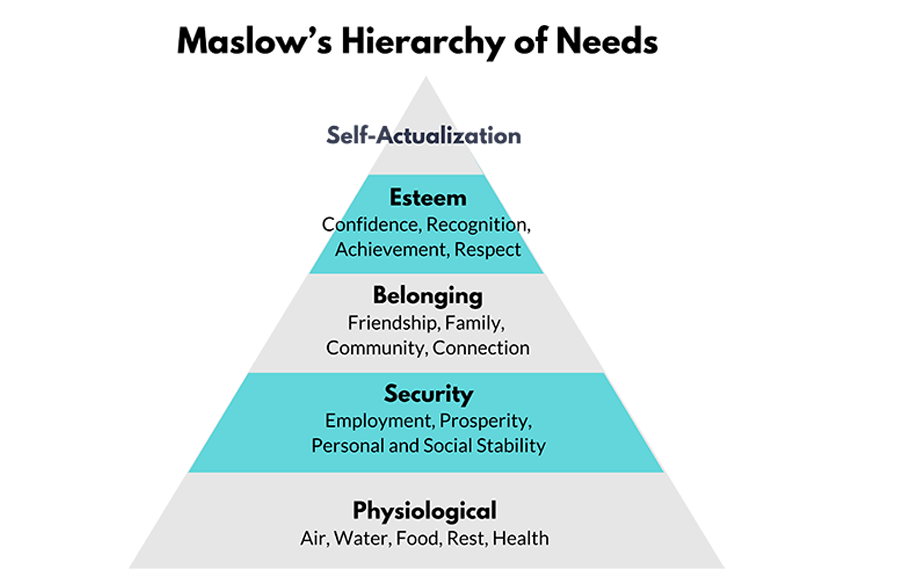
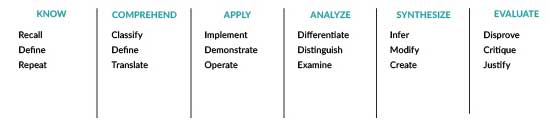
To achieve our shared goals for an excellent educational experience that works for all students and fully supports all staff, we must first ensure the workplace and school environments are in place to support readiness and achievement before any changes for improvement can be implemented. Therefore, I think in the following way: first, we must consider Maslow’s Hierarchy of Needs before we can even tackle Bloom’s Taxonomy of Learning. This means we must support the basic needs of students and staff before we make systemic operating changes to how we do the work.
 Posts by Paul Costello1