Loading

Posts by Paul Costello1

Eroding trust, spreading fear: The historical ties between pandemics and extremism

By Marc FisherFeb. 15, 2021 at 6:00 a.m. Washington Post

Image result for plague and the apocalypse

Adam Crigler used to feed his YouTube following a politics-free diet of chatter about aliens, movies, skateboarding and video games. Then came the pandemic. Now, he devotes much of his talk show to his assertion that mask mandates are an assault on personal freedom and that Democrats somehow stole the 2020 election from Donald Trump. Result: a much bigger audience.

“The pandemic has made more people want to blame someone else because they’ve lost their jobs or they’re lonely,” Crigler said.

Ian Bayne, for years a campaign professional, had sworn off politics and launched a career in real estate. Then covid hit, and he helped launch No Mask Nevada, organizing a dozen rallies against masking because he said the government was inflating the danger of the coronavirus.

“People are isolated, alone, and they need to express their true selves,” Bayne said. “I don’t know why we’re surprised that there’s more extremism now. People came to our rallies because they craved the human interaction.”AD

Since ancient times, pandemics have spurred sharp turns in political beliefs, spawning extremist movements, waves of mistrust and wholesale rejection of authorities. Nearly a year into the coronavirus crisis, Americans are falling prey to the same phenomenon, historians, theologians and other experts say, exemplified by a recent NPR-Ipsos poll in which nearly 1 in 5 said they believe Satan-worshipping, child-enslaving elites seek to control the world.

QAnon reshaped Trump’s party and radicalized believers. The Capitol riot may be just the start.

As shutdowns paralyzed the economy in the first months of the pandemic, Americans sharply increased searches for extremist and white supremacist materials online, according to Moonshot CVE, a research firm that studies extremism. The United States was not the only country affected: A British study found that the pandemic boosted radicalization globally, as people found more time to delve into extremist arguments.

New insecurities and fears loosed by the pandemic fed into an existing erosion of trust in leaders and institutions, according to those who have studied how people react to rampant, uncontrolled disease.

Some of these insecurities predated the pandemic: Many of those arrested in the Capitol riot owned businesses or worked white-collar jobs, and a Washington Post analysis of public records found that nearly 60 percent of people facing charges had prior money troubles, including bankruptcies and unpaid taxes. But many got involved in politics only after virus-related shutdowns clobbered their personal finances.

Between that economic wallop and the disease’s lethal punch, covid-19 has “reminded Americans of their own mortality” and created a sense of “social dislocation and a loss of confidence in all institutions,” said Richard Land, president of Southern Evangelical Seminary outside Charlotte and a longtime evangelical leader.AD

The result, he said, is a surge of extremism on the right and the left, including widespread embrace of counterfactual versions of current events.

“In a healthy society, the government and the church would say, ‘This is nonsense,’ and people would believe them,” Land said. But during the pandemic, he said, that check on extremist impulses has failed for some people who crave connection with others: “God created us as social creatures, and when we isolate from other human beings, we tend to malfunction.”

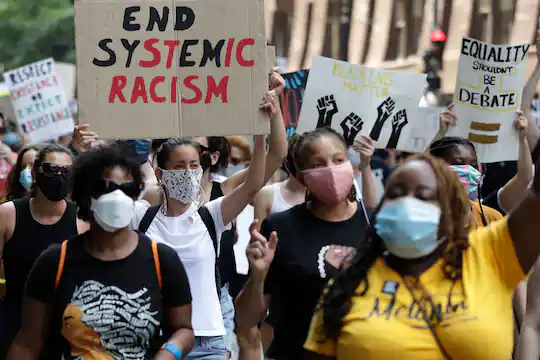
Over the past year, the pandemic was a constant undercurrent as Americans took to the streets to protest racial injustice, police brutality and President Biden’s victory in the 2020 election. As much as they were motivated by the causes themselves, many who participated in street actions were probably also eager for human contact, according to psychologists who’ve studied the effects of social isolation.AD

By that view, the Jan. 6 attack on the Capitol was both an insurrection plot and an impromptu meetup, an assault on the infrastructure of American democracy and a social gathering for people who believed they were defending their idea of nationhood.Default Mono Sans Mono Serif Sans Serif Comic Fancy Small CapsDefault X-Small Small Medium Large X-Large XX-LargeDefault Outline Dark Outline Light Outline Dark Bold Outline Light Bold Shadow Dark Shadow Light Shadow Dark Bold Shadow Light BoldDefault Black Silver Gray White Maroon Red Purple Fuchsia Green Lime Olive Yellow Navy Blue Teal Aqua OrangeDefault 100% 75% 50% 25% 0%Default Black Silver Gray White Maroon Red Purple Fuchsia Green Lime Olive Yellow Navy Blue Teal Aqua OrangeDefault 100% 75% 50% 25% 0%Was the attack on the U.S. Capitol an attempted coup?Many have argued that President Donald Trump’s efforts amounted to an attempted coup on Jan. 6. Was it? And why does that matter? (Monica Rodman, Sarah Hashemi/The Washington Post)

41 minutes of fear: A video timeline from inside the Capitol siege

“In the wake of covid-19, it appears that far-right extremists have discovered the extent of people’s fear of social control and loss of liberty and have realized how easily they can manipulate citizens who may not normally subscribe to extreme ideology,” University of Maryland social psychologist Arie Kruglanski concluded in a recent study on the link between covid and extremism.

The pandemic undermines trust — trust in government and science to curb the spread of the disease, trust in neighbors and strangers who might carry the infection, Kruglanski said. And “in the absence of trust, people need to believe in something.”AD

With many houses of worship, schools and workplaces closed for much of the past year, millions have sought community online. Some found and adopted baseless fantasies about conspiracies in government and among the nation’s elites: Election fraud, the QAnon theories about a malign “deep state,” false assertions of blame for the origins of the coronavirus.

“2020 was a perfect storm,” said John Fea, a historian at Messiah University, an evangelical Christian school in Mechanicsburg, Pa. “You had many evangelicals believing that this strongman president was protecting them from secularization. You had this belief in a God-ordained president who was not doing anything against the pandemic, who was feeding this ‘Don’t tell me to wear a mask’ attitude. It’s an incredibly explosive mix that led to the Jan. 6 attack — and now this almost Lost Cause mentality that ‘we have to fight on for Trump.’ ”

“Plagues,” Fea said, “have always led to apocalyptic thinking.”

Bayne, 47, had worked in electoral politics for years but thought he’d left that phase of his life behind. Before the pandemic hit, he was selling real estate and attending an online law school. Then the virus brought him back to activism.AD

“I would not be involved in politics if it wasn’t for covid,” said Bayne, vice chair of No Mask Nevada. As the virus spread, he became convinced that covid wasn’t terribly dangerous, that the shutdowns and mask orders amounted to a government power grab, and that Americans finally were being liberated to speak openly about their suspicions of powerful elites.

“A lot of people say covid’s just the flu,” he said. “Nobody believes wrapping a sock around your face is going to stop a deadly disease.”

Bayne, who said his 72-year-old mother got covid and recovered within three days — “better than she ever was” — added that his activism has made him feel better able to stand up to the government and take control of his life.

The pandemic has tapped into long-standing anxieties and let people band together in their search for answers, experts said, whether about the disease, or about immigration, or about globalism or socialism, or about any of the other bugaboos that have animated fringe movements in the past year.AD

“Pandemics create insecurity, while extremism offers a kind of certainty,” Kruglanski said. “Especially now, when trust is low in government, in Congress, in science, in medicine, the church — there’s nobody you can trust, so you trust your friends, your tribe.

“Extremists offer a black-and-white view,” he said: “There’s a culprit responsible for some evil plan to destroy the nation, and they have a plan for restoration that will bring back greatness.”

In the current pandemic, white supremacist and neo-Nazi groups have used shutdowns and mask mandates to recruit followers, offering a unified belief system that blames the other — from the Chinese to Jews to socialists — and proposes to resolve anxieties by attacking the existing power structure.

American extremism is not limited to hard times; it has been present in every generation. But it has mainly stayed on the fringe, lunging into the mainstream during periods of rapid, unsettling change, such as during the buildup to World War II, during the social revolution of the late 1960s, after the 9/11 terrorist attacks and today, amid radical technological change and a deadly pandemic.AD

Pervasive, epidemic diseases — and especially plagues such as AIDS, Ebola, SARS and covid that are perceived to have come from some foreign place — crystallize and exacerbate the core fears of their time, Susan Sontag said in her influential 1988 essay, “AIDS and Its Metaphors.” “Plagues are invariably regarded as judgments on society . . . as a sign of moral laxity or political decline,” she wrote.

From the Black Plague of the Middle Ages to the 1918 “Spanish flu” pandemic, epidemics have been interpreted as engines of a raw, fierce justice. When the 1918 flu killed about 675,000 Americans, many Christians argued that succumbing to pleas from public health officials to wear masks “represented a lack of faith,” Fea said.

Then as now, the rebellion against mask-wearing led to a debate about whether scientists could be trusted, as some evangelical groups viewed government health mandates “as an effort to curb the spread of the Gospel,” Fea said.

“There’s a lot of continuity between the anti-intellectualism of 1918 and the anti-science attitude of 2020,” he said. “In both cases, people said, ‘No, God will protect us.’ ”

As a professional skateboarder, gamer, musician and model, Crigler had developed an online following before the virus hit. But last year, when he shifted the content on his daily YouTube and Twitch shows to focus on mask mandates and baseless allegations of election fraud, his audience mushroomed.AD

Crigler, 36, attributes his booming popularity — he now has nearly 200,000 YouTube subscribers — to the pandemic.

“People have a lot of time on their hands,” he said. “Covid put a lot of people on the Internet more, seeking community.”

Politically uninvolved for most of his life, Crigler, who lives in Maryland, tended to vote for Democrats. But if asked what party he aligned with, “I’d say ‘I don’t know’ because I didn’t pay attention, I didn’t care.”

Crigler had been a frequent guest on his friend Tim Pool’s online show, mostly talking about pop culture. Then last summer, “because of covid and the riots, it became a political show, and I felt I was slacking,” Crigler said. “So I started doing my own research.”

His online explorations led Crigler to believe that the presidential election was stolen from Trump. But he also says the “Stop the Steal” campaign, the summer’s demonstrations against police brutality, and the nationwide protests against masks probably would not have happened — or would not have drawn as much support — if Americans had not been stuck at home.

“People just weren’t used to being alone so much,” he said. “People want to belong.”

Land, who served on Trump’s evangelical advisory board, said modern society has left people desperate for community. “There are increasing numbers of Americans, left and right, who feel unheard,” he said. “Significant numbers of Americans have no close friends. We have more people living alone than we’ve ever had in our history.”

To that portrait of a lonely nation, the pandemic adds a hefty dose of angst about life itself. “We have been reminded,” Land said, “of the transitory nature of existence.”

Pandemics often inspire a resignation or fatalism — a belief that the disease is so pervasive as to be unstoppable by human action, historians said.

Before he contracted the virus and died last year of covid-19, Bishop Gerald Glenn of New Deliverance Evangelistic Church in Chesterfield, Va., asked his congregation to consider why God let the pandemic happen. “Is this virus a sign of the end times?” he asked.

While some embrace surrender to the disease, others find comfort in rejecting the reality of the threat.

“Believing the virus is a hoax suggests you are smart, that you are not being duped,” Kruglanski said. “Finding someone to blame is human nature. For every plague, there’s a culprit.”

Several studies of responses to pandemics have found that the more trauma people suffer, the more likely they are to turn to extremist ideas. In the years immediately following the 1918 flu pandemic, areas of Germany that experienced the highest death toll saw dramatic increases in voting for the Nazi party, according to a recent analysis by the Federal Reserve Bank of New York.

Like pandemics, spasms of extremism eventually end. Some historians warn that those endings do not necessarily arrive in lockstep, but Kruglanski argues that the process of easing away from extremism begins with the approach he sees in the Biden administration, which appears to have adopted a strategy of “cooling down the temperature, attending to the issue, bringing concrete, visible results.”

If the pandemic is brought under control, “that will cool the enthusiasm for conspiracy theories,” Kruglanski said. “And people will return to their daily concerns.”

BREAKING NEWS: $1 billion supplemental for AmeriCorps Agency in the House FY21 budget reconciliation bill!

❤️ Heartbeat by Emily SteinbergFeb 8 · 2021 An important message from ASC Chief Policy Officer  Tom Branen: Exciting news!

Today, the House Education and Labor Committee’s portion of the FY21 budget reconciliation bill was released (see page 58), which enacts President Biden’s American Rescue Plan. Under the FY21 budget resolution passed by the House and Senate last week, the Committee was instructed to propose more than $300 billion in relief for students, educators, workers, and families.  

It includes $1 billion in supplemental funds for the AmeriCorps Agency as follows:

AMERICORPS STATE AND NATIONAL.—  $620,000,000 shall be used—
21 (A) to increase the living allowances, of 22 participants in national service programs, described in section 140 of the National and Community Service Act of 1990 to make funding adjustments to existing (as of the date of enactment of this Act) awards and award new and additional awards to organizations described in subsection (a) of 5 section 121 of the National and Community 6 Service Act of 1990 (42 U.S.C. 12571(a)), 7 whether or not the entities are already grant recipients under that section on the date of enactment of this Act, and without regard to the requirements of subsections (d) and (e) of such 11 section 121, by— 12 (i) prioritizing entities serving communities disproportionately impacted by 14 COVID–19 and utilizing culturally competent and multilingual strategies in the 16 provision of services; and 17 (ii) taking into account the diversity of communities and participants served by such entities, including racial, ethnic, socioeconomic, linguistic, or geographic diversity.

(2) STATE COMMISSIONS.—$20,000,000 shall be used to make adjustments to existing (as of the date of enactment of this Act) awards and new and 25 additional awards, including awards to State Commissions on National and Community Service, under 2 section 126(a) of the National and Community Service Act of 1990 (42 U.S.C. 12576(a)).

 (3) VOLUNTEER GENERATION FUND.—  $20,000,000 shall be used for expenses authorized under section 501(a)(4)(F) of the National and Community Service Act of 1990 (42 U.S.C. 8 12681(a)(4)(F)), which, notwithstanding section 9 198P(d)(1)(B) of that Act (42 U.S.C. 10 12653p(d)(1)(B)), shall be for grants awarded by the Corporation for National and Community Service on a competitive basis.  

(4) AMERICORPS VISTA.—$80,000,000 shall be 14 used for programs authorized under part A of title 15 I of the Domestic Volunteer Service Act of 1973 (42 16 U.S.C. 4951 et seq.), including to increase the living allowances of volunteers, described in section 105(b) 18 of the Domestic Volunteer Service Act of 1973 (42 19 U.S.C. 4955(b)).

 (5) NATIONAL SENIOR SERVICE CORPS.—  $30,000,000 shall be used for programs authorized under title II of the Domestic Volunteer Service Act 23 of 1973 (42 U.S.C. 5000 et seq.). 

 (6) ADMINISTRATIVE COSTS.—$73,000,000 shall, notwithstanding section 501(a)(5)(B) of the National and Community Service Act of 1990 (42 2 U.S.C. 12681(a)(5)(B)) and section 504(a) of the Domestic Volunteer Service Act of 1973 (42 U.S.C. 4 5084(a)), be used for necessary expenses of administration as provided under section 501(a)(5) of the 6 National and Community Service Act of 1990 (42 7 U.S.C. 12681(a)(5)), including administrative costs of the Corporation for National and Community Service associated with the provision of funds under 10 paragraphs (1) through (5). 11  

7) OFFICE OF INSPECTOR GENERAL.— $9,000,000 shall be used for the Office of Inspector General of the Corporation for National and Community Service for salaries and expenses necessary for oversight and audit of programs and activities funded by subsection (a). 17 ( c) NATIONAL SERVICE TRUST.—In addition to amounts otherwise made available, there is appropriated for fiscal year 2021, out of any money in the Treasury not otherwise appropriated, $148,000,000, to remain available until expended, for payment to and administration of the National Service Trust established in section 23 145 of the National and Community Service Act of 1990 24 (42 U.S.C. 12601).  More to come…

Lyttonsville, one of Montgomery’s oldest neighborhoods, braces for change

By Kathy OrtonFeb. 3, 2021 at 8:00 a.m. Washington Post

Whether they have been there for decades or only recently moved in, residents have pretty much the same answer for why they live in Lyttonsville.

“We’re a very diverse community of people from all over the world,” said Pat Tyson, whose family has lived in the Montgomery County neighborhood for 100 years.

“It’s a family-oriented neighborhood where people know each other and make friends easily,” she said. “I like the fact that it keeps its character, neighbor knowing neighbor. I’ve got neighbors up the street that will call and say, ‘Do you need anything today?’ If the snow comes, I don’t have to worry about digging my driveway out.”

Map of Lyttonsville in Maryland

Abe Saffer hasn’t lived in the area in west Silver Spring as long as Tyson has. He and his wife moved there in 2014. But they love it just the same.

“For us, we love that it is such a diverse neighborhood,” he said. “Not just in terms of ethnic or racial background but also there are families that have lived here their whole life . . . and then there are new families like ours. There’s a very good sense of community in the area. Once you live here, everyone is very welcoming. The neighborhood is great. We love the people around here. That’s part of the reason we continue to stay here.”

Lyttonsville is one of the county’s oldest neighborhoods. Although it was once much larger, it now covers 68 acres bounded by Lanier Drive on the east, Brookville Road on the west, Talbot Avenue on the north and Lyttonsville Place on the south.AD

“It is a notable example of an early community built by free African Americans prior to the Civil War,” said David S. Rotenstein, a historian who researches and writes about historic preservation, industrial history and gentrification.

The community is named after Samuel Lytton, who bought his first four acres in what would become Lyttonsville in 1853. Little is known about Lytton, but it is often erroneously said he was a freed slave. “One of the many inaccuracies about Lyttonsville is that Lytton was enslaved at one time,” said Rotenstein. “There’s no evidence to suggest that he had ever been enslaved.”

Rotenstein, who formerly chaired the Montgomery County Historic Preservation Commission, started interviewing Lyttonsville residents in 2016 as part of his research for a book he is writing on gentrification.

“Over time, Lyttonsville developed an importance in Montgomery County as a place, because of racism at the county level, where county policies enabled poverty to set in and enabled environmental racism to run rampant through the community,” he said. “So by the time Montgomery County embarked on its urban renewal program in the 1960s, Lyttonsville was already suffering from substantial disinvestment, environmental pollution issues, and was desperately in need of assistance. And in all of Montgomery County’s urban renewal documents, Lyttonsville was identified as the number-one area in the county that needed assistance.”

Lyttonsville remained an almost exclusively Black community until the mid-20th century. Under the policy of urban renewal, the county seized much of Lyttonsville, replacing it with an industrial park, a Ride On bus depot and a Washington Suburban Sanitary Commission service center. Many of the older homes were replaced with large apartment complexes.AD

“We lost more than 60 percent of the residential [area] when urban renewal came,” Tyson said. “The county just sold it to Brookville Road’s developers. The houses went and the church went.”

In Great Falls, Va., a close-knit community surrounded by nature

Lyttonsville has been thrown into upheaval again with the arrival of the Purple Line, a 16-mile light-rail public transit system that will extend from Bethesda to New Carrollton in Prince George’s County. One of the Purple Line’s stations will be near Lyttonsville Place and Brookville Road.

“I think for many people in Silver Spring, in the county, in the region, Lyttonsville was kind of off the beaten path,” said Dan Reed, an urban planner who blogs at Just Up the Pike. “I think the Purple Line will give it a lot more visibility, both as this community with this rich African American history, but also as a place where a lot of interesting things are already happening.”

Opinion: Lyttonsville could get a second chance at development

Spurred by the arrival of the Purple Line, Montgomery County in 2014 released the Greater Lyttonsville Sector Plan, which included not only Lyttonsville but also its surrounding neighborhoods. The master plan, approved in 2017, envisions 1,200 new homes — a mix of apartments and townhouses — and a half-acre plaza near the station surrounded by apartments, retail space and a small-business incubator. More than 25 percent of the homes would be set aside for low-income households. Phasing would allow residents of existing apartments to move into new apartments without being displaced.AD

Evan Goldman is executive vice president of development at EYA, a Bethesda developer that was part of the master planning process and is working to develop a few of the sites.

“Lyttonsville is a once-in-a-generation opportunity to create a model community uniquely located midway between the county’s two largest job centers, Silver Spring and Bethesda, that is inclusive, walking distance to transit, parks and retail amenities and provides much needed mixed-
income housing to support new jobs,” Goldman wrote in an email.

Saffer is skeptical of the ambitious plans.

“I was actually really involved in the neighborhood’s response to the sector plan,” he said. “I’m very familiar with EYA’s plans. I would say I’m not banking on it. . . . Hopefully, I’m wrong. I wouldn’t mind the Brookville Road area being upgraded a little bit.”AD

But Saffer said he doesn’t need more amenities in the neighborhood. He’s more interested in having access restored to the Georgetown Branch, soon to become the Capital Crescent Trail, which has been disrupted by Purple Line construction.

“My wife and I didn’t move here because it would be walking distance of whatever, other than nature,” Saffer said. “I don’t look at this as a walkable community.”

Besides the trail, Lyttonsville has access to Rock Creek Park and includes Rosemary Hills-Lyttonsville Local Park, where the Gwendolyn E. Coffield Community Center is located.

Part of historic Maryland bridge will be preserved along Purple Line trail

Living there: Debbie Cook, a real estate agent with Long & Foster, describes the housing stock in Lyttonsville as “eclectic.”

“It is a broad range of styles from 1930s bungalows, 1950s and 1960s ramblers and 1940s Colonials, mixed in with a few recent newer infill spec homes,” she wrote in an email. “It also includes a group of townhouses built in 1984.”

Three homes sold in Lyttonsville in 2020. The highest-priced was a five-bedroom, three-bathroom Colonial for $599,000. The lowest-priced was a three-bedroom, three-bathroom townhouse for $525,000. The average sale price in 2020 was $553,000. There are no homes for sale.AD

“The average sale price has skyrocketed in the last few years,” Cook wrote. “It is now a seller’s market, not a buyer’s market.”

Schools: Rosemary Hills elementary, North Chevy Chase elementary, Silver Creek middle. Lyttonsville is attractive to many families because it is the only part of Silver Spring that feeds into Bethesda-Chevy Chase High School.

Transit: Besides the future Purple Line station, Lyttonsville is served by Metro and Ride On buses that connect to the Silver Spring Metro station. The Red Line station is about 1½ miles from the neighborhood. East-West Highway is the closest main thoroughfare.

The Real Rosa Parks Story Is Better Than the Fairy Tale

The way we talk about her covers up uncomfortable truths about American racism.

By Jeanne Theoharis

Dr. Theoharis is a professor of political science and the author of eleven books on the civil rights and Black Power movements including “The Rebellious Life of Mrs. Rosa Parks” and “The Rebellious Life of Mrs. Rosa Parks Young Readers’ Edition,” co-adapted with Brandy Colbert.

  • Feb. 1, 2021 The New York Times (Black History Month)

Mug shot No. 7053 is one of the most iconic images of Rosa Parks. But the photo, often seen in museums and textbooks and on T-shirts and websites, isn’t what it seems. Though it’s regularly misattributed as such, it is not the mug shot taken at the time of Mrs. Parks’s arrest in Montgomery, Ala., on Dec. 1, 1955, after she famously refused to give up her seat on a bus to a white passenger. It was, in fact, taken when she was arrested in February 1956 after she and 88 other “boycott leaders” were indicted by the city in an attempt to end the boycott. The confusion around the image reveals Americans’ overconfidence in what we think we know about Mrs. Parks and about the civil rights movement.

Martin Luther King Jr. and Rosa Parks dominate the Civil Rights Movement chapters of elementary and high school textbooks and Black History Month celebrations. And yet much of what people learn about Mrs. Parks is narrow, distorted, or just plain wrong. In our collective understanding, she’s trapped in a single moment on a long-ago Montgomery bus, too often cast as meek, tired, quiet and middle class. The boycott is seen as a natural outgrowth of her bus stand. It’s inevitable, respectable and not disruptive.

But that’s not who she was, and it’s not how change actually works. “Over the years, I have been rebelling against second-class citizenship. It didn’t begin when I was arrested,” Mrs. Parks reminded interviewers time and again. Read More

Just Breathe

Blog

A recent video Project CHANGE shared with members to share with their students about the importance of breathing and slowing down.

Exploring the human commons

We live in a time where we quickly put people in boxes. Maybe we have more in common than what we think? Introducing All That We Share.

Why your Inner Story Matters

The story we keep telling ourselves matter more than any story others tell us or the story we tell to others. We are our own most important audience. Watch this video.

https://fb.watch/3g44aj794z/

From @TeacherToolKit Dr. Tim Obrien

At Risk!

Every learner’s inner story is potentially at risk in any mass education system. This is particularly the case if the child experiences difficulties in systems where deficit-focused labels abound. In such systems ‘the problem’ is seen as being located within the child and therefore children who experience difficulties are in danger of being treated as if they are broken washing machines that need fixing. The notion that the adults or the environment should change – in order to enable the child to change – is often absent from the agenda. Read More

Montgomery schools are failing minority students

Opinion by Lavanya Sithanandam Jan. 15, 2021 at 9:00 a.m. EST Washington Post

Lavanya Sithanandam is a pediatrician serving a predominantly low-income and minority population in Montgomery and Prince George’s counties.

Montgomery County Public Schools is failing its Black, Latino and disadvantaged minority students, who are falling further and further behind their peers.

Though school closures may have been necessary in the spring, numerous U.S. and international studies demonstrate they are unnecessary now and that school districts that continue to insist on this approach are relying on outdated science. MCPS has shuttered its doors for more than 300 days, and the equity gap that existed before the pandemic has widened substantially. In fact, prolonged school closures are affecting minority students significantly more than the coronavirus itself.

Decades of systemic racism have left minority neighborhoods and their academic support structures already weakened, and virtual learning is worsening the learning loss in students from these communities. First-quarter MCPS grades revealed alarming differences in the failure rates between White and minority students. African American and Hispanic students from low-income families failed classes at rates 5 to 6 times more compared with last year, whereas White students had minimal increases.AD

Minority students often lack access to tutors, pods or expensive learning centers, and they sometimes have to juggle child-care responsibilities, jobs and learning in more challenging home environments. Their parents are more likely to be essential workers who are unable to supervise the day-to-day demands of their children’s education. Some do not have access to quality Internet services. Students report they find distance-learning platforms inherently stressful and have stopped logging on altogether.

In my clinic, we are seeing children who were already having difficulty in school now failing classes, and honors students barely passing. English-language learners are struggling with maintaining language skills because of their lack of daily interaction with native English speakers. One Haitian immigrant teen recently told me that she used to be fluent in English, but “now I only speak Creole at home, so I am forgetting my words.”

I am also seeing patients who could be the first in their family to attend college decide to forgo their dreams of higher education. Without in-person access to counselors and teachers, they are finding it extremely difficult to navigate the challenging college application process. Maintaining high grades, for which they have worked harder, and in the face of greater head winds than their wealthier peers, has also presented challenges. Inside Higher Ed found that college applications for first-generation students and those eligible for application fee waivers were down 16 percent this year, with many colleges reporting a decrease in Latino and Black college applications.AD

In addition to academic challenges, children and teens are desperate for social interaction. A recent report by the Centers for Disease Control and Prevention revealed pediatric emergency room visits related to mental health were up 24 percent for children ages 5 to 11 and 31 percent for children ages 12 to 17. In my practice, we have documented a 30 percent increase in mental health referrals since the start of the pandemic for conditions such as depression, anxiety and suicidal ideation. Social isolation affects children from all communities, but minority children, who are particularly vulnerable to mental health crises, are at higher risk. Furthermore, there has been a 40 percent decrease in reporting of child neglect and abuse because educators are typically the main source to report. This leads to fewer interventions and worsening outcomes.

We now have convincing data that schools are safe and should be open for in-person learning. Even in minority communities where coronavirus rates may be higher, data has shown that schools are not superspreader locations, and that, with mitigation such as masking and distancing, schools are safe places for students and teachers. The CDCWorld Health OrganizationAmerican Academy of Pediatrics and numerous respected public health leaders acknowledge schools are safe and should remain open.

The harm of prolonged school closure is just too devastating to keep schools closed. And the knowledge from the thousands of schools that safely reopened in the fall demonstrates masking and social-distancing protocols are effective and sufficient.AD

And herein lies the rub. MCPS knows this. But, because of outside pressure, it is keeping school officially closed while providing subsidies for low-income children to attend in-person, privately run “equity hubs” where they can learn remotely, sitting in school alongside other students. Proctors replace teachers. This is a clear recognition that in-person learning is possible despite rising coronavirus rates in the community. But this is an unnecessary, inferior alternative.

Sadly, a county that has typically been at the forefront of addressing inequities is not adequately addressing learning loss and the ever-widening opportunity gap that results from remote learning. Contrary to the false claims that minorities don’t want to return to in-person learning, the presence of minority-filled equity hubs and results from the recent MCPS survey demonstrate that Latino and African American interest for school return is significant. This interest will continue to grow as schools reopen and it becomes clear that the health risks are minimal. In my practice, which is 90 percent minority, there is a universal desperation among students to return to school.

If MCPS is genuinely concerned about equity for its students, particularly students of color, it must reopen to provide desperately needed additional resources that can only be delivered through in-person learning. School failure has been linked to poor lifelong health consequences through decreased employment and earning capacity, higher risk of incarceration and even premature death from substance abuse and preventable diseases.AD

An entire generation between the ages of 5 and 18 has been effectively removed from society at large. They do not have the same ability to vote or speak out, so it is high time for children’s advocates, including teachers and parents, to raise their voices for a return to school.R

Education’s Three Lies

“The schools in this country are one of the biggest reasons we’re all so screwed up. Our educational experience consists of three great lies.

Lie number one is, It’s better to say, ‘I know’ than to say, ‘I don’t know.’

Lie number two: It’s better to answer a question than ask a question.

Lie number three: It’s better to worship at the foot of success than understand the nature of failure.

Those three lies have screwed our society, and it’s by overcoming one at a time–or two at a time or all three –that you can make some breakthroughs in your creative activities.” 

​Richard Saul Wurman​  – Founder of TED Talks

Study: Majority of students’ feelings about high school are negative

Flickr; Jessica Cross

AUTHOR from K-12 Dive

Naaz Modan@NaazModan

PUBLISHED

Feb. 7, 2020

Dive Brief:

  • High school students experience mostly negative emotions toward school, with feeling tired among their biggest complaints, according to a new nationwide study by Yale University’s Center for Emotional Intelligence and Child Study Center.
  • Stress and boredom were also among the top reasons students felt negative toward school, according to the survey of 21,678 U.S. students.  
  • But high school students also commonly experience positive feelings of happiness and excitement, though those were reported in much smaller percentages, and the researchers said neither of those feelings are linked to learning or achievement. 

Dive Insight:

Zorana Ivcevic Pringle, director of Yale’s Creativity and Emotions Lab and an author of the study, said while students being tired was no surprise to her, the pervasiveness of the emotion among students was. “It was overshadowing everything else,” Pringle said. “Close to 60% of the time, students are saying they are feeling tired.” 

And while positive emotions of calmness, happiness and relaxation were also among top emotional experiences, those feelings are “not the kinds that are most valuable for learning and growth.” Emotional experiences most relevant for learning, Pringle said, are interest, curiosity and pride (once achievement occurs) — all of which ranked low. 

Negative feelings were experienced more frequently by female, younger, low-income and minority students as opposed to their male, older, well-off, white counterparts. 

The frequency of negative feelings students experience, the authors write, is “likely to undermine students’ attention, motivation, and ability to learn and thrive.” The authors suggested a cultural shift in schools that emphasizes and supports self-care as something that could benefit students’ learning, health and overall well-being. Pringle suggests a greater emphasis on social-emotional learning as a way to give students tools to better regulate negative emotions. 

Once the “tired” emotion is addressed, Pringle said, the other negative emotions are likely to fall in line. “Once they are feeling more rested, they will be better able to pay attention, they might be more interested, less bored, and less stressed.” 

In an effort to ensure students are well-rested, more districts are implementing later school start times, which Pringle noted as a possible solution. The Seattle, Minneapolis, Houston and Fairfax County (Virginia) districts are among those that have moved some or all of their school start times to allow older students to start later. Whether districts save or lose money from such changes differs on a case-by-case basis. But studies suggest the bell shift has resulted in teens getting more sleep, which has in turn improved grades and attendance. 

And just last year, California became the first state to mandate a later start bell. While there will be logistical challenges — including transportation, adjusted costs and rescheduling after-school activities — other states will likely follow. 

Students and parents have helped drive the movement. In California, for example, parent and journalist Lisa Lewis penned an op-ed on the issue in the local paper. And often the smoothest transitions, experts have noted, come only after consulting key groups including parents, students, teachers and other school staff members impacted. As schools make room for growing student activism and civic engagement, including students in discussion of how they feel about school is one place to start.

Recommended Reading:

  •  SCIENCE DIRECTHigh school students’ feelings: Discoveries from a large national survey and an experience sampling study