International Day of the African Child takes place on June 16, 2021. The Day of the African Child has been celebrated every year since 1991, when it was first initiated by the Organisation of African Unity. It honors those who participated in the Soweto Uprising in 1976 on that day. It also raises awareness of the continuing need for improvement of the education provided to African children.
In Soweto, South Africa, on June 16, 1976, about ten thousand black school children marched in a column more than half a mile long, protesting the poor quality of their education and demanding their right to be taught in their own language. Hundreds of young students were shot, the most famous of which being Hector Peterson. More than a hundred people were killed in the protests of the following two weeks, and more than a thousand were injured. (With material from: Wikipedia)
Where is Day of the African Child? Worldwide World When is Day of the African Child? Wednesday, the 16th of June 2021
Opinion by Michael Gerson Columnist May 27, 2021 at 3:16 p.m. Washington Post
In the evangelical Christian tradition, you generally know when you’ve been “saved” or “converted.” It comes in a rush of spiritual relief. A burden feels lifted.
But how does one know if he or she has become “woke”? How does one respond to this altar call and accept this baptism?
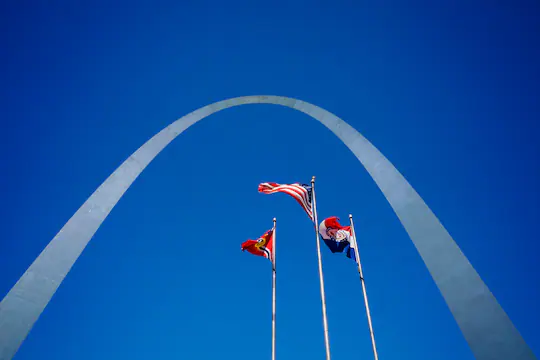
It’s a question that came to mind as I read“The Broken Heart of America: St. Louis and the Violent History of the United States,” by Walter Johnson, a history professor at Harvard University. I grew up in St. Louis, in a placid, White, middle-class suburb. At school, I was inflicted with classes in Missouri history that emphasized the role of the region in the exploration and settlement of the American West. I visited the Museum of Westward Expansion in the base of the Gateway Arch, which glorified the sacrifices of American pioneers.
“The Broken Heart of America” is a strong antidote to such lessons. In this telling, St. Louis was “the juncture of empire and anti-Blackness” and “the morning star of U.S. imperialism.” It was the military base of operations for the ethnic cleansing of Native Americans from the Upper Midwest. It was the home of vicious lynch mobs and racial redlining. “Beneath all the change,” Johnson argues, “an insistent racial capitalist cleansing — forced migrations and racial removal, reservations and segregated neighborhoods, genocidal wars, police violence and mass incarceration — is evident in the history of the city at the heart of American history.”
William Clark was not only an intrepid explorer, he was the author of treaties that removed more than 81,000 Indians from their homelands. Sen. Thomas Hart Benton was not just the populist voice of “the West,” he was the father of “settler colonialism” and an apologist for slavery. Abraham Lincoln signed the Emancipation Proclamation — but merely afew days before he had ordered the execution of 38 Dakota men, which “remains the largest mass execution in the history of the United States.” The 1904 St. Louis World’s Fair was a festival of white supremacy, in which the organizers “assembled living human beings in a zoo.”
And so on. My first reaction, honestly, was to bristle. Was every character in the American story a villain? Must one accept Marxist economic and social analysis to believe in social justice? Is every institution and achievement with injustice in its history fundamentally corrupt and worthless forevermore?
It is my second thought, however, that has lingered. Historians such as Johnson might dwell on historical horrors and put them into narrow ideological narratives, but the events they recount are real. The U.S. government’s Indian wars were often conducted by sadists and psychopaths such as William S. Harney (who beat an enslaved woman named Hannah to death because he had lost his keys and blamed her for hiding them). A White lynch mob murdered a free Black man named Francis McIntosh in 1836, burning him alive while he begged his tormentors to shoot him. Over two days in 1917, a mob of Whites in East St. Louis murdered scores of their Black neighbors and destroyed hundreds of buildings, in a horrible preview of Tulsa’s 1921 Race Massacre.
And it’s true that white-supremacist ideology pervaded institutions and systems — labor policies, construction contracts, city planning, racist policing, the exclusion of Black children from public pools. Place names I know well — Ladue, Kirkwood, Webster Groves — were scenes of exclusion, oppression and petty cruelty.
How to process all this? If being “woke” means knowing the full story of your community and country, including the systemic racism that still shapes them, then every thinking adult should be. And books such as Johnson’s are a needed corrective to history as pious propaganda. But for a fuller explanation of what patriotism means in a flawed nation, there are more reliable guides.
Frederick Douglass, for example, felt incandescent anger at the “hideous and revolting” hypocrisy of the free country where he was born into enslavement. He said in 1852: “There is not a nation on the earth guilty of practices more shocking and bloody than are the people of the United States. … The existence of slavery in this country brands your republicanism as a sham, your humanity as a base pretense and your Christianity as a lie.”
For Douglass, however, this founding crime did not discredit American ideals; it demonstrated the need for their urgent and radical application. He insisted that the Constitution was “a glorious liberty document.” He drew encouragement from the “great principles” of the Declaration of Independence and the “genius of American institutions.” He challenged the country’s hypocrisy precisely because he took its founding principles so seriously.
How can you love a place while knowing the crimes that helped produce it? By relentlessly confronting hypocrisy and remaining “woke” to the transformational power of American ideals.
Shortly after 8 p.m. on May 25, 2020, Derek Chauvin, a Minneapolis police officer, placed his knee on George Floyd’s neck and kept it there for more than nine minutes. None of the three other officers standing near Chauvin intervened. Soon, Floyd was dead.
Initially, the police gave a misleading account of Floyd’s death, and the case might have received relatively little attention but for the video that Darnella Frazier, a 17-year-old, took with her phone. That video led to international outrage and, by some measures, the largest protest marches in U.S. history.
Today, one year after Floyd’s murder, we are going to look at the impact of the movement that his death inspired in four different areas.
1. New rules for police
More than 30 states and dozens of large cities have created new rules limiting police tactics. Two common changes: banning neck restraints, like the kind Chauvin used; and requiring police officers to intervene when a fellow officer uses extreme force.
Christy Lopez of the Innovative Policing Program at Georgetown University calls the changes important but preliminary: “They’re really necessary first steps, but they’re also baby steps,” she said.
2. A focus on racism
The Black Lives Matter movement — which was re-energized by the killings of Floyd, Breonna Taylor and others — has called for changes to much more than policing. The movement has demanded that the country confront its structural racism.
In response, many companies and institutions have promised to act. The National Football League apologized for past behavior. NASCAR banned the Confederate flag from its events. McDonald’s, Amazon and other companies pledged to hire more diverse workforces.Continue reading the main story
“Non-Black employees joined with their Black colleagues to demand the hiring of more Black people,” The Washington Post’s Perry Bacon Jr. wrote. “So companies and institutions stopped whining about supposedly bad pipelines and started looking beyond them.”
It’s still unclear how much has changed and how much of the corporate response was public relations.
3. Changes in public opinion
Initially, public sympathy for the Black Lives Matter movement soared. But as with most high-profile political subjects in the 21st-century U.S., opinion soon polarized along partisan lines.
Today, Republican voters are less sympathetic to Black Lives Matter than they were a year ago, the political scientists Jennifer Chudy and Hakeem Jefferson have shown. Support among Democrats remains higher than it was before Floyd’s death but is lower than immediately afterward.
There are a few broad areas of agreement. Most Americans say they have a high degree of trust in law enforcement — even more than did last June, FiveThirtyEight’s Alex Samuels notes. Most also disagree with calls to “defund” or abolish police departments. Yet most back changes to policing, such as banning chokeholds.
Many liberals argue that the increase has little to do with the protest movement’s call for less aggressive policing. The best evidence on this side of the debate is that violent crime was already rising — including in Chicago, New York and Philadelphia — before the protests. This pattern suggests that other factors, like the pandemic and a surge of gun purchases, have played important roles.
Many conservatives believe that the crime spike is connected to the criticism of the police, and they point to different evidence. First, the crime increase accelerated last summer, after the protests began — and other high-income countries have not experienced similar increases. Second, this acceleration fits into a larger historical pattern: Crime also rose in Baltimore and Ferguson, Mo., after 2015 protests about police violence there, as Patrick Sharkey, a sociologist and crime scholar, notes.
“When there have been large-scale protests against police, it is pretty clear that some police have stopped doing their jobs, and that’s destabilizing,” Sharkey has told us. But that doesn’t mean that the pre-protest status quo was the right approach, he emphasizes. Brute-force policing “can reduce violence,” he said, in a Q. and A. with The Atlantic. “But it comes with these costs that don’t in the long run create safe, strong, or stable communities.”
Some reform advocates worry that rising crime will rebuild support for harsh police tactics and prison sentences. “Fear makes people revert to old ways of doing things,” Lopez said.
The big question
How can police officers both prevent crime and behave less violently, so that they kill fewer Americans while doing their jobs?
Some experts say that officers should focus on hot spots where most crimes occur. Others suggest training officers to de-escalate situations more often. Still others recommend taking away some responsibilities from the police — like traffic stops and mental-health interventions — to reduce the opportunities for violence.
So far, the changes do not seem to have affected the number of police killings. Through last weekend, police officers continued to kill about three Americans per day on average, virtually the same as before Floyd’s murder.
I am proud to announce that Cleydi Pacheco is Community Life’s new Director of Resident Services. As many of you know, Cleydi came to MHP in 2000 as an AmeriCorps Project CHANGE intern. Cleydi joined the Americorps team even when she did not speak any or much English. Yet she was an effective and committed member.
After completing her two years of service, she was hired as the Site Coordinator for Amherst and Pembridge. Cleydi has led and supervised almost all the programs at Amherst and Pembridge, and due to her strong leadership, she was promoted to Sr. Programs Managers a few years ago. Now, she is our new Director of Resident Services. Cleydi has continued her service with Project CHANGE as the supervisor of members assigned to MHP every year. Please help me congratulate her on this new journey, Felicidades Cleydi.
Teenagers Are Struggling, and It’s Not Just Lockdown
Ms. Esfahani Smith is a doctoral student in clinical psychology and the author of “The Power of Meaning.” At the beginning of the pandemic, she wrote about how a key to surviving the mental-health trials of isolation is to look for meaning rather than happiness.
When schools shut down last spring, Carson Roubison, a charter school student in Phoenix, was initially relieved. There were some difficulties in those early days at home — when classes went online, Carson and his parents, both public-school teachers, had to share the sole family computer. But Carson’s stress levels fell as school became less demanding during the transition to distance learning.
“I wasn’t aware of the giant impact the pandemic would have,” he said, “so I was excited, to be honest, to have some time off school.”
But things changed in the fall. The academic load went back to prepandemic levels, even though learning was still remote. Carson, a senior, struggled to stay motivated. His mental health suffered. He hoped to attend community college the following fall, but grew increasingly “terrified” that the education he’d received in high school over the past year would leave him unprepared.
“I’m afraid I’m going to get to community college,” he said, “and be held to the same standards as past students, and fail. That’s the biggest source of my anxiety.”More on the pandemic and mental health
Carson’s story is not unique. The pandemic has taken a toll on the mental health of millions. But adolescents have been hit especially hard. According to a national poll conducted in January by the University of Michigan’s C.S. Mott Children’s Hospital, 46 percent of parents say their teenagers’ mental health has worsened during the pandemic. More alarmingly, a report by the Centers for Disease Control and Prevention found that the proportion of 12- to 17-year-olds visiting emergency rooms for mental health reasons rose 31 percent for most of 2020 compared with 2019. And this is all on top of an already existing mental health crisis among young people.
While many experts believe that the reason adolescents are struggling today is that they’re away from friends and school, a closer look at the research reveals a more complicated picture. According to psychologists who study adolescent resilience, one of the biggest threats to the well-being of today’s teenagers is not social isolation but something else — the pressure to achieve, which has intensified over the past year.
Psychologists define resilience as the ability to adapt well to stress. For decades, they have studied why some kids are more resilient in adversity than others. Suniya Luthar, emerita professor of psychology at Columbia’s Teachers College and a leading resilience researcher, believes the pandemic is a “natural experiment” that can help answer that question: When you expose adolescents to an event that changes their lives significantly, how do they cope?
Dr. Luthar began her career studying resilience among urban youth living in poverty in Connecticut in the 1990s. At the urging of one of her students at Yale, where she was teaching, she also started studying teenagers living in middle- and upper-middle-class suburbs like Westport, Conn., where many of the parents are high-achieving professionals who emphasize the value of status and achievement to their children.
Comparing these students with the poor, urban adolescents, she was shocked to discover that the suburban children were doing worse on drug and alcohol abuse. They also had higher rates of anxiety and depression as compared with national norms. Researchers knew that social conditions were important determinants of resilience, but they hadn’t known that living in success-oriented cultures was a risk factor.
In the years since, Dr. Luthar and her colleagues at Authentic Connections, a research group that works to foster resilience in school communities, have studied tens of thousands of teenagers attending “high-achieving schools,” which she defines as public and private institutions where students on average score in the top third on standardized tests. The students in these samples come from a variety of racial, regional and socioeconomic backgrounds. In one group of students Dr. Luthar studied, for example, one-third were members of ethnic and racial minorities and one-quarter came from homes where at least one parent did not attend college.
But regardless of these differences, many of them were struggling in the same way. In a paper published in 2020 in the academic journal American Psychologist, Dr. Luthar and her colleagues — the psychological researchers Nina Kumar and Nicole Zillmer — reviewed three decades’ worth of research findings showing that adolescents at high-achieving schools suffer from symptoms of clinical depression and anxiety at rates three to seven times higher than national norms for children their age.
What’s driving their misery, the research shows, is the pressure to excel in multiple academic and extracurricular pursuits. The National Academies of Sciences, Engineering, and Medicine and the Robert Wood Johnson Foundation suggest children living in an achievement-oriented culture are at risk for adjustment problems, like those facing more predictable forms of adversity, such as poverty and trauma.
The pandemic offered a rare reprieve for students — at first. Since 2019, Dr. Luthar and her colleagues have surveyed thousands of adolescents each year at public and private schools across the nation. Replicating findings of earlier research, these students reported suffering from anxiety and depression at higher rates than national norms before the pandemic. But when schools closed last spring, something unexpected happened — the well-being of these students actually improved. As classes and exams were canceled, grading moved to pass/fail and extracurricular activity ceased, they reported lower levels of stress, anxiety and depression compared with 2019.
But these improvements were short-lived. Dr. Luthar and her colleagues found that beginning in the fall of 2020, as schoolwork ramped back up, the mental health of adolescents returned to prepandemic levels or worse. According to research that will be published in Social Policy Report, a quarterly publication of the Society for Research in Child Development, the strongest predictor of depression among these students was perceived parental criticism and unreachable standards.
“Even though I’m trying my best, it never really goes the way I wished,” a student Dr. Luthar studied wrote, “and my mother adds stress because she is always saying that I NEED to have a 90 or higher averages in all my classes.”
Other research supports these findings. In a nationally representative study conducted by NBC News and Challenge Success, a nonprofit affiliated with Stanford’s education school, researchers studied over 10,000 high school students in the fall of 2020. Comparing the experience of these students with about 65,000 adolescents surveyed between 2018 and February 2020, these researchers, too, found that many students reported feeling more stressed about school during the fall of 2020 than before the pandemic. A chief cause of their stress: the pressure to achieve.
Nearly half of all students reported that the pressure to do well in school had increased since 2019, and over half said their school-related stress over all had risen. Grades, workload, time management, lack of sleep and college fears were the most commonly cited sources of stress. These findings held across socioeconomically diverse schools. At underresourced schools, students were more likely to report being stressed about family finances, according to Denise Pope, a founder of Challenge Success, but the top stressors were still grades, assessments and college.
“My school is giving too much work,” a 10th grader in this study wrote, “even though times are tough for everyone. At first, this was just a break from school, but now all I feel is stress, anxiety and pain.”
Parents appear to play a big role in this phenomenon. Fifty-seven percent of students said that their parents’ expectations for their performance stayed the same during the pandemic, while 34 percent said their expectations increased. The stereotype of the adolescent aloof from parental influence doesn’t seem to apply to these students, who report feeling more stressed about family pressure than peer pressure.
When Dr. Pope asks parents to define success, they inevitably say that they want their children to be happy and healthy, have loving relationships and give back to society. But when she asks children how they define success, many describe a narrow path: getting good grades, going to college and securing a high-paying job.
Dr. Pope believes the gap is due in part to how parents praise their kids. Many parents reward their children when they perform well, which sends a signal to the kids that the approval and love of their parents depends on how much they’re achieving. So inevitably, if they believe they are falling short of their parents’ expectations, their sense of worth and well-being suffers.
Larger cultural forces are also pushing students to define success narrowly. As inequality rises and two major recessions in the past decade have left millions out of work, many students may feel compelled to climb the ladder to ensure their economic security as adults. College admissions at top-tiered schools has become more selective over the same period of time, leaving students competing harder for fewer spots — only to receive an education that will likely leave them or their parents in debt for many years to come.
If we want more-resilient kids coming out of the pandemic, then we need to heed a lesson of this past year — that the pressure to achieve is crushing the spirits of many young people and should be dialed back. Parents can play a vital role here. They can help ease their children’s anxiety by reminding them that where they attend college will not make or break them — and that getting Bs does not equal failure.
They can encourage them to prioritize their health and well-being by getting enough sleep and making time for play and leisure. And above all, they can teach their children that loss is an inevitable part of life by speaking to them about the grief of the past year. This doesn’t mean parents should necessarily lower their standards. But they might emphasize different benchmarks for achievement, like those they themselves claim to most value for their children — happiness, health and love.
If you are having thoughts of suicide, call the National Suicide Prevention Lifeline at 1-800-273-8255 (TALK). You can find a list of additional resources at SpeakingOfSuicide.com/resources.
The Times is committed to publishing a diversity of letters to the editor. We’d like to hear what you think about this or any of our articles. Here are some tips. And here’s our email: letters@nytimes.com.
The editorial board is a group of opinion journalists whose views are informed by expertise, research, debate and certain longstandingvalues. It is separate from the newsroom.
American presidents have long vied to echo John Kennedy’s “Ask not what your country can do for you.”
The spirit of service, declared Ronald Reagan, “flows like a deep and mighty river through the history of our nation.” Bill Clinton created AmeriCorps. George H.W. Bush likened volunteer organizations to “a thousand points of light.” George W. Bush created the USA Freedom Corps. Barack Obama called on Americans to “ground our politics in the notion of a common good.”
Their arguments are all the more compelling today, in a bitterly divided America struggling with a pandemic.
Many aging Vietnam-era veterans attest to the sense of community that came with either involuntary military service or the alternative service routes that those who refused the draft opted for. Conscription came to an end in 1973, and in the years since, this board has several times called on the government to expand the opportunities for national service, military or civilian. “For those young people who do not feel moved by patriotism or propelled by economics to enlist in the military, there should be other options for national service like AmeriCorps,” we wrote in 2006.
The idea has a rich pedigree.When a nation is at peace, the philosopher-psychologist William James wrote in an early-20th-century essay, “The Moral Equivalent of War,” the martial virtues of “intrepidity, contempt of softness, surrender of private interest, obedience to command” — the backbone of a strong nation, in his view — can be achieved through civic works.S
James’s focus on male service and industrial tasks is largely obsolete today. But his fundamental argument, that “a permanently successful peace-economy cannot be a simple pleasure-economy,” remains the basic case for national service. In an updated version of the case, Pete Buttigieg, now President Biden’s secretary of transportation, pushed as a candidate for a program offering hundreds of thousands of national service opportunities to young Americans as a way to counter the growing threats to social cohesion.
Mr. Biden has an opportunity to make some version of this a reality. Gen. Stanley McChrystal, a former commander of international forces in Afghanistan and head of the “Serve America. Together” campaign, recently called on the president to invest in universal national service for one million young Americans annually as “the most important strategy we can implement to ensure the strength and security of our nation.”
On the surface, the idea would seem to be attractive across the political spectrum — the idealism to liberals, the service to conservatives, the virtues of selfless sharing to millions of Americans who already perform some form of community service. According to Google trends, search interest in mandatory national service hit a five-year high in 2017 as the yawning political divide in America became increasingly evident.
What could be objectionable in asking all young people to pause before plunging into the scramble of adult life to donate some of their time and energies to some socially beneficial, critically needed service at home or abroad?
It would be an introduction to the responsibilities of citizenship, a communion with different layers of society and people of different backgrounds, a taste of different life paths. It could even be rewarded by credits toward tuition at a public university or other federal benefits, much as the G.I. Bill did for some veterans in years past.
The devil, as always, is in the phrasing, like “mandatory” or “government.” To libertarians, talk of government-mandated service smacks of more government imposition on individual liberties, possibly even a violation of the 13th Amendment’s proscription against “involuntary servitude.” Some conservatives argue that national service would be, in effect, government-paid and government-managed social activism, displacing private and faith-based charity. Coerced service is not service, they argue. The rich would get the desirable jobs, while the poor would be stuck with the bad ones. The cost would outweigh the benefits to society.
These are serious arguments, and no doubt one reason mandatory service has been relegated to the fringes of legislative effort.
It is hard to imagine a government levying penalties on young people who do not want to do what is essentially volunteer work, unless it was offered as an alternative to mandatory military service, with women now also liable. That is not likely to happen, as Mr. Buttigieg acknowledged when he said his proposed national service would be “if not legally obligatory but certainly a social norm.”
That social norm is critically needed. With America’s democracy threatened by a political and ideological chasm that seems to widen by the day, with dialogue rendered almost futile on fundamental issues such as racial justice, the environment, a battered economy and America’s role in the world, the debate over national service is really a debate over how we move forward.
“It’s a debate over how we will solve public problems and what we owe our country and each other,” E.J. Dionne Jr. and Kayla Meltzer Drogosz wrote in a 2003 study on national service for the Brookings Institution. “If we decide there are no public things to which we are willing to pledge some of our time and some of our effort — not to mention ‘our lives, our fortunes and our sacred honor’ — then we will have quietly abandoned our nation’s experiment in liberty rooted in mutual assistance and democratic aspiration.”
In his speech to a joint session of Congress on Wednesday, Mr. Biden said, “It’s time we remembered that ‘we the people’ are the government. You and I,” and his call on the American people was “that we all do our part.”
Asking young Americans for a year of their time for their country would be a powerful way to inculcate that call to service. It would not be a panacea for America’s troubles, of course. But a year in which barriers of race, class and income were breached, working in areas like underresourced schools, national parks or the military, where the fruits of service were real and beneficial, could help restore a measure of the community, commitment and hope that America cries out for.
Our country is facing a crisis unlike anything it has experienced since the Great Depression. The long-term public health consequences of COVID-19 remain uncertain. Education has been disrupted and children face continued learning loss. Millions of Americans, especially women and people of color, have been left behind by the workforce. Communities across the country are dealing with the impacts of climate change in the form of fires, hurricanes, and coastal degradation. And while traditional infrastructure, like bridges and roads, are in desperate need of repairs, the pandemic uncovered the essential nature of broadband for all Americans.
At the same time, a generation of young people is increasingly disconnected from education and employment. Millions graduated from college and found no job prospects. Others who might have gone on to higher learning have faced uncertain futures. The impact on educational opportunities has been disproportionately felt by economically disadvantaged youth and youth of color.
Finally, the events of the last few years, climaxing with the coup attempt at the Capitol, have demonstrated just how polarized we have become as a nation. The Biden-Harris Administration has made tackling these issues their core priorities. These challenges — COVID response and recovery, workforce development, climate change, crumbling infrastructure, racial justice, and healing a divided nation — are complex. They require significant capacity and coordination from local communities up to the federal government.
While each of these challenges requires nuanced policy solutions, there is one tool flexible enough to begin to address each of them head on: national service.
Communities across the nation already utilize national service to meet their pressing needs, offer people a pathway to employment, and forge a common American identity by bringing people from different backgrounds together in shared purpose to solve problems. With additional investment and strategic expansion, it can rise to meet this unprecedented occasion, much like the Civilian Conservation Corps (CCC) did during the Great Depression under President Roosevelt.
This paper offers a roadmap for how President Biden can reimagine national service to meet his Administration’s priorities. It highlights opportunities for expanding national service, outlines the gaps, and offers solutions to improve and expand upon the existing national service infrastructure.
It offers six steps that would allow President Biden to make national service a 2 foundational part of his Administration building off the principles and ideals that have shaped his career. Prioritizing national service in the Biden Administration means:
1. Expanding national service positions, including to 250,000 AmeriCorps positions a year, up from 75,000 a year today, and 10,000 Peace Corps positions, and progress toward an ultimate goal of one million;
2. Flooding the nonprofit sector and communities with critical support through a Service Year Fellowship and the creation of on-ramps for new programs;
3. Leading a whole-of-government effort to put Americans into national service to meet our country’s urgent needs, including elevating service in the White House by creating a National Service Advisor and service corps within and between departments and federal agencies;
4. Launching an awareness campaign and an online portal to connect people to military, national, and public service opportunities;
5. Making national service positions accessible to youth of all races, ethnicities, and income levels by increasing stipends and benefits and eliminating barriers for groups working with opportunity youth; and
6. Setting young people up for success by ensuring workforce development is integrated into national service programs.
By spearheading this bold transformation of national service and breaking down barriers to make national service more equitable and inclusive, President Biden will reimagine what it means to serve our country and make national service the cornerstone legacy of his Administration.
Meeting the Moment
President Biden has the opportunity to make a historic call to service that meets the demands of our next generation. And if asked, young people would answer the call. A national poll conducted in January 2021 by Change Research on behalf of Service Year 1 Alliance found that 44% of young people ages 18-28, including 60% of young people of color, would be somewhat or very likely to participate in a paid year of national service — that’s the equivalent of approximately 1.7 million young Americans who would be interested in service if given the opportunity.
Interest from historically underrepresented communities suggests an enormous opportunity to provide young people of color, in particular, the tools to make change in their communities that can also put them on a path to good-paying jobs in sectors that could benefit from increased diversity. (1 “New Poll: As President Biden Calls for National Unity, Majority of Americans Support National Service to Bridge Divides.” Service Year Alliance, January 25, 2021. 3)
Further, these young people indicate that a call to service from President Biden would be more persuasive than hearing from virtually any other messenger, with almost half of young people — and more than half of young people of color — indicating that if President Biden urged them to join a national service program, they would feel even more positively about national service.
Additionally, by significant margins, Americans of all ages and demographics support measures to increase national service opportunities. More than three-quarters of Americans — including 93% of Democrats and 59% of Republicans — support expanding national service opportunities. And because national service is highly cost-effective –- for every $1 spent on national service, the government, corps members, and society see a return of $11 — it is a 2 shrewd investment to make that pays dividends to the nation.
With the right investments and support from the current Administration, national service can tackle many of our nation’s problems and demonstrate to Americans their own ability to make a difference. It is effective, bipartisan, and time-tested, and it is a solution that meets this moment in history. Read More
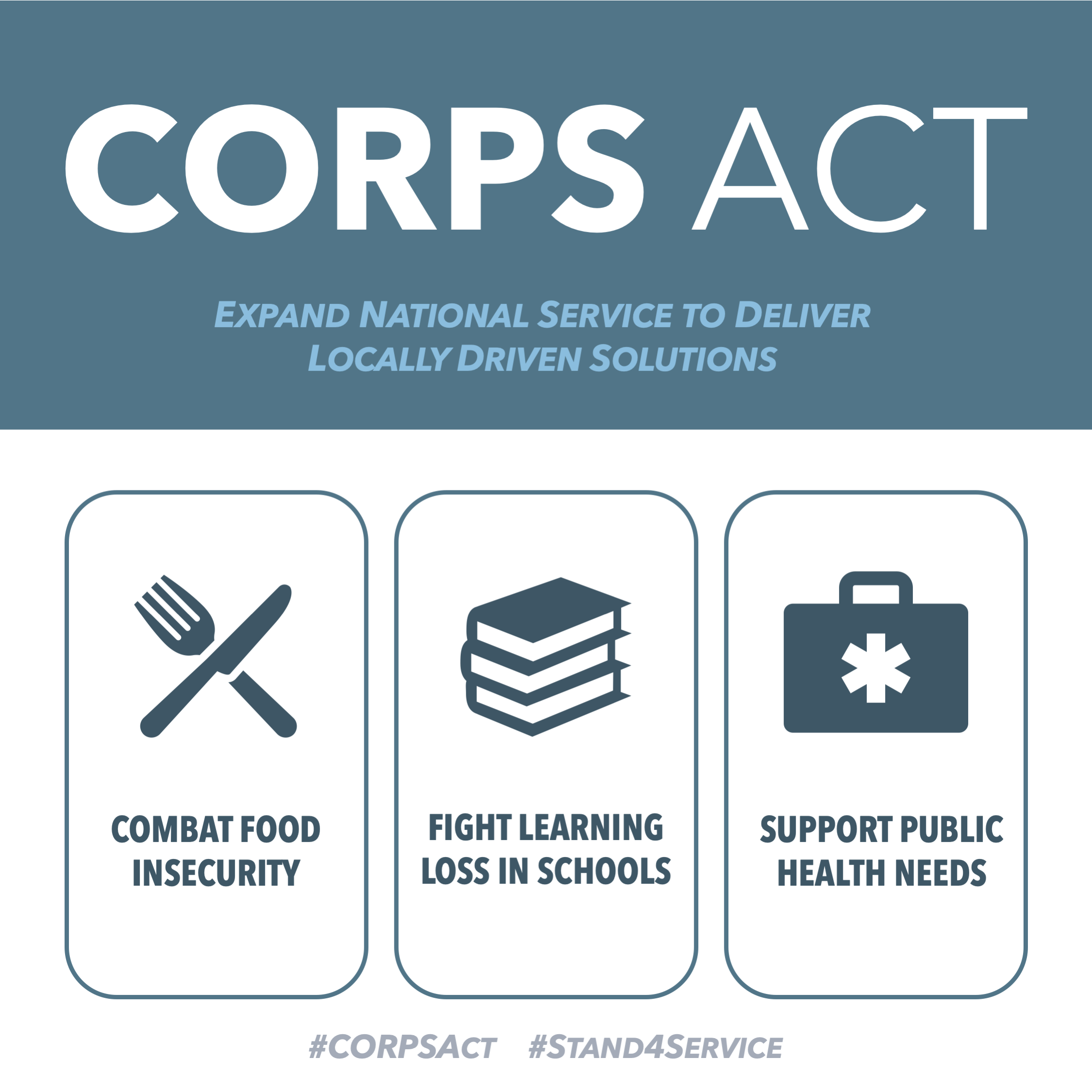
On April 15, 2021, the CORPS Act (Cultivating Opportunity and Response to the Pandemic through Service Act) was reintroduced by Senator Chris Coons (D-DE) and Senator Roger Wicker (R-MS) in the 117th Congress.
They were joined in introducing the bill by 15 co-sponsors: • Senator Coons (D-DE) – Lead Sponsor • Senator Baldwin (D-WI) • Senator Booker (D-NJ) • Senator Duckworth (D-IL) • Senator Durbin (D-IL) • Senator Kelly (D-AZ) • Senator Klobuchar (D-MN) • Senator Reed (D-RI) • Senator King (I-ME) • Senator Wicker (R-MS) – Lead Sponsor • Senator Blunt (R-MO) • Senator Cassidy (R-LA) • Senator Collins (R-ME) • Senator Cornyn (R-TX • Senator Graham (R-SC) • Senator Hyde-Smith (R-MS) • Senator Rubio (R-FL)
The CORPS Act proposes an $8 billion investment in national service programs, members, and state service commissions over a three-year period in order to contribute to our nation’s economic recovery. The CORPS Act also enables national service to contribute to recovery by growing a more diverse group of participants and local nonprofit programs, improving the quality of service experiences through increased living allowances and education awards, stabilizing existing programs, and targeting COVID-impacted communities and economic recovery projects.
“America’s Service Commissions is proud to endorse the bipartisan CORPS Act as it is reintroduced in the 117th Congress,” said Kaira Esgate, CEO of America’s Service Commissions (ASC). “This bill is a bold-but-realistic proposal to make AmeriCorps, state service commissions, national service and volunteer programs a cornerstone of our nation’s long term economic recovery from the COVID-19 pandemic. Expanding national service opportunities and benefits is essential to making service accessible to all and engaging a diverse group of Americans who want to serve our country and gain valuable job skills and experience in the process. The CORPS Act also provides governors and their state service commissions the flexibility they need to get these national service resources out the door to local communities and nonprofits quickly and efficiently. Our network stands ready to implement the CORPS Act across all states and territories during the COVID economic recovery period.”
Recent articles: The Hill – National service is a bipartisan priority CNN – This program puts people to work serving America. Now it’s going to jump in size ROI Study – New Research Shows an Unprecedented Return on Investment from AmeriCorps and Senior Corps.
CORPS ACT Bill Summary— 117th Congress
The bill would enable the following policies to take effect from the date of enactment through the end of Federal Fiscal Year 2024 (September 30, 2024):
Authorization to Expand National Service Authorizes $8 billion in funding to be spent through FY24 to strengthen and expand the signature national service programs – AmeriCorps, AmeriCorps Seniors and the Volunteer Generation Fund. AmeriCorps Living Allowance and Cost Per MSY Increases the AmeriCorps State and National and AmeriCorps VISTA living allowances to 175% of poverty for a single individual ($22,540 in 2021), and removes the cap on cost per member-service-year (MSY) for programs. Requires that the federal AmeriCorps agency award supplemental grants to fund the increased living allowance plus additional associated costs.
Special Education Award Allows AmeriCorps members to earn a concurrent (or second) education award that is equal the same value as their regular education award — $6,345 for members enrolled by September 30th and $6,495 for members enrolled after September 30, 2021.
Tax Exemptions Permanently exempts both the AmeriCorps living stipend and the Segal Education Award from federal income tax.
Direct Placement Authority Establishes a pilot program allowing state service commissions to directly place AmeriCorps members in state-based national service programs.
Augmentation and Expansion Grants Allows for expansion grants and grant augmentations to meet the compelling needs of grantees.
Recruiting a Diverse Corps Prioritizes awarding expansion grants and directly placing AmeriCorps members with diverse entities that are:
1) Serving communities disproportionately impacted by COVID-19; 2) Using culturally competent and multilingual strategies to provide services; and 3) Recruiting members to serve in the communities that they are from.
Match Waivers and Other Flexibilities Provides critical flexibilities to stabilize national service programs during the economic crisis and to allow them to grow and respond to dynamic local recovery needs, including:
• Waives program matching requirements for the duration of the COVID recovery period. • Addresses some seasonal and summer limitations within VISTA and NCCC. • Expands eligibility requirements for AmeriCorps Seniors. • Increases operating support for education award-only programs to $1,600 per member with a waiver up to $2,000.
Agency Reporting on Improvements Requires that CNCS submit a report that includes recommendations for improving grant programs, to include:
• Recommendations for improving the cost reimbursement and fixed price grants programs. • Analysis on establishing a new unit within CNCS to assist or manage background checks and the new member enrollment process. • Examination of flexibilities for state service commissions to strengthen the work of commissions and subgrantees.
With questions, please contact our policy team at policy@statecommissions.or
The coronavirus pandemic upended almost every aspect of school at once. It was not just the move from classrooms to computer screens. It tested basic ideas about instruction, attendance, testing, funding, the role of technology and the human connections that hold it all together.
A year later, a rethinking is underway, with a growing sense that some changes may last.
“There may be an opportunity to reimagine what schools will look like,” Education Secretary Miguel Cardona told The Washington Post. “It’s always important we continue to think about how to evolve schooling so the kids get the most out of it.”
Others in education see a similar opening. The pandemic pointed anew to glaring inequities of race, disability and income. Learning loss is getting new attention. Schools with poor ventilation systems are being slotted for upgrades. Teachers who made it through a crash course in teaching virtually are finding lessons that endure.
“There are a lot of positives that will happen because we’ve been forced into this uncomfortable situation,” said Dan Domenech, executive director of AASA, the school superintendents association. “The reality is that this is going to change education forever.”
School systems in America are not done with remote learning.
They want more of it.
After a year when some systems did nothing but school by computer screen, it has become clear that learning virtually has a place in the nation’s schools, if simply as an option.
“It’s like a genie that is out of the bottle, and I don’t think you can get it back in,” said Paul Reville, former Massachusetts secretary of education and founding director of Harvard University’s Education Redesign Lab at the Graduate School of Education. “In many respects, this is overdue.”
Few suggest that remote learning is for everyone. The pandemic showed, unmistakably, that most students learn best in person — in a three-dimensional world, led by a teacher, surrounded by classmates and activities.
But school systems across the country are looking at remote learning as a way to meet diverse needs — for teenagers who have jobs, children with certain medical conditions, or kids who prefer learning virtually.
It has also emerged as a way to expand access to less-common courses. If one high school offers a class in Portuguese, students at another school could join it remotely.
Colorado’s second-largest school system, Jeffco Public Schools, recently announced a full-time remote learning program across grade levels. Students would regularly interact with teachers, have mostly live instruction, and stay connected to their neighborhood schools, meeting with a staff member at least once a week.
To make it work, some of the system’s teachers would only be remote. Parent interest was one impetus for the program.
“We’re taking all that we have learned from the pandemic — and others have learned — and going with it,” said Matt Walsh, a community superintendent, who estimated that 1,000 to 2,500 students will enroll during the first year, starting this fall.
In the Washington region, suburban Montgomery County is exploring the creation of a virtual academy for full-time online instruction. Parents have advocated for a program for some time, said Gboyinde Onijala, a spokeswoman.
“The pandemic has helped us see that it is possible and can be done well,” she said.
A study by the Rand Corp., a nonprofit research organization, found about 2 in 10 school systems were adopting virtual schools, or planning or considering the idea. It was the innovative practice that the greatest number of district leaders surveyed said would outlast the pandemic.
Not everyone imagines the same path forward.
“Remote learning is a supplement, not a substitute, for in-school instruction,” said Randi Weingarten, president of the American Federation of Teachers, emphasizing that classroom learning is best for most students and that remote school can mean intense isolation.
“Staring at a screen all day is not optimal,” Weingarten said. “Zoom fatigue is real.”
The quality of remote learning varied widely among school districts, with parents complaining about the lack of live instruction and individual attention as well as technical difficulties. Even many families who want remote learning to continue want it improved.
Kevin Dougherty, a Laytonsville, Md., parent, said that while remote education has worked for some families, most kids have struggled — and the toll on mental health and social well-being is hard to ignore. Any program, he said, should be operated by the state, with a dedicated budget so “the needs of virtual learning don’t interfere with in-person learning, and vice versa.”
Katie McIntyre, a mother of two in Damascus, Md., said that for family, virtual classes were “wonderful experiences” — especially for her 10-year-old daughter who has autism and is gifted. Teachers have gone above and beyond.
“If I had any opportunity to do this again, I would,” she said.
— Donna St. George
The great catch-up
Schools set to attack lost learning
Could this pandemic year — when so many children fell so far behind, when students dropped off the radar, when teachers could hardly tell who understood what as they tried to teach from a distance — could this be the year that American education gets serious about helping kids catch up?
An infusion of cash from Washington and a new determination from educators across the country are laying the groundwork for an unprecedented combination of summer programming and high-intensity tutoring, all aimed at helping children recover from what was, for some, a lost year.
What’s more, some believe that once this infrastructure is in place, it could last for years, especially if it shows results.
“We’ve got a big opportunity to do it much better, to really come up with practices that are actually going to catch kids up. If that sticks, it’s revolutionary,” said Dan Weisberg, chief executive of TNTP, a nonprofit group that focuses on effective teaching.
The coronavirus rescue package signed into law by President Biden includes almost $123 billion for public K-12 schools, and districts are required to spend at least 20 percent of their funding on evidence-based interventions to address learning loss. Districts across the country are now gearing up programming for this summer and beyond.
They are also rethinking what the great catch-up should look like, with many shifting the focus from remediation to acceleration, or what’s sometimes called “accelerated learning.”
With remediation, the goal is to make up what a child missed the first time around. Some call it meeting students “where they are.” The problem is students may never catch up. Accelerated learning, by contrast, seeks to make grade-level work accessible to those who are behind through a combination of intensive help and modifications.
So if a child is behind in reading, he might be given the grade-level text along with tools to make it more accessible, such as a plot summary or a list of characters, or perhaps the audiobook version.
That’s the approach that Alabama is encouraging for its districts, said Eric Mackey, the state’s schools superintendent.
“We are afraid that when we come back, many of our students are going to be way behind,” Mackey said. “Even if we said, ‘We just need to catch them up to where we were,’ where we were isn’t good enough.”
He said there is simply not enough time for teachers to make up all the lost material. Reteaching is unrealistic, so he is recommending that schools try accelerated learning.
“It’s a shift for most of our districts,” he said. “It’s something that everybody wants to do, but in the past we’ve had neither the time nor resources to really do that.”
The movement is also underway in Los Angeles. L.A. County Superintendent of Schools Debra Duardo, who works with 80 districts, said educators have been thinking about accelerated learning for a long time, but the deep losses of the last year have prompted them to try something new.
“In the past we have done a lot of remedial work and we’re finding we need to have really high expectations, finding ways of keeping students at the level they should be … not just giving them the same stuff all over again,” she said. “We’re looking at this as an opportunity to think about the whole system about what’s working and what’s not working and how we can improve.”
— Laura Meckler
When students struggle
More support for mental health
The mental health struggles of the nation’s schoolchildren will outlast the pandemic, and so too will school districts’ efforts to meet the far-reaching need.
“We’re getting countless questions from districts that are asking, ‘How do we do this?’ ” said Sharon Hoover, a professor at the University of Maryland School of Medicine and co-director of the National Center for School Mental Health.
A year into the pandemic, counselors and others in mental health report an increasing number of students who are depressed or anxious. Hoover says that 75 percent of students who get mental health services get them at school.
With the need so great, she expects schools to hire more staff and to forge partnerships with community mental health providers. In many cases, therapists are based at schools, working with students and families on campus.
“I think we will see more of this,” said Hoover, who once worked as a school-based therapist in Baltimore public schools.
Some school systems have started to expand mental health services. In Broward County, Fla., which was rocked in 2018 by the fatal shootings of 17 people at Marjory Stoneman Douglas High School in Parkland, the school district was already attentive to mental health issues.
Following the mass shooting, it put at least one mental health professional on staff at each of its nearly 240 schools and opened a hotline. But a survey of students and families after the pandemic began revealed another wave of mental health needs.
The 2020-21 school year opened with a focus on mental health, mindfulness, social-emotional learning and equitable distribution of support, said Antoine Hickman, chief of Broward public schools’ student support initiatives. Schools were required to start every day with 10 minutes of mindfulness.
The district stationed a nurse in every school because “nurses are at the front line of mental health,” he said, and more support was added to the hotline. Teletherapy was arranged when in-person services were not possible. A new app — “Tell Another. Listening is Key” (T.A.L.K.) — on students’ learning platforms enabled them to confidentially request mental health support or report abuse.
Mental health services will continue, Hickman said, because the problems the pandemic caused won’t disappear.
In New York City, the country’s largest school district, Meisha Ross Porter, who is taking over as chancellor on Monday, said this month that schools were already arranging for guidance counseling check-ins with students — a step that added to other recent supports, including teacher training on dealing with trauma, grief and self-care.
Last October, 26 schools in neighborhoods hardest hit by covid-19 were connected to outpatient mental health clinics, therapy, evaluation and other clinical services. Plans are in the works to hire 150 social workers.
But in some school districts, mental health interventions underway are “relevant but insufficient,” according to Howard Adelman and Linda Taylor, co-directors of the UCLA Center for Mental Health in Schools.
Too often the focus is on hiring more support staff, increasing education and expanding social-emotional learning but, they said, those are “often unrealistic and usually produce counterproductive competition for sparse resources.”
What’s also essential, they said, is unifying the district’s services and then weaving in community and home resources “to develop a comprehensive and equitable system of student learning supports.”
— Donna St. George and Valerie Strauss
Teachers tested
Educators draw lessons from a challenging year
Kim Walker, a veteran public high school social studies teacher in Philadelphia, has 167 students in her six virtual classes. The students are not required to turn on their video during class and only a handful do. Most remain muted. A full six months into the school year, Walker has no idea what most of them look like or sound like.
“Some days I don’t see or hear anybody. There is no interaction at all,” she said. “When they’re in the physical classroom, you can see if they’re struggling. You can push them and help them. You can check in on them. But this is crazy.”
Crazy is a word many teachers have used to describe teaching during the pandemic. And frustrating. And exhausting. They had to become technology wizards, Zoom screen DJs, counselors, cheerleaders and teachers all in one. Workloads doubled and stress levels quadrupled. Nothing in their training had prepared them for this.
But as the end of the school year approaches, many are looking at what they’ve learned about teaching and about themselves during the pandemic and thinking about how they’ll incorporate that in their classes once something close to normal returns.
For Walker and many teachers like her, the past year has only confirmed for them the importance of their jobs. And being a present and encouraging educator for their students has never been more necessary. After a year of teaching virtually, Walker says she will make extra efforts to connect and check in with her students at every opportunity when they return.
“I don’t see myself leaving this profession at all and I want to continue to show them that they can make it out, they can find a path out of whatever environment they’re in,” said Walker, who is eager to return to a physical classroom. “Teaching is who I am and what I do.”
Mackenzie Adams teaches kindergarten in a small school district not far from Seattle. In the fall, Adams became an Internet sensation when videos of her enthusiastic virtual lessons went viral, and parents and teachers across the country applauded her vibrant approach.
Adams, 24, said she and her colleagues had to adjust on the fly.
“We really had to shift our thinking and shift the way we do lessons when we went online,” Adams said. “Even veteran teachers were back to being new first-year teachers with this whole new way of teaching.”
Being enthusiastic is an essential trait for kindergarten teachers in normal times. But online, Adams said, “you almost have to like triple that level of enthusiasm and engagement.”
That approach works, but it’s also wearying. Adams thinks that both she and the students are experiencing screen fatigue. But it hasn’t dampened her desire to teach.
The experiences of the past year, “really just made me want to teach more,” Adams said. “I can’t wait to be back in the classroom with my students … and really making those in-person connections, the social aspect of it all. And I think that’s really what’s missing right now.”
Aleta Margolis, founder and president of the Center for Inspired Teaching, said this past year should provide ideas and opportunities for teaching going forward.
“The best thing educators can do right now is to gather as much information as possible about what students have experienced over the past year — their learning, their worries and their ideas — and take that data seriously and build on it as we return to in-person learning,” Margolis said.
— Joe Heim
Connected at home
Laptops and hotspots likely to stick around
Before the pandemic began, millions of students got by without a computer or Internet connection at home. The “homework gap,” by which some students could Google their way through research papers and others could not, was derided by policymakers but, like so many other inequities in education, it persisted.
Over the last year, by necessity, the vast majority of students have been connected. Millions of devices and hotspots have been purchased and distributed. The question now is: Will this new, more equitable arrangement persist?
Most say yes.
In Texas, officials are looking into a plan that would bring broadband connections to every K-12 student beyond the pandemic, funded by a combination of state and local dollars.
The coronavirus rescue package signed into law by Biden includes more than $7 billion for the Federal Communications Commission to fund at-home Internet connections and devices through the E-rate program, which typically pays for service in school buildings and libraries. Pressure is mounting on the FCC to also use regular E-rate funding to connect students at home.
The FCC has yet to rule. But acting commissioner Jessica Rosenworcel has called the homework gap the most important issue of digital equity facing the nation and said the pandemic provided the incentive needed to finally address it.
“The days when out-of-school learning required only paper and pencil are long gone. Today, students live their lives online and use Internet-based resources for so much of modern education,” she wrote last spring.
Some argue an expansion would put too much pressure on the Universal Service Fund that pays for service and is funded by telecom user fees, but proponents say it’s urgent. A change in the FCC’s rules depends in part on the agency’s definition of “educational purposes.” Since the program began in 1996, that has been defined as inside school buildings.
“Our argument is even connecting people off-campus can be for educational purposes,” said John Windhausen Jr., founder and executive director of the Schools, Health & Libraries Broadband Coalition. “Education does not only happen at school. Kids do homework at night and that’s education.”
For now, he hopes that some schools use the $7 billion in new E-rate funding to go beyond handing out hotspot devices to families who need them, and to deploy new wireless networks that can serve many homes and live beyond the pandemic.
In the meantime, school districts have invested millions of dollars to buy devices for students that should last for several years, and students have become accustomed to doing schoolwork at home. Some also see benefits beyond direct education. Parents whose schedules make coming to the school difficult can now easily arrange a 10- or 15-minute online conversation with a teacher.
It adds up to a no-turning-back moment, said Richard Culatta, chief executive of the International Society for Technology in Education, a large nonprofit focused on helping teachers use technology to improve quality of learning.
“There’s been a huge amount of work to build out the infrastructure,” he said. He estimates that the share of districts that provide every student with a device has jumped from about one-third to about 80 percent. It was necessitated by the pandemic but will persist, he said, especially if schools figure out how to best use the technology to advance learning most effectively. “I don’t think there’s a question the technology will stay around.”
— Laura Meckler
D-plus school buildings
Pandemic spotlight offers real chance for reform
Christina Headrick has pored over more than 100 scientific studies, questioned a dozen air-quality experts, filed five public records requests and launched a parent group and website dedicated to ensuring a safe return to classrooms in Arlington, Va. — especially when it comes to ventilation.
The mother of two children is one of thousands of people — parents and administrators alike — suddenly paying attention to school buildings after the pandemic placed a bright, unforgiving spotlight on the crumbling status of America’s school facilities and their often outdated heating, cooling and ventilation systems.
In the short-term, administrators are commissioning outside reviews of their air quality, installing portable air cleaners and advising teachers on how to maximize airflow (advice that often boils down to, “Open your windows”). But they are also requesting millions in funding from school boards and town councils to make upgrades over the next several years, that are decades overdue.
The difference is, now, their requests are actually getting approved.
“We’ve proposed air-quality improvements in our schools, and ventilation improvements, ever since I’ve been superintendent,” said Tom Moore, who has led West Hartford Public Schools in Connecticut for close to a decade. Fully half of his school buildings, constructed in the 1950s, “don’t have anything at all” when it comes to ventilation, he said. It’s just “single-pane windows, to let the air come in and out.”
But before, he said, “there has always been taxpayers with concerns, and pushback: ‘Are you just looking for air conditioning?’”
Not this time. Moore’s proposal to spend $57 million over the next 10 years upgrading — in some cases, installing — air circulation, heating and cooling systems at nine of its 11 elementary schools sailed past the school board on an unanimous, bipartisan vote earlier this year.
In Chicago, the public school system has spent $100 million upgrading the district’s HVAC systems since last spring. Chief operating officer Arnaldo Rivera said that amid the pandemic, a quality assurance team began checking air flow and cleanliness against industry standards every month at every one of Chicago’s more than 530 school buildings — a practice they will continue indefinitely. Likewise, every school will get a periodic air-quality assessment with special new devices.
“We want to standardize this, so that moving forward, our buildings always meet the standard of warm, safe and dry,” Rivera said.
The Chicago Teachers Union, however, has been sharply critical of these efforts, saying more must be done to ensure a quality and healthy learning environment. Chicago Public Schools has a $3.5 billion backlog of facilities repairs on its campuses, and the average age of its buildings is 80 years old.
In its 2021 report card grading the nation’s infrastructure, the American Society of Civil Engineers gave public schools a D-plus, estimating more than half of districts need to update or replace their heating, cooling and air filtration systems. The problems are worst in low-income districts that are often majority minority, experts say.
“Every child in our system deserves to have clean air in their classrooms, now and for the long term,” said Headrick, the parent volunteer.
A lot hinges on what happens with federal funding, said Mary Filardo of the 21st Century School Fund, a nonprofit that advocates for the modernization of public school facilities. Biden’s coronavirus relief plan sets aside roughly $123 billion for K-12 schools, and Filardo would like to see at least $10 billion of that go to building upgrades — although how the money is used will most likely be decided by state and district leaders, and could vary widely throughout the nation.
“We have the opportunity to really make some improvements,” Filardo said, “with the light that has been shone on this.”
— Hannah Natanson
Rethinking attendance
Who attends, who is absent
What it means to be in school is in flux.
For decades, students took their places at desks in classrooms, as teachers recorded who was there and who was not. But as schools shuttered and students began to learn remotely, the conventions of taking attendance through “seat time” fell away.
School systems scrambled to come up with new ways to define attendance in remote school. Was it enough just to log in for the day or tune into a Zoom class?
States took varied approaches.
In Connecticut, students need to spend half of the day in learning activities, including live classes, independent work and time logged into an electronic system. In Alaska, they are counted as present whether or not they log on, with the state viewingremote learning as similar to a correspondence course.
“The pandemic wreaked havoc with measuring attendance,” said Hedy Chang, executive director of Attendance Works, a national nonprofit initiative that has tracked state policies.
The hodgepodge may well continue this fall, as many school systems continue to offer families the option of remote learning. Beyond that, a number of school systems are also planning virtual programs as a more lasting effort, for students who need or want to learn that way.
For many school leaders, the issue was a balancing act as they tried to support students who may be in crisis — as covid-19 has claimed lives and left many workers strapped and jobless — but also draw them into school.
Without reliable ways to track attendance, it’s harder to recognize patterns in chronic absenteeism — a major worry before the pandemic that is worsening, experts say. High rates of absenteeism are linked to academic failure and dropping out of school.
In Connecticut, described as the first state to produce monthly statewide data on the issue, the percentage of chronically absent students as of January was 21.3 percent — a 75 percent jump over a year earlier.
Harder hit were some of the most vulnerable students. The rate of chronic absenteeism for English learners more than doubled to 36 percent, and the rate for students from free meal-eligible families shot up by 78 percent, to roughly the same level.
“It’s pretty troubling,” Chang said.
Some say it’s past time to rethink attendance more broadly, to focus on mastery of skills and content.
“It’s not about seat time,” said Robert Hull, president of the National Association of State Boards of Education. “It’s about engagement. I think as a result of this pandemic we can see some innovation in that area.”
— Donna St. George
Funding schools
Changing the ‘butt-in-seats’ formula
Parents, students and teachers were hyper-focused during the pandemic on when shuttered schools would reopen, but John Kuhn and other district superintendents were sweating out something else too: state funding.
Because most state funding formulas are based in part on how many students are in schools, district leaders worried about pandemic attendance drops. Less funding would mean cuts in programs and personnel. And the districts that would be hit the hardest would be those with the poorest and neediest students.
Kuhn, superintendent of Mineral Wells Independent School District in Texas, said he and his colleagues were relieved on March 4 when Gov. Gregg Abbott (R) announced that schools would be “held harmless” from funding cuts for the rest of the 2020-21 school year. Kuhn said some 130 students of about 3,200 — a little more than 4 percent — have stopped coming to school (when during a normal year almost none do), and Abbott said districts where students stopped coming to school would not be penalized.
Some policymakers began to consider permanent changes that would meet the changed education landscape.
“The way we educate kids now is new,” said Texas state Rep. Gina Hinojosa (D-Austin), who has introduced legislation to change Texas’s funding formula — from being based on the number of kids in seats on certain days to enrollment — so that districts would get more state money.
Referring to remote learning that began during the pandemic and will last beyond the crisis, she said: “We are going to be doing a lot more of that now and this emerging way of teaching our kids through blended learning is not a butt-in-desks model of education and should not be funded that way.”
Public schools are funded primarily by local funds, mostly from property taxes, combined with state funding — though the divisions are different among states. Because wealthy areas pay more in property taxes, they get more of this funding than high-poverty districts. The federal government supplies about 10 percent of overall funding to try to make up the gap, but it usually doesn’t.
A majority of the state funding formulas involve attendance counts — but there are a host of ways and times during the school year to count kids, and the differences can mean plus or minus millions of dollars a year for districts. For example, some states use average daily attendance, and others take attendance in the fall and spring and average the two. Colorado uses an attendance count from a single day in October. Texas is one of seven states that uses average daily attendance.
Even before the pandemic, attendance methods put high-poverty districts at a disadvantage; children from low-income and unstable homes are more likely to be absent because of limited access to transportation, untreated health issues and other problems.
Hinojosa said she wants to use enrollment, not attendance, as the basis of Texas’s funding formula in part because districts have to budget for enrolled students — not for the changing number of students who show up daily.
With most public school students in Texas from minority and economically disadvantaged families, she said: “Our districts are getting shortchanged and our schools are getting shortchanged and so are our students.”
Now some districts are thinking ahead for the next school year beginning in the fall — but nobody knows for sure how many missing students will return.
— Valerie Strauss
The tests
Wanted: New ways to assess students
A few days before Christmas last year, many of the country’s state schools chiefs met over Zoom to address a foundation of modern school reform: standardized testing. The consensus was that U.S. schools need better ways to assess students — as soon as possible.
For nearly 20 years, schools have been mandated by federal law to test most K-12 students in math and English language arts and use the results in an “accountability system” intended to close the achievement gap between White and most minority students.
The exams have long been controversial. Supporters say standardized testing is vital to know how the most challenged students are doing. Critics say they don’t reveal valid, useful data and perpetuate educational inequity.
The coronavirus pandemic jolted the country’s fixation with standardized testing, bringing the first break in the annual spring exam ritual since the No Child Left Behind era began in 2002.
With schools closed last spring, the Trump administration told states they did not have to administer them. States would have to manage without the test results, used for high-stakes decisions such as teacher evaluation and A-F grading of individual schools.
Enter the Biden administration. In February, it announced that tests must be given in 2021 — but could be shortened and administered as late as the fall, and the results did not have to be used for accountability purposes. Education Department official Ian Rosenbaum said in a letter to state school chiefs that the data is important to collect because “it is urgent to understand the impact of covid-19 on learning.”
How the scores will be used remains unclear. Florida education chief Richard Corcoran said he would wait to see if there are score anomalies before deciding. Ohio, Colorado and other states decided not to use scores in teacher evaluations for 2020-21, and Arizona said it wouldn’t use them to assign A-F grades to schools.
The administration’s decision to allow states to go a second year without using test scores for high-stakes decisions could spur the drive for new assessments, said Bob Schaeffer, acting executive director of the nonprofit National Center for Fair and Open Testing, which fights the misuse of standardized tests.
Once “we see that not having high-stakes assessments for a year or two did not harm educational quality or equity — as the pandemic itself most certainly did — the door will be opened for broader assessment reforms,” he said.
The 2015 K-12 Every Student Succeeds Act, the successor law to No Child Left Behind, provided for a pilot program to create more varied and valid assessments.
That is what the state chiefs talked about last Dec. 23 at the event hosted by the Council of Chief State School Officers, which brought together the leaders with Biden-Harris transition officials.
There were, according to participants, nearly unanimous calls for more opportunity to create assessments focused on “authentic learning” that can provide real-time information to direct student learning.
“I like to think this could be an opportunity to rethink the whole” standardized testing system, said Joshua P. Starr, former superintendent of Montgomery County schools in Maryland and now chief executive of PDK International, a professional organization for educators.
— Valerie Strauss
Illustrations by iStock
Story editing by Kathryn Tolbert. Copy editing by Jamie Zega. Design by Beth Broadwater.
 Posts by Paul Costello1