
We live in a time where we quickly put people in boxes. Maybe we have more in common than what we think? Introducing All That We Share.
"locals serving locals for over 25 years."
 Posts by Paul Costello1
We live in a time where we quickly put people in boxes. Maybe we have more in common than what we think? Introducing All That We Share.
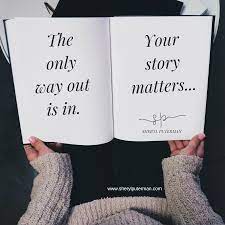
The story we keep telling ourselves matter more than any story others tell us or the story we tell to others. We are our own most important audience. Watch this video.
Every learner’s inner story is potentially at risk in any mass education system. This is particularly the case if the child experiences difficulties in systems where deficit-focused labels abound. In such systems ‘the problem’ is seen as being located within the child and therefore children who experience difficulties are in danger of being treated as if they are broken washing machines that need fixing. The notion that the adults or the environment should change – in order to enable the child to change – is often absent from the agenda. Read More
Opinion by Lavanya Sithanandam Jan. 15, 2021 at 9:00 a.m. EST Washington Post
Lavanya Sithanandam is a pediatrician serving a predominantly low-income and minority population in Montgomery and Prince George’s counties.
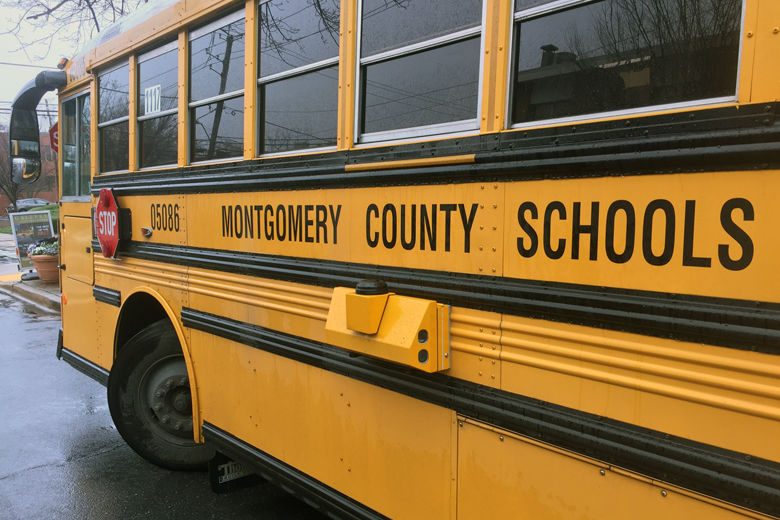
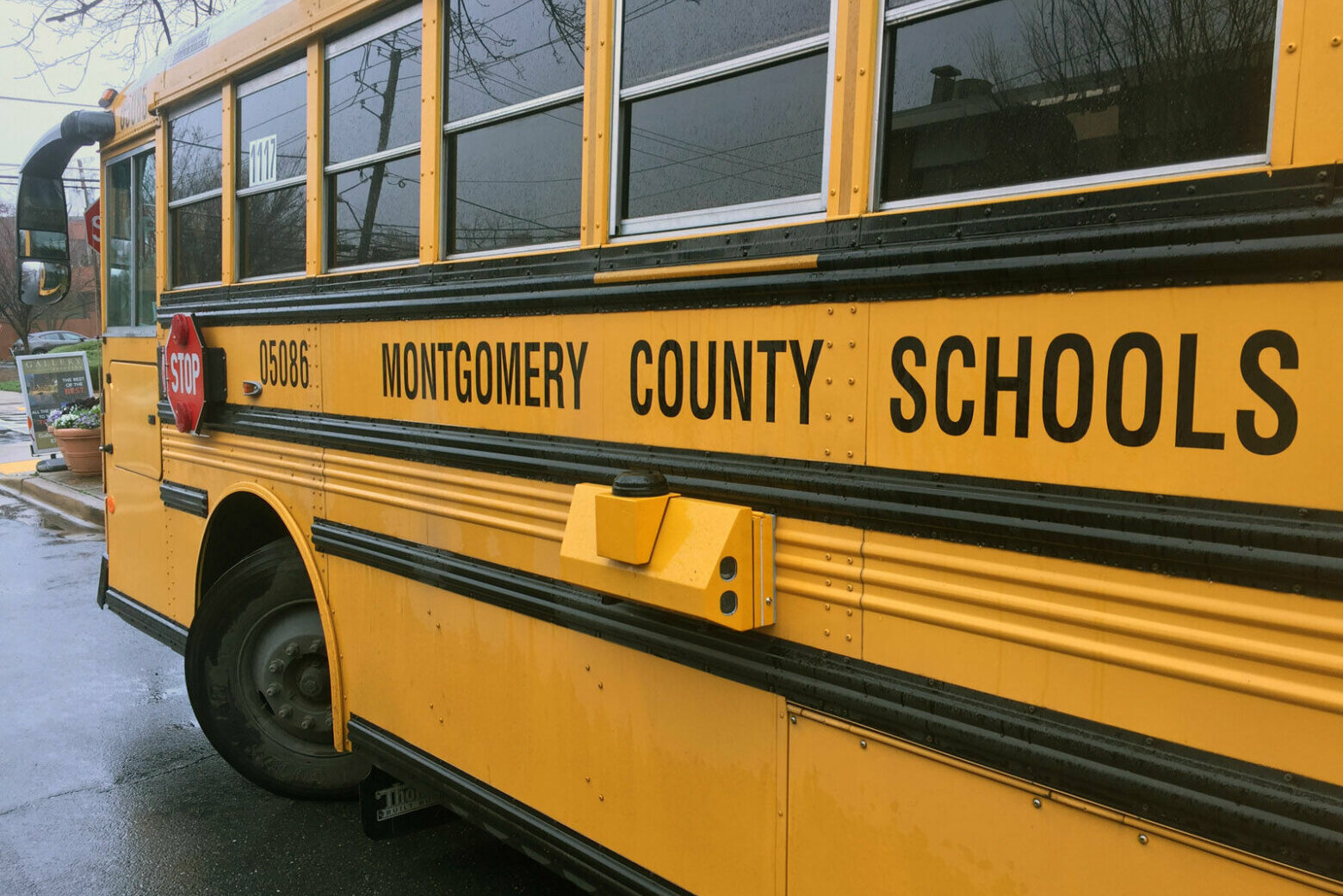
Montgomery County Public Schools is failing its Black, Latino and disadvantaged minority students, who are falling further and further behind their peers.
Though school closures may have been necessary in the spring, numerous U.S. and international studies demonstrate they are unnecessary now and that school districts that continue to insist on this approach are relying on outdated science. MCPS has shuttered its doors for more than 300 days, and the equity gap that existed before the pandemic has widened substantially. In fact, prolonged school closures are affecting minority students significantly more than the coronavirus itself.
Decades of systemic racism have left minority neighborhoods and their academic support structures already weakened, and virtual learning is worsening the learning loss in students from these communities. First-quarter MCPS grades revealed alarming differences in the failure rates between White and minority students. African American and Hispanic students from low-income families failed classes at rates 5 to 6 times more compared with last year, whereas White students had minimal increases.AD
Minority students often lack access to tutors, pods or expensive learning centers, and they sometimes have to juggle child-care responsibilities, jobs and learning in more challenging home environments. Their parents are more likely to be essential workers who are unable to supervise the day-to-day demands of their children’s education. Some do not have access to quality Internet services. Students report they find distance-learning platforms inherently stressful and have stopped logging on altogether.
In my clinic, we are seeing children who were already having difficulty in school now failing classes, and honors students barely passing. English-language learners are struggling with maintaining language skills because of their lack of daily interaction with native English speakers. One Haitian immigrant teen recently told me that she used to be fluent in English, but “now I only speak Creole at home, so I am forgetting my words.”
I am also seeing patients who could be the first in their family to attend college decide to forgo their dreams of higher education. Without in-person access to counselors and teachers, they are finding it extremely difficult to navigate the challenging college application process. Maintaining high grades, for which they have worked harder, and in the face of greater head winds than their wealthier peers, has also presented challenges. Inside Higher Ed found that college applications for first-generation students and those eligible for application fee waivers were down 16 percent this year, with many colleges reporting a decrease in Latino and Black college applications.AD
In addition to academic challenges, children and teens are desperate for social interaction. A recent report by the Centers for Disease Control and Prevention revealed pediatric emergency room visits related to mental health were up 24 percent for children ages 5 to 11 and 31 percent for children ages 12 to 17. In my practice, we have documented a 30 percent increase in mental health referrals since the start of the pandemic for conditions such as depression, anxiety and suicidal ideation. Social isolation affects children from all communities, but minority children, who are particularly vulnerable to mental health crises, are at higher risk. Furthermore, there has been a 40 percent decrease in reporting of child neglect and abuse because educators are typically the main source to report. This leads to fewer interventions and worsening outcomes.
We now have convincing data that schools are safe and should be open for in-person learning. Even in minority communities where coronavirus rates may be higher, data has shown that schools are not superspreader locations, and that, with mitigation such as masking and distancing, schools are safe places for students and teachers. The CDC, World Health Organization, American Academy of Pediatrics and numerous respected public health leaders acknowledge schools are safe and should remain open.
The harm of prolonged school closure is just too devastating to keep schools closed. And the knowledge from the thousands of schools that safely reopened in the fall demonstrates masking and social-distancing protocols are effective and sufficient.AD
And herein lies the rub. MCPS knows this. But, because of outside pressure, it is keeping school officially closed while providing subsidies for low-income children to attend in-person, privately run “equity hubs” where they can learn remotely, sitting in school alongside other students. Proctors replace teachers. This is a clear recognition that in-person learning is possible despite rising coronavirus rates in the community. But this is an unnecessary, inferior alternative.
Sadly, a county that has typically been at the forefront of addressing inequities is not adequately addressing learning loss and the ever-widening opportunity gap that results from remote learning. Contrary to the false claims that minorities don’t want to return to in-person learning, the presence of minority-filled equity hubs and results from the recent MCPS survey demonstrate that Latino and African American interest for school return is significant. This interest will continue to grow as schools reopen and it becomes clear that the health risks are minimal. In my practice, which is 90 percent minority, there is a universal desperation among students to return to school.
If MCPS is genuinely concerned about equity for its students, particularly students of color, it must reopen to provide desperately needed additional resources that can only be delivered through in-person learning. School failure has been linked to poor lifelong health consequences through decreased employment and earning capacity, higher risk of incarceration and even premature death from substance abuse and preventable diseases.AD
An entire generation between the ages of 5 and 18 has been effectively removed from society at large. They do not have the same ability to vote or speak out, so it is high time for children’s advocates, including teachers and parents, to raise their voices for a return to school.R

“The schools in this country are one of the biggest reasons we’re all so screwed up. Our educational experience consists of three great lies.
Lie number one is, It’s better to say, ‘I know’ than to say, ‘I don’t know.’
Lie number two: It’s better to answer a question than ask a question.
Lie number three: It’s better to worship at the foot of success than understand the nature of failure.
Those three lies have screwed our society, and it’s by overcoming one at a time–or two at a time or all three –that you can make some breakthroughs in your creative activities.”
Richard Saul Wurman – Founder of TED Talks

Feb. 7, 2020
Zorana Ivcevic Pringle, director of Yale’s Creativity and Emotions Lab and an author of the study, said while students being tired was no surprise to her, the pervasiveness of the emotion among students was. “It was overshadowing everything else,” Pringle said. “Close to 60% of the time, students are saying they are feeling tired.”
And while positive emotions of calmness, happiness and relaxation were also among top emotional experiences, those feelings are “not the kinds that are most valuable for learning and growth.” Emotional experiences most relevant for learning, Pringle said, are interest, curiosity and pride (once achievement occurs) — all of which ranked low.
Negative feelings were experienced more frequently by female, younger, low-income and minority students as opposed to their male, older, well-off, white counterparts.
The frequency of negative feelings students experience, the authors write, is “likely to undermine students’ attention, motivation, and ability to learn and thrive.” The authors suggested a cultural shift in schools that emphasizes and supports self-care as something that could benefit students’ learning, health and overall well-being. Pringle suggests a greater emphasis on social-emotional learning as a way to give students tools to better regulate negative emotions.
Once the “tired” emotion is addressed, Pringle said, the other negative emotions are likely to fall in line. “Once they are feeling more rested, they will be better able to pay attention, they might be more interested, less bored, and less stressed.”
In an effort to ensure students are well-rested, more districts are implementing later school start times, which Pringle noted as a possible solution. The Seattle, Minneapolis, Houston and Fairfax County (Virginia) districts are among those that have moved some or all of their school start times to allow older students to start later. Whether districts save or lose money from such changes differs on a case-by-case basis. But studies suggest the bell shift has resulted in teens getting more sleep, which has in turn improved grades and attendance.
And just last year, California became the first state to mandate a later start bell. While there will be logistical challenges — including transportation, adjusted costs and rescheduling after-school activities — other states will likely follow.
Students and parents have helped drive the movement. In California, for example, parent and journalist Lisa Lewis penned an op-ed on the issue in the local paper. And often the smoothest transitions, experts have noted, come only after consulting key groups including parents, students, teachers and other school staff members impacted. As schools make room for growing student activism and civic engagement, including students in discussion of how they feel about school is one place to start.
From Huffington Post
Co-authored by Marc Brackett, Ph.D, Director of the Yale Center for Emotional Intelligence
On a Saturday in late October, the Yale Center for Emotional Intelligence and Born This Way Foundation had the immense pleasure of welcoming almost 200 high school students to the Yale University campus for the Emotion Revolution Summit.
The Emotion Revolution was launched on the basic belief – supported by a growing body of scientific research – that emotions are fundamental to a young person’s decision making, academic achievement, and overall well-being. It was also grounded in a commitment to make young people a part of the conversation about how to better integrate tools and tactics to support emotional wellness into their schools and communities.
That’s why – before the Summit began – we conducted an unprecedented online survey of teens nationwide. Drawing responses from approximately 22,000 high schoolers, we collected data on how young people currently feel and how they want to feel in school, and the possible reasons for these emotions. This research is straightforward but crucial to strengthening our understanding of current school climates and the factors that affect those environments.
The results were clear. When asked how they currently feel in school, approximately 75% of the words the students used were negative. Just 23% were positive. Furthermore, the top three emotions the students reported were tired (used by 39% of the respondents), stressed (29%), and bored (26%). In contrast, the top three emotions students said they want to feel in school are happy, excited, and energized.
We also asked the students about their experiences in school, revealing several notable correlations. For instance, students who said their peers had been mean or cruel to them were more likely to feel negative emotions such as loneliness, fear, and hopelessness. Meanwhile, respondents who said that what they were learning is relevant and meaningful were more likely to feel positive emotions such as interest, respect, and happiness. Similarly, students who reported that their teachers delivered engaging lessons experienced less boredom and greater respect and happiness.
These results clearly demonstrate the need to close the gap between what students are currently feeling in school and how they want to be feeling. We must start by empowering the young people themselves by giving them tangible support, practical tools and tactics, and a voice in the conversation.
The Emotion Revolution Summit was a first step in that process, bringing together young people with teachers and education leaders such as Yale University President Dr. Peter Salovey and New York City Department of Education Chancellor Carmen Fariña, passionate speakers including journalist Soledad O’Brien, Life is Good Co-Founder Bert Jacobs, and poet Azure Antoinette, and advocates like Lady Gaga. This New WorldThe current capitalist system is broken. Get updates on our progress toward building a fairer world.
At the Summit, our partner Facebook unveiled InspirED, a set of online resources for teachers and teens focused on building emotional intelligence in schools. It aims to connect high school students and educators across the country with tools and inspiration in social and emotional learning, so they can work together to create more positive learning environments and lead healthier, more fulfilled lives.
The day was also an opportunity to hear from students directly. We were blown away by their bravery in sharing their stories and honesty in discussing the role emotions play in their lives. Here are just a few of their reflections we think are worth remembering:
1. If you are struggling with anxiety, depression, self-doubt, or other negative emotions, it is difficult to be a positive force for change in the world. So before you can help anyone else, you need to be able to help yourself.
2. Regardless of background and personal history, everyone struggles at times with their emotions. Speaking up honestly about those experiences can helps the person doing the sharing but it can also serve as a comfort and inspiration to others navigating their own obstacles.
3. Risking judgement for expressing emotions is far outweighed by the dangers of concealing emotions. Don’t keep everything bottled inside – and be supportive of others who are brave enough to speak up.
4. In order for real change to take place, conversations like this need to have everyone involved – from students and parents to educators and policy makers. Everyone needs to be able to voice their opinions freely so that we can work together to come up with meaningful solutions.
5. Talking about emotional wellness is crucial, but real change will take empowering young people with practical tools and real change. Whether it’s changing policies that affect school climate or online resources like InspirED, building kinder and braver schools will take more than just words.
The Emotion Revolution Summit was the beginning of an important conversation. Now it’s time for everyone to take the lessons from that day and start a dialogue in their own communities. As organization leaders, educators, and parents, we need to give young people – and the adults in their lives – the support they need to create environments where emotions matter.
The Emotion Revolution Summit was hosted in partnership with Facebook and The Robert Wood Johnson Foundation and was made possible by the generous support of Microsoft, Mattel, Monster High, Life is Good, HopeLab, WWE, U.S. Chamber of Commerce Foundation, Flawless Foundation, and The Faas Foundation.
Cynthia Germanotta is the co-founder and president of Born This Way Foundation, which she founded with her daughter, Lady Gaga, to “empower youth” and “inspire bravery.”
Marc Brackett, Ph.D. is Director of the Yale Center for Emotional Intelligence and is on the research advisory board of Born This Way Foundation. He is also a senior research scientist in psychology and faculty fellow in the Edward Zigler Center in Child Development and Social Policy at Yale University. He co-created RULER, and evidence-based approach to social and emotional learning.
Link
https://www.huffpost.com/entry/the-emotion-revolution-wh_b_8463732
From the Washington Post
By Donna St. GeorgeDec. 3, 2020 at 4:10 p.m. EST
Failure rates in math and English jumped as much as sixfold for some of the most vulnerable students in Maryland’s largest school system, according to data released as the pandemic’s toll becomes increasingly visible in schools across the country.
In but one stark example, more than 36 percent of ninth-graders from low-income families failed the first marking period in English. That compares with fewer than 6 percent last year, when the same students took English in eighth grade.
“It breaks my heart to see so many of these numbers,” Rebecca Smondrowski, a school board member, said after the numbers were shared at a board meeting Thursday. “We knew that gaps were going to get bigger, but these are huge.”
The data comes as neighboring Fairfax County in Virginia recently reported a sharp increase in failing grades for its students — one of the first systems nationally to detail the fallout of pandemic-driven online education.
In Montgomery, a diverse system of more than 161,000 students, Black and Hispanic students from families at or near the poverty line were among the most severely affected groups, along with English language learners.
Nearly 45 percent of those with limited English proficiency failed the first marking period in ninth-grade math, for instance — a stunning figure given that only 8 percent of the same students failed math in the first marking period last fall.
The data is a grim and vivid reflection of the struggle many students face with remote instruction. Some find the volume of independent work or screen time overwhelming. Some are trying to manage child-care duties, technology glitches, family difficulties or jobs.
Learning in Montgomery County has been all-virtual since March, when public schools across the nation were shuttered as the coronavirus spread. But officials were more forgiving with grades in spring, saying students should not be penalized for disruptions they did not cause as the school system embarked on an unprecedented experiment with online education.
This fall, with classes still online but with greater preparation, Montgomery returned to its traditional grading system. In recent weeks, it has been considering a plan to reopen school buildings in January, but with coronavirus cases surging that remains an open question.
Back in school buildings: One school district’s experience in 10 weeks
The new data on grades points to critical questions about how to measure the performance of students who attend school from home. Some learners have the advantage of oversight and support from parents or siblings. In other families, parents work at jobs outside the home, face language barriers or are less familiar with material being taught.
Diego Uriburu, co-founder of the Black and Brown Coalition for Educational Equity and Excellence, an advocacy group in Montgomery County, described the reaction he was hearing as a mix of anger, disappointment and despair.
“We are angry,” he said. “It’s not that they can change things on a dime, but from our communities’ perspective nothing has changed from before the pandemic. We hoped that the pandemic was going to be a wake-up call and an inflection point.”
He emphasized the importance of placing the most effective teachers and principals in schools most affected by poverty. Long-standing learning losses still need to be addressed, he said, along with issues of cultural competency.
“They work very hard, but their efforts are not reaching our communities,” he said. “This is a catastrophe, a huge catastrophe.”
Maryland school advocates push for equity for Black and Hispanic students
The data Montgomery presented Thursday was limited to students in grades six, nine and 12. It was broken down by race, ethnicity and other characteristics to get at which students were most affected.
Montgomery’s nationally regarded school system was roughly 32 percent Hispanic, 27 percent White, 21 percent Black, 14 percent Asian and 5 percent multiracial in the past school year.
Among sixth-graders taking math, Hispanic students from low-income families fared worst, with last year’s failure rate of 4 percent soaring to nearly 24 percent this fall.
Least affected among the sixth-graders in math was a category that included White and Asian students from families not identified as low-income. Last year, less than 1 percent of that group failed the first marking period, and this year it was slightly more than 1 percent.
In many cases, percentages of A’s and B’s dropped as the share of failing grades increased. In some cases, A’s increased markedly, even as failing grades climbed.
For sixth-grade students in special education taking English, for example, the percentage of A’s shot up from 16 percent last year to 27 percent this fall, even as failing grades doubled, from less than 5 percent to 10 percent.
Overall, students in special education experienced significant spikes in failing grades. In sixth-grade math, fewer than 6 percent of students in special education failed last year — compared with nearly 16 percent this year.
In ninth-grade English, some students in special education who passed last year failed this year; the failure rate jumped from 6 percent to 32 percent.
School officials said they are making changes to grading practices, student supports and instructional guidance — adding flexibility with due dates, for example, and reducing the number of recommended assignments that are graded.
Janet Wilson, chief of teaching, learning and schools, pointed to a learning curve as the district moved into new territory with remote learning. The system is bringing practice more into line with a virtual setting, she said.
“We’ve never done this before,” she said.
Before the school year started, administrators worked with educators, students and parents to create what they thought was strong guidance for the first marking period, said Scott Murphy, director of college and career readiness and districtwide programs.
“What we’ve learned is that for many, many, many students, it was too much — too many assignments, too much work to do, managing it across seven, eight classes,” Murphy said. “We had some grade books for the first marking period that had 20, 30, even more assignments in one class, and the pretty consistent feedback we got was it was too much.”
The issue is directly tied to student anxiety and well-being, he said, and “the stress students have right now, and trying to help them manage the volume of work that they have.”AD
Cynthia Simonson, president of Montgomery’s countywide council of PTAs, said it has been clear that students are struggling, especially those in special education and English language learners.

“That’s probably a very realistic portrayal of what’s happening,” she said. “I think it means we are teaching the content with the same rigor, and I think it’s incredibly sad. This means we are failing to meet the needs of that many students.”
In another sign of academic slippage amid the pandemic, new data from Arlington Public Schools showed slight overall performance drops — in the single digits — on a literacy assessment for kindergartners, first-graders and second-graders, but much steeper declines for students of color and English learners.
The share of Hispanic students meeting the benchmark dropped nearly 15 points, to 60 percent, while the percentage of Black students hitting the mark dropped by roughly 10 points, to 78 percent. The results for English learners in the first and second grades fell even more precipitously, with drops of 26 to 30 points.
We often get asked about the idea behind AmeriCorps and the whole concept of service. While we always tell the history of President Clinton’s signature legislation in 1993 and before that, JFK’s idea about the Peace Corps in 1961, what many people don’t realize is an earlier formulation goes way back to America’s first psychologist, William James, and his famous 1906 talk on “The Moral Equivalent of War,” at Stanford University. It’s emphasis on the “male” is a product of its time but the idea spins from James looking for an alternative to the service citizens offer the state at a time of war. Here is the conclusion.
_______________________________________________________________________________________________________________________________________________

This essay, based on a speech delivered at Stanford University in 1906, is the origin of the idea of organized national service. The line of descent runs directly from this address to the depression-era Civilian Conservation Corps to the Peace Corps, VISTA, and AmeriCorps. Though some phrases grate upon modern ears, particularly the assumption that only males can perform such service, several racially-biased comments, and the notion that the main form of service should be viewed as a “warfare against nature,” it still sounds a rallying cry for service in the interests of the individual and the nation.
….There is nothing to make one indignant in the mere fact that life is hard, that men should toil and suffer pain. The planetary conditions once for all are such, and we can stand it. But that so many men, by mere accidents of birth and opportunity, should have a life of nothing else but toil and pain and hardness and inferiority imposed upon them, should have no vacation, while others natively no more deserving never get any taste of this campaigning life at all, — this is capable of arousing indignation in reflective minds.
It may end by seeming shameful to all of us that some of us have nothing but campaigning, and others nothing but unmanly ease. If now — and this is my idea — there were, instead of military conscription, a conscription of the whole youthful population to form for a certain number of years a part of the army enlisted against Nature, the injustice would tend to be evened out, and numerous other goods to the commonwealth would remain blind as the luxurious classes now are blind, to man’s relations to the globe he lives on, and to the permanently sour and hard foundations of his higher life. To coal and iron mines, to freight trains, to fishing fleets in December, to dishwashing, clotheswashing, and windowwashing, to road-building and tunnel-making, to foundries and stoke-holes, and to the frames of skyscrapers, would our gilded youths be drafted off, according to their choice, to get the childishness knocked out of them, and to come back into society with healthier sympathies and soberer ideas. They would have paid their blood-tax, done their own part in the immemorial human warfare against nature; they would tread the earth more proudly, the women would value them more highly, they would be better fathers and teachers of the following generation.
Such a conscription, with the state of public opinion that would have required it, and the many moral fruits it would bear, would preserve in the midst of a pacific civilization the manly virtues which the military party is so afraid of seeing disappear in peace. We should get toughness without callousness, authority with as little criminal cruelty as possible, and painful work done cheerily because the duty is temporary, and threatens not, as now, to degrade the whole remainder of one’s life.
I spoke of the “moral equivalent” of war. So far, war has been the only force that can discipline a whole community, and until and equivalent discipline is organized, I believe that war must have its way. But I have no serious doubt that the ordinary prides and shames of social man, once developed to a certain intensity, are capable of organizing such a moral equivalent as I have sketched, or some other just as effective for preserving manliness of type. It is but a question of time, of skilful propogandism, and of opinion-making men seizing historic opportunities.
The martial type of character can be bred without war. Strenuous honor and disinterestedness abound everywhere. Priests and medical men are in a fashion educated to it, and we should all feel some degree if its imperative if we were conscious of our work as an obligatory service to the state. We should be owned, as soldiers are by the army, and our pride would rise accordingly. We could be poor, then, without humiliation, as army officers now are. The only thing needed henceforward is to inflame the civic temper as part history has inflamed the military temper. H. G. Wells, as usual, sees the centre of the situation. “In many ways,” he says, “military organization is the most peaceful of activities. When the contemporary man steps from the street, of clamorous insincere advertisement, push, adulteration, underselling and intermittent employment into the barrack-yard, he steps on to a higher social plane, into an atmosphere of service and cooperation and of infinitely more honorable emulations. Here at least men are not flung out of employment to degenerate because there is no immediate work for them to do. They are fed a drilled and training for better services. Here at least a man is supposed to win promotion by self-forgetfulness and not by self-seeking. And beside the feeble and irregular endowment of research by commercialism, its little shortsighted snatches at profit by innovation and scientific economy, see how remarkable is the steady and rapid development of method and appliances in naval and military affairs! Nothing is more striking than to compare the progress of civil conveniences which has been left almost entirely to the trader, to the progress in military apparatus during the last few decades. The house-appliances of today, for example, are little better than they were fifty years ago. A house of today is still almost as ill-ventilated, badly heated by wasteful fires, clumsily arranged and furnished as the house of 1858. Houses a couple of hundred years old are still satisfactory places of residence, so little have our standards risen. But the rifle or battleship of fifty years ago was beyond all comparison inferior to those we now possess; in power, in speed, in convenience alike. No one has a use now for such superannuated things.”
Wells adds that he thinks that the conceptions of order and discipline, the tradition of service and devotion, of physical fitness, unstinted exertion, and universal responsibility, which universal military duty is now teaching European nations, will remain a permanent acquisition when the last ammunition has been used in the fireworks that celebrate the final peace. I believe as he does. It would be simply preposterous if the only force that could work ideals of honor and standards of efficiency into English or American natures should be the fear of being killed by the Germans or the Japanese. Great indeed is Fear; but it is not, as our military enthusiasts believe and try to make us believe, the only stimulus known for awakening the higher ranges of men’s spiritual energy….See more on William James here.

To: President George W. Bush
Senator Biden signed a letter from 43 Senators to the President in 2003
Dear President Bush:
We write to express our strong support for AmeriCorps and recognize the leadership you have shown on this issue over the years. We know you agree that AmeriCorps is an outstanding program which has proven successful in addressing our homeland security needs, leveraging volunteers, and improving the quality of services available to a broad range of Americans.
Unfortunately, as you know, the Corporation for National Service officially announced yesterday unprecedented and drastic funding cuts, from 50 to 95 percent in every state. These cuts mean that under the State Competitive funding stream the Corporation will only fund 2,036 volunteers, compared with 11,236 last year. Many states will see their volunteer allocations under the competitive stream drop by as much as 90 percent and 16 states are shut out completely.
In your 2002 State of the Union address, you called for every American to dedicate 4,000 hours to community service throughout their lives. In your 2004 budget request, you proposed increasing the number of AmeriCorps volunteers from 50,000 to 75,000. Unfortunately, due to serious errors made by the Corporation, fewer than half this number of Americans will be allowed to serve their country through service.

We should support, not oppose, efforts to encourage more Americans to enter public service. We should do everything in our power to reward the American men and women who have chosen to serve the country and their communities in the hope of meeting the nation’s critical education, safety, health, and homeland security needs.
We urge you to request additional funding in the supplemental appropriations bill to ensure that AmeriCorps remains a strong and vital program today and in the future.
By Connie ChangNovember 16, 2020 at 9:00 a.m. From Washington Post

When the pandemic hit in March, Devon Anderson and her three children — ages 7, 9 and 12 — abruptly stopped volunteering at their local Humane Society in Ohio. “We miss our little four-legged friends,” Anderson says. “We talk about it all the time and look at the Facebook page to see if any of the animals we worked with have been adopted.” And although restrictions have loosened in recent months, because Anderson is at high risk for coronavirus complications, she and her family haven’t been back.
They’re not alone. According to Laura Plato, chief solutions officer at VolunteerMatch, a platform that connects volunteers with nonprofit organizations, traditional in-person volunteering has dropped off precipitously since the pandemic began, while need has only grown. “Our nation’s nonprofits are having to really get creative and reinvent what volunteering looks like,” she says.
A wide body of research on teens and adults links volunteering to a host of benefits, including reduced rates of depression and anxiety and meaningful improvements in life expectancy. “But for children,” says Akua Boateng, a psychotherapist based in Philadelphia who works with families, “volunteering can also be a positive component of their developmental process — helping them understand their place in the social fabric — and is associated with a higher sense of self-esteem.” In the course of volunteering, children “develop the skills to think of the world outside of themselves,” she says, which lays the foundation for empathy, compassion and engagement. Parents, too, experience mental and physical health benefits from volunteering with their children, and they report closer family connection.
When so much is out of our control, the act of volunteering puts some control back in our hands. And with the normal rhythms of life still very much disrupted, it’s a good way to occupy and engage children who might otherwise feel stuck.
5 ways to help teens feel seen and heard in an uncertain time
Peter Levine, a professor at Tufts University’s Jonathan M. Tisch College of Civic Life, cautions that how parents frame volunteering is important. “It’s crucial to talk about social inequity in the right way with children,” he says, “to avoid communicating a sense of superiority that leads to, ‘We have to help these people because there’s something wrong with them.’ ” Even for a 4-year-old, “you can make it clear that the people you give food to, that that could be us, and there’s nothing wrong with them. They’ve just had bad luck.”
For families who want to volunteer in this new landscape, what options are there? Quite a few, says Karen Daniel, vice president of programs at Youth Service America. “We have a project ideas database on our website, where people can search by the issue area that they care about and by their spark, which is what they love to do. We really believe in helping kids start with something they love so that the project is fun for them, too.”
Plato from VolunteerMatch says to “think about activities that you’ve traditionally done and organizations that you’ve traditionally done them with. A lot of these places — and new, smaller organizations, too — are embracing practices to make their programs more virtual, more safely distanced.”
Volunteering that addresses the immediate needs created by the pandemic and employs children’s natural creativity can often be done from home. For example, children can sew masks to donate to local hospitals and essential workers. Younger children, or those uncomfortable working with needles, can construct no-sew alternatives. The Centers for Disease Control and Prevention’s tutorials and guidelines are a good place to start, but endless variations can also be found online.
A thoughtful note can go a long way toward cheering someone up. There are programs to help kids reach out to military personnel and their families, or write letters and cards to older people who are separated from their loved ones. But you don’t need formal avenues to contribute; sending letters to family, friends or members of your immediate community helps strengthen ties in your own backyard.
Hunger is a long-standing problem that has been exacerbated by the pandemic. Although churches and shelters have largely suspended big meal gatherings for now, grab-and-go meals and meal deliveries have filled some of the gap. Children can help prepare meals from home, decorate packages and tag along when parents deliver the food safely, adhering to social distancing regulations.
Virtual volunteering, where activities are done using a computer or phone, and asynchronous volunteering, where they’re completed independently without following a rigid schedule, have transformed the traditional fundraiser.
“For Global Youth Service Day this year, instead of doing a physical fun run — where the kids would get pledges for the miles they run — they did it virtually,” Daniel says. In virtual run-walk events, participants run alone and then submit their results, often through social media platforms. But the shared experience of reaching mileage and fundraising goals together still fosters community building. In more team-driven events, family members and friends can buddy up to hit target distances collectively.
“Consider hosting a virtual toy or food drive and have your neighbors be a part of it,” Plato suggests. To incorporate a social component to the drive, you can host a virtual movie-watching party and ask for donations in return for a “seat.” Another popular mainstay of holiday volunteering is Adopt-a-Family, which can also be done virtually with friends and family.
Right now, the safest place to congregate is outdoors, provided social distancing rules and mask-wearing are observed. Therefore, outings to the park or beach to pick up trash are great ways for kids to get the wiggles out with friends while also learning about the importance of environmental stewardship. Even a walk around the neighborhood with a garbage bag emphasizes how important it is that everyone does their part to keep our world safe and clean.
According to Katie Stagliano of Katie’s Krops, a nonprofit that helps children start gardens across the United States, community gardening can continue in the colder months with winter crops such as cabbage, carrots, kale, turnips and collard greens, which can then be distributed to families struggling with food insecurity. And other activities centered around garden hygiene and upkeep are good to tackle when it’s colder out: tending to your compost pile, pruning back perennials and building new garden beds for spring.
With about 80 percent of the approximately 1.5 million nonprofits in the country using volunteers, according to Plato, “the help is needed and wanted,” she says. “And the best way to get out there is to connect with folks and find out what they need, consider what you’re passionate about and match those two things up as a family.”
Lydia Elle, a writer in Los Angeles, and her 10-year-old daughter, London, have embraced this philosophy. Inspired by a love of reading and the realization that other kids may not have the same access to books, London started partnering up with organizations in 2019 to donate books to children in need. “During the summer, because we couldn’t get out and distribute books in person like we normally would have, we made a huge donation of books to our local food bank instead,” Elle says. The food bank matched books to packages they were assembling for the families they serve, and “it was just a nice way to ensure kids kept on reading during the summer months.”
Connie Chang writes about the second-generation immigrant experience, including the challenges of raising children at the intersection of multiple cultures and traditions. She lives in Silicon Valley, is a mother of three and knits in her spare time. Find Connie on Twitter @changcon.