Loading

Posts by Paul Costello1

COVID19 IS A MENTAL HEALTH CRISIS FOR MCPS STUDENTS

Demonstrations Message

STUDENTS HAVE NEVER FACED SUCH SOCIAL AND EMOTIONAL CHALLENGES TO THEIR LEARNING.


Montgomery County Public Schools (MCPS) with 165,000 Students enrolled, is one of the nations largest school disctricts and it grows every year. But since March 2020, all schools have shutdown, leaving kids cut off from their peers, depriving them of normal healthy social outlets. The virtual platforms of learning might be able to teach math or science but they cannot make up for losses in Social/Emotional learning, the very skills students need most to deal with the crisis. This is where you come in.

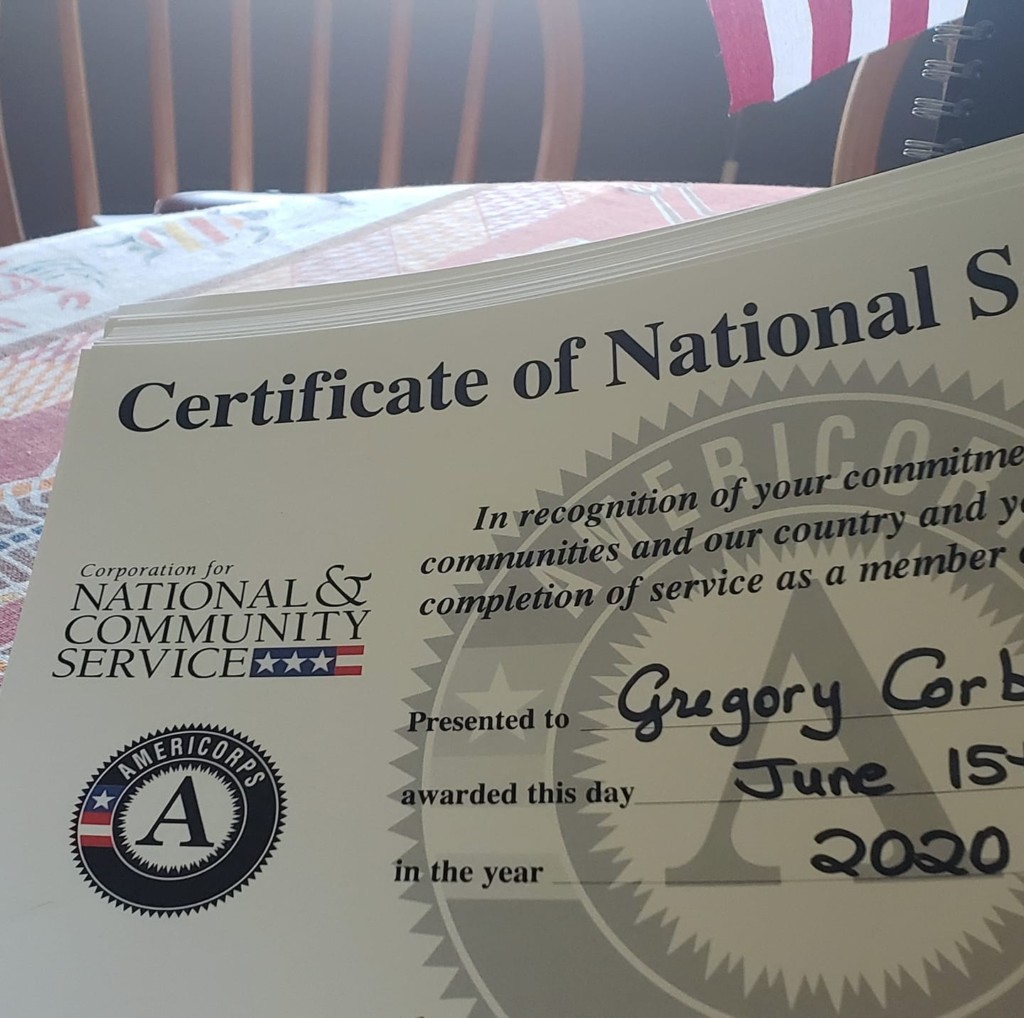
Every child needs one on one attention, especially struggling students, who battle to believe in themselves. Project CHANGE is dedicated to the 5C’s curriculum that says every student needs to grow in Confidence, Curiosity, Collaboration, Courage and Career/future focused learning. Guided by internationally known teachers, the best narrative and coaching faculty in the region, the Project CHANGE 2020-21 team will serve together to tackle the COVID19 challenge to learning. By serving directly in schools and in after-school programs with leading non-profit organizations, AmeriCorps members commit to a year serving students so that they not just catch up, but “catch on fire” with their own love of learning.

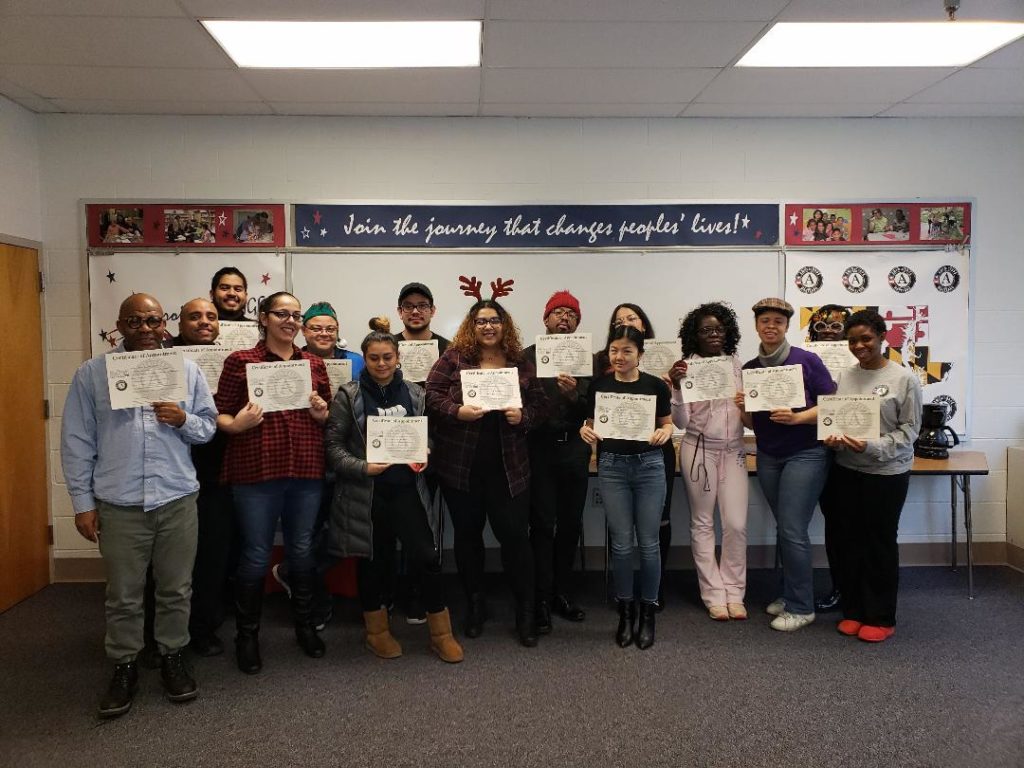
For 20 years, AmeriCorps Project CHANGE Montgomery has combined a traditional AmeriCorps placement with the most innovative training and supervision drawn from the complementary disciplines of the narrative method and peer to peer executive coaching. 2020-21 will offer the same amazing faculty that includes Disaster Relief specialist Mary Fowler (Trauma informed teaching) performer and author Noa Baum, ( on how to tell a story) Therapist Jonathan Zeitlin ( Mindfulness and Zen) executive master coach Lynn Feingold ( the art of peer to peer coaching) Lockheed Martin retired manager John Dold ( Building a Team) author and Professor, Dr. Jean Freedman ( How Improv can improve performance) Women’s Business Coach, Maria Mcelhenny ( financial Literacy ) and many others. This outstanding team has been brought together under the leadership of world authority on narrative method and Project CHANGE director, Paul Costello.

Project CHANGE Montgomery is the original Montgomery County MD program of AmeriCorps, America’s “Domestic Peace Corps.” Because this year is different, the new team will form a specialist MCPS task force to help lead on the COVID19 response. Places are available from mid August 2020 to mid-August 2021. Members serve the county’s most under-served K-12+ students inspiring them to believe in themselves enough to achieve. Project CHANGE uses its own Phone App called MYSCORE, the innovative SEL tool that allows students to self-assess their growth in the 5C’s and reach out to the members to help them grow more confident, curious, collaborative, courageous and career/future focused learners.

In return, members receive training, a living stipend, a 6K educational scholarship, health benefits, professional mentoring, a team of supportive peers, connection to AmeriCorps alumni, preference in hiring for many organizations, and overall a life-changing experience. Positions are full time (1700 hours over 12 months) and two positions are Half Time (900 hours over a year.)

Assignments in Montgomery County’s Project CHANGE include the following outstanding nonprofit and educational organizations:

  • Montgomery County Public Schools: 7 POSITIONS ACROSS MCPS

Project CHANGE places 6 members Full Time and two members Half Time in the MCPS school system where students need the most support and would most benefit from a committed mentor. Members serve as Teacher’s assistants in the classroom.

Listed are some of the placments of previous years:

Kemp Mills Elementary School ( In classroom support for bi-lingual grade 5s)
Brown Station Elementary School ( In classroom support)
Jackson Road Elementary School ( In classroom support)
Kings View Middle School ( In classroom support)

Gaithersburg High School ( assist ESOL and METS program students)

Thomas Edison School of Technology CREA ( assist 18-21 with GED-work readiness)
George B Thomas Learning Academy ( assist Saturday school classes)
Seneca Valley High School CREA ( Assist CREA program)
MCPS Restorative Justice Unit ( Assist head office run program)

OTHER PROGRAM PARTNERS

YMCA-Benchmarks
Member serves in a Middle School program based at Sliver Creek Middle School in Kensington and supports 25 middle schoolers from high needs communities.

Community Bridges
Up to four members serve over 350 girls from Grade4-14 with an after school program that helps empower girls to succeed.

Caring Matters
A member serves with Caring Matters to run Good Grief Clubs that are grief support groups in schools to help students who are dealing with the loss of a loved one.

Family Learning Solutions
Up to two members assist students in middle and High School overcome the achievement gap and learn healthy ways to grow and succeed.

Montgomery Housing Partnership
Familes that live in MHP affordable housing communites are served by MHP community centers where students gather for after school programs for K, elementary and middle school. Members help staff and run these centers.

All applicants must be high school graduates and American citizens or permanent residents. Send a copy of your resume and a letter of interest and be prepared for an interview over may-June.

Job Type: Full-time

Salary: $18,000.00 /year

The Road to COVID-19 Recovery Is Long—But AmeriCorps Can Help

VAN NUYS, CALIFORNIA - APRIL 09: Volunteers load food into a recipient's trunk at a Food Bank distribution for those in need as the coronavirus pandemic continues on April 9, 2020 in Van Nuys, California. Organizers said they had distributed food for 1,500 families amid the spread of COVID-19.  (Photo by Mario Tama/Getty Images)

Stabilizing and growing AmeriCorps can speed our return to a healthy society by providing a meaningful boost to many young people’s careers, delivering necessary supports to the communities most impacted by the pandemic, and maintaining the strength of the nonprofit sector.

Emma Vadhera and Daniel Edelman in Next 100 from Century Foundation

While far from a silver bullet solution, expanding national service programs like AmeriCorps should be a core component of the recovery agenda. AmeriCorps members are already helping our country through this time, supporting the continuity of food access and learning, keeping homebound seniors connected, and so much more. Stabilizing and growing AmeriCorps can speed our return to a healthy society by providing a meaningful boost to many young people’s careers, delivering necessary supports to the communities most impacted by the pandemic, and maintaining the strength of the nonprofit sector. Moreover, it will do so at a net savings to taxpayers, with a dollar invested in AmeriCorps recouping over two dollars from higher tax revenues and reduced spending on social programs over the long term. When one also counts gains to society in health, education, and productivity from AmeriCorps members’ participation and service, the value of benefits gained for every dollar invested grows to over $3.50. Read More.

America Needs a National Service Draft Now to Fight the Coronavirus

A World War II-era postcard.

BY CHARLI CARPENTER | APRIL 7, 2020, 5:14 PM FOREIGN POLICY

My son, Liam, turned 18 in March, just as schools and universities were closing and stay-at-home orders began proliferating. On the day U.S. President Donald Trump declared war on the coronavirus, we received Liam’s selective service card in the mail. Were this a real war, Liam and his friends could have been called up to go off and risk their lives. Instead, he and millions of high school seniors and college students had just been instructed, by political leaders, school authorities, and the media, to do their part to beat this virus—by staying home. As a popular Facebook meme read: “Your grandparents were called to war. You’re being called to sit on your couch. You can do this.” Read More

Expand National Service Programs to Respond to COVID-19

Reed Seeks to Expand National Service Programs to Respond to COVID-19

4/22/2020 — Senator Reed

WASHINGTON, DC — In an effort to mobilize the power of national service, assist communities in need, and put more Americans to work combating the novel coronavirus (COVID-19) and building a better future, U.S. Senators Jack Reed (D-RI)Chris Coons (D-DE)Amy Klobuchar (D-MN), and Tammy Duckworth (D-IL), and several others are announcing new legislation to expand national service programs as the country works to respond and recover from the COVID-19 pandemic.

The Pandemic Response and Opportunity Through National Service Act would fund 750,000 national service positions over a three-year response and recovery period, in part to meet the projected need for as many as 300,000 public health workers.  The bill would also help grow the next generation of public service leaders by expanding partnerships between AmeriCorps and federal health agencies, and increase the AmeriCorps living allowance to ensure all Americans can step up to serve regardless of their financial circumstances.  The Senators are actively working to include this bill in the next COVID-19 relief package set to be considered by the Senate. Read More

A national service response to a national disaster

We can’t spend our way out of our problems, but we can serve our way out of them together.

Roll Call- By AnnMaura Connolly and Eric TanenblattPosted May 6, 2020 at 1:48pm

Faris Albakheet, left, of Busboys and Poets, and Robert Laster of Saval Foodservice, distribute free food to restaurant industry workers affected by the coronavirus pandemic at Fourteenth and V Streets Northwest in Washington, D.C., on April 17.  (Tom Williams/CQ Roll Call file photo)

The crises the United States knows best — fires and floods, hurricanes and tornadoes, school shootings and mass violence — have all been proximate to individual communities or states.

Government and civil society are prepared for this backyard disaster paradigm because we’ve been called to respond to so many before. But the coronavirus pandemic is a uniquely national crisis affecting every nook and cranny of the country, and policymakers have struggled to develop a “whole of America” response.

Predictably, the gut reaction in Washington has been to spend money — lots. But even as Congress writes trillion-dollar checks to stabilize the economy, the unprecedented strain on our health systems, schools and essential public services is so acute that stimulus alone won’t be enough.

America will need to tap a well far deeper than its treasury if it’s going to pull itself out of this hole. We’re not going to spend our way out of these problems, but we can serve our way out of them together. Read More

We Need National Service. Now

By David Brooks Opinion Columnist May 7, 2020 New York Times

There is now a vast army of young people ready and yearning to serve their country. There are college graduates emerging into a workplace that has few jobs for them. There are more high school graduates who suddenly can’t afford college. There are college students who don’t want to return to a college experience. This is a passionate, idealistic generation that sees the emergency, wants to serve those around them and groans to live up to this moment.

Suddenly there is a wealth of work for them to do: contact tracing, sanitizing public places, bringing food to the hungry, supporting the elderly, taking temperatures at public gathering spots, supporting local government agencies, tutoring elementary school students so they can make up for lost time. Read More

Dealing with the COVID19 Crisis

5 Crisis Management steps for PMs to take during hardships

AmeriCorps Project CHANGE continues to serve the students of MCPS even though the school system has switched to the virtual classroom. We hope all our partners and members and the students they serve and all their families stay home and stay safe.

Montgomery County schools struggling to meet the needs

Recent reports in the Washington Post relate the disturbing news that the MCPS school system is struggling to keep with the needs of students and that attempts to address the achivement gap are not effective, says the report.

“Despite attempts by Maryland’s largest school system to close achievement gaps between black and Latino children and their white and Asian peers, those differences have barely budged in recent years, a new report finds. “

A more recent Editorial in the Post repeats the same message.


By Editorial Board Jan. 15, 2020 at 6:52 p.m. EST

THERE WAS a time, not so long ago, when Montgomery County was singled out for its efforts to shrink the achievement gap between black and Latino children and their white and Asian peers.“We are a tall tree in a short forest” was a favorite phrase of Jerry D. Weast, then the schools superintendent, noting progress as well as its relative enhancement by poor results elsewhere. Today, sadly, Montgomery County no longer stands so tall. Instead, like much of the U.S. education system, it struggles to devise solutions for the achievement gap. That should be a matter of urgent concern to school and county officials.

The lack of real progress by the state’s largest school district was spotlighted in a recent report from the county’s Office of Legislative Oversight. The report examined a variety of performance measures, including graduation rates, SAT scores and state exams, and concluded that gaps between black and Latino students and their white and Asian peers had not changed appreciably despite the county’s efforts over the years. “Largely ineffective” was the verdict of the report, which alleged that money earmarked to help students at-risk or from impoverished families was not properly spent.

School officials challenged the accuracy of the analysis. They say the examination of student progress is too narrowly focused and doesn’t take into account the system’s efforts to expand access of minority and low-income students to advanced courses. Undisputed, though, is that disparities persist, with low-income students concentrated in schools where there are higher numbers of less experienced teachers.AD

Demographic changes in the schools in the past decade — more students, more from low-income families, more who are English-language learners — present new challenges for the district and might partly explain why there has been less success in closing the gap than there was during Mr. Weast’s tenure. That, though, doesn’t let the schools off the hook. Montgomery County Schools Superintendent Jack R. Smith has called the achievement gap a “crisis in our community” and has developed new reporting tools to hold schools accountable for student outcomes.

Clearly, though, there is a need for doubling down on programs that produce results, jettisoning those that are ineffective and developing new strategies. Should there be more investment in prekindergarten? Should the system attract more experienced teachers to the needier schools with higher pay? Should the system’s experiment with a longer school year be expanded? Should school boundaries be adjusted so that schools are more racially and socioeconomically diverse?

Montgomery County, which has always prided itself on being a leader in education, needs to start leading again in this critical area.

Living Stories Revisited

Image result for Living Stories

….The stories that are shared in the plenary session are always powerful. People prove to be incredibly open and vulnerable. The day is so full of energy and engagement. Pablo, our co-host at Casa and myself observed that it’s like opening the valve of a story hose. People immediately want to meet and tell. But this is all the obvious stuff.  Something else is going on here but it takes some post-mortem reflection to understand what it is.

IT’S ALL ABOUT THE LISTENING
It is the quality of the Listening. That is the invisible mystery that perhaps we have not factored enough into our work and something that  has not penetrated deeply enough into our story community. What LS seems to do better than anything else is create a Listening Culture that ellicits the most powerful stories in the room. These stories are nothing like the spontaneous tellings that occur in our everyday conversations. They are tellings that grow with repetition because the listeners are invited into their co-creation. My colleague David Hutchins calls them Twice Told Stories but on Friday, they became Thrice Told Stories because the power resides in the iteration. Read More

Making sure you show up in your own story

Tomorrow we have our fourth Annual Storytelling Festival for the AmeriCorps programs of Maryland. Our hosts at Casa Maryland and Pablo Blank always provide a warm welcome in their amazing space.

Each year, we try different things and end with Living Stories, the signature process developed by Storywise.com over the past twenty years. Every time we invite people into this practice, we are amazed how much energy is released with the simple invitation for people to tell their own story in their own voice, to respectful and appreciative audiences.

Tomorrow, we will introduce some of our latest work that we call POND, the Principles of Narrative Design. Members of AmeriCorps are creating a new story, one that will lead to enduring memories of how they dedicated a year of their lives to serve their community. That is a remarkable story in and of itself.

But four months in, the members will be invited to map out the journey as one that goes through the predictable Beginning- Middle-Ending axis of coherence, where
-Beginnings hold the creative space,
-Middles hold the Complication and Recommitment space, and
-Endings hold the completion space.

If you want to have a great story at the end, design it from the beginning. Don’t leave it to chance. That is what POND teaches us.

Tomorrow, we will push the chairs aside, open up the room so space has a voice. We will ignore the Power Point and shut off the phones, and invite the members to walk back into the story of their service, retracing WHERE it began, ( not why or when) and then walk into the space that reveals their expanding horizon of possibility. We will ask the magic question “What do you know from here that you did not know from there that will help you get to where you are headed?”

Image result for where to?

We get so tangled up in the Why or the How. We forget a far more important question- Where? We start with WHERE. Even that word “question” is loaded with the same insight because it contains a “Quest,” which wikipedia calls “a long or arduous search for something.” To ask a question is to be going somewhere.

Our other focus will be to invite stories that go beyond excuse and blame, stories of the decisions and choices that members made to get this far and the decisions and choices that lie ahead. Too often, our lives in the telling sound like experience after experience, “this happened” and then, “this happened,” or as one writer put it, “one damned thing after another.” But this only masks the character in the story who is walking the road and deciding which path to take. Even deciding to take no path is deciding on a path. Decision comes from the same word as “incision” meaning cutting off one option to pursue another. A choice of a path is a choice about what story you get to tell.

We may not be the sole creators of our history as we live it, but we are the creators of our own history in how we choose to remember it. Though our lives can be assaulted by enormous challenges, we are a species that knows instinctively that how we tell the story is how we manage to name and tame our chaos, how to get beyond it and how even to transform the most painful memories into moments of epiphany.

We will ask members to share from three directions:

1) Go to the place that holds the story of your decision to serve at the beginning- the Genesis story or origins.

2) Go to the place that holds the stories of your decisions you are having to make every day to honor and deepen that commitment- the Exodus story or passage.

3) Go to the place where this decision might grow into something about the kind of life you are choosing to live, the kind of world you are choosing to create, and most of all, the kind of person you are choosing to become. That is the story of Revelation.

We joke at storywise that before 35, you can blame parents and family and circumstances all you like but there comes a time when you have to grow beyond that and stop showing up as a prop in someone else’s story. Its time to show up in your own- the story of your fateful, faithful choices.

Surely, your choice as a member of AmeriCorps to serve, to put your other life on hold, to live on a barely livable allowance, all in the name of a higher good that you are bringing into the world is a story worth showing up in.

See you tomorrow.

Image result for show up and shine