 Posts by Paul Costello1
What if the achievement gap was a symptom of something bigger, something more basic than just students failing exams or dropping out? What then?
What if students fail or succeed due to circumstances and contexts over which they have little or no control? What then?
What if as spirited and motivated we are as educators to remedy the problem, we might be as much part of the problem as we are of the solution? What then?
What if all our precious presumptions about equality and justice make us blind to reality, and that our belief that students, given the same opportunities, rise or fall based on character or will power or grit is nothing more than a softer expression of hard discrimination? What then?
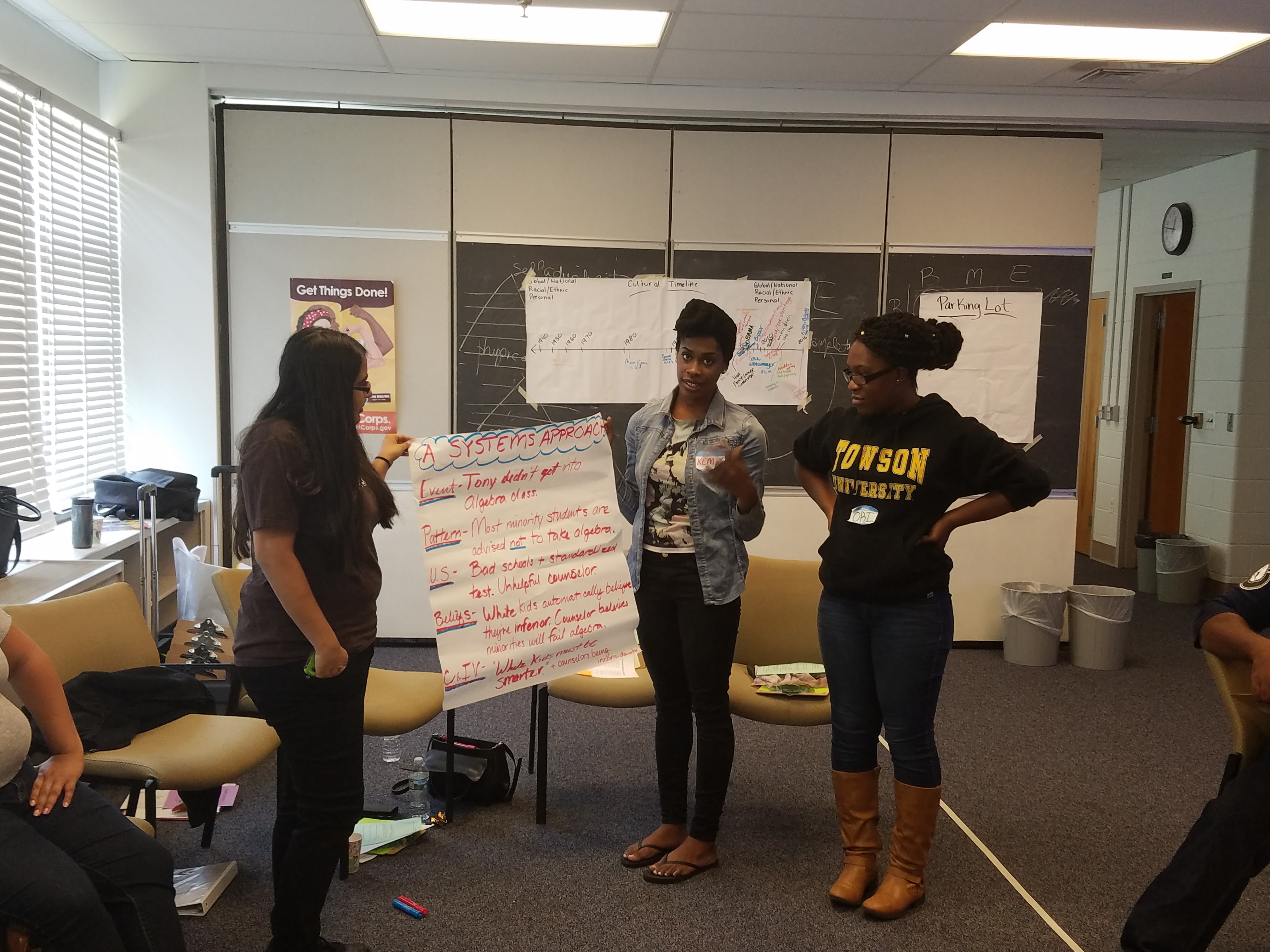
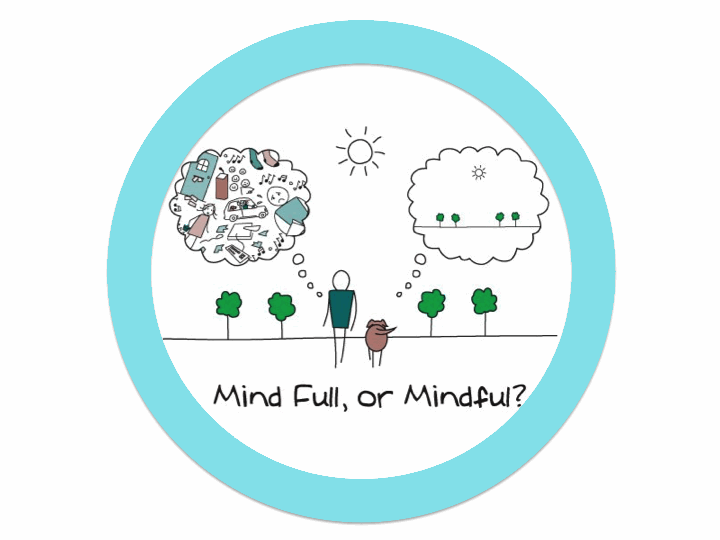
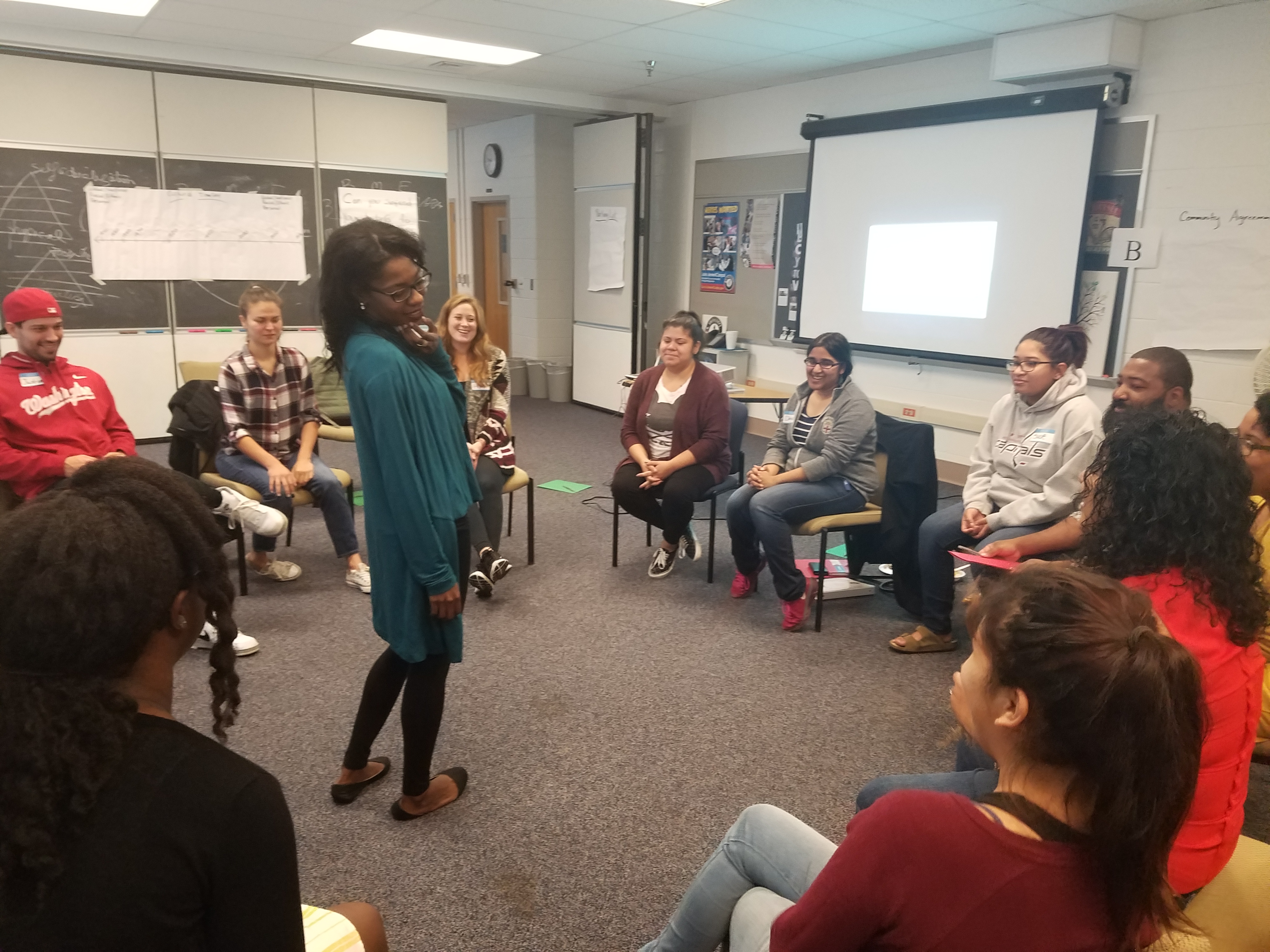
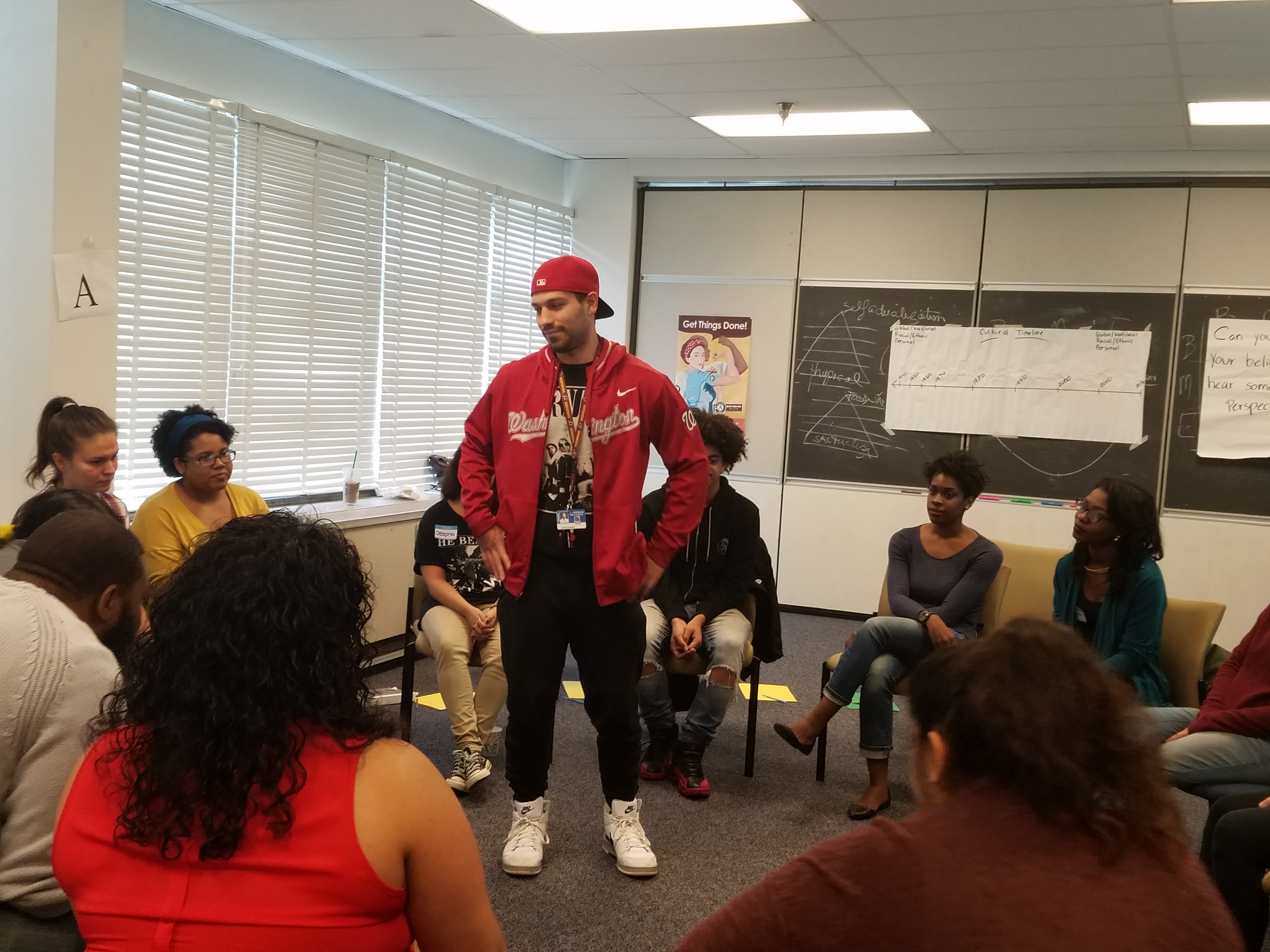
Project CHANGE today experienced Part Two of the powerful Study Circles method. We in the helping and teaching professions can get so outward focused, we feel its a luxury or navel gazing to take some time doing some serious self-reflection on our practices, beliefs and goals. But we have to be reflective practitioners if we are keep our own learning alive. Last week, the team learned some basic techniques of mindfulness, to quiet that noise and focus on being, not doing. It was a perfect complement to the session today, when we took a pause to look at our own stories where race and prejudice may have got in our way and the way of our students.
The team were asked to take a ‘systems approach’ to the problem, to focus less on instant fixes 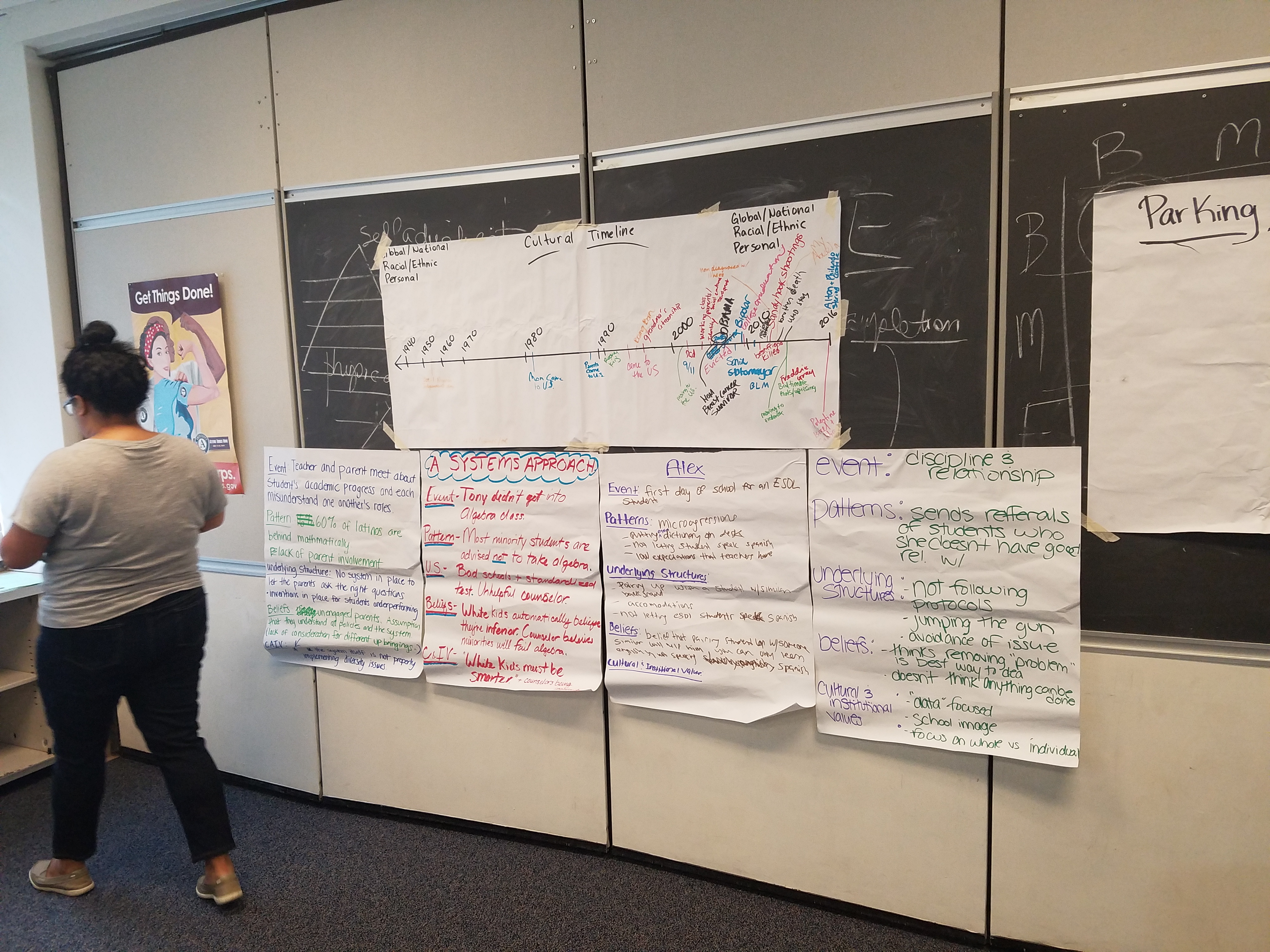 and more on what behaviors and attitudes feed the problem, and what gets in the way of us getting a handle on it. There is so much to learn, and so much to unlearn.
As Marion Wright Edelman said to us in an event two years ago, “Every child has the right to feel they can achieve and be successful.” If we create a system that tests and tests and tests, to screen out failure from success, or if we serve a culture that overlooks young people’s developing bodies, minds and souls, to privilege aptitude over attitude, then we are creating more failures to fix. We are like that ingenious Irish fire brigade who to avoid unemployment, tried lighting the fires they then went to put out.
Today was hard. There was some heavy lifting, some hard topics, some tears, even some anger, but Yesenia led us through with great calm and compassion. She knew what the Project CHANGE team might be feeling, because three years ago, she was in the room not as a facilitator but as a member of another great AmeriCorps Team.
Thank you Yesenia. Thank you John Landesman and Study Circles. Thank you CHANGE team for the courage to have a fierce conversation.


 ember is a time for new beginnings. School is back in business and so is Project Change, with five more member slots than before, and new partners to join the collaborative work that CHANGE has been doing in Montgomery County for the past 16 years. We want to thank our MD State and Federal funders for their vote of confidence in what we are doing.
 ging with endorsement and gratitude. Here are some of the comments we heard:
 u might live in a big city that tourists pay a lot of money to come see, and not ever do what the tourists do. Such was the case today when Project CHANGE took time out to visit the Lincoln Memorial, and walk through to the MLK and FDR memorials to end at the Jefferson Memorial on the Tidal Basin. For some members, though they are locals, this was their first visit.
 To spend time in such inspiring places was in keeping with the mission of Project CHANGE. These great statues were first built to remember history, but then become places where new history is also made. The stories that matter are ones that keep growing new chapters. Of course, the CHANGE team don’t see themselves in the same class as these great heroes, but nevertheless, they are part of that unfolding story of leadership through service of something greater than oneself. Well Done Project CHANGE.