Jennifer Martin is president of the Montgomery County Education Association.
The best part of my job as president of the Montgomery County Education Association (MCEA) is stopping by schools to talk with colleagues about their experiences on the front lines in public education. While there, I also get to observe and chat with students. Every school visit reinforces the sense of pride I feel in the skill and dedication of my colleagues and reminds me what an honor it is to be entrusted with educating our county’s children.Sign up for a weekly roundup of thought-provoking ideas and debates
At a high school, I struggle to keep up with the lanky young man whose stride is easily four of mine as he guides me through the halls and offers his opinions about life. At a middle school, I weave through groups of kids as they verbally jostle to impress each other and scurry or saunter between classes. I am reminded then how a 13-year-old’s bravado covers a host of teenage insecurities. And at an elementary school, little ones peer up at me quizzically and offer shy waves as they line up outside their classrooms waiting to be escorted to the next activity. Their trust, openness and curiosity are beguiling.
But each visit also emphasizes the weighty burden that educators shoulder to make schools welcoming, safe and powerful places of learning for students. Educators are beleaguered and exhausted. Our county must do much more to support their work.
Teachers have been whipsawed over the past two years by those who praise them for their heroism and others who cast unfair blame for months of school building closures that forced us to become instant experts in running virtual classrooms. The return to the school buildings didn’t end the challenges and fears — in fact, the job is pushing many to the breaking point as they cope with staffing shortages while they strive to address the increased challenges our students and families experience.
To meet the needs of every child, we must do right by the educators who teach them. A recent Education Week article described the national problem of education staffing shortages caused by poor working conditions and overwhelming workloads. These same problems exist in our county, where this month hundreds of classroom positions still remain unfilled. Many staff members have expressed that this will be their last year in the system — and the profession.
Educators are tired of sacrificing countless unpaid hours beyond their workday to fulfill their duties. They are tired of neglecting their own families’ well-being because of work pressures. They are tired of struggling to pay down student debt and find housing they can afford. And they recognize that they possess skills that are highly prized and better paid in other sectors of the economy. As a result, many current teachers are eyeing the exits, and very few college students are now pursuing careers in education. We must increase our commitment to the people who seek to do this crucial work.
Throughout these two years of hardship, the 14,000 members of the Montgomery County Education Association have leveraged their collective power to move mountains to better serve students. They have fought for policies such as adequate student preparation and planning time, wage increases to incentivize and retain educators and substitute teachers, and increases in mental health staffing in schools.
Now is the moment to renew our county’s commitment to giving our students the schools they deserve. Emerging from two years of a health crisis and into a time of managing covid-19, students, families and educators recognize the need to invest in our schools and the people who do the work of educating students. The MCEA calls on our elected county leaders to commit to that investment.
One has already answered that call. Montgomery County Executive Marc Elrich (D) released a budget that seizes the opportunity to build back better. Supplying nearly 99 percent of what the Board of Education requested, Elrich’s budget is designed to give teachers and students the support they need.
The Montgomery County Council now has a duty to approve this budget so that educators have the time, resources and working conditions needed to nurture and develop the full potential of our students. Our children’s success and our county’s future prosperity depend on it.
Fading candles, a ‘sad’ horse: Students process pandemic with quilt
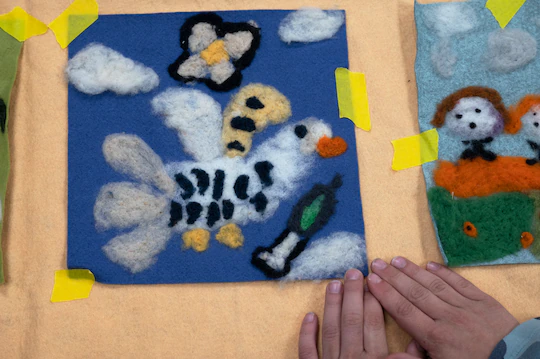
The quilt block depicted a dove flying through the sky, a coronavirus vaccine in its talons.
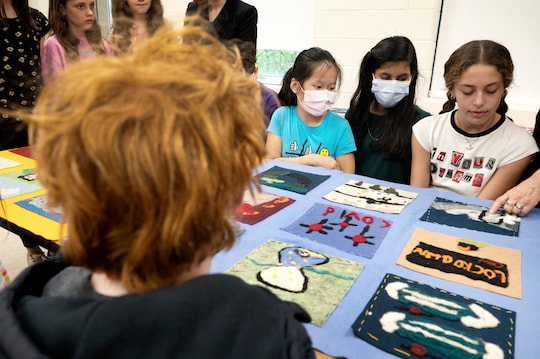
The dove, created using dyed merino wool, was dropping the vaccine over the world, Max Tolka, 10, explained to his classmates at Bannockburn Elementary School on Thursday. The artwork represented his hope that the pandemic would nearly be over.
“It took a while, but eventually it’s going to end,” Max said. “You’re almost there.”
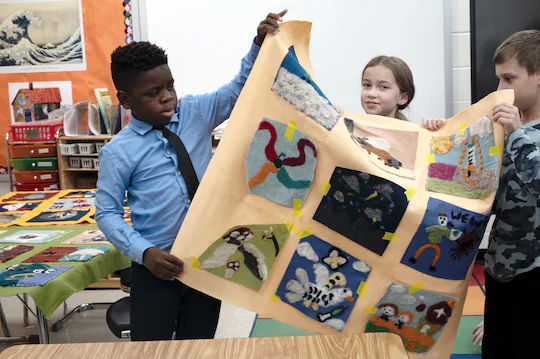
The block is among 133 decorated by fourth- and fifth-graders at Bannockburn Elementary School in Bethesda as part of a months-long project to help the students document their feelings about the pandemic. Together, the blocks will form a 45-foot-long, three-foot-tall quilt.
“We gave kids time to actually reflect on the experience,” said Emily Thaler, Bannockburn’s art teacher.“During school, we’re mostly focusing on academics, whereas this time, they’re really able to express themselves in an artistic way and show how they really felt.”
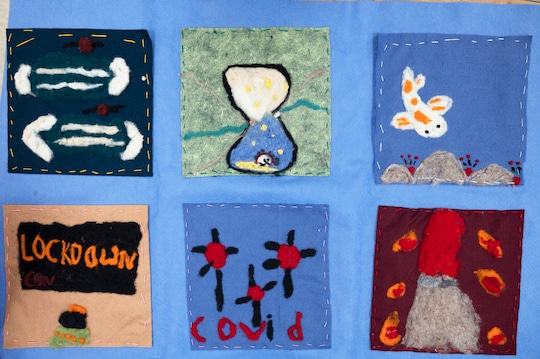
A lot of the students’ artwork shared how alone they felt during the past two yearsand how much they missed their friends and the normal school experience. Some depicted how they felt like the pandemic was an experience that would never end. And then there were students like Max, who tried to capture the hope the vaccine would have on their futures.
Nathan Satlof, a fifth-grader, divided his block into six smaller panels that chronicled his experience at the beginning of the pandemic until February when the class started the project. The first panel showed a candle burning, the flame gradually dimming through each frame. He told his classmates he felt like he was the candle. He hadn’t contracted the coronavirus for a while, he said, but in January, he tested positive. The fading flame represented how eventually, he just “burnt out,” he said.
Emily Winningham, 9, told her peers she chose to illustrate a horse in a stable in herblock, since she loves the animal. But the horse was “sad, because he didn’t have any friends,” she said.
“If you’re in fourth or fifth grade, that’s a huge percentage of your short life that has been taken up by this experience,” said Katherine Dilworth, a visiting visual artist from Baltimore-based nonprofit Arts for Learning Maryland. “It was interesting to watch them talk about in their images, talk about how hard it’s been, but also, there were little inklings that maybe this is going to be the end.”
Dilworth collaborated with Bannockburn’s teachers on the topic, which would help the students also learn about metaphors and how to depict them through art.
The students wrote poetry in their homeroom teacher’s class that captured how they felt throughout the pandemic. They then brought the poems to Dilworth, and looked at New Yorker cartoons and other sources of inspiration to figure out what images they wanted to use. Once they were ready, they created a sketch.
Dilworth then taught the students needle felting, an art form that uses dyed fleece from an animal and special needles to create different images. The needles have a point and tiny barbs at the end of the shaft. When it’s stabbed into a background material — which in this case, was cloth — the barbs catch on the fibers and smooth it out. Unlike sewing, no thread is involved.
“It’s almost like you’re able to sculpt with your needle,” Dilworth said.
Felting is an obscure art form, so many of the students didn’t know how to do it, Dilworth said. But she said that made it easier in the classroom because everyone was able to start from the same place. Students who weren’t typically successful at other art forms took to this, she said.
Mason Qiu, 10, pointed to his quilt block, which showed a coronavirus cell taking over the Earth “because coronavirus felt like it was overpowering — there was nothing we could do,” he said. Smaller coronavirus cells were rotating around the planet in space. Mason said he probably would have made those smaller, but he had “needle problems,” he said, though he liked experimenting with how the wool functioned.
“The wool sometimes decides, ‘Hey, I’m not going to do what you want. I’m going to suddenly fluke this way,’ ” the fifth-grader said. “It’s pretty fun.”
The students used dyed merino wool to construct their quilt blocks, and each took roughly four days to make. Some of the students have been taking panels home to sew them together with other family members. Others have gone to Thaler’s classroom during their lunch periods to help, like they were doing on Thursday.
“Do you guys feel different about the pandemic than when we were making it?” Dilworth asked the class. “Because I feel like we made it in February, and a lot has changed.”
A lot of the children nodded their heads. When they started constructing the quilt, the omicron variant had been sweeping across the D.C. region. Many schools shifted to virtual instruction to curb the spread of the virus. But now that caseloads were down, they were back working together, only a few of them were wearing masks.
“We can, like, get closer and collaborate more than we used to,” one student said.
“Physically, the masks are being taken off,” another student added. “It’s a lot easier to breathe. But mentally, we’re still recovering.”
The quilt, once completed, will be displayed in the elementary school.
National Volunteers Week- “from charity to justice”
Today begins National Volunteer Week where we shine a light on the enduring contributions of volunteers and celebrate the generosity of spirit that each of them embodies. Volunteerism and service is a quintessential American value, that unites individuals from diverse backgrounds to make an impact on challenges big and small. From schools and shelters, hospitals and hotlines, to civic, nonprofit, and faith-based organizations across the country, Americans from all walks of life volunteer together for a better future.
For decades, AmeriCorps has worked to make service to others an indispensable part of the American experience. Each of you has played an important role in our collective impact whether it was making volunteer opportunities more equitable and readily accessible or raising your hand to serve in your communities in times of tragedy and triumph.
Service can take us on a path from charity to justice. Whether people are donating to a food bank or advocating to change policies that address food insecurity, their service matters. We owe a debt of gratitude to every volunteer who continues to shape both our neighborhoods and our nation.
As Americans, we belong to one another. Our destinies are connected and each of us has something to give. That’s what makes a more just and fairer world attainable. This week, I hope that all who can, will join me and our fellow neighbors in giving back to your local community, celebrating those who volunteer, and making a commitment to a lifetime of service. Please use the resources below to support your efforts.
Saw @TheLionKing tonight. What a joyous and triumphant show!! Brilliant casting and superb production values. Congrats to all involved!@louendicottWho’s seen #TheLionKing in #NYC? Amazing show! I can’t believe I waited this long to see it!! Thanks for a great time@MrDrewScottHad a great day @TheLionKing what an amazing show from start to finish, I had goosebumps from the moment the show began@BoJain1985Had a fabulous time @TheLionKing. So creative, clever, emotional and funny. And thanks to all performers who give up weekends for Sun mats!@KTL01Saw @TheLionKing tonight. What a joyous and triumphant show!! Brilliant casting and superb production values. Congrats to all involved!@louendicottWho’s seen #TheLionKing in #NYC? Amazing show! I can’t believe I waited this long to see it!! Thanks for a great time@MrDrewScott
A PERFECT MARRIAGE OF ENTERTAINMENT AND ART.NEW YORK DAILY NEWS
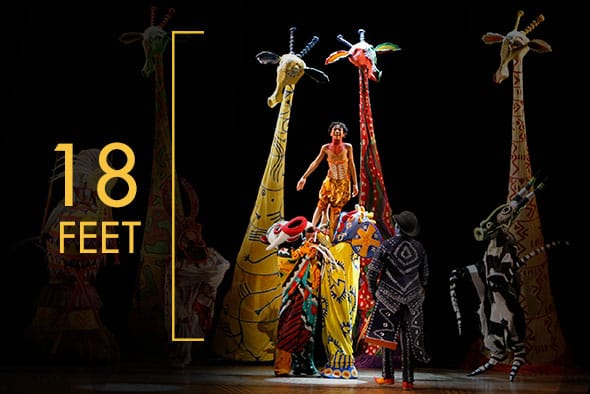
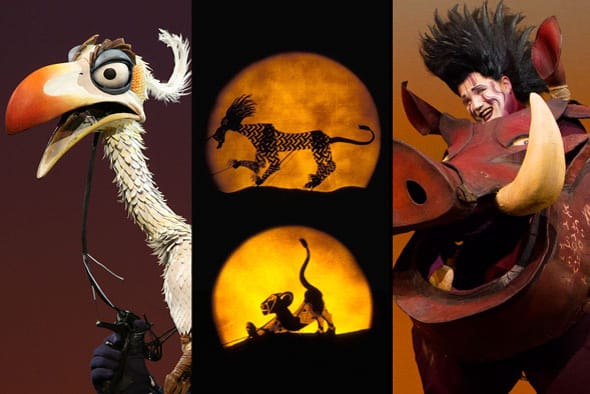
There are 6 indigenous African languages sung and spoken throughout the show: Swahili, Zulu, Xhosa, Sotho, Tswana, Congolese
HEAR FROM THE DIRECTORVIEW BEHING-THE-SCENES PHOTOS Still can’t stop thinking about the amazing performance last night at @TheLionKing. Loved every second of it!@LibbiWalsh@TheLionKing awesome awesome awesome! Can’t wait to see it for a third time!!@DimasRodeelaSeriously though everyone go and see @TheLionKing musical it is life changing@zeranyabiancaSafe to say @TheLionKing is the best show I have ever had the pleasure of witnessing! Left speechless from start to finish!@KatyMmorganStill can’t stop thinking about the amazing performance last night at @TheLionKing. Loved every second of it!@LibbiWalsh@TheLionKing awesome awesome awesome! Can’t wait to see it for a third time!!@DimasRodeela
Ambition to become a dancing lion has never been greater @TheLionKing@LouisMarguerite@TheLionKing #yeg Pretty freakin’ amazing! I could listen to these guys sing all night #InAwe #MusicToMyEars@RchESsnHAVE CRIED IN EVERY SINGLE SCENE OF @TheLionKing. Except for “Be Prepared” but that’s because I was too busy lifting my jaw from the floor@alit12@TheLionKing was simply amazing! It made me cry, laugh and gave me goosebumps! #breathtaking@BethJackson09Ambition to become a dancing lion has never been greater @TheLionKing@LouisMarguerite@TheLionKing #yeg Pretty freakin’ amazing! I could listen to these guys sing all night #InAwe #MusicToMyEars@RchESsn
THE MOST EXCITING, MOST INVENTIVE, MOST MOVING THEATER THAT HAS EVER COME TO BROADWAY.NEWSWEEK
Watch our 32-minute abridged version of our live guided tour.
Podcast Episode: Listen to tour guides Lori and Katherine discuss Central Park on an episode of our NYC Travel Tips podcast.
This podcast offers bite-sized audio clips with tips on how to plan your trip to NYC. You can get our podcasts on Apple, Google, or wherever you get your podcasts.
WHAT TO DO IN CENTRAL PARK
This tour covers about 5 miles (8 km), so you may want to split your visit in half.
We have designed this tour to give you the options and directions you need to stop at 79th Street or continue north.
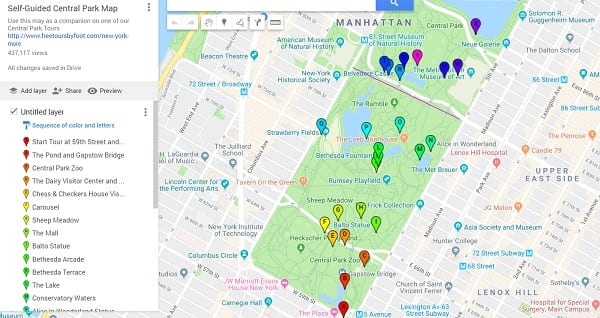
Enter the park at the southeast entrance (59th and 5th Avenue) across from The Plaza hotel. Walk up East Drive and you will see on your left the first stop on the tour.
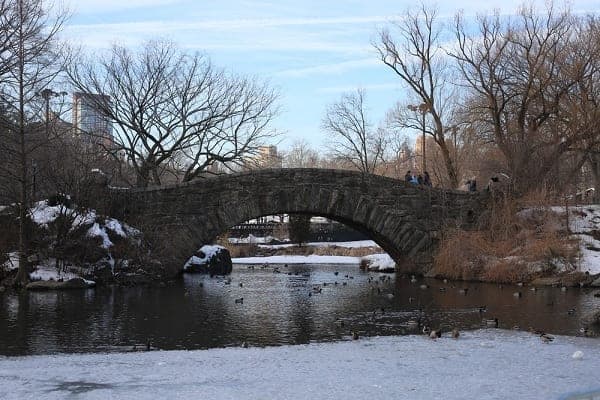
(B) The Pond and Gapstow Bridge
The Pond is the southernmost body of water in the park. It is entirely man-made and is fed from the city water supply system.
Gapstow Bridge arches over the Pond and offers one of the best views of Midtown from Central Park. It is a classic spot for a photo so have your camera ready.
It is also a popular location for marriage proposals to take place – so have a ring with you too!
Go north up the path and then head under the Inscope Arch towards the Central Park Zoo.
The Central Park Zoo happened by accident. It was not included in the original plans for the park but was started when New Yorkers started leaving “gifts” of exotic animals in the park.
The park found itself with a menagerie on its hands, including swans and bears. A couple of years later, the city decided to make it official.
The New York State Assembly recognized the Central Park Zoo, making it the second publicly owned zoo in the country.
The zoo has received two major overhauls. The first was in the 1930s when the zoo became the Robert Moses Zoo. During this renovation, the famous Sea Lion Pool was added.
This pool was considered groundbreaking because the designer actually studied the habits of sea lions and tried to make the pool resemble their natural habitat.
The next renovation occurred in the 1980s when the old-fashioned menagerie cages were taken out and replaced with natural, open habitats.
Many of the larger animals were moved to the Bronx Zoo. The Sea Lion Pool was redesigned and remains the central feature of the zoo.
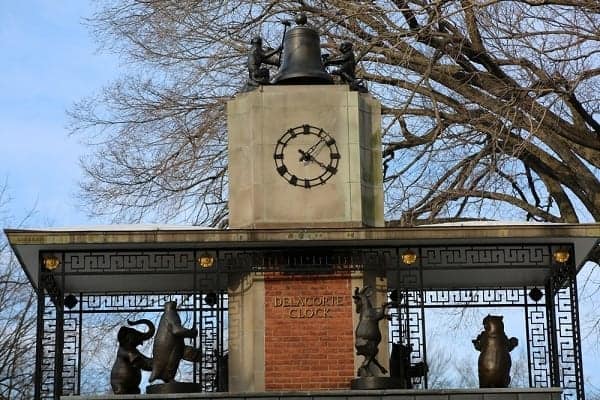
On the way out, make sure you check out the Delacorte Clock.
The clock was donated by George Delacorte and features animals that move in a circle to nursery rhymes every half-hour. (The clock plays 44 different songs!)
From the Zoo, walk north East Drive until you reach the 65th Transverse and turn left (west) and walk a bit down til you find the next stop.
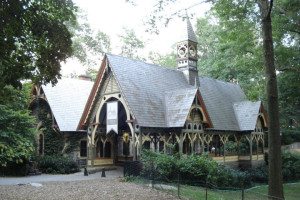
(D) The Dairy
This Victorian-style cottage was a functioning dairy when the park opened. This part of the park is known as The Children’s District.
One of the major criticisms of the Greensward Plan, when it was released, was that it didn’t contain enough features for children. The Dairy and other children’s attractions were then added.
The Dairy was a place where children and their caretakers could go for refreshment and a break from the outdoors.
The dairy, designed by Calvert Vaux, served fresh milk and ice cream in the nineteenth century.
By the 1950s the building was dilapidated and was used as a maintenance shed.
When the Central Park Conservancy took over in 1979 the dairy was restored to its former appearance and became the first Visitor’s Center in the park.
Walk a bit further on the 65th Transverse to find the next stop.
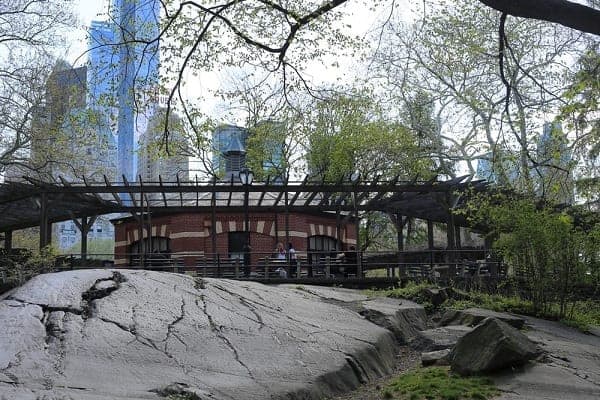
(E) Chess and Checker House
The Chess and Checker House is also considered a part of The Children’s District.
When the park was built, this was the site of the Kinderberg (children’s mountain). The Kinderberg was the largest shelter for children and their parents.
In 1952 the Chess and Checkers House was built to replace the Kinderberg. It was refurbished by The Central Park Conservancy in the 1980s when the shaded area was added.
Today, visitors are welcome to bring their own chess and checker sets or to borrow them from the Conservancy staff. Dominoes and backgammon are also available.
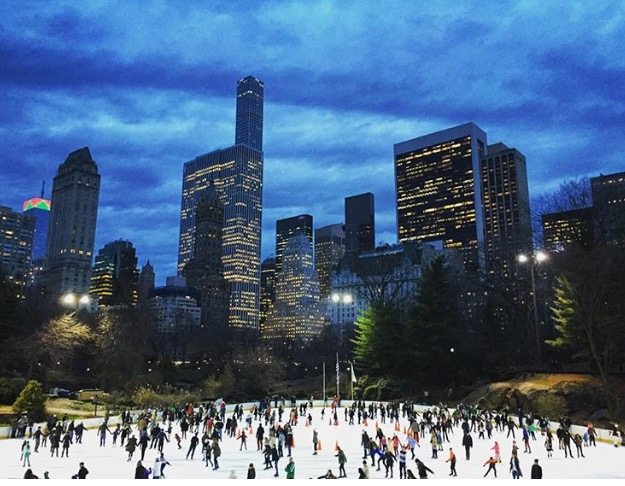
Look down the hill and check out the Wollman Rink, one of two rinks in Central Park.
The rink is seen in a number of films, including the final scene of “Serendipity.” Check out our post on ice skating in NYC!
Now head down the path and through the red and white brick archway to the Carousel.
(F) The Carousel
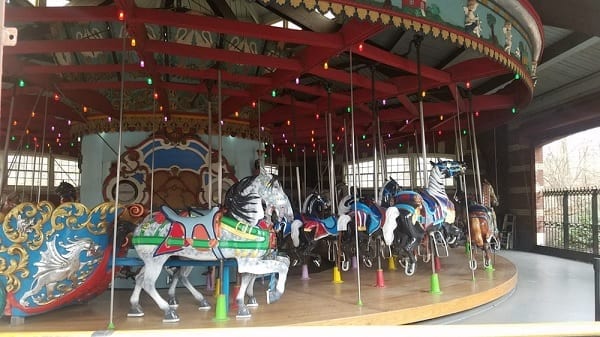
The beautiful Carousel is one of the most beloved attractions in the park. It is the 4th carousel to stand in the park.
The first one, opened in 1873, was powered by a horse or mule under the platform. It was trained to stop walking in a circle when the operator tapped his foot on the platform.
This original carousel was replaced in 1924 and promptly burned down. The next one also burned down in 1950.
The current carousel was discovered abandoned in a trolley terminal in Coney Island.
It was constructed in 1908 and is considered one of the finest examples of American folk art in the country.
It has 57 horses and plays beautiful calliope music. The carousel runs 7 days a week in the summer.
For carousel lovers, you should visit Jane’s Carousel in DUMBO. It is one of a kind with the best views of the New York Skyline just behind it.
Head north up the path to the Sheep Meadow.
(G) Sheep Meadow
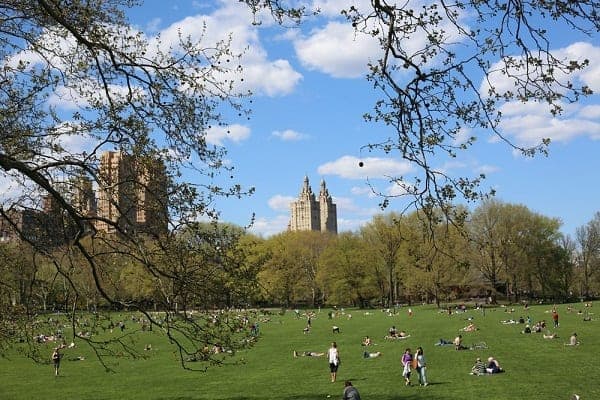
This massive grassy meadow got its name from the sheep that once grazed here.
The famous Tavern on the Green restaurant at the edge of the meadow was constructed as the Sheepfold in 1870.
The area was used for grazing sheep until 1934 when they were removed to Prospect Park out of fear that New Yorkers impoverished by the Great Depression would eat the sheep.
The area was turned into a lawn and the Sheepfold became a restaurant.
On weekends, this is one of the most popular locations for New Yorkers to come and relax in the sun. It can be so crowded you may not find a spot to sit!
But it is an amazing experience to see so many locals basking in the sun and taking in the best the city has to offer.
Head east along main paths and you will find yourself at The Mall.
(H) The Mall
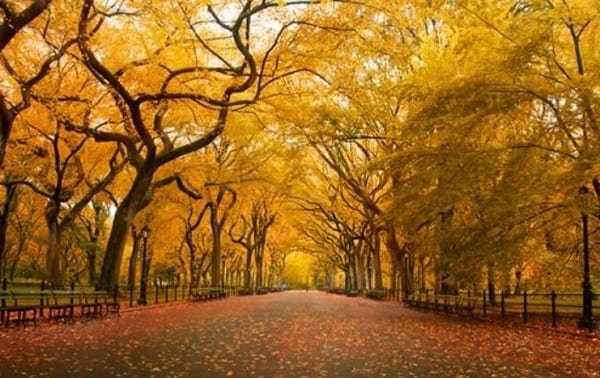
The Mall is the only path laid out as a straight line in the park. The designers did that so that there could be a big buildup leading to Bethesda Terrace, north of the Mall.
The American Elm trees that line both sides of the Mall, one of the largest collections of these trees in the United States. The trees create a “cathedral ceiling” over the pathway.
The Mall quickly became a popular spot for wealthy New Yorkers when the park opened. It was New York’s answer to Hyde Park or the Bois de Boulogne.
Carriages would drop people off at the start of The Mall and then loop around to the top to pick them up.
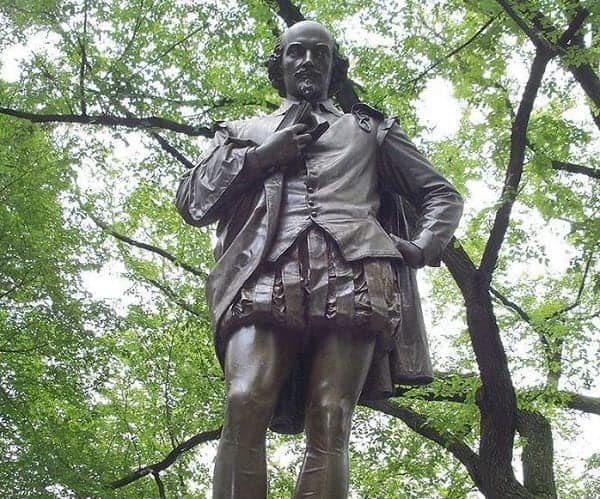
Also along the pathway is the Literary Walk, a collection of statues of famous writers. William Shakespeare is the first statue of the walk.
Many famous photographs and film scenes have been filmed here such as Doctor Who, Jessica Jones, Person of Interest, and the movie Enchanted.
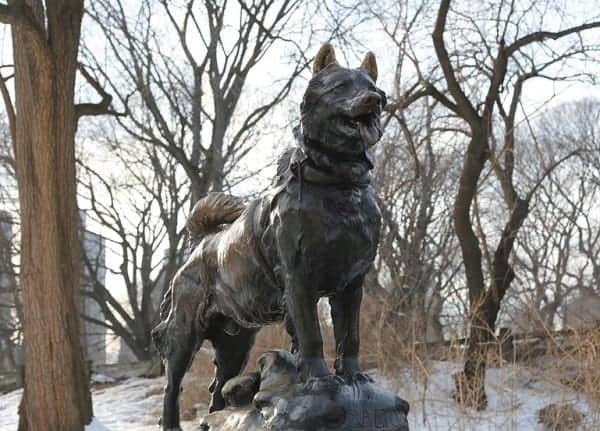
You can head up north along the Mall or, for dog-lovers, you can take a quick detour and walk east (crossing over East Drive) to see Balto.
(I) Statue of Balto
Head out of the zoo and then cut over towards the center of the park. Look for the statue of a dogalong the path!
This statue is donated to all of the sled dogs that participated in the Great Race of Mercy, a dogsled run that relayed diphtheria antitoxin to the town of Nome, Alaska in 1925, effectively saving the town.
Balto, the dog featured in the statue, was the lead dog of the final team. He was present for his statue’s dedication later that year.
The statue’s shiny appearance comes from all of the children in the park “petting” him!
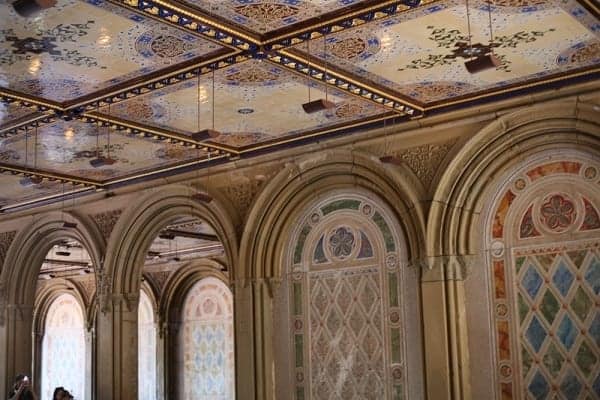
From Balto, double back to The Mall and head north. You will reach a set of stairs. Go down the stairs to check out the Minton tile ceiling in the Arcade.
(J) Bethesda Arcade
The underground Arcade was designed to be a contrast to the openness of Bethesda Terrace that it leads to.
Look up and see the spectacular ceiling, with 15,000 tiles made by the famous Minton Tile Company of England. The Bethesda Arcade is the only place in the world where these tiles are used for a ceiling.
The ceiling was designed by Jacob Wrey Mould, who also designed many of the decorative carvings seen on Bethesda Terrace.
It was completed in 1869 and the ceiling weighs around 50 tons, and over the years the tiles deteriorated.
In the 1980s they were removed and placed in storage. After many years and many donations, the ceiling was finally restored in 2000.
The acoustics in the Arcade is wonderful, so take a minute to enjoy whatever musician is performing there when you visit.
Above the Arcade is a terrace with great views. Surrounding the arcade is a large palazzo style area made of reddish stone. This is one of the most famous locations in Central Park right in front of you.
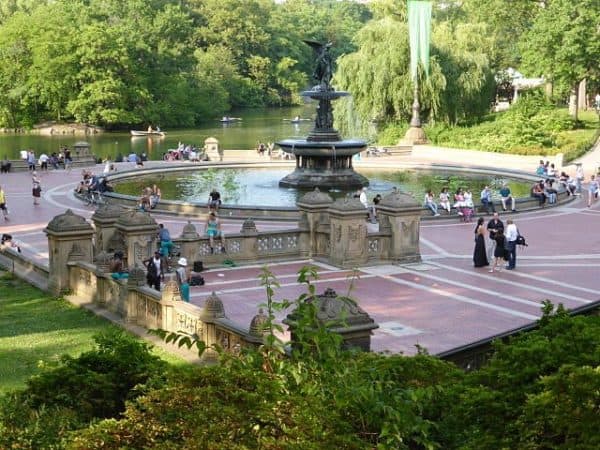
(K) Bethesda Terrace and Fountain
The formal terrace was considered the heart of the park by the designers.
The central feature is the famous Bethesda Fountain with its Angel of the Waters statue. This statue is the only statue in the park that was specifically commissioned for the park.
The terrace and fountain get their names from the Gospel of John, where a pool called Bethesda with healing waters is referenced.
This was all dedicated in honor of the Croton Aqueduct System, the water supply system that gives New York its drinking water today.
The creation of the aqueduct was a huge leap forward in New York’s development and it greatly reduced disease in the city and also helped decrease the number of fires in New York.
In the statue, the angel has her hand out, blessing the water for New York. The lily on her other hand represents the purity of the water.
This area is seen in dozens of films and TV shows, including Law and Order, Sex and the City, Enchanted, and Elf.
Fans of the Avengers will recognize the Terrace as the scene where they all depart from one another.
Just beyond the fountain, you cannot miss the very big and bucolic lake.
(L) The Lake
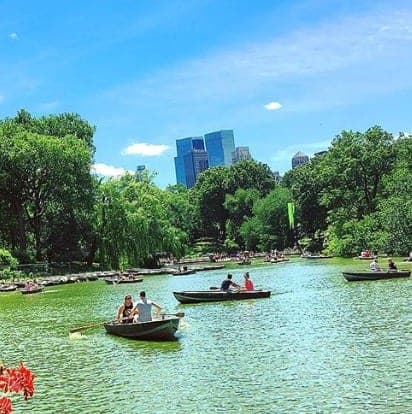
The Lake was used year-round in the early days of the park. Visitors to the park rowed boats on the water in the summer and ice skating in the winter.
The Lake was used for ice skating all the way up until the 1950s when Wollman Rink was opened.
People can still enjoy rowing boats on the Lake today. It is pretty easy to get a rowboat and onto the lake. Kids especially enjoy this and it is an easy lake to navigate.
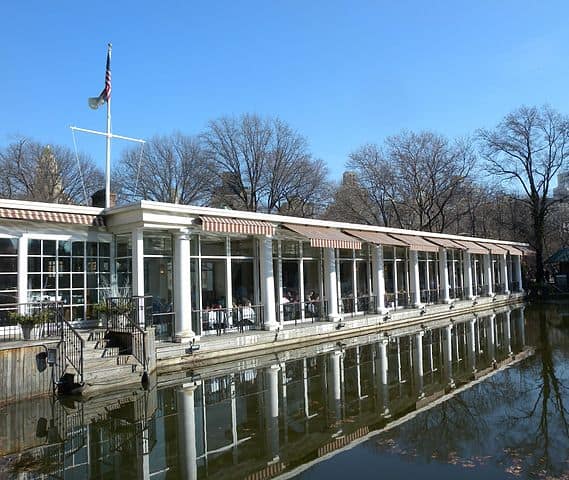
Head over to the Loeb Boathouse on the east side of the lake – you cannot miss it (They also serve food. See our FOOD section below).
In good weather, rowboats are available for rent from 10 am till sundown. Boats are $15 per hour (cash only), $4.00 for each additional 15 minutes with a $20 cash deposit.
Each boat holds up to 4 people. The Loeb Boathouse will provide life jackets. Children under 12 must be accompanied by an adult.
Follow the path along the Lake until you come to the Loeb Boathouse. From there head east, cross East Drive and you will see a larger than life statue of a man and behind it a calm pool of water.
(M) The Conservatory Water
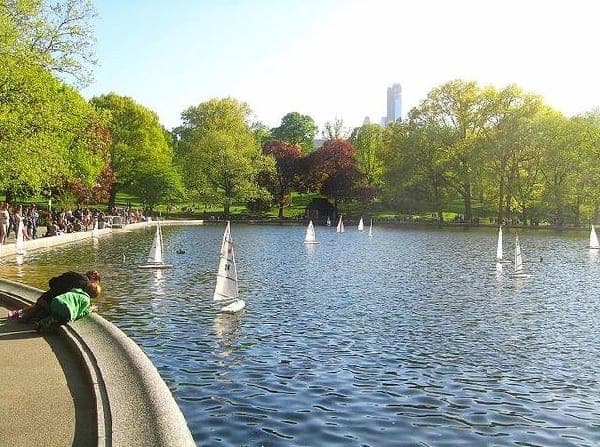
Fans of the book Stuart Little write will recognize this pond, which is usually filled with toy sailboats. This is where Stuart races a sailboat to victory in the book.
On the near side of the pond is a statue of the master of all fairy tales, Hans Christian Anderson.
He is seated on a slab of stone feeding “The Ugly Duckling” one of his most famous characters.
Absolutely pose for a picture with Hans – he is known for being quite friendly!
Walk north on the small path until you reach another playful statue.
(N) Alice in Wonderland
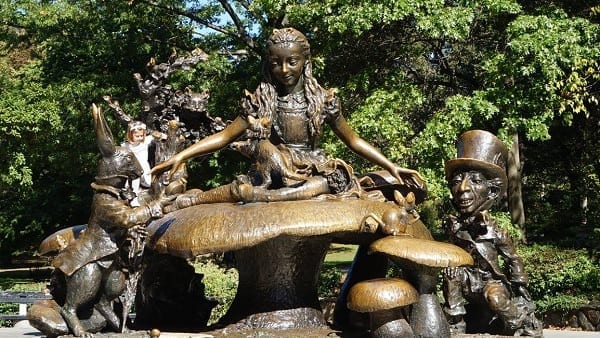
Alice in Wonderland is on the north end of the pond. It shows Alice and the Mad Hatter Tea Party.
The statue was donated by George Delacorte in honor of his wife Margarita Delacorte.
The design of the statue is taken from the illustration in the first edition of the novel that was ever released.
Feel free to climb on the sculpture and have fun in this whimsical part of the park.
Head northwest away from Alice and back towards the Loeb Boathouse Restaurant. Go to the back end of the Loeb Boathouse Restaurant to enter The Ramble.
The Ramble was designed alongside Bethesda Terrace and The Lake as one of the key elements of the park.
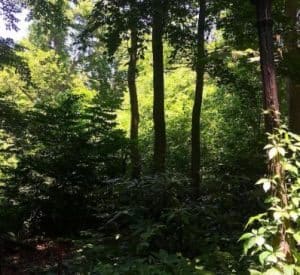
The Ramble, which can be seen from Bethesda Terrace, is meant to be a juxtaposition to the formality of the terrace. The Ramble was built to resemble a wild forest and a place where you can truly escape the city.
Amazingly, despite its appearance, The Ramble is entirely manmade. Some of the trees in The Ramble today were original plantings in 1859.
The Ramble is known as being one of the best spots for bird-watching in the United States.
Over 230 different species have been spotted. Click here for much more information about the Ramble.
At this point, you may want to decide if you want to start to wrap up your tour by backtracking south to see Strawberry Fields and then leave the park or if you have the energy to keep going north for another 1 1/4 miles to see several more sites.
From the Ramble, head west, back towards the lake. When you reach the lake, you will get to a small cast-iron bridge.
(P) Bow Bridge
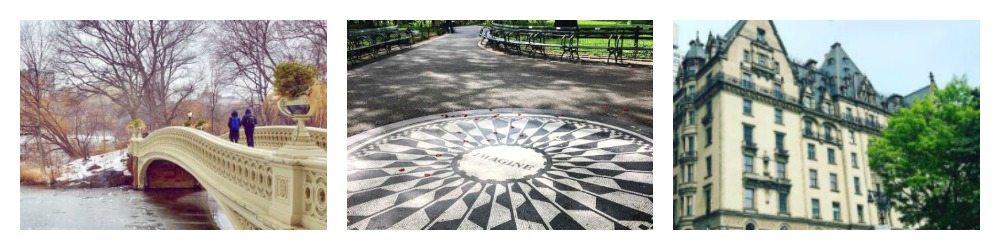
Completed in 1862. It is one of the most photographed and filmed locations in Central Park. Woody Allen’s film Manhattan, Spider-Man 3, and Night at the Museum have scenes filmed here.
Many marriage proposals take place here as well. It is definitely a special spot in the ark and if you cand time to get this into your route, you should.
Bow Bridge – Strawberry Fields – Dakota Building
Cross the bridge and veer to the right along the path. Follow the path along the lake for about 1/4 of a mile until you end up in Strawberry Fields. You will likely see signs guiding you to this very sacred spot.
This quiet area of the park is dedicated to John Lennon, who lived just outside of the park in the Dakota Building.
The name comes from the Beatles song “Strawberry Fields Forever.” The garden was planned by the city and John Lennon’s widow Yoko Ono.
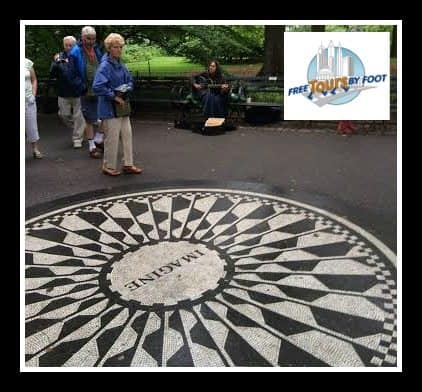
Its central feature is the Imagine Circle, donated by the city of Naples, Italy. It was designed by Italian mosaic artists and displays the name of Lennon’s most famous solo work.
Strawberry Fields is recognized as a “Garden of Peace” by 121 different countries and is one of the most popular parts of Central Park.
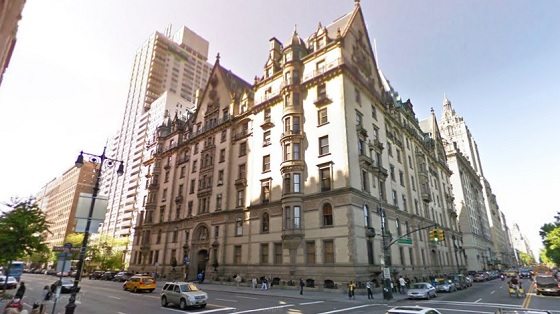
Across the street from the exit from the park, you will see a very impressive unusual looking building. This is the renowned Dakota Building
Completed in 1884, the Dakota was New York’s first luxury apartment building.
It was financed by Edward Singer (of the Singer Sewing Machine Company), who decided that he could convince New Yorkers that apartments could be a viable option for the wealthy.
The Dakota offered many amenities, such as porters, maids, room service, a formal dining room, and electricity provided by an in-house generator.
There were 65 apartments, ranging in size from 4 rooms to 20.
Throughout its history, The Dakota has been famous as the home of many celebrities, including John Lennon and Yoko Ono. (Yoko Ono still lives in the building).
This is the last stop of the Southern Route. The nearest subway is right on that corner at 72nd Street and Central Park West. There you can catch the B or C trains uptown or downtown.
NORTHERN ROUTE
Leave the Ramble and walk north weaving along the paths.
Again, a map always comes in handy, but this is a fairly easy part of the park to navigate. You will get to the 79th Street Transverse. Cross over to the next stop.
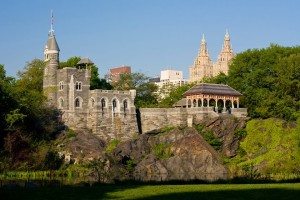
This castle, whose name means “beautiful view” in Italian, was designed by Calvert Vaux.
It is a “folly,” an architectural term for a purely decorative building, and was completed in 1869.
It was meant to be a lookout over the Croton reservoir to the north and The Ramble to the south, and it is one of the highest points in the park.
For years it was also used by the National Weather Service, who took weather readings for the city up in the castle’s tower. They still use the wind instruments up on top of the turret.
The castle was renovated in 1983 and became a Nature Center, where visitors can get information about the flora and fauna of the park and rent bird-watching kits.
One of the hidden treasures in Central Park is a beautiful fairytale-looking castle. Have a look! #centralParktours #visitnewyork #nyctoursPosted by Free Tours By Foot on Wednesday, October 27, 2021
(S)Shakespeare Garden
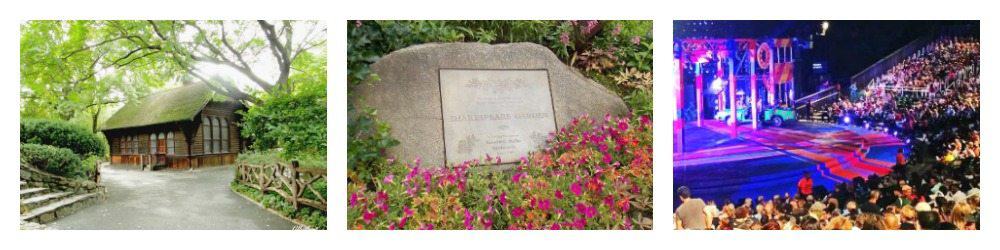
This beautiful garden was originally a flower garden called “Heart Garden.” It was redesigned and designated Shakespeare Garden in 1915, in honor of the famous poet and playwright William Shakespeare.
All of the plants and flowers in the garden are mentioned in the works of Shakespeare, and there are small plaques with quotations scattered throughout.
The designer also released 60 starlings (mentioned frequently in Shakespeare) into Central Park when the garden opened.
These birds were not native to North America, and those originals became over 150 million on this continent. Be sure to read our post on the famous summer event Shakespeare in the Park.
Walk through the garden and exit by the Swedish Cottage.
(T)The Swedish Cottage
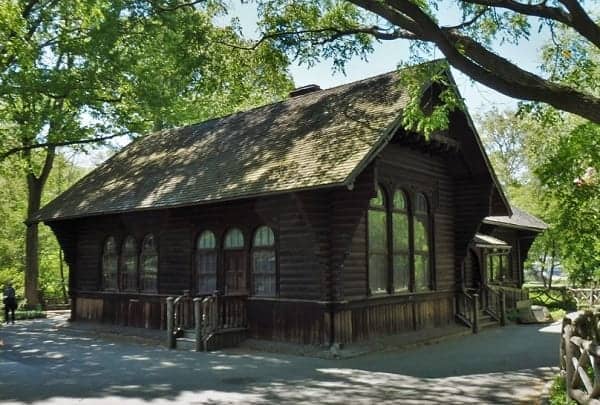
This cottage was built in Sweden in 1875 and was brought to the United States as a part of the 1876 World’s fair.
It was displayed in the Swedish Pavilion as an example of a traditional Swedish schoolhouse, where Fredrick Law Olmstead spotted it and decided that it would be a great addition to Central Park.
It was brought to New York in 1877.
Today it is the home of a marionette theater company known for its productions of fairy tales such as Cinderella and Peter Pan. It is the oldest continuously operating marionette theatre in the country.
From the cottage walk northwest 300 feet to the next stop.
(U) The Delacorte Theatre
This 1800 seat, open-air theatre is home to the famous Shakespeare in the Park performances every summer (read below for information on attending a performance).
Built in 1962, the theatre was named for George T. Delacorte, Jr., who financed it. Over 100,000 people flock to this theatre every summer for its legendary free theatre performances.
TIP: There are public restrooms at this location!
Just 200 feet north of the Delacorte Theatre you will find the next stop. There is no missing it!
(V)The Great Lawn
This massive lawn is one of the most famous in the United States.
It was not a part of the original park design because it was the site of a massive reservoir that was part of the Croton Aqueduct System.
The reservoir was drained in 1931 and filled in with excavation from the building of Rockefeller Center and the 8th Avenue Subway.
Over the years, the Great Lawn has been used for many concerts, including Simon and Garfunkel, Bon Jovi, and the New York Philharmonic, just to name a few.
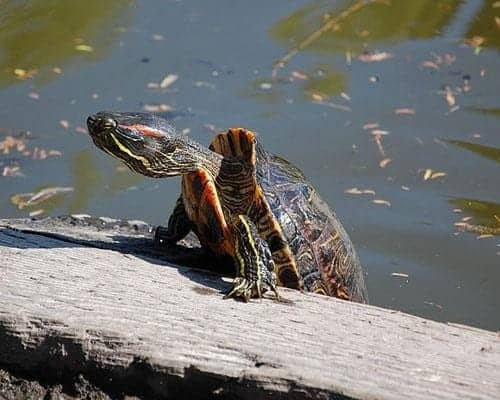
Turtle Pond, the body of water at the south end of the lawn, is actually the last remaining part of the Croton Reservoir. It is named Turtle Pond for its many turtle inhabitants, as many as 5 different species!
From the Great Lawn look east and you will see a large obelisk. Walk towards it.
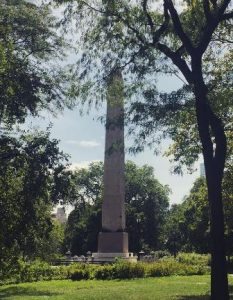
(W) Cleopatra’s Needle
The oldest object in the park. The obelisk was constructed in Egypt in 1400 BC.
The name is misleading because the obelisk was 1000 years old by the time Cleopatra began her legendary reign.
The obelisk in Central Park is a twin with a second Cleopatra’s Needle that can be found on the Thames River in London.
There is also one in Paris, but it is not a matched set with the other two.
The obelisk was moved from Alexandria to New York in 1880, and it was an arduous task.
A hole was cut into the hull of the ship, and the obelisk was rolled into it atop cannonballs.
Once it reached New York, it was moved in a wagon hitched up to 32 horses. They had to move very slowly so as not to jostle it too much. It took 112 days to move the obelisk from New York Harbor to Central Park.
Just past Cleopatra’s Needle is the next stop – actually the back end of it.
This is probably the most well-known museum in the city. It was designed by Calvert Vaux and Jacob Wrey Mould and was opened in 1874.
The permanent collection has over 2 million items housed in about 2,000,000 square feet (19,000 square meters).
There are numerous collections, including a vast Egyptian collection, Impressionist Paintings, a massive armor collection, and the famous Metropolitan Costume Institute.
Continue north from the museum approximately 300 yards to the next stop.
(Y)The Jacqueline Kennedy Onassis Reservoir
The Reservoir is one of the most popular spots in the park.
The one billion gallons (3.7 billion liters) reservoir was built in the 1860s as a backup water supply for the city while the Croton Reservoir System was shut down for two weeks for repairs.
The Reservoir was permanently decommissioned in 1993. It was no longer needed because of a new underground water tunnel.
There is a dirt jogging track that goes around the water (approximately 1.6 miles or 2 km).
It was a favorite spot of Jackie Onassis’s to run while she lived in New York, so the Reservoir was renamed in her honor in 1994.
Walk along the east side of the Reservoir. It is approximately a 3/4 mile walk until you reach the 97th Street Transverse where the last stop is located.
(Z) The North Meadow
This 23 acres (10 hectares) meadow has 7 baseball fields and 5 softball fields. It is the largest meadow in Central Park.
The competition winners, Frederick Law Olmstead and Calvert Vaux were asked to include three areas for playing ball in their design because the sport was rapidly gaining popularity in the 19th century when the park was being built.
Today, the North Meadow is used by baseball teams in the spring and then is turned into football and soccer fields in the fall.
The North Meadow also has the North Recreation Center, which is a great place to find water fountains and restrooms while you are in the park.
This is the last stop on the Northern section of the park.
From here there a number of things you can do. We have listed activities further down in this post. Click here to jump down to that section.
If you want to either leave the area or stay and explore more outside of the park, here are some ideas:
To subway Exit park at 97th Street. Walk down one block to 96th Street and walk east 3 blocks to Lexington Avenue for the entrance to the 6 train Uptown or Downtown. There is also a station at Lexington Avenue and 103rd street for 6 ttrains
Cooper-Hewitt Design Museum 5th avenue and 91st street
Guggenheim Museum 5th avenue and 88th street
Museum of the City of New York 5th avenue and 103rd street
El Museo del Barrio 5th avenue and 104th street
MONEY-SAVING TIP: See our comprehensive guide to free museums, free entry days, and hours to certain museums.
MAPS OF CENTRAL PARK
The sheer size of Central Park makes it a great place to go to engage in all sorts of outdoor activities.
As big as the park is, however, you will definitely need a map of some sort to find your way through. Many a New Yorker has gotten lost in the park…more than once!
General Maps
These are some of the better basic maps of the park that give you a broad overview of the main attractions, large paths, locations of restrooms, and food.
Some are interactive, printable, or in PDF form for you to download.
These are two printable maps on the same website: the first is a map of top attractions surrounding the park as well as a few inside. This is useful so you know about other places you may want to visit when you are finished with the park. The second map is a very clear-cut map of the park and about 30 key locations to visit.
This excellent, free printable and downloadable map is from the Central Park Conservancy and has all the essentials you need – points of interest, visitor centers and facilities, paths and major roads and also all the nearby subways.
This interactive map is also from the Central Park Conservancy. It is a comprehensive map that will help you find playgrounds, places to eat, and cultural points of interest. You can use the map legend to select what types of things you want to see on the map. It also has a feature where you can click an icon and get a summary and more information.
Playground Maps
The Plan for Play interactive map is simply the best map ever to find out easily where all the playgrounds are in the park (and there are many!). It is easy on the eyes, but don’t let its visual simplicity fool you. This map has links you can click on to find out the history of the parks, photos of the park and any other pertinent information.
This link is to the official NYC Parks department list of playgrounds with addresses. While it is not a visual map, it is essential for planning in advance if you are traveling with someone who needs accessibility due to a wheelchair or other reason. Also, this list states which parks have adaptable swings for children with special needs.
Biking Maps
This biking map is a JPEG that you could save on your smart device. It is user-friendly and includes a legend so you know where the bike lanes get hilly and where you can find water – which you will probably need!
This interactive map is great for its use of a detailed legend letting you know such things as which bike paths has restricted hours, shared with vehicles and more. It also has a chart of elevations at various parts of the park.
Jogging and Running
See our detailed post with interactive maps and tips
Bathrooms Although this PDF map is meant for runners, well, everyone has to go sometime! The map has all the bathrooms in the park marked on it. There are about 20 bathrooms in the park, and not all are the cleanest, you may want to bring some tissues or napkins with you!
ACTIVITIES IN CENTRAL PARK
RIDE A BIKE!
If you are unable to join us for a Central Park Bike Tour, you can still enjoy cruising around the park!
There are many rental options available for visitors.
Central Park Sightseeing Bike Rentals 56 W 56th Street Our guests are entitled to 20% off on all of our partner shop’s Central Park bike tours. Just use promo code FTBF. Rates: start at $15/hr (but cheaper per hour if you do a longer rental) Rate includes a helmet, lock, and a bike basket.
CitiBikeLocation: docking stations on the south end of the park-west, middle and east. Price: $9.95 for a 24-hour access pass. (CitiBike is intended for shorter trips, so the unlimited use is only for 30-minute trips. The charge for the second half-hour is $4)
GO FOR A RUN!
Central Park is one of the best spots for running in the city. It offers different distance options and terrains. For detailed information on running and jogging in the park, check out our post on running in the park.
Every year, from mid-April to late October, on most Saturdays and Sundays, the Central Park Dance Skaters Association offers a roller skate-dance party in the “Skate Circle”.
It’s located mid-park area, south of the 72nd Street Traverse. Check their website on how to find the Skate Circle.
The event runs from 2:45-6:45 and music is provided by a DJ. Check their event calendar to see what’s on.
It is free to attend, but bring your own skates! These events are done weather-permitting and provided there is not another major event in the park.
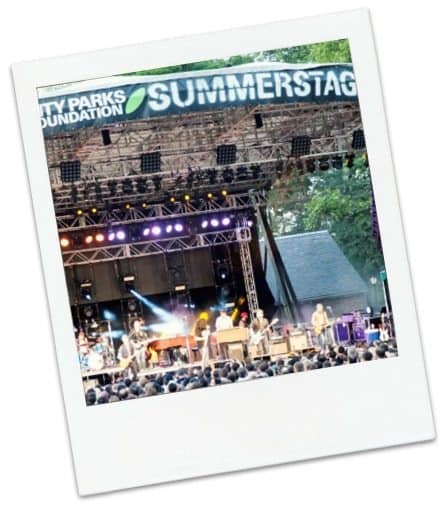
Several spots and venues in the park have free music, either as part of a scheduled series, such as the Naumburg Bandshell which puts on music events, such as the Naumburg Orchestral Concert series in the summer.
There are other musicians and performers throughout the park and in good weather, you will likely come across some.
Tucked behind the more well-known lakefront restaurant, this take-out café offers quick fare for a reasonable price. Price: $; Cuisine: American; Credit Cards Accepted: Yes; Attire: Casual
Le Pain QuotidienWest 69 Street Inside Park. Enter the park at West 69th Street path.
This casual restaurant offers both sit-down and take-out service.
It is located in the historic Mineral Springs pavilion, on the north end of the Sheep Meadow. In the late 19th and early 20th centuries, park-goers could go to this pavilion for a drink of fresh spring water.
You have multiple subway options. The 1,2 and 3 trains run on Broadway and the B and C trains run on Central Park West. These lines can take you to a number of destinations all over the city.
Wide variety of restaurants and bars, including some lively nightlife along Amsterdam Avenue.
Upper East Side
Quick access to Museum Mile, including the Metropolitan Museum of Art and the Guggenheim.
Nice walk or a quick subway ride to 5th Avenue shopping.
The 4, 5 and 6 trains run along Lexington Avenue on the Upper East Side. Though these trains can get a little crowded during rush hour, they are great for getting to a lot of NYC hotspots.
Good nightlife along 1st and 2nd Avenue with a wide variety of restaurants and bars!
HISTORY OF CENTRAL PARK
Central Park was designed as an urban oasis to give New Yorkers an escape from the crowded city. The original design for New York, aid out by the City Commissioners in 1811 did not include a park.
Between that time and the 1850s, the city of New York quadrupled in size. As the city got more and more crowded, New Yorkers started seeking a respite.
Landscaped cemeteries became a popular place to stroll and picnic because they were among the only public green spaces in the city. It was time for a change in New York.
In 1853 the city purchased the land that would become Central Park for $5 million.
To ensure that they were getting the best design possible, they held a design competition to determine what the future park would look like.
The design team of Frederick Law Olmstead and Calvert Vaux won the completion with a design called “The Greensward Plan.”
Even though the Greensward Plan was meant to look very naturalistic, this 843-acre park is entirely man-made.
The plan entailed clearing land as long as 2.5 miles (4 km) from 59th Street to 110th Street and is 0.5 miles or (0.8 km) wide between 5th Avenue and Central Park West.
The layout plan encompassed the use of 843 acres (341 hectares) right in the middle of Manhattan.
The park was a massive undertaking. Construction began in 1857 and was completed in 1873.
Over 1500 residents had to be cleared from the area, particularly in Seneca Village, home to the Seneca Native American tribe.
Even just preparing the land for landscaping was a feat. The Manhattan schist (the bedrock that makes up the island) had to blast apart in many areas using gunpowder.
There was more gunpowder used in building Central Park than was used in the Battle of Gettysburg in the American Civil War.
It was also determined that the soil in the area was not suitable for all of the planting that was planned. The topsoil was removed, and new soil was brought in from New Jersey.
All in all, during the park’s construction, more than 10 million cartloads of rubble were carted out.
The end result of the years and labor that went into the development of this park was a success so great that New Yorkers, then and now, regard Central Park as one of its most-loved treasures.
We hope it has now become one of your favorite places. Join our free FTBF Travel Community. As a thank you, you’ll receive a trip planner and FREE audio tour.
Which City? I want them all PLUS general travel tips. Amsterdam Berlin Boston Charleston Chicago Dubai Lisbon London Los Angeles Miami Nashville New York City New Orleans Paris Philadelphia Prague Rome San Francisco Washington DC
Stephen is the CEO of Free Tours by Foot and has overseen the transformation of a local walking tour company into a global tour community and traveler’s advice platform. He has personally led thousands of group tours in the US and Europe, and is an expert in trip planning and sightseeing, with a focus on budget travelers. Stephen has been published and featured in dozens of publications including The Wall Street Journal, BBC, Yahoo, Washington.org, and more.
Wall Street is synonymous with the Financial District and the nature of the business conducted in this area for about 225 years.
There are many sights that are worth a visit and the street can tell many interesting stories.
The street is named for the wooden stockade constructed under the then Dutch colonial governor Peter Stuyvesant on the northern boundary of New Amsterdam.
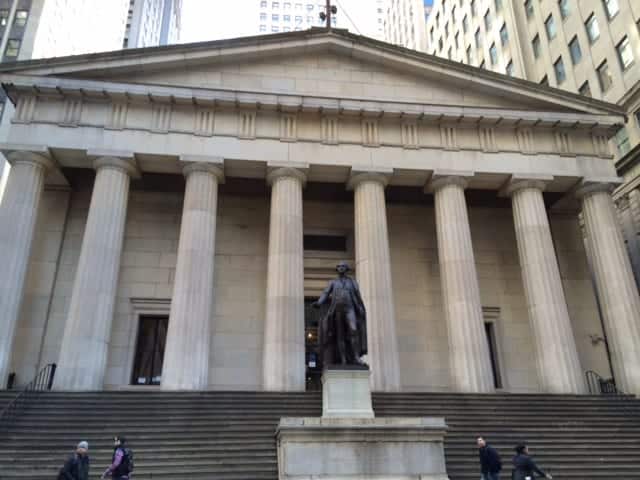
Federal Hall (former US Treasury Building)
Wooden markers in the cobblestone street are reminiscent of the wall designed to protect the Dutch colony from the British invasion.
We also provide include Wall Street as well as the Financial District on our Lower Manhattan Walking Tour as well as a few other of our pay-what-you-like New York tours:
Downtown Manhattan Tour
New York in a Day Tour
Wall Street is also a stop on our GPS-enabled audio tour of Lower Manhattan. Listen to a clip below.
If you are interested in taking a guided Wall Street tours catered specifically to those interested in finance, then you might want to consider a guided Wall Street tour.
How to Get to Wall Street
Wall Street is located in the heart of New York City’s Financial District in Lower Manhattan. The street stretches from Trinity Church in the west to the East River in the east.
There are several subway stations that you could use to access Wall Street.
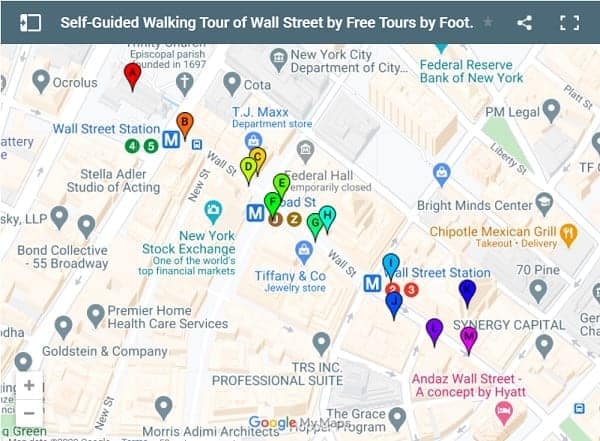
A – Trinity Church – Corner of Wall Street and Broadway
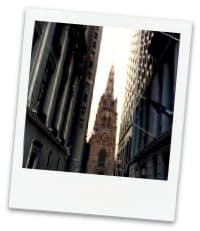
Before you start the tour, admire this beautiful Gothic-inspired church.
Its steeple measures 284 feet (87 meters) and was once the tallest building in all of New York City.
It’s strange to see Trinity dwarfed by all of the larger modern buildings surrounding it (of course, the tallest building in New York is One World Observatory).
Take a quick look inside to admire its stain-glassed windows and roam about its graveyard.
The earliest burial dates back to the early 16oo’s when New York City was called New Amsterdam.
Notable burials include American Founding Father Alexander Hamilton (of $10 bill fame) as well as Robert Fulton, who invented the first viable steamboat.
The first building on the right as one enters Wall Street from Broadway is one of the best-designed buildings of Ralph Walker.
In the Art Deco style, the building was constructed between 1929-32 for the Irving Trust Co.
Through the tall windows, passersby are gifted with a view of the flaming mosaic walls designed by Mildred Meière.
The Bank of New York, founded by Alexander Hamilton in 1789, was the first stock traded on the New York Stock Exchange in 1792.
C – Bankers Trust Company – 14 Wall Street
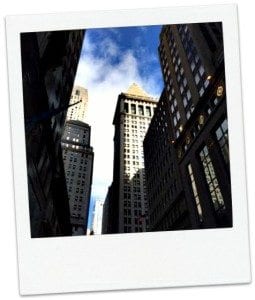
Located on the left side of the street, and built in 1912 by Trowbridge & Livingston, the stepped pyramid at the top is so iconic that Bankers Trust adopted it as the company logo.
One thing you might notice is that this particular building appears to rise completely vertically, rather than inward steps.
This is because this building was built before New York City instituted its setback laws, which was a response to complaints that buildings like the Bankers Trust Building created a darkened Wall Street below.
You can see the difference between this building and 40 Wall Street, which was built under the new rules.
D – New York Stock Exchange – corner of Wall Street and Broad Street
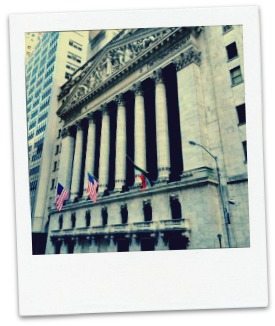
Originally formed under a buttonwood tree further west down Wall Street, the NYSE moved into this Classical style building in 1903.
Now part of the ICE, the Intercontinental Exchange, the New York Stock Exchange is the largest exchange in the world, responsible for about $169 billion in trading daily.
The sculpture in the Broad Street portico is “Integrity Protecting the Works of Man” by John Quincy Adams Ward.
Be sure to read our full post on the New York Stock Exchange, which includes a virtual tour and video of the trading floors.
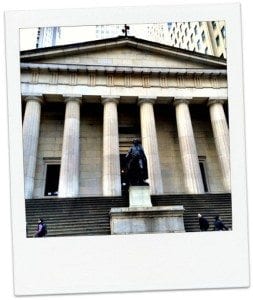
George Washington (also designed by JQA Ward) is standing on what would have been the second-floor balcony of City Hall, which was located on this site until 1812.
Here is where the U.S. Congress met just after the American Revolution and it’s where George Washington took his oath of office on April 30, 1789.
Designed in the Classic style, with Greek and Roman details, the building is said to reflect the democratic ideals of ancient Greece and the power of the Roman Empire.
Step inside to see the former vault in the basement or visit the changing exhibits that are on display in several of the building’s rooms.
The National Park Service also operates a visitor center here. This is a great place to use the bathroom facilities.
F – Morgan Guaranty Trust – corner of Wall Street and Broad Street
The former Morgan Guaranty Trust Company at 23 Wall Street was the bank of J.P. Morgan, who said he did not need a skyscraper as a monument to his wealth since everyone knew how much he was worth.
On the Wall Street side of the building gouges can still be seen under the last two windows from a bomb blast in 1920.
A cart of TNT was exploded, killing 33 people and sending more than 300 to the hospital with injuries.
No one was arrested, although anarchists were suspected of this domestic terrorism, the largest of its kind until the Oklahoma City Bombing.
G – Trust Company of America – 37 Wall St.
Beaux-Arts style building designed by Francis Kimball was the center of the Panic of 1907, which encouraged the Federal Reserve system to be developed.
Today, Tiffany has a satellite store on the street level.
H – 40 Wall Street (The Trump Building)
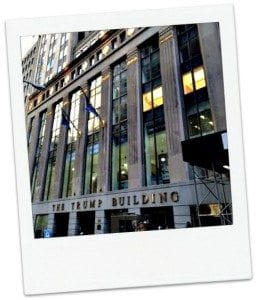
Constructed by H. Craig Severance and Yasuo Matsui for the Bank of Manhattan in 1929, it was designed to be the tallest building in the world.
But architect William Van Alen, who was building the Chrysler Building on 42nd Street, surpassed the height of 40 Wall Street by raising a spire atop the Chrysler Building three days after 40 Wall Street opened.
The Museum, a non-profit Smithsonian affiliate, is the only independent museum dedicated to providing educational programs on “finance, the financial markets, money, banking, and Alexander Hamilton,” according to their website.
As of August 2018, the museum is closed for renovations.
J – 55 Wall Street
Built after the fire of 1835 destroyed the original Merchants’ Exchange, this three-story Ionic temple-style building boasts 16 single block granite columns of Quincy granite and a commanding central hall that is now an events facility for Cipriani.
The upper floors were added by McKim, Mead & White in 1907 after the custom house relocated from this building to Bowling Green.
Today, the upper floors are 106 exquisite apartments for Cipriani Club Residences.
K – Deutsche Bank – 60 Wall Street
This 50-story skyscraper is the tallest building on Wall Street. Built in 1985 for JP Morgan and Company, it was purchased by Deutsche Bank in 2001.
Once the attacks of 911 damaged the company’s building on Liberty Street, the 5500 employees were relocated here.
The design is a modern interpretation of a Greek temple. On the roof at 737 feet is a solar installation, which is the highest solar PV installation in the world.
This building was rumored to be the real headquarters of the Occupy Wall Street movement, holding events for the group sleeping in Zuccotti Park, just up Broadway.
L – The Crest of 63 Wall Street
The 1929 headquarters of Brown Brothers Harriman; converted to apartments in 2004. The front is decorated with Greek drachmas.
M – Site of the Buttonwood Agreement – 68 Wall Street
An event which instituted the New York Stock Exchange in 1792. Traders gathered outside the building to do their business before moving inside.
The building burned during the fire of 1835, forcing the then non-profit association to move up Wall Street to its present location.
This concludes our tour of Wall Street. If you found this tour useful, please share this friends and family.
Disclosure: We think you should consider our free tours, but we have also provided other options. While our recommendations are always unbiased, we may receive a small share of sales through some of the links below at no cost to you. See the full text.
WALKING THE BROOKLYN BRIDGE (EASY TO FOLLOW LOCAL’S GUIDE + TIPS)
Our easy to follow guide to walking the Brooklyn Bridge and Brooklyn Bridge tips will help you plan your dream visit to one of the most famous landmarks of NYC, not to mention the history of the Brooklyn Bridge is also fascinating.
We provide you with everything you need to know before walking the Brooklyn Bridge including the history, where to go, what you’ll see, and how to walk across the Brooklyn Bridge pedestrian walkway as well as how to bike it or drive it!
Here’s all the tips, tricks, dos, and don’ts of walking the Brooklyn Bridge, one of the best walks in Brooklyn and NYC!
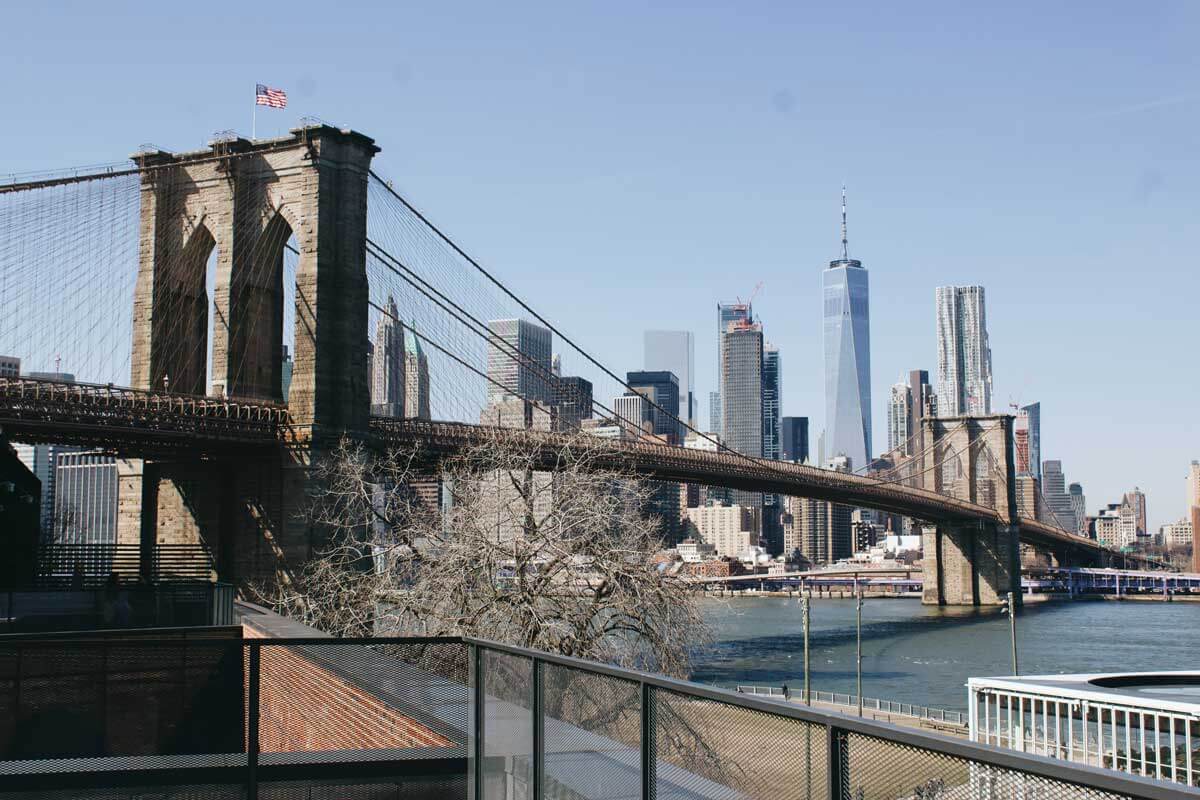
The Brooklyn Bridge was completed in 1883 and is one of the oldest suspension bridges in the United States. The historic and iconic bridge is one of the most recognizable in the country and connects the two boroughs of Manhattan and Brooklyn over the East River.
Brooklyn Bridge was designed by John Augustus Roebling, but after suffering an injury and complications with recovery, he died and his son Washington Roebling took over the project. This wouldn’t be the first complication during the construction of the Brooklyn Bridge.
Many workers developed “caisson disease,” which occurs when workers would leave a compressed atmosphere and enter into a normal atmosphere too quickly.
This took place when workers were sent below the surface of the East River to clear mud and boulders from the bottom of the river to begin laying down granite.
Washington Roebling fell ill to this disease and his wife Emily Warren Roebling took over the operation.
When the Brooklyn Bridge opened to the public on May 24, 1883. Emily Roebling was the first to walk across the Brooklyn Bridge.
On the opening day, over 150,000 pedestrians crossed the bridge including American President Chester A. Arthur and New York Mayor Franklin Edson.
Shortly after the Brooklyn Bridge’s completion, rumors that it would somehow collapse filled the city with panic. In order to put these rumors to rest, P.T. Barnum led 21 elephants across the bridge in 1884, wouldn’t that be a sight?
You can find a plaque on your Brooklyn Bridge walk dedicated to John Augustus Roebling, Washington Roebling, and Emily Roebling.
The Brooklyn Bridge’s total cost was over $15 million in the 19th century and led to a few dozen deaths and over 100 caisson disease cases.
There are a few different ways to cross the Brooklyn Bridge, by foot, car, bicycle, and below by water taxi or ferry.
DRIVING ACROSS THE BROOKLYN BRIDGE
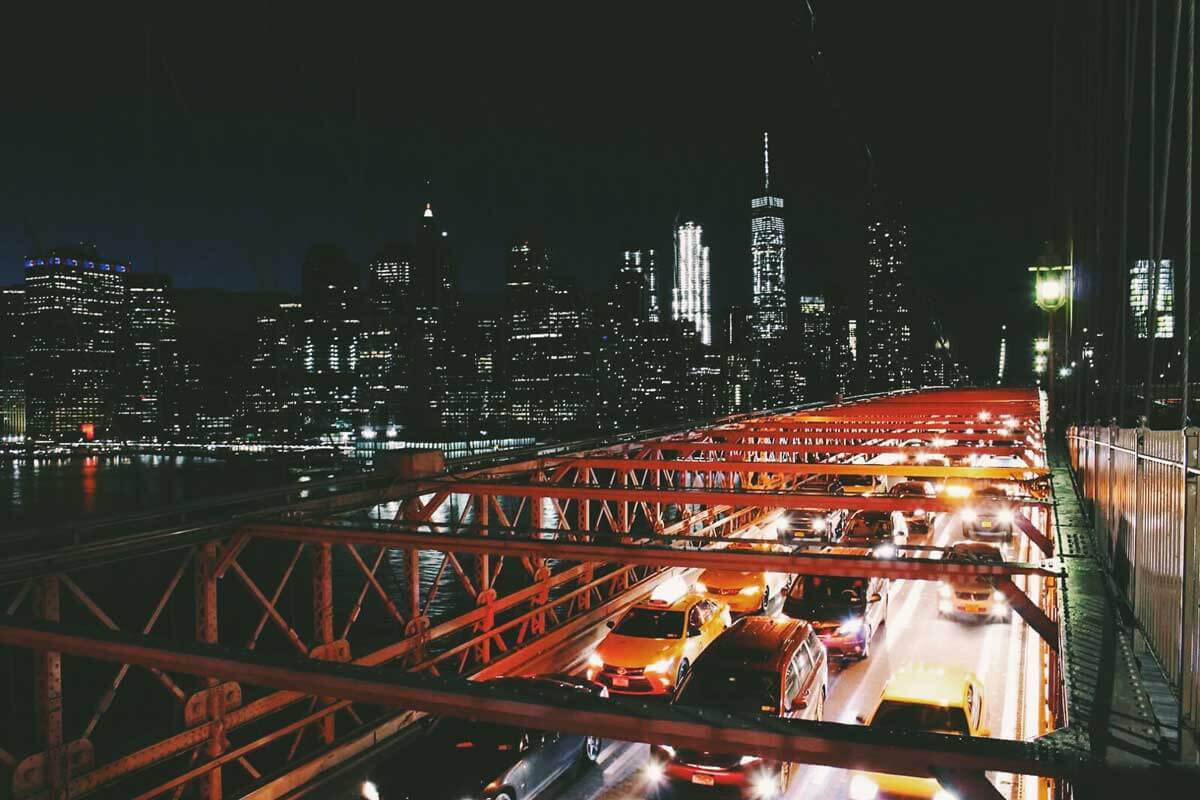
If you’re looking for a quick cityscape fix, cruise across the Brooklyn Bridge in your car, rideshare, or taxi. This famous New York City bridge is actually one of the rare toll free motorways in and out of Manhattan, which makes it more appealing for drivers in NYC.
Although you can observe the beautiful skyline from the comfort of your car, don’t forget that traffic is a possibility. If you’re looking for a day of being a tourist and taking your time at this national landmark, you might want to consider our other options of crossing the bridge.
BIKING ACROSS THE BROOKLYN BRIDGE
The key to biking in New York City as a visitor or someone without their own bicycle is using CitiBike rentals who have docking stations all throughout the city.
CitiBike is really easy to use, you just have to download the app for payment as well as finding your nearest docking station to pick up or drop off your bikes.
As of September 2021, biking the Brooklyn Bridge is no longer possible on the pedestrian pathway on the top of the bridge. Prior to the change, bikers and pedestrians shared the same pathway with a few painted lines that distinguished where cyclists stayed and where pedestrians stayed.
This was chaos for everyone as often unknowing tourists didn’t obey either the bike lane or the pedestrian lane making it a really frustrating and chaotic experience.
Now, there is a designated bike lane on the lower level of the bridge alongside the motor traffic. While the lane is separate from the motorists, you do not get the same ‘views’ as you did previously when the bike lane shared the upper level of the bridge with pedestrians.
CROSSING BY THE BROOKLYN BRIDGE BY WATER
A unique vantage point for seeing the Brooklyn Bridge is via below from the water using the NYC Ferry or New York Water Taxi to take you from Brooklyn to Manhattan or vice versa on the East River.
The NYC Ferry has a route that takes you from South Brooklyn to Wall Street (Pier 11) in Lower Manhattan. This costs the same as riding the subway, $2.75. However, if you’re bringing a bicycle for any reason there is a small additional fee when you go to buy your ticket.
The other water option is by the New York Water Taxi. This is a sightseeing cruise with multiple stops around popular city landmarks by water! You will have to by an all day pass, so this option only makes sense if you plan on using this to see many attractions.
WALKING THE BROOKLYN BRIDGE
Many would say, walking the Brooklyn Bridge is the best way to do it. You will deal with difficult crowds, flying selfie sticks, and aggressive cyclist commuters, but it’s totally worth it. I mean taking the slowest way possible gives you a chance to soak in this amazing NYC landmark and views!
Walking the Brooklyn Bridge is one of the most popular and iconic things to do in Brooklyn and in New York City. Because of its popularity you can imagine that there will be many other people on the bridge trying to see this iconic landmark from up close and experiencing the epic views along the way.
It is estimated that nearly 4,000-10,000 people walk the Brooklyn Bridge per day!
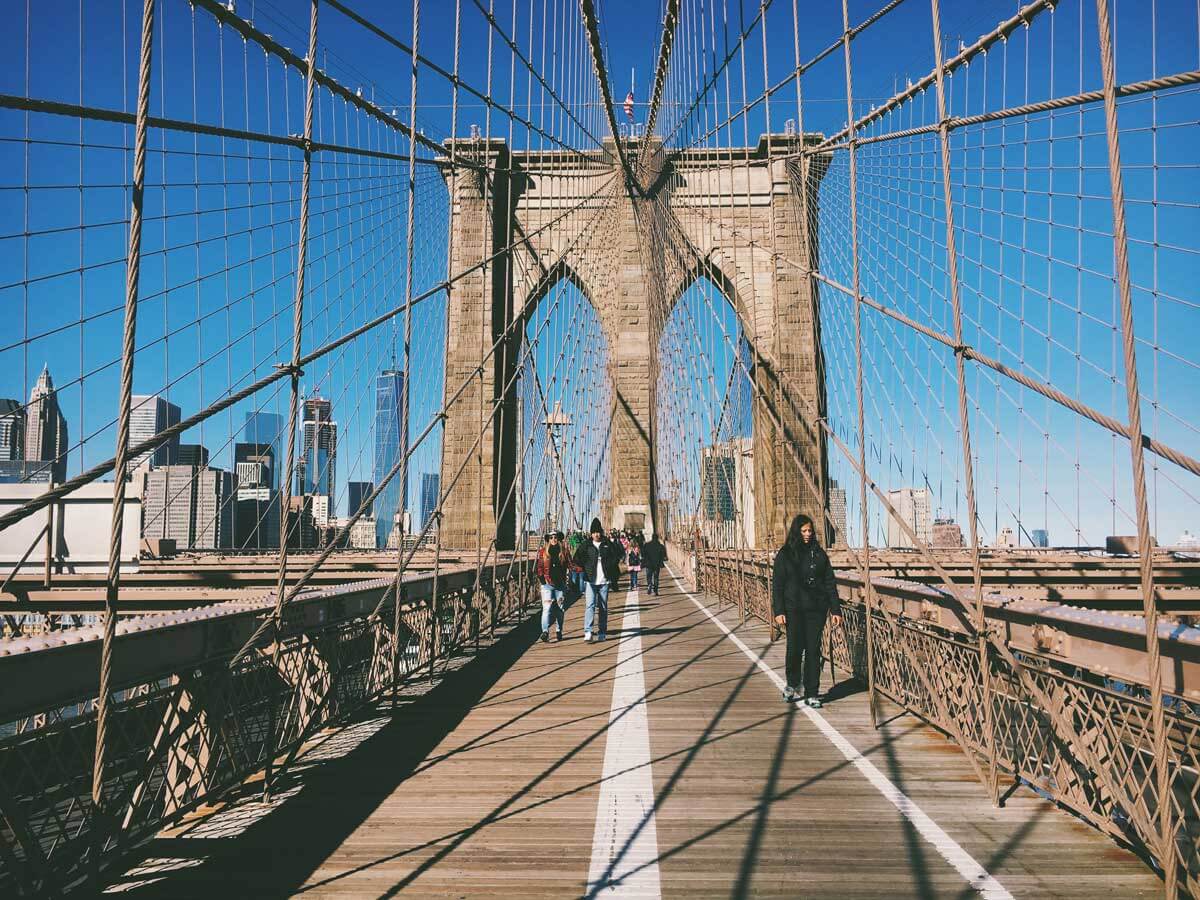
Something you used to have to keep in mind when walking the Brooklyn Bridge is that you needed to stay in the pedestrian lanes, but now that’s no longer an issue, the upper level of the Brooklyn Bridge is now for pedestrians only.
Before, many people stop to take photos not realizing they are standing directly in the bicycle lane. You’ll probably see at least a dozen during your visit and walk across the Brooklyn Bridge if not more. Besides giving tourists on bikes a hard time, I mean it when I say that these New York City bicyclists will run over you and not even look back. So now, that dilemma is no more.
Many people wonder these common questions including how long the Brooklyn Bridge is in feet and how long the Brooklyn Bridge is in miles! When you’re there in person it really doesn’t look as long as it really is!
HOW LONG THE BROOKLYN BRIDGE IS IN FEET
The Brooklyn Bridge is 5,989 total feet.
HOW LONG IS THE BROOKLYN BRIDGE IN MILES
The Brooklyn Bridge is 1.134 miles but the entrances for the Brooklyn Bridge pedestrian walkway are approximately 1.6 miles apart.
Planning to cross one of the most famous NYC bridges? You might want to plan for how long it takes to cross the Brooklyn Bridge, especially if you’re trying to plan around visiting this iconic landmark.
DRIVING ACROSS THE BROOKLYN BRIDGE
As we mentioned before, time spent driving on the Brooklyn Bridge can vary. If you’re traveling in the early morning or mid-day when everyone should be in their offices, you may be able to drive across the whole bridge without delays. As mentioned, the Brooklyn Bridge is just over 1 mile long, so you can expect to cross quickly by car if there is no traffic.
I would not suggest taking this route when you’re in a cab around rush hour, unless you’re prepared for a long wait and a higher fare at the end of your ride.
You can also ride across the bridge quickly in the later hours of the night if you’re coming back from a night out in Brooklyn or Manhattan.
If you’re in a taxi, you can always ask your driver what the conditions are on the bridge, since they are driving the city all day everyday they might have a good idea of whether or not its a good time to drive across. If not, you can always have them drop you off at the Brooklyn Bridge Pedestrian Walkway to finish the rest of your journey by foot!
BIKING ACROSS THE BROOKLYN BRIDGE
Biking across the Brooklyn Bridge may take you as little as 15 minutes. Biking across the Brooklyn Bridge bike lane is on the lower level next to motorists. While there is a barricade between the bike lane and the motorists, some have said that the fast moving vehicles can be a bit alarming, so if you’re new to biking in the city just be aware of this.
WALKING THE BROOKLYN BRIDGE
If you’re visiting and walking the Brooklyn Bridge for a first time, chances are you’re going to want to take your time and rightfully so.
The quickest walk by foot without stops will take around 30 minutes. However, with crowds and photo and view stops along the way you can expect walking the Brooklyn Bridge to take closer to 60 minutes plus depending entirely on you and your stops as well as the crowds.
Remember, the Brooklyn Bridge is just over 1 mile long, and if you’re walking you’re using the Brooklyn Bridge pedestrian walkways which are approximately 1.6 miles apart.
Unless you come on a slow day, you can imagine that when you’re adding hundreds of people and other people trying to sell you things as you’re walking the Brooklyn Bridge, it could lengthen the process.
My pro tip would be walking across the Brooklyn Bridge at a slow pace – expect for it to take longer than you planned that way you have extra time for unplanned stops and photos and you won’t be in a rush.
This won’t be something you’re going to do everyday whether you live in New York or you’re just visiting, so make it count. Enjoy every second of walking the Brooklyn Bridge.
Using the Brooklyn Bridge pedestrian walkway is the only way to cross the bridge by foot or access the bridge if you’re a pedestrian. Here are detailed steps on how to access the Brooklyn Bridge pedestrian walkway from both the Brooklyn side and the Manhattan side of the Bridge.
WALKING THE BROOKLYN BRIDGE: BROOKLYN SIDE
Starting your Brooklyn Bridge walk in Brooklyn? Great, there are a couple of entrances to the Brooklyn Bridge Pedestrian Walkway.
If you’re entering from Downtown Brooklyn, the walkway begins on Tillary Street and Boerum Place.
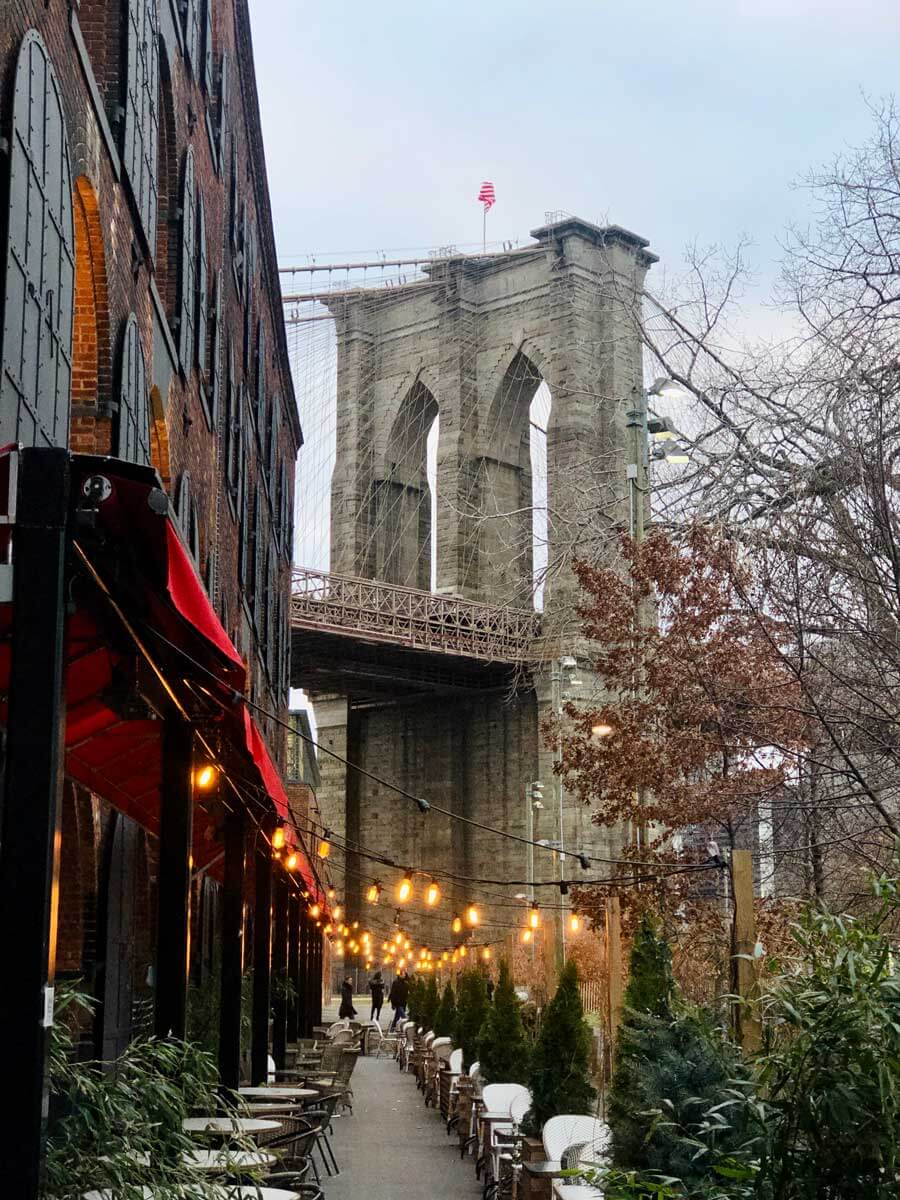
The second entrance is a stairway in the underpass located in DUMBO on Washington Street, 2 blocks from Front Street where the famous DUMBO Instagram photo is at. There is a stairway in the underpass that is the entrance leading directly to the Brooklyn Bridge Pedestrian Walkway.
I would always recommend walking the Brooklyn Bridge starting in Brooklyn because of the breathtaking Manhattan and famous NYC skyline views. This is where you can get the most famous views of the city.
Nearest Subway:
Unless you are already in the Downtown Brooklyn or DUMBO neighborhoods of Brooklyn, you will probably be taking the subway to the Brooklyn Bridge and going by foot the rest of the way.
There are a few different options each within a reasonable walking distance to the Brooklyn Bridge Pedestrian Walkway. All of these subway stations are relatively the same distance from the entrance, so choose whatever is most convenient from your starting point!
A, C or F subway lines to Jay Street/MetroTech Station
N or R subway lines to Court Street Station
2/3 or 4/5 subway lines to Borough Hall Station
A or C subway lines to High Street (take the High Street Exit – this is the most direct route)
WALKING THE BROOKLYN BRIDGE: MANHATTAN SIDE
I won’t lie, sometimes when I’m traveling back home to Brooklyn, I will just do the Brooklyn Bridge walk to avoid putting more money on my Metrocard and to just enjoy the bridge. I also consider this option after I’ve eaten a delicious New York meal and need to burn some calories.
From the Manhattan side, you can enter the Brooklyn Bridge Pedestrian Walkway at the northeast corner of City Hall Park along Centre Street.
There’s usually a lot of vendors on the Manhattan side, so don’t be afraid to snag a hot dog or pretzel and a souvenir before you embark on your Brooklyn Bridge walk.
Nearest Subway
Chances are you need to get close to the Brooklyn Bridge pedestrian walkway via the Manhattan side before crossing! Here are the closest subway stops that are just a short walk away.
The Brooklyn Bridge—City Hall and Chambers St. are closest to the Brooklyn Bridge Pedestrian Walkway, the bridge is located right across the street from these subway stations.
4, 5, or 6 subway lines to Brooklyn Bridge/City Hall
As mentioned before, the best views on the Brooklyn Bridge are starting/coming from the Brooklyn side and walking toward Manhattan. The best way to soak in all the amazing views and photo ops is to take your time on your Brooklyn Bridge walk. This really is one of the best free things to do in Brooklyn too!
Here are some of my favorite views to take in while on the Brooklyn Bridge walk, one of the best places for Brooklyn photography and Instagram spots:
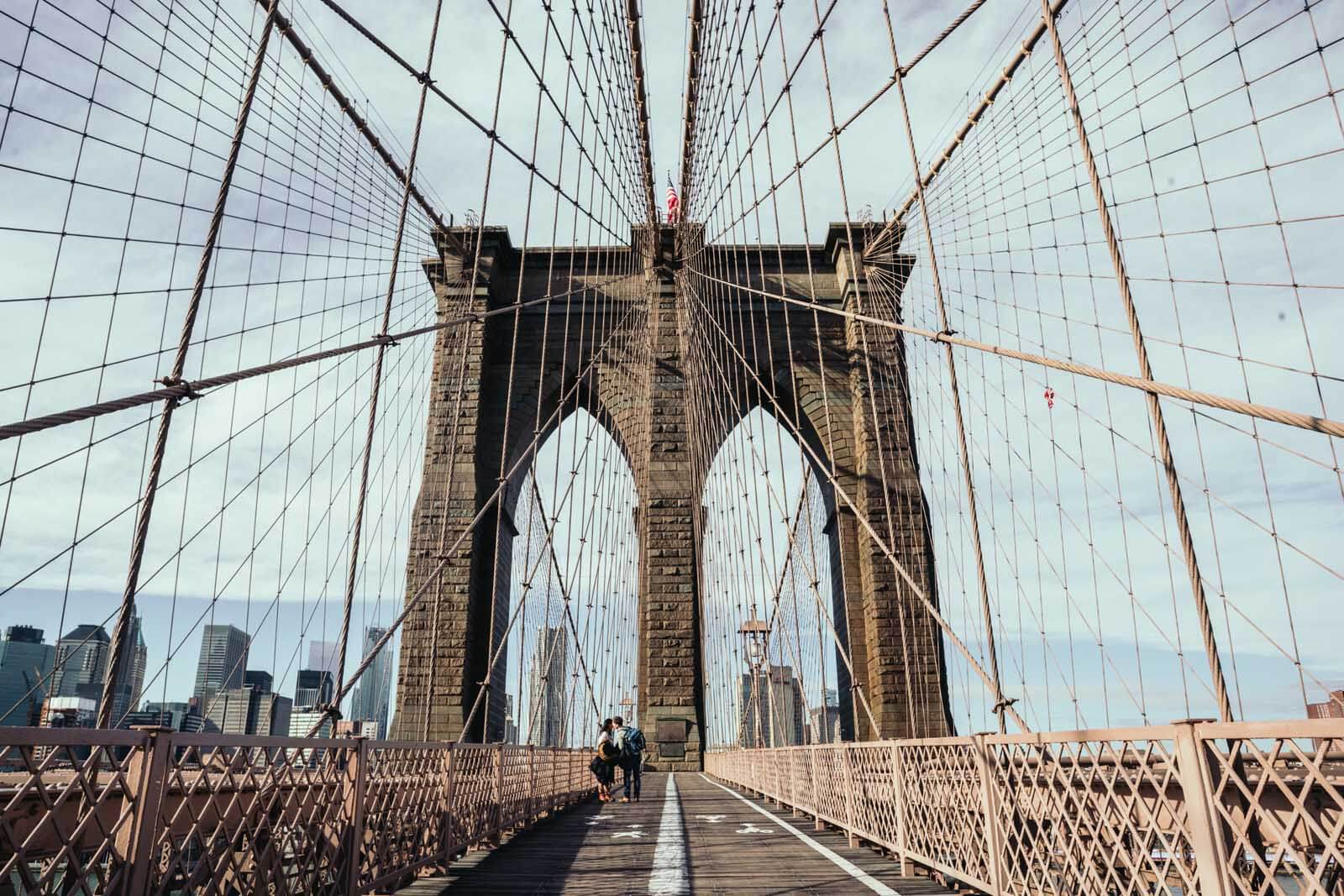
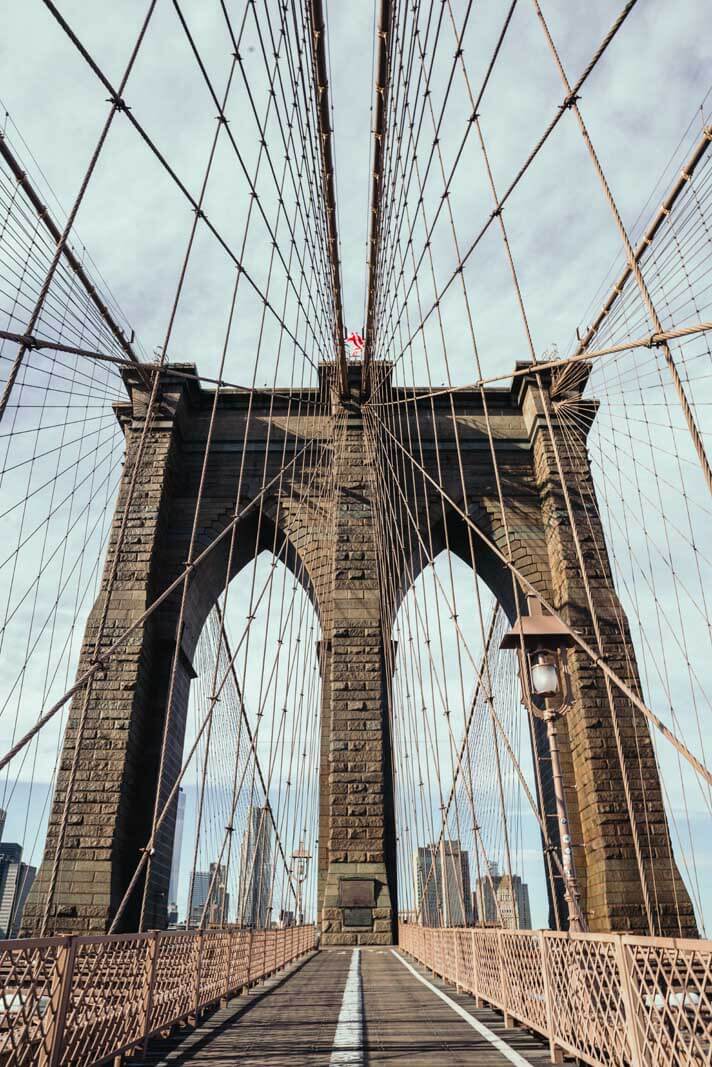
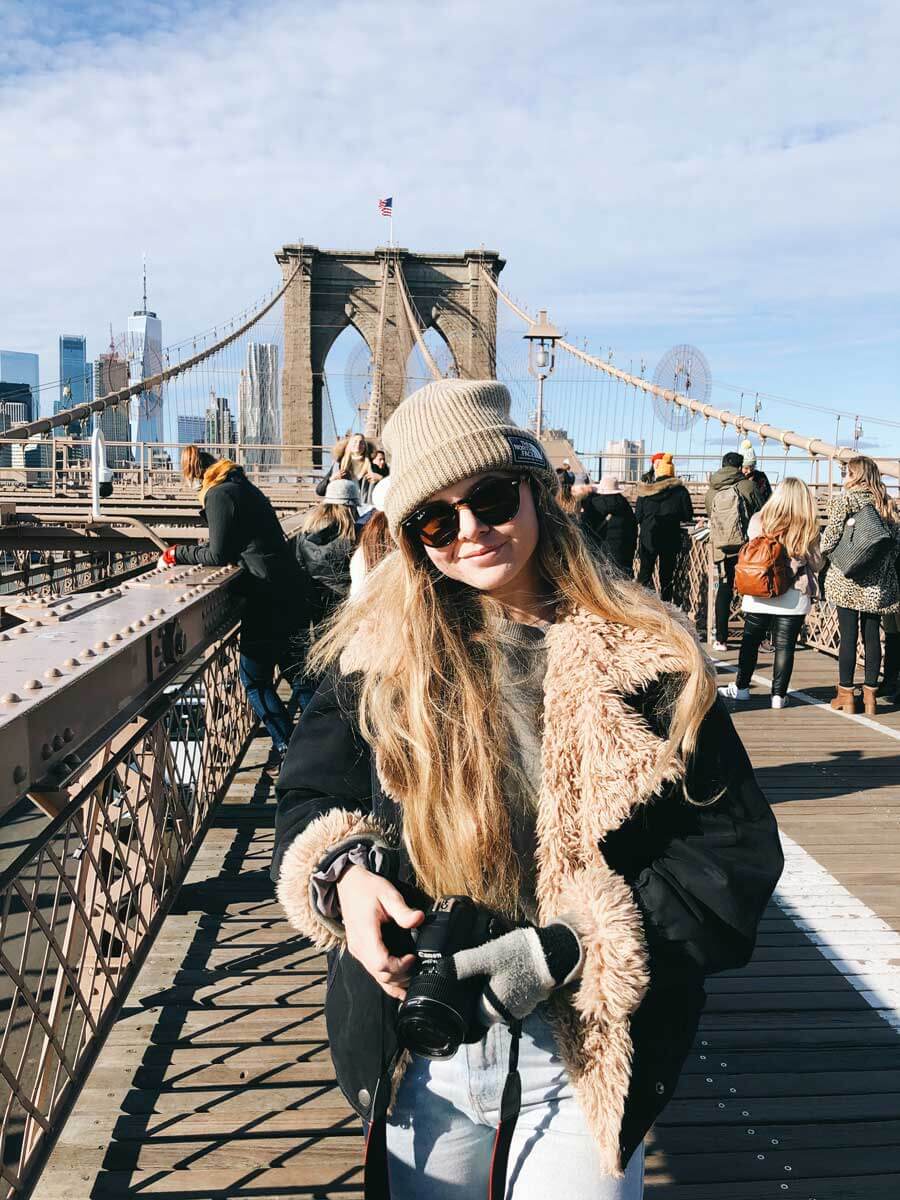
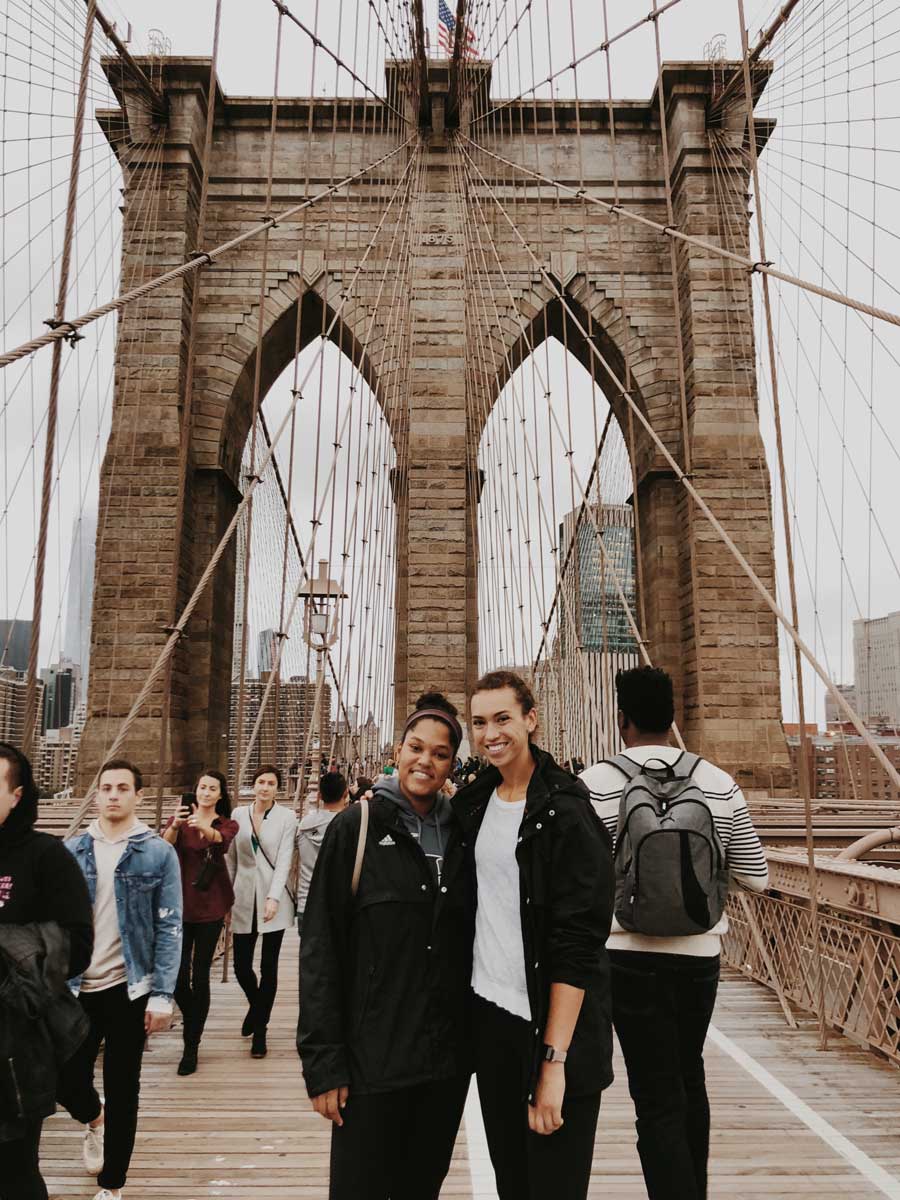
Brooklyn Bridge towers—Pose underneath the famous arches while walking on the Brooklyn Bridge. These pictures turn out the absolute best on an empty bridge day.
Statue of Liberty— Take a look off into the distance and find Lady Liberty dazzling in the horizon during your Brooklyn Bridge walk.
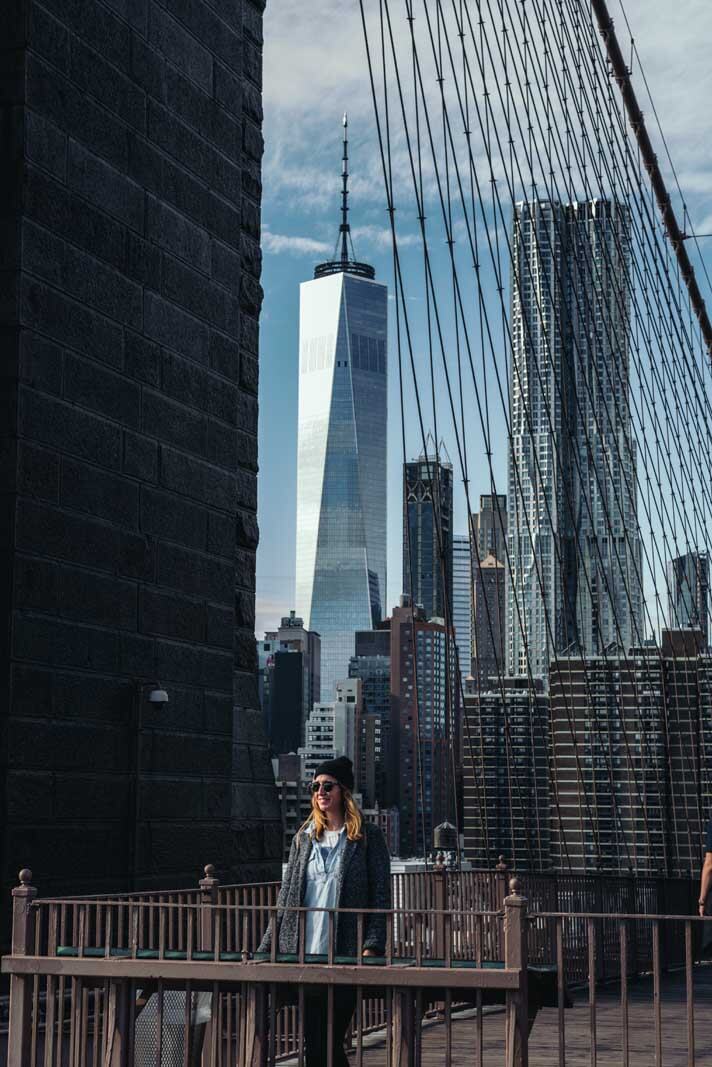
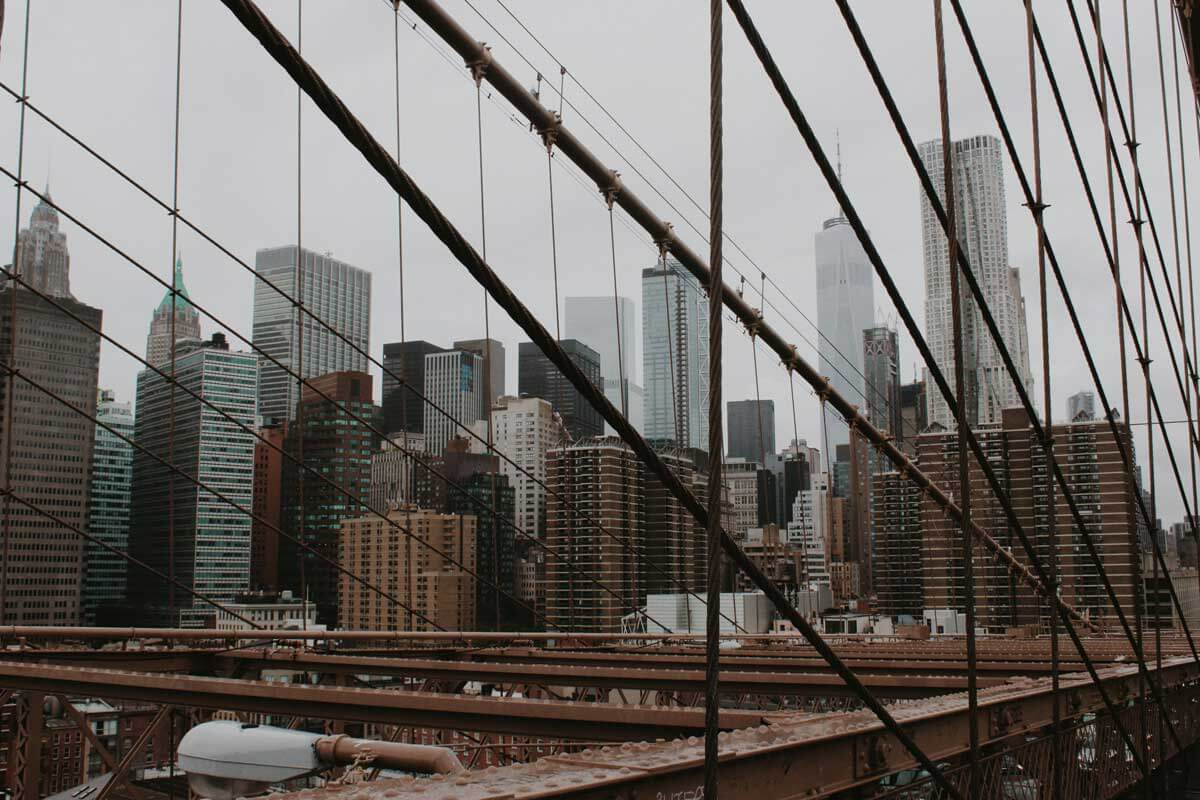
Lower Manhattan—The staggering and stunning skyline is jaw-dropping, make sure to pose for a couple pictures with the cityscape including the World Trade Center.
Manhattan Bridge— Don’t forget about the blue beautiful bridge right across from the Brooklyn Bridge.
About halfway through walking the Brooklyn Bridge, there will be some little areas to pull over and snap some really great shots with Lower Manhattan as your backdrop.
When taking photos, DO NOT SIT OR STAND ON LEDGES when posing for pictures. There are no rails to protect pedestrians from falling down onto the roadway below and besides risking your life, you’re putting others in danger. Please be responsible.
The key to walking the Brooklyn Bridge is being prepared for the possibility of crowds and if you don’t want that experience, you will need to have patience and plan around it.
It’s easy to get frustrated with big crowds, especially if you’ve had a long touristy day. Here are a couple of pro local tips when walking the Brooklyn Bridge:
Wear comfortable shoes:You’ll be walking alot during your visit to Brooklyn and NYC. Save your feet by coming prepared with stylish and comfortable walking shoes.
Bring your camera: Most people already have great cameras built into their smartphones, but if you do have a DSLR or other camera we do recommend bringing that on your Brooklyn Bridge walk as this is one of the best places for photos in the city. Leave your tripod behind unless you plan at coming as early as sunrise to get to the bridge before anyone else or are coming on a day where the bridge is empty.
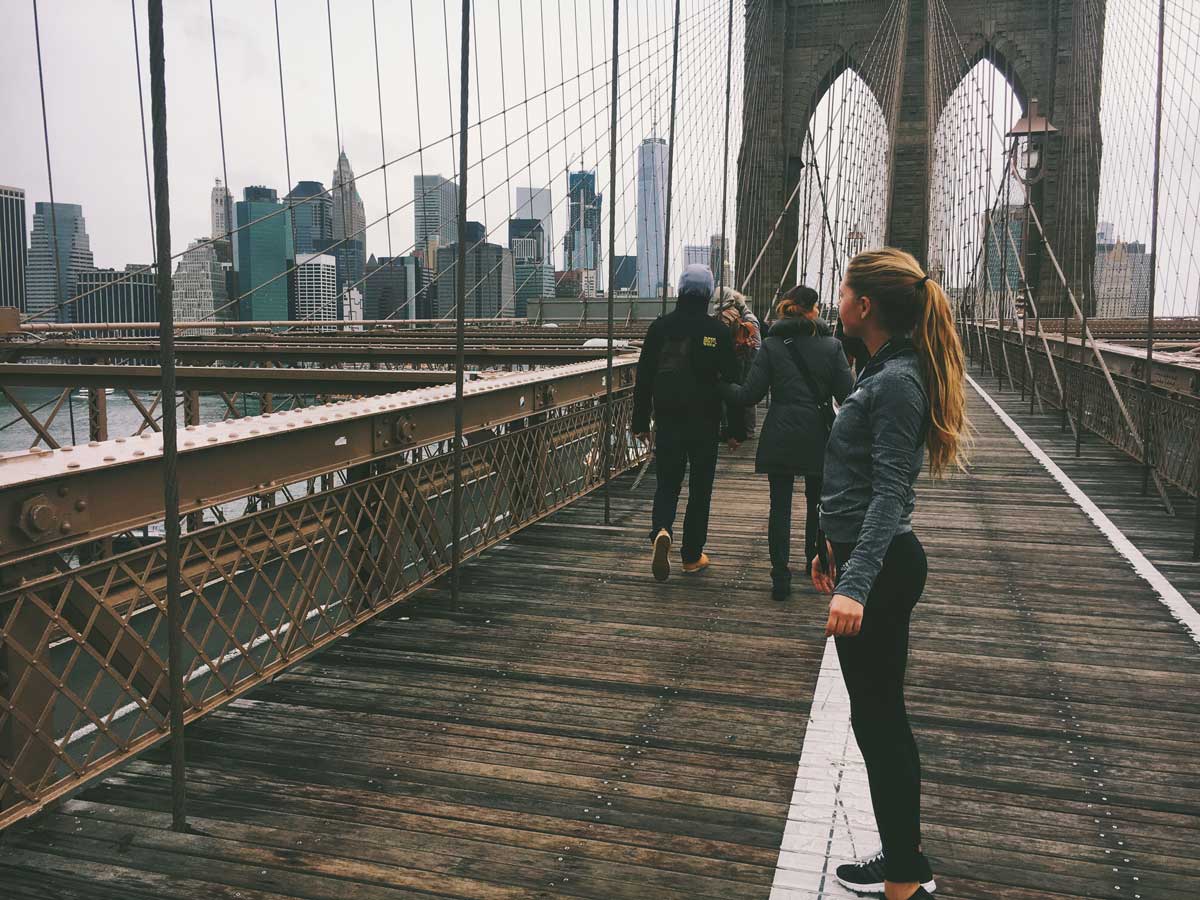
Come on a crappy day: Want to avoid people? The worst the weather the more likely the crowds will thin out on the Brooklyn Bridge! Rainy and cold winter days are some of the best times to experience the Brooklyn Bridge without hoards of people!
Prepare for the weather: Rainy and cold days are some of the best times to visit and walk the Brooklyn Bridge if you’re looking to avoid the crowds. If this is the case for you, come prepared! It gets pretty windy above the water so you will probably need more than just an umbrella. Layer up if its a chillier day to make your Brooklyn Bridge walk more enjoyable!
Be ready to be patient:You will get irritated, you will get separated from your group, you might get smacked by a selfie stick, but remember it’s part of sharing this experience with everyone else and while it might test your patience, it’s good to come prepared ready for a more crowded experience.
Start on the Brooklyn Side: This is just a reminder that if you are looking for the most ‘iconic’ way to do the Brooklyn Bridge walk you should start on the Brooklyn side so you can see Manhattan and the NYC skyline when you walk.
Weekdays can be less crowded*: Unless it’s peak summer season, if you come on a weekday you have a better chance to avoid the bigger crowds than on the weekends! But notice we said, *can be*. This is not always the case.
Holidays are always busy: Planning a visit to the Brooklyn Bridge around a holiday? Expect more crowds and be ready to have to practice some extra patience!
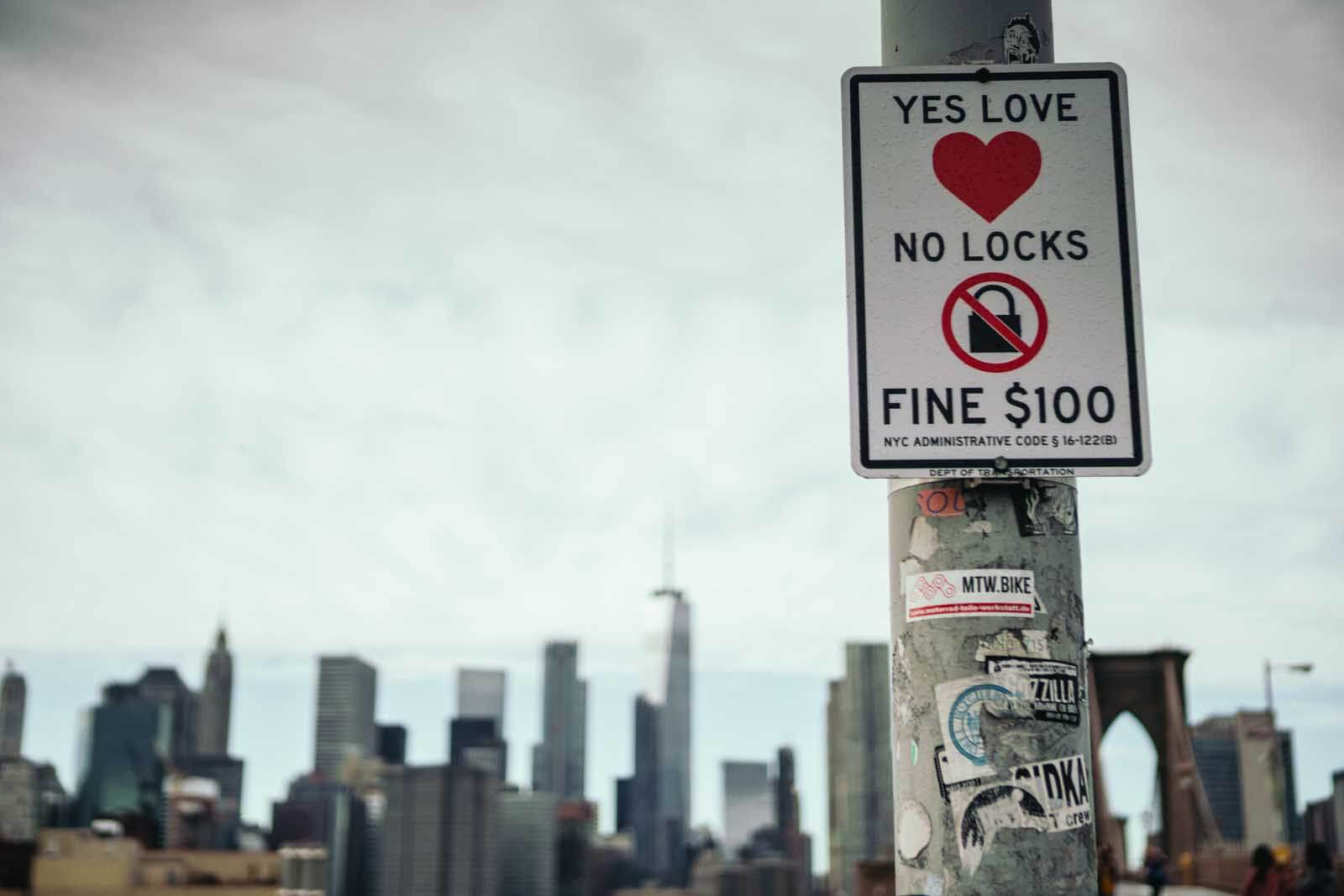
Don’t leave a lock on the bridge: This is not allowed and you could get ticketed with a fine if caught.
Be sure to see our entire Brooklyn packing list guide for what you don’t want to leave home without when planning your Brooklyn trip and more great tips.
Both sides of the Brooklyn Bridge have so much to offer, which is the best part about having this bridge that connects the two of the best boroughs in New York City.
Here are some of my top picks for what to do before or after your Brooklyn Bridge walk.
If you’re looking for another bridge walk with views, consider walking one way on the Brooklyn Bridge and the other way on the Manhattan Bridge walk.
THINGS TO DO NEARBY THE BROOKLYN BRIDGE IN MANHATTAN
The Brooklyn Bridge Pedestrian Walkway drops you off right in Downtown Manhattan. From here you have access to some of the best parts of Manhattan.
City Hall— Located right next to the Brooklyn Bridge walkway entrance, check out New York City Hall. This City Hall is the oldest city hall in the United States. Built from 1803-1812, so ultimately it’s labeled a U.S. National Historic Landmark!
One World Trade Center— Take about a 15 minute stroll over to the One World Trade Center after walking the Brooklyn Bridge. Make sure to get tickets for the observation deck, one of just three observation decks in New York City! This destination is just about one mile away from the Brooklyn Bridge walking entrance/exit. Alternatively, you can just visit from the outside and enjoy all the colorful murals here too.
9/11 Memorial & Museum— Just down the street from the One World Trade Center, visit the 9/11 Memorial & Memorial. The Memorial’s twin reflecting pools are free of charge, but if you have time, we would suggest checking out the Museum as well. This historical spot is a little over half a mile from the Brooklyn Bridge walking entrance, about a 15 minute walk.
Oculus Center—Ever wonder what that crazy looking white building is near One World Trade and the 9/11 Memorial? It’s called the Oculus Center, it’s full of high-end stores, kiosks, and subway stops! Located just half a mile from the Brooklyn Bridge Pedestrian Walkway, it should take just about 12 minutes to walk there.
Brookfield Place— Brookfield is also another spot to fulfill all your shopping needs in New York City. Around a 17 minute walk (.7 miles) from the Brooklyn Bridge walking entrance, you can find some of New York’s best stores such as Lululemon, Madewell, Tory Burch, Michael Kors, Louis Vuitton, J. Crew, and much more!
SoHo—Visit one of the most famous shopping spots and trendy neighborhoods there is! SoHo is just under a mile away from the Brooklyn Bridge walking entrance and takes just under 20 minutes to get there! Find every store you could imagine just in this area of NYC! Check out some of the options like Topshop, Zara, Urban Outfitters, H&M, & Other Stories, Forever21, and all the designer brands you can think of.
Chinatown— While you’re in the area, check out one of the iconic areas in Manhattan! Chinatown is just about a 16 minute (.7 miles) walk from the Brooklyn Bridge walkway entrance. You can check out some historical museums, the famous Canal St, and try some awesome Chinese food.
THINGS TO DO NEARBY THE BROOKLYN BRIDGE IN BROOKLYN
The Downtown Brooklyn and DUMBO areas surrounding the bridge are a can’t miss experience. Here are some great recommendations for before or after your Brooklyn Bridge walk in Brooklyn.
Hang out in DUMBO – DUMBO is one of our favorite neighborhoods to hang out in. If you’ve built up an appetite be sure to try some of the best pizza in DUMBO (some of the best in the city) or check out the different DUMBO restaurants with a view before/after exploring the rest of the best things to do in DUMBO.
Brooklyn Bridge Park- Visit this Brooklyn park with the best views in the city! Located on DUMBO’s waterfront you have some of the best views of Manhattan, the Brooklyn Bridge, and Manhattan Bridge all in one spot. See our entire guide for best things to do in Brooklyn Bridge Park.
Time Out Market New York—Time Out Market New York is an amazing food hall in DUMBO featuring the best foodie scene of the city under one roof. There are 21 different gourmet vendors located overlooking the East River and the Manhattan skyline. Time Out Market is about a 7 minute walk (.3 miles) from the Brooklyn Bridge walking entrance.
Dekalb Market and Food Hall— You will not want to miss this famous Brooklyn spot a short 15 minute (.7 miles) walk away from the Brooklyn Bridge Pedestrian Walkway on Tillary St. Equipped with multiple stores such as Trader Joe’s, Target, Century 21, an ahhhhmazing food hall with over 40 vendors, and the Alamo Drafthouse, you can’t ask for anything more.
Junior’s— Junior’s Restaurant is a New York delicacy with amazing food and even better desserts. Did you even go to New York if you didn’t have a slice of Junior’s cheesecake? Dine in after a quick 16 min walk (.7 miles) from the Brooklyn Bridge walking entrance.
Fulton St Mall— What is a trip to New York without a shopping spree? Although you can do this in SoHo and other hot spots in Manhattan, you can do it right here in Brooklyn too. Check out awesome stores like Macy’s, Nordstrom Rack, H&M, American Eagle, Old Navy, TJ Maxx and more just a short 13 minute walk (.5 miles) from the Brooklyn Bridge walking entrance on Tillary St.
Stay in DUMBO –Want to stay in DUMBO with an amazing view of NYC in this popular neighborhood? See our full guide for where to stay in DUMBO for your best accommodation options for your visit.
Want to learn about the fascinating history of the Brooklyn Bridge? From the deadly construction to other historical events that took place around the bridge and the fabric of NYC?
Join a Brooklyn Bridge walking tour with a guide! This 2-hour Brooklyn Bridge walking tour will cover all things related to the Brooklyn Bridge from fun facts to history as well as stops in DUMBO and Manhattan.
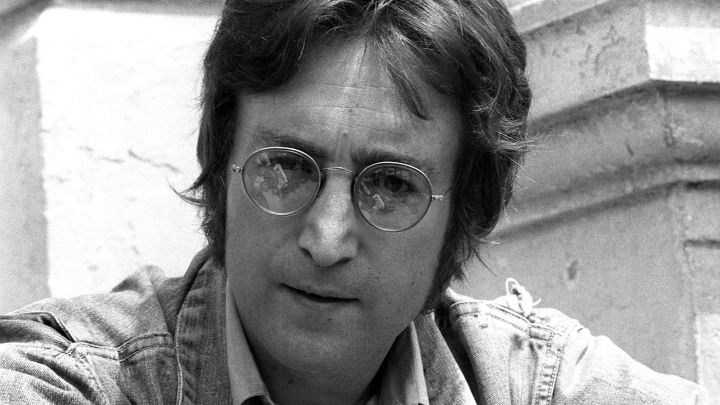
John Lennon had a particularly busy day planned for December 8th, 1980, a day that ended tragically when he was fatally shot outside his home in New York City.
Earlier that morning, photographer Annie Leibovitz visited the apartment he shared with Yoko Ono in the Dakota building on the Upper West Side in order to complete a photo shoot for an upcoming Rolling Stone cover story. They came up with the idea for the shot of a naked Lennon embracing a fully-clothed Ono in a fetal pose, which turned into the iconic cover of the Rolling Stone issue that was released on January 22nd, 1981, and unintentionally turned into a final tribute to him.
Lennon then went for an interview with RKO Radio. That interview touched upon his recent 40th birthday, entering middle age, his routine at home, and his legacy: “I always considered my work one piece, whether it be with [the] Beatles, David Bowie, Elton John, Yoko Ono,” he said, “and I consider that my work won’t be finished until I’m dead and buried, and I hope that’s a long, long time.”
Lennon and Ono then made their way downstairs to West 72nd Street and Central Park West, where Mark David Chapman approached and asked Lennon to sign a copy of his recent album Double Fantasy. Photographer Paul Goresh, who had befriended Lennon and often took his photo outside the Dakota, even snapped a photo of the two men together, one of the last photos taken of Lennon.
“I was taking a picture of John and I was trying to squeeze the guy [Chapman] out of the photo,” Goresh told the NJ Advance during a rare interview five years ago. “He was such a nuisance all that day that I was trying to get him out of the picture. And thank God three-quarters of him is in the picture. It was ironic.”
Lennon and Ono then headed to The Record Plant where they met up with producer Jack Douglas to continue work on her soon-to-be hit single “Walking On Thin Ice.” Douglas had befriended Lennon when he was working in the studio with him during the making of Imagine in the early 1970s.
“I’m in this room, editing, doing transfers, and about a week or five days into this whole process John Lennon walks into the room,” Douglas told Gothamist back in 2016. “And I’m just thrilled to be on this. And he walks in, and he says to me, ‘Do you mind if I just sit in here for a little bit?’ There was a lot of activity, the two rooms where they were doing overdubs and tracking. And I said no problem, and he sat down and I’m like a nervous wreck because he was my favorite Beatle, of course.”
“And he sits down on the other side of the console, feet up on the glass, and cigarette smoke was all I saw, pair of sneakers,” Douglas continues. “And after a few minutes, I was editing on a small speaker, and I said to him, ‘Uh, I’ve been to Liverpool.’ And his head popped up, and he said, ‘Really? You been to Liverpool?’ And I said, ‘Yep.'”
It turned out that Lennon remembered Douglas from a newspaper story in 1965. Douglas and a friend has traveled to Liverpool to soak in the musical scene, and made up a story about being American musicians who were held captive on a boat, a story which made the front page of the Liverpool Echo.
“And he said, ‘You did, huh? ‘65, the crazy Yanks in the papers. It was you, wasn’t it?'” Douglas recounted. “And I said yeah, and he said, ‘I’ll be damned. We released an album, Rubber Soul, it should have been just us on the front pages of the Liverpool paper but who do I see there?’ And we laughed…he said, ‘I can’t believe it, you’re here.’ And he got all excited about me.”
The two forged a friendship and working partnership for the rest of Lennon’s life, one which hit its peak when Lennon handpicked Douglas to produce his comeback album Double Fantasy in the late ’70s. After work on that album and its companion piece Milk and Honey were done, Lennon still wanted to record more, which is what led to the “Walking On Thin Ice” session.
Below, Douglas recounts everything leading up to that final session, and what it was like being with Lennon hours before his death.
Were the final sessions pretty quick? No, it was a long process. Like I said, we’re talking about like four records. He took a little time off, he told me he was going back to Bermuda to write, the plan was to do a Ringo album, Paul had already signed on. So it was going to be Paul and John and we were trying to get George to back Ringo, which would have been unbelievable.
He’d written a couple songs here and there specifically for Ringo, right? Like “I’m The Greatest”? Yeah, there were a bunch of things. Almost every song, at some point, he says, “Okay, this is for Ringo.” And it could be that the Milk and Honey record may have been… a lot of those songs ended up on Ringo’s record.
Was it you or was it John who ultimately decided which songs were going to go onDouble Fantasy? It was definitely mutual. I think we just had all this material. [After we finished those sessions] he told me he was going to Bermuda and to go ahead and do whatever I want, we would start recording again [eventually], and probably the Ringo thing after the first of the year, and he was planning a tour and all this other stuff. And then he called me and said, “We’re going back. Again. I feel like I just don’t want to leave the studio.”
He got the bug back. Yeah, and said, “Just you and me and Yoko. That’s all I want. Get an assistant, get an engineer, and produce.” And by then, we went back to Record Plant and we worked up on the 10th floor in the smaller room and I had already booked to do something for RCA, I moved it back to the middle of the night. And we would work all afternoon. “Walking on Thin Ice.” We only had a germ of that record, so we made a loop of I think eight bars, and then John and I played all the rest of the instruments on it. It’s just loop based. And a loop then was just a tape machine, I had it on a two- track spinning back to a multitrack, cutting bars together. And then John and I played over it, which was very wild. It was great. We were having a blast. We just felt like we had complete freedom to do whatever we wanted. And Yoko was great.
Everyone was getting along great during those later records. Yeah, and John knew that Yoko was onto something with that one. Especially with that spoken word. And the whole feel of it was so different that she was going to have a hit. It was nominated for a Grammy. But we actually finished that song and that last night he…I would go to my session afterward, a session at nine or ten at night, and he…we were planning on mastering in the morning. And some asshole went and shot him when he got home.
That wasthatnight? Yeah, I said, “Goodnight, see you in the morning” at Sterling, the mastering studio. And a few minutes later I get a phone call, he’s been shot. I couldn’t believe it. I went up to Roosevelt Hospital, spent the night there. But he was already gone. They didn’t announce it until 6 in the morning.
So you were one of the last people to spend time with him. Yeah. It was me, Yoko and the driver. That’s it.
Double Fantasy was already number one. We were doing that in December. I mean he came back into the studio in late October, late November and started just messing around with stuff and decided on “Walking on Thin Ice”. And it didn’t look like he was gonna leave us, either. I mean, we were just having a great time. But then it was cut short.
That’s a pretty incredible story. Do you think that he chose you specifically for that last project because of your prior relationship? I ask the same question. I mean, we were friends, I never had an agenda with him. None whatsoever. Yoko trusted me. Knew that I understood what she was doing and I didn’t think it was crazy. But I asked John… we used to have a lot of talks. We would talk for hours after a session, cause Yoko worked in the daytime for the most part. And she’d go home and John would come in and we’d work all night. And John would like to kick back after a session. He had an old opium pipe that he liked to load with some weed, [a pipe] that I believe he got from Paul.
“Are we finished?” “Yep” So we’d kick back and smoke his pipe. And we would talk. But one day we were sitting and talking just for the hell of it. Anyone in the world could be producing, there’s so many other producers out there. I do some interesting stuff, but you know, I’m not George Martin…
So I asked John, “You know, of all these different people, you could have had…” and that look he would give me, the look if you’re getting insecure about something. And I said, “Look, why me? Why am I producing this record?” And he said, “Don’t you know? You should know why.” And I said, “No” and he went like this to me [Douglas puts his hands above his head]. And I said, “What’s that?” and he said, “Good antenna”. He said, “I don’t have to say much. I know you’re ahead of me. You have an idea of what the flow is, what I’m looking for. You know I’m impatient, you know that if things get caught up I get angry, I can’t take it. It flows. It moves. If we get stuck on a song, you get off it and move on to another. Then you move on to the right one, the right order. That’s why.”
He said, “That’s why. I don’t have to work, I just let you produce”. And he was very easy to produce. One of the easiest people to produce. So easy to produce, such a pro.
The scene outside the Dakota the night Lennon was killedDAVID HANDSCHUH/AP/SHUTTERSTOCK
Lennon and Ono got back to the Dakota around 10:45 p.m. that night, hoping to say goodnight to their son Sean before he fell asleep. That’s when Chapman intercepted them and murdered Lennon on the sidewalk.
You can read more about Douglas’s relationship with Lennon here and here; check out more photos of the scenes from the Dakota in the days after Lennon’s death here; read the coverage of Lennon’s death and his final interview with Rolling Stonehere; and read an interview with the first person to report on his death here.
Check out a few tributes to Lennon today from his loved ones and former bandmates below as well.
A sad sad day but remembering my friend John with the great joy he brought to the world. I will always be proud and happy to have known and worked with this incredible Scouser! X love Paul#JohnLennon
Tuesday, 8 December 1980 we all had to say goodbye to John peace and love John. I’m asking Every music radio station in the world sometime today play Strawberry Fields Forever. Peace and love. 😎✌️🌟❤️🎶🎼💝☮️ pic.twitter.com/dAEgekrvmW— #RingoStarr (@ringostarrmusic) December 8, 2020
The success of 1994’s The Lion King, the Disney animated hit that spawned a Broadway musical and a Grammy win for “Can You Feel the Love Tonight?,” endures today. Jon Favreau’s 2019 live-action remake starring Donald Glover, Beyoncé, and Seth Rogen (to name just three members of its celeb-heavy cast) has reintroduced the story to new generations. Notably, The Lion King was the first animated feature film from Disney that told an original story, as opposed to reinterpreting a myth or folk fairytale.
While the tale of Simba, Mufasa, and Scar was specifically conceived for the ’90s movie that spawned a cornerstone franchise for Disney, it does share more than a few themes with centuries-old stories. The similarities between The Lion King and The Tragedy of Hamlet, Prince of Denmark, one of Shakespeare’s best-known plays, are absolutely intentional—and it’s not the only work it draws inspiration from, either.
Is The Lion King based on Hamlet?
“Based on,” no. But it’s thematic similarities are undeniable. In fact, the original film’s co-directors, Roger Allers and Rob Minkoff, openly admit it.
The Lion King wasn’t originally meant to mirror Hamlet.
In a 2011 interview with Blu-Ray.com, Minkoff said the film, which went into development six years before its release, was initially “thought of as a Bambi in Africa.” He said the filmmakers believed that “because The Lion King was considered an original story, there was always the need to anchor it to something familiar. “
RELATED STORIES
Listen to Beyoncé’s Can You Feel the Love Tonight
The Lion King’s Beauty and the Beast Nod
How Disney Animated The Lion King Remake
While it does share a crucial plot point or two with the 1942 tearjerker (the pivotal sudden death of a parent, for one), unintended parallels to another story emerged during a roundtable meeting.
“When we first pitched the revised outline of the movie to Michael Eisner, Jeffrey Katzenberg, Peter Schneider and Tom Schumacher, someone in the room announced that its themes and relationships were similar to Hamlet,” Minkoff said. “Everyone responded favorably to the idea that we were doing something Shakespearean, so we continued to look for ways to model our film on that all-time classic.”
“I’d be happy if we had even unconsciously channeled the old Bard!” added Allers.
Both stories center around a fatherless prince.
Simba, The Lion King‘s main protagonist, is the son of Mufasa, the king of Pride Rock.This content is imported from poll. You may be able to find the same content in another format, or you may be able to find more information, at their web site.
As the son of the murdered King Hamlet, Hamlet is also a prince. Both characters’ lives are profoundly shaped by their father’s death, and no siblings are mentioned in either story.
The Lion King and Hamlet both feature an uncle as the villain.
Scar, Mufasa’s younger brother, plots to have young Simba and Mufasa killed so he can take the Pride Rock throne; Mufasa ultimately dies due to Scar’s machinations.
In Hamlet, the prince’s uncle, Claudius, also kills his brother so that he can succeed him and become the king.
In the end of both [SPOILER ALERT], their uncles wind up dead, though Simba shows more mercy than Hamlet.
An alternate Lion King ending even included an iconic Hamlet quote.
Minkoff wasn’t kidding when he said they wound up trying to include more aspects of Hamlet in the film. In an earlier alternate ending that absolutely no one would have enjoyed, Scar winds up killing Simba and wins (well, kind of; Scar winds up dying in a fire).
In the original storyboard rendering below, Scar even says a line from Shakespeare’s play, which Hamlet’s friend Horatio utters as Hamlet is dying in his arms: “Goodnight, sweet prince.”
Thankfully, this potentially childhood-ruining plot twist never made it to the final version.This content is imported from youTube. You may be able to find the same content in another format, or you may be able to find more information, at their web site.The Lion King – Alternate Ending (Storyboard)Watch on
Simba and Hamlet’s uncles convince them to exile themselves.
Scar makes Simba believe it’s his fault that his father fell, and he runs away into exile until he reaches adulthood.
 Posts by Paul Costello1