Theoretical Justification: Trajectory-Based SEL Measurement
1. Methodological Framework: Directional Versus Acquisitional Measurement
Project Change rejects the traditional, acquisitional paradigm of Social-Emotional Learning (SEL) which treats emotional well-being as a finite mass of discrete, linear skills to be systematically accumulated. Human development is inherently relational, contextual, and fluid; an individual’s social-emotional capacity is not a static trait, but a dynamic state that is continuously negotiated within their environment.
Rather than utilizing a scalar framework that attempts to weigh or inventory isolated competencies, Project Change uses a vector-based methodology. By focusing on a student’s directional trajectory, our evaluation model measures movement rather than mass. This recognizes that developmental progress is characterized by shifts in posture, perspective, and an evolving baseline of openness to learning over time.
2. Limitations of Static Frameworks (The Observer Effect in Psychometrics)
Standardized, competency-checklist models operate on decontextualized assumptions—presuming that an emotional skill, once acquired, is permanently held and universally applicable. This approach introduces an evaluation error analogous to the Heisenberg Uncertainty Principle in psychometrics: by attempting to force a fluid, complex human state into a fixed, quantifiable point, traditional assessments strip away the critical context of momentum, environment, and relationship.
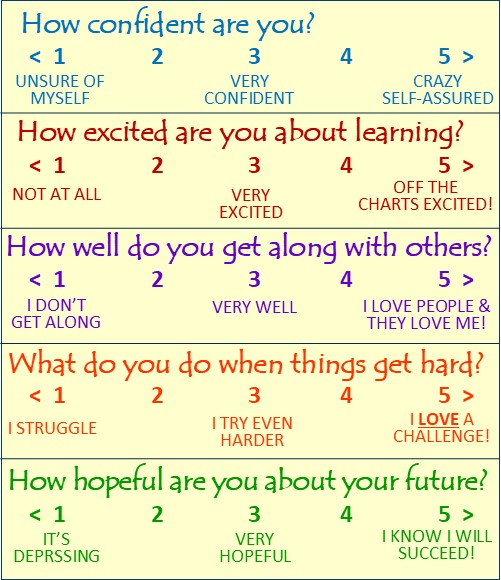
Human emotional states naturally fluctuate; individuals navigate environments where they may temporarily lose or regain emotional grounding based on systemic stressors. Therefore, cross-sectional, benchmark-style testing fails to capture authentic growth. Project Change utilizes the MyScore instrument specifically to map the student’s momentum—evaluating whether their baseline trend line is moving toward greater curiosity, hope, and connection, rather than auditing whether they have reached an arbitrary, universal benchmark.
3. Aggregating Individual Trajectories into Communal Ecosystems
Because an individual’s emotional state is inextricably linked to the social environment, SEL cannot be accurately measured as an isolated individual phenomenon. A child’s capacity for emotional regulation or engagement is a direct reflection of the safety and climate of the room they occupy.
To bridge the gap between individual accountability and systemic reality, Project Change tracks individual student growth trends over time and aggregates these individual vectors to assess classroom climate averages. This multi-tiered evaluation structure ensures full compliance with AmeriCorps performance measurement mandates by tracking individual longitudinal progress. Simultaneously, it maintains absolute programmatic integrity by evaluating success as a collective, directional shift in the overall learning ecosystem.